A City of Canyons, Clay, and Contradictions
San Diego averages just 10 inches of rain in a typical year — some years far less — and yet drainage is arguably the single most underestimated property risk in the region. The reason is geological. San Diego sits on a landscape of deeply incised canyons, mesa-top plateaus, and coastal bluffs carved from ancient marine sediments. When rain arrives — often in concentrated bursts between December and March — it encounters surfaces that resist absorption: dense adobe clay soils that swell shut, hardpan layers just inches below the surface, and miles of impervious development that channels water downhill at velocities the natural landscape was never designed to handle.
What makes San Diego's drainage story uniquely challenging is the collision of Mediterranean climate extremes with a topography that funnels water aggressively. The city's canyon system — over 80 named canyons threading through urban neighborhoods from Tierrasanta to Point Loma — acts as a vast natural drainage network. But decades of development on canyon rims, fill-graded slopes, and former floodplains have disrupted that network in ways that create serious consequences for individual properties. Homes in Scripps Ranch, Mira Mesa, Clairemont, and dozens of other neighborhoods regularly experience foundation damage, slope failures, and yard flooding that trace directly back to how water moves — or fails to move — through the soil beneath them.
This guide is written specifically for San Diego property owners, buyers, sellers, and the professionals who serve them. It covers the drainage conditions you'll actually encounter here, the regulations that govern what you can and cannot do, and the practical steps you can take to protect your property.
San Diego's Drainage Landscape: Why Water Behaves the Way It Does Here
Soil Composition: The Adobe Clay Problem
San Diego's dominant soil challenge is expansive clay. The region's most widespread soil types — including the Huerhuero, Olivenhain, and Diablo series — contain high percentages of montmorillonite clay minerals that undergo dramatic volume changes with moisture fluctuations. When wet, these soils can expand by 10% or more. When dry, they shrink, crack, and pull away from foundations. This seasonal expansion-contraction cycle is the root cause of a staggering amount of structural damage across the county.
You can explore the specific soil series on your property through the USDA Web Soil Survey, which provides detailed drainage class ratings, shrink-swell potential, and permeability data for every parcel in San Diego County. What you'll typically find is that the mesa-top neighborhoods — Clairemont Mesa, Kearny Mesa, Mira Mesa, University City — sit on some of the most expansive clay in the region, often classified as "poorly drained" or "very poorly drained" by the USDA Natural Resources Conservation Service.
Sandy loam soils do exist in San Diego, primarily in coastal areas, river valleys (Mission Valley, San Diego River corridor, Otay River Valley), and alluvial fans. These soils drain far more readily, but they come with their own risks: they're more susceptible to erosion, and in flood-prone valleys, they often sit atop shallow water tables that can rise dramatically during wet winters.
The practical implication for homeowners is this: in clay-heavy areas, surface water doesn't percolate. It sits, ponds, and migrates laterally — often toward your foundation. Traditional drainage advice that assumes permeable soil simply doesn't apply to most of San Diego.
Topography: Living on the Edge (Literally)
San Diego's topography is defined by a series of marine terraces — ancient sea floors uplifted over millions of years — that step down from the inland foothills to the coast. These terraces are dissected by a canyon system that functions as the region's primary natural drainage infrastructure. The canyons carry stormwater from the mesas down to the coast through named waterways like Rose Creek, Chollas Creek, Tecolote Creek, and the San Diego River.
For property owners, the critical question is: where does your property sit relative to this system?
Canyon-rim properties (common in Tierrasanta, Allied Gardens, Del Cerro, Clairemont, Serra Mesa) face slope stability risks. Water that isn't properly managed on the mesa top migrates to the canyon edge, saturates the slope, and can trigger slumps or full slope failures. The Lindbergh-Schweitzer neighborhood in Clairemont has experienced repeated slope issues directly attributable to unmanaged surface drainage.
Canyon-bottom properties receive concentrated runoff from upslope development. Homes along Chollas Creek in southeastern San Diego, or along Rose Creek in Pacific Beach and Linda Vista, can experience flash flooding during intense storms.
Hillside properties in communities like Mission Hills, Bankers Hill, Normal Heights, and the coastal bluffs of Ocean Beach and Point Loma deal with both surface runoff from above and the challenge of managing water on slopes where gravity wants to move everything downhill — including soil.
Valley-floor properties in Mission Valley, Fashion Valley, and along the San Diego River corridor sit in areas with historically high water tables and flood risk. Much of Mission Valley was a floodplain before it was developed.
Climate Patterns: The Feast-or-Famine Cycle
San Diego's Mediterranean climate means that virtually all precipitation arrives in a narrow window — roughly November through April — with the heaviest events concentrated in December through February. The rest of the year is essentially bone dry. This pattern creates a unique drainage dynamic: soils spend six to eight months desiccating and cracking, then must suddenly absorb concentrated rainfall.
The cracked clay surface that forms during summer might seem like it would help absorption — and briefly, it does. The first rains of the season infiltrate through surface cracks. But within hours, the clay swells shut, and subsequent rainfall runs off almost entirely. This is why the second and third storms of the season are often more damaging than the first: the soil is already saturated and sealed.
Atmospheric rivers — long corridors of tropical moisture that strike the California coast — have become the dominant driver of flood damage in San Diego. According to NOAA, atmospheric rivers account for the majority of extreme precipitation events on the West Coast. The January 2024 storms delivered over 3 inches of rain to parts of San Diego in a single day, causing widespread flooding in Ocean Beach, Mission Valley, and Barrio Logan. Climate projections from NOAA suggest these events are becoming more intense even as average annual precipitation remains relatively stable — meaning more water in shorter periods, which is the worst-case scenario for drainage infrastructure.
The National Weather Service provides localized precipitation forecasts and flood warnings for San Diego County, and monitoring these during the wet season should be standard practice for any property owner in a drainage-sensitive area.
Regulatory Environment: What San Diego Requires
The Municipal Stormwater Permit and What It Means for Homeowners
San Diego operates under one of the most stringent stormwater regulatory frameworks in the nation. The City's Municipal Separate Storm Sewer System (MS4) permit, issued under the federal Clean Water Act and administered through the San Diego Regional Water Quality Control Board, imposes requirements that affect everything from new construction to landscape renovations.
The Environmental Protection Agency oversees the Clean Water Act framework that drives these local requirements. In practice, what this means for San Diego homeowners is:
New development and significant redevelopment (projects that create or replace 5,000 square feet or more of impervious surface) must incorporate post-construction stormwater Best Management Practices (BMPs). This typically means bioretention areas, permeable pavement, or other features designed to treat and infiltrate stormwater on-site.
Grading permits are required for virtually any significant earthwork on your property. The City of San Diego's Development Services Department administers grading permits, and the process includes drainage review. Even seemingly minor regrading projects — building a retaining wall, leveling a backyard — can trigger permit requirements if they involve moving more than a few cubic yards of soil.
Discharge prohibitions mean you cannot direct concentrated stormwater onto a neighbor's property or into the public right-of-way without approval. This is enforced, and it's a common source of neighbor disputes. If your downspouts, sump pump, or yard drain discharge onto an adjacent property, you may be in violation.
Canyon buffer zones apply to properties adjacent to environmentally sensitive lands (ESL), which includes most of San Diego's canyon system. The Multi-Habitat Planning Area (MHPA) regulations restrict grading, drainage modifications, and vegetation removal within buffer zones that can extend 100 feet or more from the canyon edge.
Flood Zone Designations
FEMA maintains Flood Insurance Rate Maps (FIRMs) for San Diego County that designate flood hazard zones. The most significant designations for San Diego homeowners include:
Zone AE: Areas subject to inundation by the 1% annual chance flood (the "100-year flood"). In San Diego, AE zones follow the San Diego River through Mission Valley, Chollas Creek through southeastern San Diego, and portions of the Otay, Sweetwater, and San Dieguito river valleys.
Zone X (shaded): The 500-year floodplain. These areas have a 0.2% annual chance of flooding. Many properties in Mission Valley, Linda Vista, and Pacific Beach fall in this zone.
Zone D: Areas where flood hazard is undetermined. Some canyon areas in San Diego carry this designation, which doesn't mean they're safe — it means they haven't been fully studied.
If your property is in a designated flood zone and you have a federally backed mortgage, you're required to carry flood insurance. FloodSmart.gov provides consumer resources for understanding flood insurance options and costs. Even if you're not in a mapped flood zone, it's worth understanding that FEMA maps don't capture every flood risk — particularly localized ponding, canyon-edge flooding, and drainage failures that affect individual properties.
Disclosure Requirements
California law requires sellers to disclose known material facts about a property, including drainage problems, flooding history, and grading issues. The Transfer Disclosure Statement (TDS) and Natural Hazard Disclosure (NHD) report are the primary vehicles. The NHD will flag whether a property is in a FEMA flood zone, a dam inundation zone, or other hazard areas.
However, the NHD only captures mapped hazards. It won't tell you about the seasonal ponding in the backyard, the retaining wall that's failing because of hydrostatic pressure, or the neighbor's grading that redirects water onto your lot. This is precisely the gap that a drainage-specific assessment fills — and why buyers and agents in San Diego are increasingly requesting independent drainage evaluations before closing.
Diagnosing Drainage Problems on Your San Diego Property
Before you spend money on solutions, you need to understand what's actually happening with water on your property. Here's a systematic approach tailored to San Diego conditions.
Step 1: Read the Soil
Go outside after a moderate rain (at least 0.5 inches in 24 hours) and observe:
Where does water pond? In San Diego's clay soils, you'll often see standing water in low spots within 30 minutes of rainfall starting. Mark these areas. If water is still standing 24 hours after rain stops, you have a significant drainage problem.
Where does water flow? Look for erosion channels, sediment deposits, and staining on hardscape. Water leaves evidence of its path. Follow the flow from high points to low points on your property.
What does the soil surface look like when dry? Deep cracks (more than 1/4 inch wide) in bare soil indicate expansive clay. If you see a pattern of cracks forming a polygon network, you're dealing with high-shrink-swell soil that requires careful moisture management around foundations.
Probe the soil. Push a screwdriver or soil probe into the ground in several locations. In San Diego's clay areas, you'll often hit resistance within 6-12 inches. If the probe slides in easily to 18+ inches, you're in sandier soil. If it won't penetrate at all when dry, you're likely on hardpan or heavily compacted clay.
Step 2: Inspect the Foundation Perimeter
Walk the full perimeter of your home and look for:
Negative grading: The ground should slope away from your foundation at a minimum of 2% (about 1/4 inch per foot) for at least 6-10 feet. In San Diego, settlement of fill soils and erosion frequently create reverse slopes that direct water toward the foundation. Use a 4-foot level to check grade at multiple points.
Soil-to-siding contact: The foundation should be visible for at least 4-6 inches above grade. If soil or mulch is piled against siding or stucco, moisture is wicking into your wall assembly. This is extremely common in San Diego homes where landscape beds have been built up over the years.
Staining and efflorescence: White mineral deposits on concrete foundation walls indicate water is migrating through the concrete. Dark staining suggests sustained moisture contact.
Cracks: Horizontal cracks in foundation walls are the most concerning — they can indicate hydrostatic pressure from saturated soil pushing against the wall. Stair-step cracks in block or brick follow mortar joints and often relate to differential settlement caused by uneven soil moisture. In San Diego's expansive clay, foundation cracks that open and close seasonally are a telltale sign of shrink-swell movement.
Step 3: Check Downspout and Gutter Performance
San Diego homes present a unique challenge: many were built without gutters. The prevailing attitude for decades was that with so little rain, gutters weren't necessary. This is wrong, and it's the source of enormous damage.
Without gutters, roof runoff falls directly to the ground at the drip line, creating a concentrated erosion zone around the entire perimeter of the house. On clay soils, this water saturates the soil immediately adjacent to the foundation — exactly where you don't want it.
If your home does have gutters, verify:
- Downspouts discharge at least 6 feet from the foundation (10 feet is better)
- Extensions or splash blocks are in place and directing water downslope
- Gutters aren't overflowing at corners or seams (indicating undersizing or blockage)
- Underground downspout drains, if present, are actually flowing and not clogged with roots or sediment
Step 4: Evaluate Hardscape Drainage
Patios, driveways, and walkways are impervious surfaces that generate runoff. In San Diego's clay-soil neighborhoods, a common pattern is:
- Concrete patio poured flat or sloped toward the house
- Rain hits patio, runs toward foundation
- Water pools against foundation wall
- Over time, soil saturates, foundation settles or heaves
Check the slope of every hardscape surface adjacent to your home. Water should always flow away from the structure. If you see ponding against the foundation after rain, this is a priority fix.
Step 5: Assess Slope and Retaining Wall Conditions
If your property includes slopes or retaining walls — and in San Diego, most do — look for:
Bulging or leaning retaining walls: This indicates hydrostatic pressure buildup behind the wall, usually because weep holes are clogged or the drainage gravel behind the wall has silted up. This is a structural safety issue.
Slope creep: Trees or fence posts leaning downhill, cracks in the soil surface running parallel to the slope face, or separation between hardscape and the slope all indicate slow soil movement. In San Diego's clay soils, this is often driven by water infiltration.
Erosion gullies on slopes: Concentrated flow paths cut channels that deepen with each storm. Left unaddressed, these can undermine structures at the top or bottom of the slope.
Step 6: Look for Interior Evidence
Drainage problems often announce themselves inside the home before they're obvious outside:
- Musty odors in rooms at or below grade
- Damp or stained carpet along exterior walls
- Mold growth on baseboards or lower wall surfaces
- Doors or windows that stick seasonally (indicating foundation movement)
- Cracks in drywall that appear or widen during the wet season
- Efflorescence on garage slab or basement walls
In slab-on-grade construction — the dominant foundation type in San Diego — moisture problems manifest as slab heave (the floor develops humps or ridges), cracked floor tile, or moisture vapor transmission through the slab that damages flooring.
Common Drainage Solutions for San Diego Properties
Every drainage solution must be matched to the specific conditions on your property. Here are the approaches most commonly effective in San Diego's soil, climate, and topographic context.
Surface Grading and Regrading
The single most impactful drainage improvement for most San Diego properties is correcting the grade around the foundation. This means reshaping the soil surface so water flows away from the structure in all directions.
In practice, this often involves:
- Importing fill soil (typically a sand-clay blend suitable for compaction) to build up low areas
- Compacting fill in lifts to prevent future settlement
- Establishing a minimum 5% slope away from the foundation for the first 10 feet
- Tying new grades into existing drainage paths so water has somewhere to go
In San Diego's clay soils, the fill material matters enormously. Pure clay fill will shrink and crack. Pure sand fill will erode. A properly engineered fill blend — typically 60-70% sand, 30-40% clay — provides both stability and drainage. A soils engineer can specify the right mix for your site.
For grading projects that move more than 200 cubic yards of soil or affect slopes steeper than a certain ratio, the City of San Diego requires a grading permit. Even smaller projects may require permits if they're near environmentally sensitive lands or affect drainage patterns on adjacent properties.
French Drains and Subsurface Drainage Systems
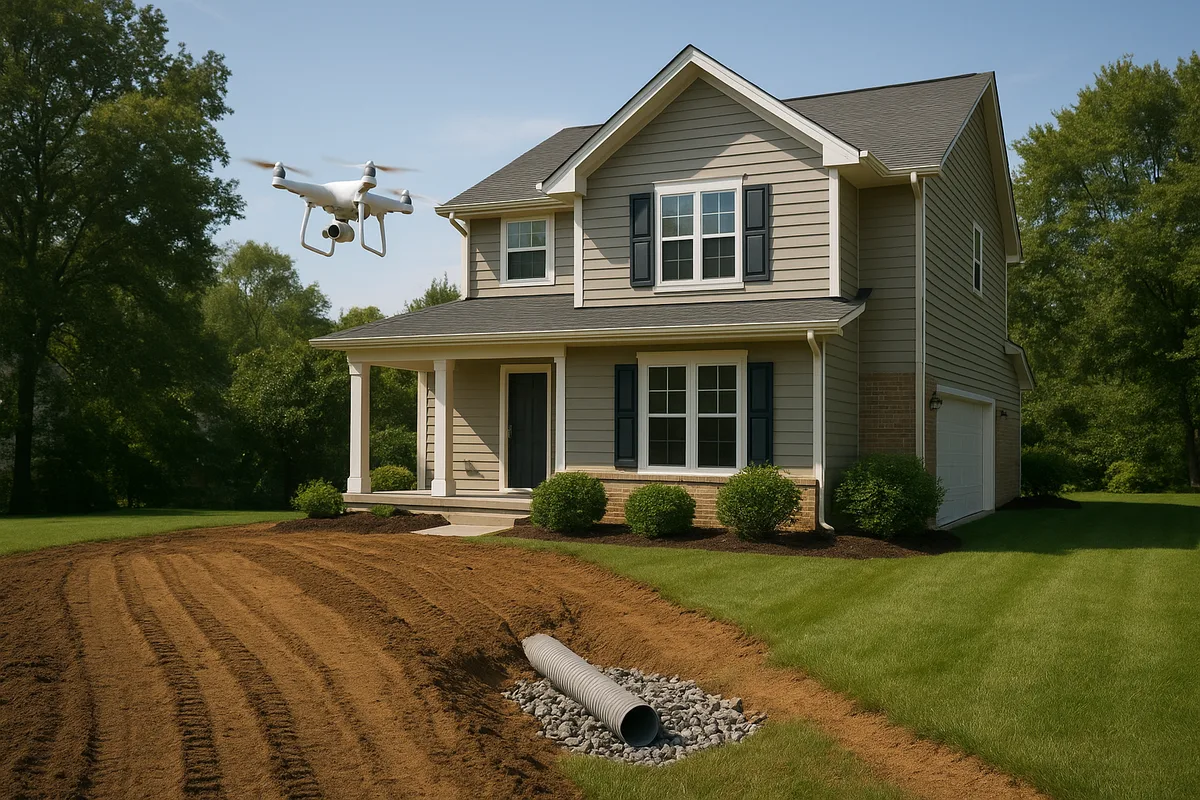
French drains are the workhorse of residential drainage in San Diego. A properly installed French drain consists of:
- A trench (typically 12-18 inches wide, 18-24 inches deep)
- Perforated pipe (4-inch diameter minimum) set on a bed of clean gravel
- Filter fabric wrapping the gravel to prevent clay soil from migrating into and clogging the system
- Clean, washed drainage gravel (3/4-inch to 1-inch) filling the trench around the pipe
- A discharge point — either to daylight at a lower elevation, to a dry well, or to the storm drain system (with appropriate permits)
In San Diego's clay soils, French drain design requires specific attention to filter fabric selection. The clay particles are extremely fine and will clog standard landscape fabric within a few years. Non-woven geotextile fabric rated for clay soil applications is essential. Products from manufacturers like NDS are widely available and specifically designed for residential drainage applications.
Common French drain applications in San Diego include:
Foundation perimeter drains: Installed along the foundation footing to intercept water before it reaches the foundation wall. Critical for homes on slopes where uphill water migrates toward the structure.
Curtain drains: Installed across a slope uphill of the home to intercept subsurface water flow before it reaches the building envelope. Particularly effective in hillside neighborhoods like Mission Hills, Normal Heights, and Del Cerro.
Yard drains: Collecting surface water from low spots and conveying it to a discharge point. Often combined with catch basins or area drains.
Area Drains and Catch Basins
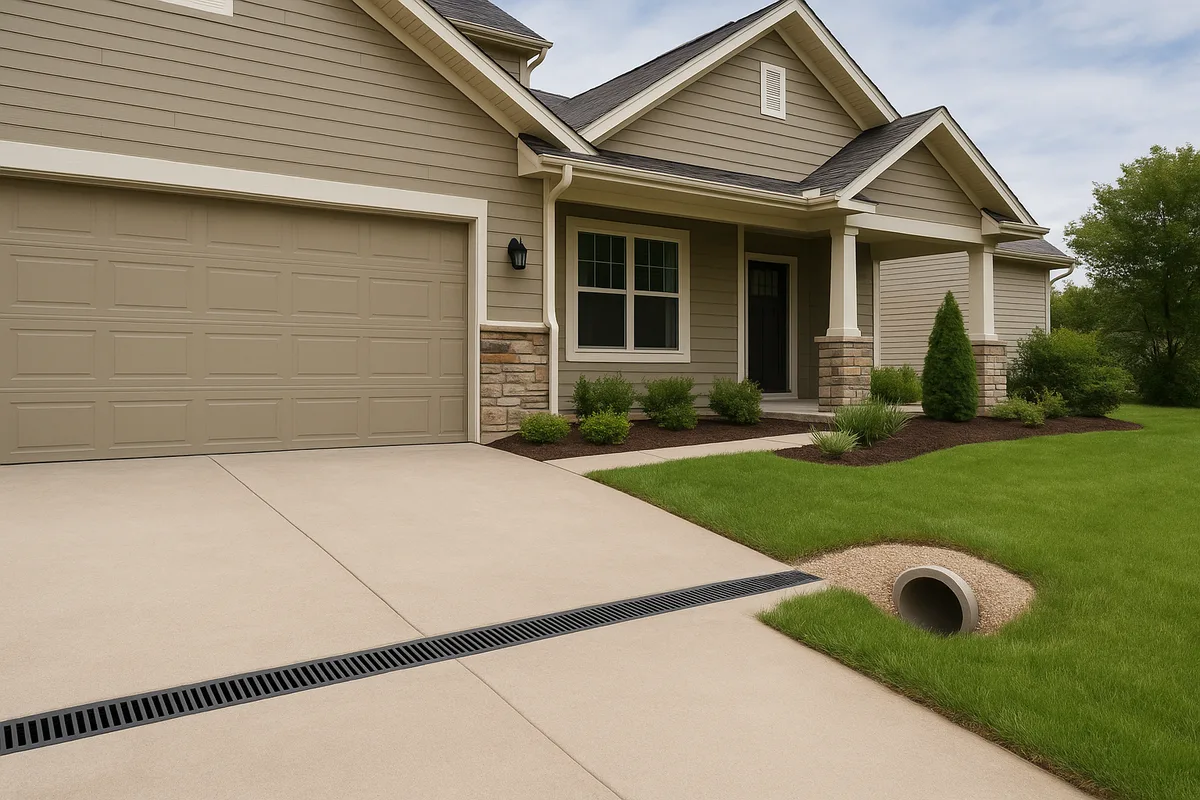
For localized ponding — a common problem in flat San Diego backyards with clay soil — area drains (also called catch basins) collect standing water and route it through underground pipe to a discharge point. These are surface-level grated inlets connected to solid (non-perforated) pipe.
The key design consideration in San Diego is ensuring adequate fall (slope) in the underground pipe. A minimum slope of 1% (1/8 inch per foot) is needed to keep water moving; 2% is preferred. On flat mesa-top lots in Clairemont, Mira Mesa, or University City, achieving adequate fall can be challenging and may require deeper trenching or a sump pump at the collection point.
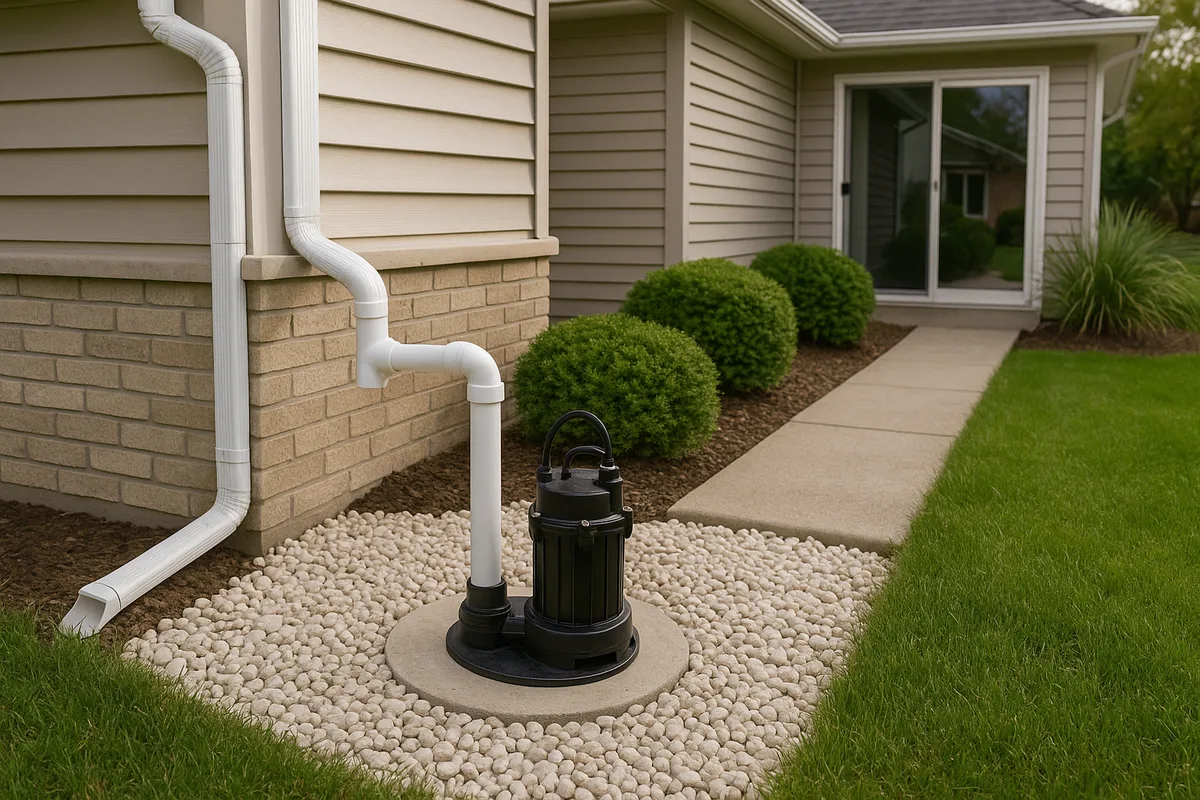
Sump Pumps
When gravity drainage isn't possible — because there's no lower elevation to discharge to, or because the water table is too high — sump pumps provide mechanical drainage. In San Diego, sump pumps are most commonly needed in:
- Below-grade spaces (basements, sunken living rooms, below-grade garages) in hillside homes
- Properties in low-lying areas of Mission Valley, Pacific Beach, and Ocean Beach where the water table can rise to within a few feet of the surface during wet winters
- Situations where the only discharge option is uphill to a street or storm drain
A reliable sump pump system includes a primary pump, a battery backup (critical during power outages that often accompany major storms), and an alarm to alert you to pump failure. The discharge must be directed to an approved location — not onto a neighbor's property or into the sanitary sewer.
Retaining Wall Drainage
Retaining walls are ubiquitous in San Diego's hilly terrain, and drainage behind them is the single most important factor in their longevity. A retaining wall without proper drainage is a wall that will eventually fail.
Proper retaining wall drainage includes:
- A drainage layer of clean gravel (12 inches minimum) behind the wall face
- A perforated drain pipe at the base of the gravel layer, sloped to discharge at the wall ends
- Weep holes through the wall face (typically 4-inch PVC pipes at 4-6 foot intervals along the base)
- Filter fabric between the gravel and the native clay soil to prevent migration
- A waterproof membrane on the back face of the wall (for block or concrete walls)
If you have an existing retaining wall that's showing signs of distress — leaning, cracking, bulging, or soil washing through weep holes — the drainage system behind it has likely failed. Retrofitting drainage behind an existing wall is expensive but usually cheaper than replacing the wall entirely.
Green Infrastructure and Low-Impact Development
San Diego's stormwater regulations increasingly encourage — and in some cases require — green infrastructure approaches. These include:
Rain gardens (bioretention): Shallow, planted depressions designed to capture and infiltrate stormwater. In San Diego's clay soils, rain gardens typically require an amended soil mix (often 60% sand, 20% compost, 20% native soil) and an underdrain to function. Without the underdrain, water will simply pond in the clay. The Low Impact Development Center provides design guidance for bioretention systems adapted to various soil types.
Permeable pavement: Interlocking pavers, pervious concrete, or permeable asphalt that allow water to infiltrate through the surface. Effective for driveways, patios, and walkways. In clay-soil areas, permeable pavement must include a gravel reservoir base and often an underdrain, because the underlying clay won't accept water fast enough.
Dry wells (infiltration chambers): Underground chambers that collect runoff and allow it to slowly infiltrate into the soil. These work well in San Diego's sandier coastal soils but are less effective in heavy clay without significant oversizing.
Bioswales: Vegetated channels that convey and filter stormwater. The American Society of Landscape Architects provides resources on bioswale design for residential applications.
Green infrastructure can be aesthetically appealing and adds property value, but it must be designed for San Diego's specific soil conditions. A rain garden designed for loamy Midwest soil will fail spectacularly in Clairemont's adobe clay.
Gutter Installation and Downspout Management
For the many San Diego homes built without gutters, installing a gutter system is often the highest-return drainage investment. By capturing roof runoff and directing it away from the foundation through downspout extensions or underground pipes, gutters eliminate the single largest source of foundation-adjacent water for most homes.
A standard San Diego home with a 2,000-square-foot roof footprint generates approximately 1,200 gallons of runoff from a 1-inch rain event. Without gutters, that water falls directly at the foundation perimeter. With gutters and properly extended downspouts, it's conveyed 10+ feet away.
For San Diego's typical rainfall intensities, 5-inch K-style gutters with 3x4-inch downspouts are adequate for most residential applications. Homes with large roof areas or steep pitches may need 6-inch gutters.
Neighborhood-Specific Drainage Concerns
Clairemont and Clairemont Mesa
Clairemont sits on some of the most expansive clay in San Diego County. The neighborhood was developed primarily in the 1950s and 1960s on mesa-top terrain with minimal grading. Many homes have shallow foundations (post-tensioned slabs weren't standard yet), and decades of soil movement have created widespread foundation issues. Drainage problems here typically manifest as:
- Ponding in flat backyards with no outlet
- Foundation heave and settlement from inconsistent soil moisture
- Slope failures along the Tecolote Canyon and Rose Canyon edges
Mission Valley
Mission Valley is San Diego's most significant flood-risk area. The San Diego River runs through its center, and much of the valley floor is in FEMA Zone AE. The 2024 storms produced significant flooding in areas that hadn't flooded in decades. Properties in Mission Valley — particularly older residential areas near the river — should carry flood insurance regardless of whether their specific parcel is mapped in the floodplain. The US Army Corps of Engineers has been involved in San Diego River flood management studies, and the City maintains a channel system through the valley, but capacity is limited during extreme events.
Scripps Ranch
Scripps Ranch combines hilly terrain, heavy clay soils, and a landscape heavily affected by the 2003 Cedar Fire and 2007 Witch Creek Fire. Post-fire landscapes are particularly drainage-sensitive because burned soil develops a hydrophobic (water-repellent) layer that dramatically increases runoff. While the fire effects have diminished over two decades, the underlying clay soils and steep terrain continue to create drainage challenges. Lot-to-lot drainage disputes are common in Scripps Ranch subdivisions where grading during original development created complex water flow patterns between properties.
Ocean Beach and Point Loma
Coastal communities face a different drainage profile. Sandy soils near the beach drain well but are erosion-prone. The bluffs and hillsides of Point Loma have clay soils with steep slopes, creating landslide and erosion risk. Ocean Beach experiences periodic flooding in low-lying areas near the San Diego River outlet and Dog Beach. Sea level rise adds a long-term dimension: NOAA's Office for Coastal Management provides sea level rise projection tools that show increasing tidal flooding risk for low-lying coastal areas of San Diego.
Tierrasanta
Tierrasanta is surrounded by canyons on nearly all sides, and many properties sit on canyon rims with fill slopes. The combination of expansive clay, steep canyon walls, and aging drainage infrastructure creates persistent slope stability concerns. Properties backing to canyons should have their drainage systems inspected regularly to ensure water isn't being directed toward the slope edge.
Rancho Peñasquitos and Carmel Mountain Ranch
These 1980s and 1990s subdivisions were built with more modern grading standards than older neighborhoods, but the sheer volume of impervious surface (wide streets, large driveways, dense housing) generates significant runoff. Common issues include overwhelmed storm drain inlets during heavy rain, erosion in common-area slopes maintained by HOAs, and drainage conflicts between lots where original grading has settled or been altered by homeowner landscaping.
Costs and Budget Considerations for the San Diego Market
Drainage work in San Diego reflects the region's generally higher construction costs. Labor rates, disposal fees for excavated clay soil, and permit costs all contribute. Here are realistic 2026 cost ranges for common drainage projects in San Diego:
| Project | Typical Cost Range | Notes |
|---|---|---|
| Gutter installation (full house) | $2,500 - $5,500 | Varies with roof length and access |
| Surface regrading (foundation perimeter) | $1,500 - $5,000 | Depends on volume of fill needed |
| French drain (linear foot) | $45 - $85/LF | Includes pipe, gravel, fabric, labor |
| French drain (typical 80-100 LF system) | $4,000 - $8,500 | Complete system with discharge |
| Area drain with underground pipe | $1,200 - $3,500 | Per drain, including pipe run |
| Sump pump installation | $2,000 - $4,500 | Including basin, pump, backup, discharge |
| Retaining wall drainage retrofit | $3,000 - $10,000+ | Depends on wall length and access |
| Rain garden / bioretention | $2,500 - $8,000 | Depends on size and soil amendment needs |
| Comprehensive drainage system | $8,000 - $25,000+ | Multi-component systems for complex sites |
| Grading permit (City of San Diego) | $1,500 - $5,000+ | Includes plan check and inspection fees |
These costs can escalate significantly for hillside properties where access is limited, where excavation encounters rock or hardpan, or where the project triggers environmental review due to proximity to sensitive canyon lands.
For properties that have suffered flood or drainage damage, the Small Business Administration offers disaster loans that can cover repair costs, including drainage improvements, following a federally declared disaster.
Getting Accurate Bids
When soliciting bids for drainage work in San Diego:
- Get at least three written bids from licensed C-36 (plumbing) or C-12 (earthwork/grading) contractors
- Ensure bids specify pipe diameter, gravel type and depth, fabric type, and discharge location
- Ask whether the bid includes permit costs (if applicable)
- Verify the contractor carries current workers' compensation and liability insurance
- Ask for references from projects in your specific neighborhood — a contractor experienced with Clairemont clay may not be familiar with Point Loma's coastal bluff conditions
- Be wary of bids that are dramatically lower than others — they often omit critical components like filter fabric or adequate gravel depth
The American Society of Civil Engineers and Irrigation Association maintain resources on drainage system design standards that can help you evaluate whether a contractor's proposed approach meets professional standards.
Seasonal Considerations: Timing Your Drainage Work
The Ideal Window: Late Summer Through Early Fall
The optimal time to perform drainage work in San Diego is August through October. The soil is dry (making excavation easier and less messy), there's no rain to interfere with construction, and you'll be ready before the wet season begins. Contractor availability is also generally better during this period, as the construction industry isn't dealing with weather delays.
Pre-Season Checklist (October-November)
Before the first significant rain:
- Clean gutters and downspouts completely
- Verify downspout extensions are in place and directing water away from the foundation
- Clear debris from area drains, catch basins, and French drain outlets
- Test sump pumps (pour water into the basin and verify the pump activates and discharges properly)
- Inspect retaining wall weep holes — clear any that are blocked
- Walk your property and note any areas where grading has changed (settlement, erosion, landscaping additions)
- Trim vegetation away from the foundation to allow air circulation and visibility
During the Wet Season (December-March)
This is your observation window. After each significant rain event:
- Walk the property within 12-24 hours of rain stopping and document where water ponds, flows, or accumulates
- Take photos and videos — these are invaluable for contractors and engineers
- Check the interior for any signs of moisture intrusion
- Monitor retaining walls for new cracks or movement
- Note whether drainage systems are performing as designed
The information you gather during wet weather is the most valuable diagnostic data you'll have. Many drainage problems are invisible during San Diego's long dry season.
Post-Season Assessment (April-May)
After the wet season ends:
- Assess any damage or erosion that occurred
- Plan and budget for repairs or improvements during the summer construction window
- Address any emergency repairs immediately — don't wait for the next wet season to see if the problem gets worse (it will)
When to Get Professional Help
Some drainage issues are straightforward enough for a competent homeowner to address — extending a downspout, regrading a small area, or clearing a clogged drain. But many San Diego drainage situations require professional expertise. Engage a professional when:
Foundation cracks are present: Any crack wider than 1/4 inch, any horizontal crack, or any crack that's growing warrants evaluation by a structural engineer. In San Diego's expansive soils, foundation movement is often directly related to drainage, and the solution requires addressing both the structural damage and the underlying moisture condition.
Slopes are moving: Slope creep, retaining wall distress, or erosion gullies on slopes are safety issues. A geotechnical engineer can assess stability and recommend drainage solutions that address the root cause.
Water is entering the living space: Moisture intrusion through slabs, walls, or below-grade spaces requires professional diagnosis. The source may not be where the water appears — in clay soils, water can travel laterally for considerable distances.
You're in or near a flood zone: Properties with flood risk need drainage solutions designed to handle specific flow volumes. A civil engineer can calculate design flows and size systems appropriately.
The project involves significant grading: Any project that changes drainage patterns on your property or affects adjacent properties should be designed by a professional and permitted through the City.
You're buying or selling property: A pre-purchase drainage assessment can identify issues that aren't visible during a standard home inspection, especially during San Diego's dry season when most real estate transactions close. FEMA's preparedness resources emphasize the importance of understanding flood risk before purchasing property.
The Water Environment Federation maintains resources on stormwater management best practices that can help property owners understand the technical aspects of drainage system design.
The Limits of Standard Home Inspections
Standard home inspections in San Diego typically note obvious drainage deficiencies — standing water, damaged gutters, visible grading issues. But they are not designed to provide a comprehensive drainage analysis. Inspectors generally don't:
- Evaluate soil type and its implications for drainage
- Assess the adequacy of subsurface drainage systems
- Calculate runoff volumes or flow paths
- Evaluate slope stability or retaining wall drainage
- Consider the property's position within the larger watershed
- Review the property's flood zone status in detail
- Assess the condition of underground drainage infrastructure
This is not a criticism of home inspectors — drainage analysis requires specialized knowledge that falls outside the scope of a general inspection. It's why a dedicated drainage assessment provides information that no other part of the due diligence process captures.
The US Geological Survey provides topographic maps and water resource data that can supplement a property-level assessment with watershed-scale context — understanding how water moves through the broader landscape helps explain what's happening on an individual lot.
Protecting Your Investment: The Long View
Drainage is not a one-time fix. San Diego's expansive soils are constantly moving. Climate patterns are shifting toward more intense precipitation events. Development continues to increase impervious surface coverage. The drainage conditions on your property today will not be the same in five or ten years.
Effective drainage management is an ongoing practice:
- Annual inspections of drainage systems, gutters, retaining walls, and grading should be routine
- Landscape changes — adding patios, pools, raised beds, or changing plant material — should always consider drainage impacts
- Neighbor communication matters. In San Diego's dense subdivisions, what your uphill neighbor does with their drainage affects you. Maintain good relationships and address water flow issues collaboratively when possible.
- Documentation of drainage conditions, improvements, and maintenance creates value. When you sell, being able to show a buyer that drainage has been professionally assessed and properly maintained is a significant differentiator.
Organizations like American Rivers advocate for watershed-level approaches to stormwater management that benefit individual property owners by reducing overall flood risk in developed areas. Understanding your property's role in the larger watershed context helps you make better drainage decisions.
Get a San Diego Drainage Intelligence Report™
If you own property in San Diego — or you're considering buying — understanding your drainage conditions isn't optional. It's essential. San Diego's combination of expansive clay soils, canyon topography, concentrated rainfall, and aggressive stormwater regulations creates a drainage environment that demands attention.
A Drainage Intelligence Report™ from Low Point Labs provides a comprehensive, property-specific analysis of drainage conditions, risks, and recommended actions. Unlike a general home inspection, a Drainage Intelligence Report™ examines:
- Soil type and drainage characteristics specific to your parcel
- Topographic analysis including slope, aspect, and watershed position
- Surface and subsurface drainage system evaluation
- Foundation perimeter grading assessment
- Flood zone and regulatory status review
- Identification of current and potential drainage deficiencies
- Prioritized recommendations with cost context
Whether you're a homeowner planning improvements, a buyer conducting due diligence, a seller preparing for market, or a real estate professional advising clients, a Drainage Intelligence Report™ gives you the information you need to make confident decisions about one of the most consequential — and most overlooked — aspects of property condition.
Don't wait for the next atmospheric river to find out what your drainage can't handle. Get your San Diego Drainage Intelligence Report™ today.
Explore our US Drainage Guide for a national perspective.
Frequently Asked Questions
The Low Point Labs Drainage Intelligence™ platform is accessible via invitation-led onboarding.