Grading and Lot Drainage: What Sacramento Buyers Should Check Before Closing
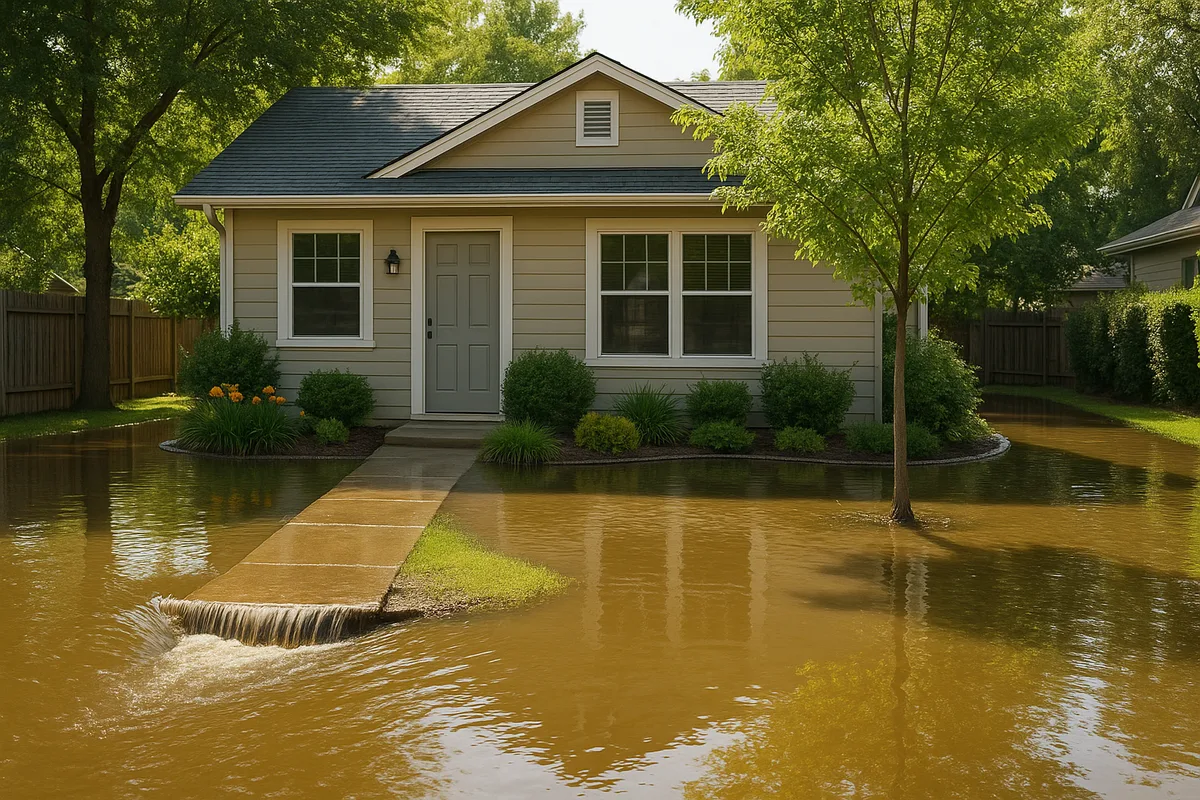
Buying a home in Sacramento is one of the most significant financial decisions you'll ever make — and one of the most overlooked risk factors in that decision is what's happening with the ground beneath and around the property. Lot grading Sacramento real estate transactions often hinge on factors like square footage, school districts, and kitchen finishes, but the slope of the yard and the way water moves across the lot can determine whether you're buying a sound investment or an expensive headache.
Sacramento's unique combination of expansive clay soils, seasonal rainfall patterns, and a landscape shaped by river floodplains makes drainage assessment especially critical for buyers. A property that looks perfectly dry during the summer showing season can become a waterlogged nightmare during the first atmospheric river of winter. This guide walks you through everything you need to evaluate about grading and lot drainage before you sign closing documents — from understanding Sacramento's specific soil challenges to performing your own visual assessments and knowing when to call in specialized help.
Why Sacramento's Geography Makes Lot Grading a Critical Concern
Sacramento sits at the confluence of the Sacramento and American Rivers, built on a landscape defined by alluvial deposits, former floodplains, and engineered levee systems. The city's elevation ranges from roughly 13 to 75 feet above sea level, and much of the metropolitan area is remarkably flat. This flatness is precisely what makes Sacramento yard grading drainage so important — in hilly terrain, gravity naturally moves water away from structures, but in Sacramento's level topography, even subtle grading deficiencies can cause water to pool against foundations.
The region's Mediterranean climate compounds the challenge. Sacramento averages approximately 18 to 20 inches of rainfall annually, but nearly all of it falls between October and April. This means the ground transitions from bone-dry and cracked in summer to saturated and swollen in winter. Properties with inadequate grading may show no signs of trouble during the dry season, only to reveal serious drainage failures when the rains arrive. Buyers who close on a home in July or August often don't discover grading problems until December — well past the point where negotiation leverage exists.
Sacramento's development history also plays a role. Many neighborhoods built in the 1950s through 1980s have experienced decades of soil settlement, root intrusion from mature trees, and incremental landscaping changes that have altered original grading. Even newer subdivisions in areas like Natomas, Elk Grove, and Rancho Cordova can have grading issues if initial construction compaction was insufficient or if surrounding development changed drainage patterns. Understanding these regional factors is the first step in protecting yourself as a buyer.
Understanding Grading Fundamentals: What Buyers Need to Know
Grading refers to the intentional shaping of the ground surface to control the direction and velocity of water flow. In residential construction, proper grading is designed to move surface water away from the foundation and toward designated drainage points — typically the street, a storm drain inlet, a swale, or a retention area. The concept is straightforward, but the execution matters enormously.
The Minimum Slope Standard
The International Residential Code (IRC) specifies that finished grade should fall a minimum of 6 inches over the first 10 feet from the foundation wall. This translates to approximately a 5% slope. For impervious surfaces like concrete patios or driveways adjacent to the foundation, a minimum 2% slope (approximately ¼ inch per foot) is required. These aren't aspirational guidelines — they're code requirements that exist because decades of building science have demonstrated that anything less invites moisture problems.
In Sacramento's clay soils, many experienced contractors and drainage specialists recommend exceeding the IRC minimum. A slope of 8 to 10 inches over 10 feet provides a buffer against the inevitable settling that occurs as clay soils go through wet-dry cycles. When you're evaluating a property, keep these numbers in mind: you're looking for the ground to visibly slope away from the house on all sides, with no flat spots or reverse grades within that critical first 10-foot zone.
Positive vs. Negative Grading
Positive grading means the ground slopes away from the foundation — water flows outward, away from the structure. Negative grading Sacramento home conditions exist when the ground slopes toward the foundation, directing water against the walls and footings. Negative grading is one of the most common and most consequential deficiencies found in Sacramento residential properties.
Negative grading can develop over time even on properties that were originally graded correctly. Soil settlement around the foundation perimeter, raised garden beds installed against the house, mulch or soil accumulation from landscaping, and erosion from downspout discharge can all create localized areas of negative grading. During a buyer walkthrough, look for soil or mulch that has been built up against the siding or foundation wall — this is a telltale sign that the original grade has been compromised.
The Sacramento Soil Factor: Clay, Expansion, and Drainage Failure
You cannot understand lot drainage in Sacramento without understanding the soil. The Sacramento Valley is dominated by clay and clay-loam soils — classifications that have profound implications for how water behaves on a residential lot. The NRCS Web Soil Survey is an invaluable free tool that allows you to look up the specific soil types on any property you're considering purchasing.
Hydrologic Soil Groups and Infiltration Rates
Soils are classified into four Hydrologic Soil Groups (A through D) based on their infiltration capacity. Group A soils (sands and gravels) absorb water rapidly. Group D soils (heavy clays) absorb water extremely slowly. Much of Sacramento's residential land falls into Groups C and D, with infiltration rates as low as 0.05 inches per hour. To put that in perspective, a moderate Sacramento rainstorm can deliver 0.25 to 0.50 inches per hour — meaning the soil physically cannot absorb the water fast enough, and surface runoff becomes the primary drainage mechanism.
This is why grading matters so much in Sacramento specifically. In areas with sandy, well-draining soils, minor grading imperfections might be forgiven because much of the rainfall soaks into the ground before it can accumulate against the foundation. In Sacramento's clay soils, virtually all rainfall becomes surface runoff that must be directed away from the structure through proper grading, swales, and drainage infrastructure. There is no margin for error.
Expansive Soil and Foundation Movement
Sacramento's clay soils are classified as expansive, meaning they swell when they absorb moisture and shrink when they dry out. This volume change can be dramatic — some Sacramento clays exhibit a Plasticity Index (PI) above 30, indicating high expansion potential. When water is directed toward a foundation by negative grading, it saturates the soil on one side of the footing while the other side may remain dry. This differential moisture creates uneven pressure and uneven support, which can lead to foundation cracking, wall separation, door and window misalignment, and other structural damage.
During your pre-purchase evaluation, look for physical evidence of expansive soil activity: cracks in exterior stucco or brick, gaps between the foundation and the framing, doors that stick or won't latch properly, and visible cracks in the foundation itself. While these symptoms can have multiple causes, their presence in combination with poor grading is a significant red flag that warrants professional evaluation.
The Pre-Closing Drainage Inspection Checklist for Sacramento Buyers
Armed with an understanding of why grading matters in Sacramento, here's a systematic approach to evaluating drainage slope Sacramento foundation conditions before you commit to a purchase. This checklist is designed to be performed during your inspection contingency period.
Exterior Perimeter Walk
Walk the entire perimeter of the home and assess the ground slope visually. At each wall, ask yourself: does the ground slope away from the foundation or toward it? Pay special attention to these common problem areas:
- Side yards: Narrow side yards between houses are notorious for drainage problems. Water from the roof, the neighbor's roof, and surface runoff often converges in these tight corridors with nowhere to go.
- Rear yard transitions: Where a patio, deck, or concrete slab meets the yard, look for settlement that may have created a reverse slope directing water back toward the house.
- Garage-to-yard transitions: The junction between the garage slab and the adjacent yard often settles, creating a low point where water collects against the garage foundation.
- Planter beds against the house: Raised planting areas against the foundation frequently have soil levels above the weep screed or siding line, trapping moisture against the structure.
Downspout and Gutter Assessment
Roof runoff is one of the largest sources of concentrated water delivery to the foundation perimeter. A typical Sacramento home with a 2,000-square-foot roof footprint can generate over 1,200 gallons of water from a single inch of rainfall. Evaluate the gutter and downspout system with these criteria:
- Are gutters present on all roof edges, and are they in good condition without visible leaks or sags?
- Do downspouts terminate at least 4 to 6 feet away from the foundation? (Extensions or splash blocks should direct water well away from the house.)
- Are downspouts connected to underground drain lines? If so, do you know where those lines discharge? Clogged or collapsed underground lines can actually make drainage worse by concentrating water near the foundation.
- Are there any areas where roof runoff discharges directly onto the ground next to the foundation without any gutter system?
Surface Drainage Features
Look for evidence of intentional drainage infrastructure on the property:
- Swales: Shallow, graded channels designed to collect and redirect surface water. In Sacramento subdivisions, swales along property lines or through backyards are common. Check that they're clear of debris and maintain their intended grade.
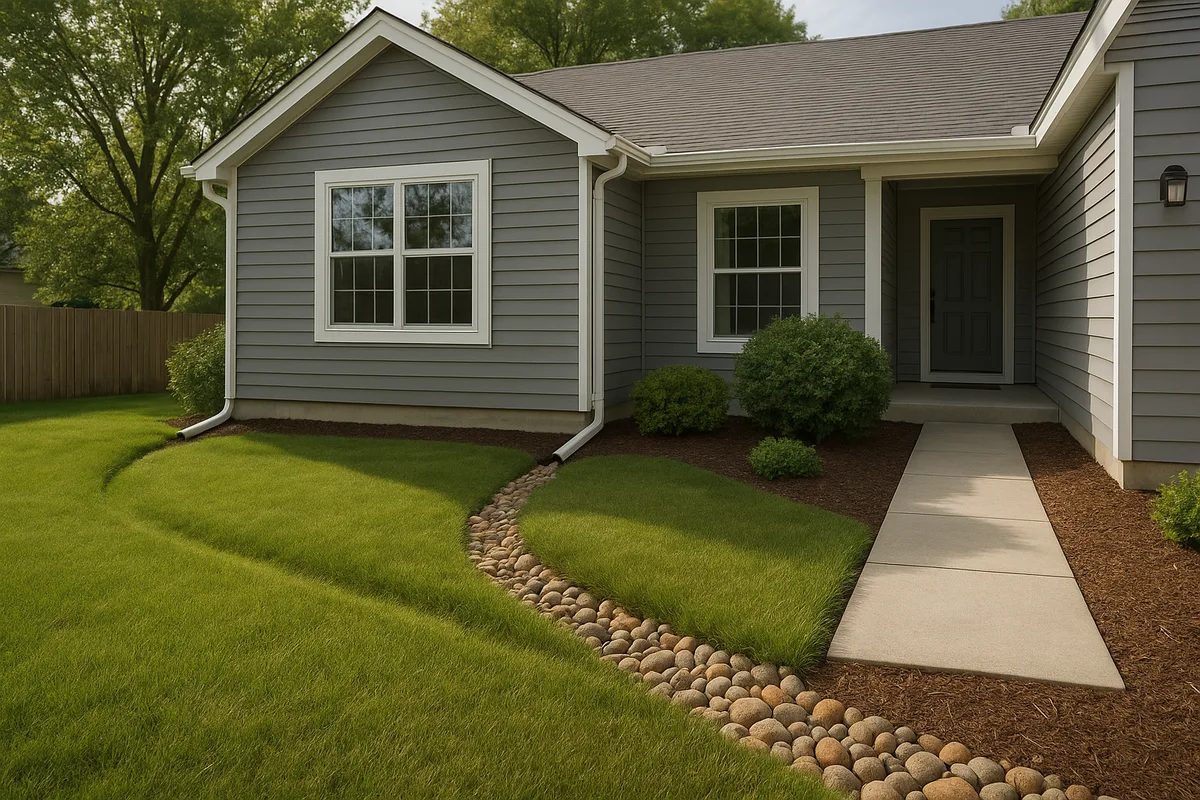
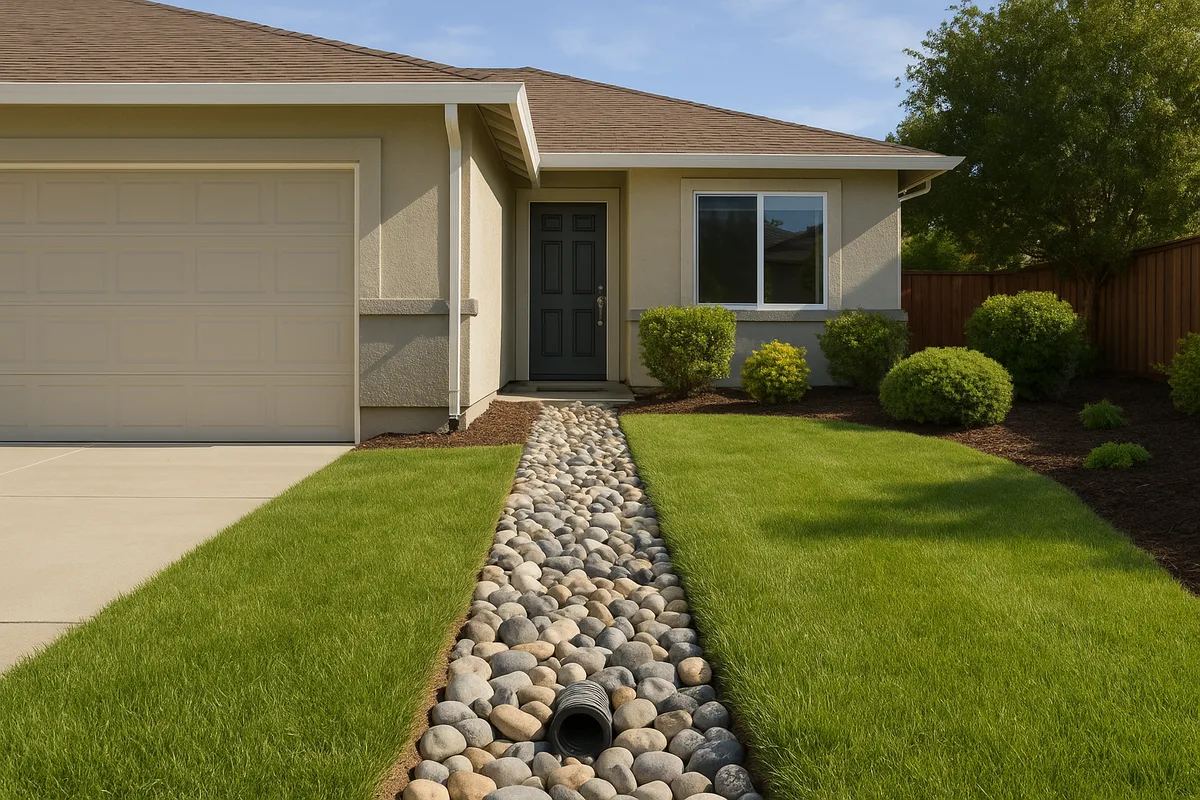
- French drains: Gravel-filled trenches with perforated pipe designed to collect subsurface water. Look for exposed gravel lines in the yard, which may indicate French drain locations. Ask the seller about their maintenance history.
- Area drains and catch basins: Round or square grated drains set into the yard surface, connected to underground pipe. Test them by running a hose into them and observing whether water drains promptly.
- Sump pumps: If the property has a sump pump, that's a significant indicator that the site has a history of water management challenges. Ask when it was installed, how often it runs, and what happens during power outages.
Evidence of Past Water Problems
The most reliable predictor of future drainage problems is evidence of past drainage problems. Look for:
- Staining on foundation walls: Mineral deposits or discoloration on the exterior foundation indicate repeated water contact.
- Efflorescence: White, chalky mineral deposits on concrete or masonry surfaces — a clear sign that water has been migrating through the material.
- Mold or mildew on exterior walls: Particularly in shaded areas or north-facing walls where moisture lingers.
- Erosion channels: Visible paths where water has carved through soil or mulch, indicating concentrated flow patterns.
- Standing water or saturated soil: If you can visit the property during or shortly after a rain event, the drainage story becomes immediately obvious. This is arguably the most valuable inspection you can perform.
Beyond the Visual: Professional Grading and Drainage Assessments
A thorough visual inspection is valuable, but it has limitations. You're seeing the property at a single point in time, under specific weather conditions, and without the ability to measure precise elevations or subsurface conditions. A professional Sacramento grading inspection buyer assessment goes significantly further.
What a Professional Assessment Includes
A comprehensive drainage and grading assessment typically involves several components that go beyond what a standard home inspection covers:
Elevation measurement and grade analysis: Using surveying equipment, a professional can measure the precise elevation at multiple points around the foundation and across the lot. This data reveals the actual slope percentages and identifies areas of negative grading that may not be visible to the naked eye — particularly subtle reverse grades of 1-2% that can still cause significant water accumulation over time.
Drainage pattern mapping: By analyzing the topography of the entire lot and its relationship to adjacent properties and the street, a professional can map the expected flow paths of surface water during a rain event. This analysis often reveals drainage issues that aren't apparent from a simple perimeter walk — for example, water from a neighbor's lot flowing onto the subject property, or a low point in the backyard that has no outlet.
Soil assessment: Understanding the specific soil type on the property helps predict how water will behave. A professional can identify the soil's hydrologic group, estimate its infiltration rate, and assess its expansion potential. This information is critical for determining what type of drainage solutions would be effective if remediation is needed.
Subsurface drainage evaluation: If the property has existing French drains, underground downspout lines, or other subsurface drainage infrastructure, a professional assessment may include camera inspection of these lines to verify they're functional and not clogged, collapsed, or disconnected.
When to Insist on a Professional Assessment
While every Sacramento home purchase benefits from drainage awareness, certain situations warrant a dedicated professional assessment:
- The property is in a known flood-prone area or near a waterway. Check the FEMA National Flood Map Service Center to determine the property's flood zone designation.
- The home inspection revealed any signs of moisture intrusion, foundation movement, or drainage deficiencies.
- The property is on a flat lot with clay soil and no visible drainage infrastructure.
- The home was built before 1980 and may have experienced significant soil settlement.
- Neighboring properties sit at higher elevations, potentially directing runoff toward the subject property.
- The property has a basement or below-grade living space.
- There's been recent landscaping or hardscaping work that may have altered the original grading.
Neighborhood and Regional Drainage Considerations in Sacramento
Individual lot grading doesn't exist in isolation. The drainage performance of a Sacramento property is influenced by the broader neighborhood and regional drainage infrastructure. Savvy buyers evaluate the bigger picture.
Subdivision Drainage Design
Sacramento subdivisions are designed with comprehensive drainage plans that route water from individual lots to the street, through the storm drain system, and ultimately to a detention basin, creek, or river. When this system functions as designed, individual lot grading is the first link in a reliable chain. When it breaks down — due to deferred maintenance, aging infrastructure, or upstream development that increased runoff volumes — even well-graded individual lots can experience problems.
Drive through the neighborhood during or after a rainstorm if possible. Look for water ponding in the street, overflowing gutters at the curb line, and evidence of flooding at low points in the road. These are signs of system-level drainage issues that could affect the property you're considering.
Sacramento's Specific Neighborhood Drainage Challenges
Certain Sacramento neighborhoods have well-documented drainage characteristics that buyers should understand:
Natomas: Much of North and South Natomas sits within a FEMA-designated flood zone protected by levees. While significant levee improvements have been completed, the area's low elevation and proximity to the Sacramento and American Rivers mean that drainage infrastructure performance is critical. Properties in Natomas should be evaluated with particular attention to lot grading, sump pump systems, and flood insurance requirements.
Land Park and Curtis Park: These established neighborhoods feature mature trees whose root systems can significantly alter original grading over decades. Root heave can create localized high points that redirect water toward foundations. The older construction in these areas may also predate modern grading standards.
Pocket and Greenhaven: Located in a low-lying area near the Sacramento River, these neighborhoods can experience elevated groundwater tables during wet winters. Lot grading is important, but subsurface water management may be equally critical.
Elk Grove and Rancho Cordova: Newer construction in these areas generally meets modern grading codes, but rapid development can change regional drainage patterns. Properties adjacent to new construction or undeveloped land should be evaluated for potential changes in runoff patterns as surrounding areas are built out.
East Sacramento and Midtown: Older urban neighborhoods with a mix of original construction and infill development. Lot sizes are often small, and the proximity of structures means that water management in tight side yards and shared drainage corridors is a common challenge.
HOA and Municipal Drainage Responsibilities
Understand who is responsible for drainage infrastructure maintenance. In many Sacramento subdivisions, the homeowners association maintains common-area drainage features like detention basins, swales, and shared storm drains. In other areas, the City of Sacramento or Sacramento County maintains the public storm drain system, while individual lot drainage is the homeowner's responsibility. This distinction matters because it determines who you'll need to work with — and who will pay — if drainage problems arise after purchase.
Negotiating Drainage Issues: Leverage, Costs, and Remediation Options
If your inspection reveals grading or drainage deficiencies, you have several options during the contingency period. Understanding the typical costs and remediation approaches strengthens your negotiating position.
Common Remediation Approaches and Cost Ranges
Here are the most common drainage remediation strategies for Sacramento residential properties, along with general cost ranges as of early 2026:
Regrading the yard: Bringing in fill dirt and reshaping the grade around the foundation. For a typical Sacramento home, expect $1,500 to $5,000 depending on the extent of regrading needed and accessibility.
French drain installation: A perforated pipe in a gravel-filled trench to intercept and redirect subsurface water. Costs typically range from $25 to $75 per linear foot, with most residential installations running $3,000 to $10,000.
Surface drainage systems (channel drains, catch basins, and solid pipe): Collecting and piping surface water to an appropriate discharge point. Budget $2,000 to $8,000 for a typical residential system.
Downspout extensions and underground drain lines: Connecting roof downspouts to underground pipes that discharge well away from the foundation. Typically $500 to $2,500 for a complete system.
Sump pump installation: For properties with persistent subsurface water issues, a sump pump system with battery backup typically costs $2,000 to $5,000 installed.
Comprehensive drainage overhaul: For properties with multiple drainage deficiencies, a complete remediation involving regrading, French drains, surface drains, and downspout management can run $10,000 to $25,000 or more.
Negotiation Strategies
When presenting drainage concerns during negotiation, documentation is your most powerful tool. A professional grading and drainage assessment with specific findings, measurements, and remediation cost estimates carries far more weight than verbal observations. Here are effective negotiation approaches:
Request seller-funded repairs before closing: This ensures the work is completed to your satisfaction before you take ownership. Require that repairs be performed by a licensed contractor and include a warranty.
Negotiate a price reduction: If the seller is unwilling to perform repairs, a price reduction equal to or exceeding the estimated remediation cost gives you the flexibility to manage the project yourself after closing.
Request a closing credit: Similar to a price reduction but structured as a credit that reduces your closing costs, freeing up cash for post-closing repairs.
Extend the inspection contingency: If drainage concerns are identified late in the process, request additional time to obtain professional assessments and contractor bids before making your final decision.
Remember that in competitive Sacramento market conditions, aggressive repair demands may cause sellers to consider other offers. Balance your drainage concerns against the overall value of the property and the severity of the issues identified. Minor grading corrections are relatively inexpensive and may not warrant significant negotiation, while major drainage deficiencies affecting the foundation are legitimate deal-breakers that justify substantial price adjustments.
Seasonal Timing and Sacramento's Rainy Season Advantage
The timing of your home purchase relative to Sacramento's rainy season significantly affects your ability to evaluate drainage performance. Understanding this dynamic can inform both your buying strategy and your inspection approach.
Buying During the Wet Season (November–March)
Purchasing during Sacramento's rainy season offers a significant advantage for drainage evaluation. You can observe the property during or after actual rain events, seeing firsthand how water moves across the lot, where it pools, and whether the grading is performing as intended. Saturated soil also reveals issues like poor compaction (soft, spongy areas in the yard), active seepage through foundation walls, and overwhelmed drainage infrastructure.
If you're under contract during the rainy season, schedule at least one visit to the property during or immediately after a significant rain event. Take photos and video of any water accumulation, drainage flow patterns, and areas of concern. This documentation is invaluable for negotiation and for planning any post-purchase remediation.
Buying During the Dry Season (May–October)
Most Sacramento home sales close during the dry season, when properties look their best — and when drainage problems are invisible. The yard is dry, the soil is firm, and there's no water to reveal grading deficiencies. This doesn't mean you can't evaluate drainage, but it requires more deliberate effort.
During dry-season inspections, focus on physical evidence of past water behavior: erosion patterns, staining, efflorescence, and the condition of existing drainage infrastructure. You can also perform a rudimentary flow test by running a garden hose at the foundation perimeter and observing which direction the water travels. While this doesn't replicate the volume of a rainstorm, it reveals the basic grade direction at specific points around the house.
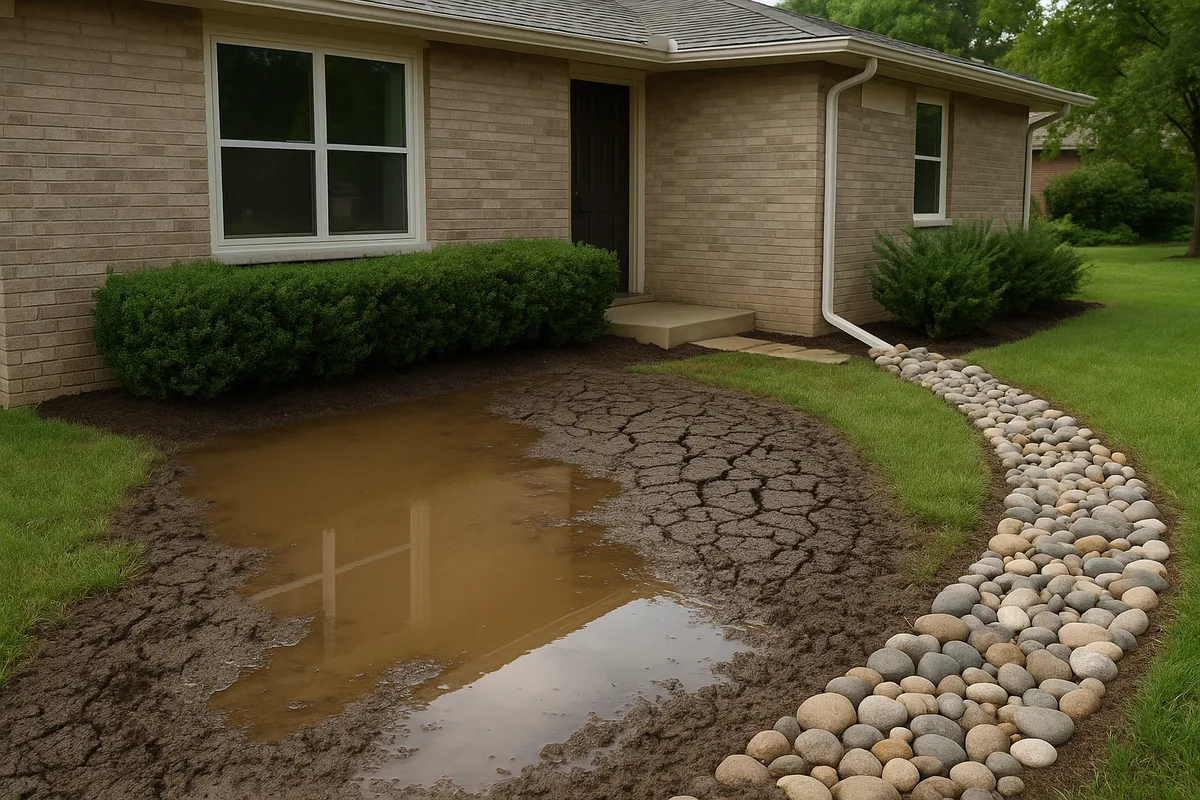
Another dry-season strategy is to examine the property's soil cracks. Sacramento's expansive clays develop visible surface cracks during the dry season, and the pattern and width of these cracks can indicate the soil's expansion potential. Wide, deep cracks (greater than ½ inch) suggest highly expansive clay that will require particularly robust drainage management to protect the foundation.
Historical Weather and Drainage Research
Regardless of when you're buying, research the property's drainage history. Ask the seller directly about any history of flooding, water intrusion, or drainage repairs. Review the seller's Transfer Disclosure Statement (TDS) and any available inspection reports from previous transactions. Check with the City of Sacramento or Sacramento County for any drainage complaints, permits for drainage work, or flood-related claims associated with the property address.
Protecting Your Investment: Post-Purchase Drainage Maintenance
Even if the property you purchase has excellent grading and drainage, maintaining that performance requires ongoing attention. Sacramento's soil and climate conditions mean that grading is not a set-it-and-forget-it feature — it requires periodic monitoring and maintenance.
Annual Drainage Maintenance Tasks
Establish a routine that includes these essential maintenance activities:
Pre-rainy-season inspection (September–October): Walk the perimeter and check that the grade still slopes away from the foundation. Look for areas where soil has settled, mulch has accumulated, or landscaping changes have altered the grade. Clean gutters and test downspout drainage lines.
Mid-season check (January–February): During the peak of the rainy season, observe the property during a rain event. Note any areas of ponding, erosion, or drainage failure. Address urgent issues immediately to prevent damage during the remainder of the wet season.
Post-season assessment (April–May): After the rains end, evaluate any damage or changes that occurred during the wet season. Plan and schedule any corrective grading or drainage work for the dry season, when soil conditions are optimal for earthwork.
Long-Term Grading Considerations
Over the lifespan of a Sacramento home, several factors can gradually degrade grading performance:
- Tree root growth: Mature trees can lift soil, crack hardscape, and alter drainage patterns. Monitor trees within 20 feet of the foundation for root-related grade changes.
- Soil settlement: Clay soils settle over time, particularly in areas that were backfilled during construction. The foundation perimeter is especially susceptible to settlement as the backfill around the footing compresses.
- Landscaping modifications: Every time you add a planter bed, install a patio, build a retaining wall, or change the yard layout, you potentially affect drainage patterns. Always consider water flow implications before modifying your landscape.
- Neighbor activities: Construction, grading, or landscaping on adjacent properties can redirect water onto your lot. Maintain awareness of neighboring property changes and address any resulting drainage impacts promptly.
Take Control of Your Sacramento Home Purchase with Drainage Intelligence
The ground beneath a Sacramento home tells a story — and if you know how to read it, that story can save you tens of thousands of dollars in foundation repairs, water damage remediation, and ongoing headaches. Lot grading Sacramento real estate evaluation isn't a luxury or an afterthought; it's a fundamental component of due diligence that protects your largest investment.
Whether you're a first-time buyer evaluating a starter home in Arden-Arcade or purchasing your forever home in Folsom, the principles are the same: verify that the ground slopes away from the foundation, understand the soil you're building your life on, assess the drainage infrastructure, and document everything during your contingency period. The cost of a professional drainage assessment is a fraction of the cost of remediating problems you didn't catch before closing.
At Low Point Labs, we specialize in topographic drainage intelligence that gives homebuyers, inspectors, and real estate professionals the detailed, data-driven insights they need to make confident decisions. Our assessments go beyond visual observation to deliver precise elevation data, drainage pattern analysis, and actionable recommendations tailored to Sacramento's unique soil and climate conditions. Before you close on your next Sacramento property, explore how Low Point Labs' drainage assessment services can give you the clarity and confidence you deserve.
See Drainage Intelligence in Practice
Talk with our team or request an invitation to the platform.
Frequently Asked Questions
Negative grading occurs when the ground slopes toward your foundation instead of away from it. In Sacramento, where heavy winter rains can deliver several inches of precipitation in a short period, negative grading channels water directly against your foundation walls, leading to moisture intrusion, soil expansion, and potential structural damage.
The industry standard and IRC building code requirement is a minimum of 6 inches of fall over the first 10 feet from the foundation, which equals approximately a 5% grade. In Sacramento's clay-heavy soils, many drainage professionals recommend exceeding this minimum to account for soil settlement over time.
Yes. Documented grading and drainage deficiencies are legitimate negotiation points. Buyers can request seller-funded repairs, a price reduction reflecting remediation costs, or a credit at closing. Professional grading assessments with cost estimates strengthen your negotiating position significantly.
Standard home inspections typically include a visual assessment of grading and drainage, but they are limited in scope. Inspectors may note obvious negative grading or standing water, but they generally do not perform elevation measurements, soil analysis, or subsurface drainage evaluations. A specialized drainage assessment provides far more detailed and actionable information.
Sacramento's prevalent clay soils — particularly those in Hydrologic Soil Groups C and D — cause the most drainage problems. These soils have very low infiltration rates (0.05 to 0.15 inches per hour), meaning water pools on the surface rather than draining through the ground. They also expand when wet and shrink when dry, creating cyclical stress on foundations.
Yes. Under California's Transfer Disclosure Statement (TDS) requirements, sellers must disclose known material defects, including drainage issues, flooding history, and grading problems. However, sellers can only disclose what they know, which is why independent buyer inspections and drainage assessments are essential.
Related Articles
French Drains in Sacramento: Costs, Permits, and What to Expect
Why Clay Soils in Sacramento Cause Drainage Headaches (and How to Fix Them)