High Water Table in Sacramento: What It Means for Your Future Home
Sacramento sits at the confluence of two major rivers in the heart of California's Central Valley — a geographic reality that shapes everything from the region's agricultural legacy to the way water behaves beneath every residential lot in the metro area. For anyone considering a home purchase in the Sacramento region, understanding the high water table in Sacramento is not optional — it's essential due diligence that can save you tens of thousands of dollars in unexpected repairs and protect your most significant investment.
Whether you're a first-time buyer eyeing a bungalow in Land Park, a growing family looking at newer construction in Natomas, or an investor evaluating rental properties in Elk Grove, the depth of groundwater beneath a property influences foundation integrity, landscaping viability, insurance costs, and long-term livability. This guide breaks down exactly what Sacramento's water table means for your future home, how to assess risk before you buy, and what drainage strategies keep properties safe for decades.
Understanding Sacramento's Water Table: Geography and Hydrology
Sacramento's position at the junction of the Sacramento and American Rivers isn't just scenic — it's hydrologically significant. The city was built on a natural floodplain, and much of the surrounding region consists of alluvial deposits: layers of sand, silt, clay, and gravel deposited over millennia by river action. These deposits create a complex underground environment where water moves through permeable sand and gravel layers while being trapped above or between dense clay lenses.
The water table — the upper boundary of the zone where soil and rock are fully saturated with groundwater — fluctuates seasonally in Sacramento. During the wet season (typically November through March), heavy rainfall and snowmelt runoff from the Sierra Nevada recharge the aquifer, pushing the water table upward. In some neighborhoods, the water table can rise to within 3 to 8 feet of the surface during particularly wet winters. During dry summer months, the water table may drop to 15 to 30 feet or deeper, depending on location and local pumping activity.
This seasonal fluctuation is a critical concept for Sacramento groundwater home buyers to understand. A property that appears bone-dry during an August showing may have a crawl space full of standing water by February. The gap between summer conditions and winter reality catches many buyers off guard, especially those relocating from regions with deeper, more stable water tables.
Sacramento's groundwater system is also influenced by the extensive levee and canal infrastructure that defines the region. The network of levees along the Sacramento and American Rivers, combined with agricultural drainage canals and urban stormwater systems, creates a managed hydrological environment. When levees contain river water during high-flow events, hydrostatic pressure can force groundwater laterally into adjacent neighborhoods — a phenomenon known as underseepage that affects properties even when surface flooding doesn't occur.
Why Sacramento's High Water Table Matters for Home Buyers
The practical implications of a high water table extend far beyond the abstract concept of underground water levels. For home buyers, groundwater depth directly affects several critical aspects of property ownership that influence both livability and financial outcomes.
Foundation Performance and Longevity
Sacramento homes are built on three primary foundation types: slab-on-grade, raised (pier-and-beam or post-and-pier), and, rarely, full basements. Each interacts differently with high groundwater. Slab-on-grade foundations — common in post-1970s construction — can experience hydrostatic pressure from below when the water table rises to meet the slab. This pressure can force moisture through microscopic pores in the concrete, leading to damp floors, efflorescence (white mineral deposits), and damage to flooring materials. Over time, sustained moisture exposure can degrade the concrete itself and corrode embedded rebar.
Raised foundations, which are prevalent in Sacramento's older neighborhoods like Curtis Park, East Sacramento, and Land Park, create a crawl space between the ground and the living floor. When the water table rises into this crawl space, standing water can persist for weeks or months. This standing water accelerates wood rot in floor joists and subfloor sheathing, creates ideal conditions for mold and mildew growth, and attracts pests including termites and mosquitoes. The cost to remediate a moisture-damaged crawl space can range from $5,000 to $25,000 or more, depending on the extent of structural damage.
Soil Behavior and Structural Risk
Sacramento's soils add another layer of complexity. Much of the region is underlain by expansive clay soils — particularly the Capay, Clear Lake, and Sacramento series clays identified by the USDA Natural Resources Conservation Service. These soils swell when wet and shrink when dry, creating a cycle of movement that can crack foundations, displace retaining walls, and damage hardscaping. The NRCS Web Soil Survey allows buyers to look up the specific soil types on any Sacramento parcel, providing data on shrink-swell potential, drainage class, and depth to the water table.
When a high water table keeps expansive clay soils consistently saturated, the swelling phase becomes prolonged and more severe. Conversely, during drought years, the same soils can shrink dramatically as the water table drops, causing foundation settlement. This wet-dry cycle is particularly damaging to older foundations that lack modern reinforcement and moisture barriers.
Insurance and Financial Implications
A high water table doesn't automatically place a property in a FEMA-designated flood zone, but there's significant overlap between areas with shallow groundwater and areas with elevated flood risk. Buyers should be aware that standard homeowner's insurance does not cover groundwater intrusion or flooding — these require separate flood insurance policies, typically through the National Flood Insurance Program. In Sacramento, flood insurance premiums can range from a few hundred dollars to several thousand dollars annually, depending on the property's flood zone designation and elevation relative to the base flood elevation.
Beyond insurance, Sacramento water table real estate considerations include the ongoing cost of operating drainage systems. A sump pump running continuously during wet months adds to electricity costs, and the pumps themselves require replacement every 7 to 10 years. French drain systems, waterproof membranes, and vapor barriers all represent maintenance expenses that buyers should factor into their total cost of ownership.
Neighborhood-by-Neighborhood Water Table Conditions
Sacramento's water table depth varies significantly across the metro area, and understanding the general patterns can help buyers focus their search and calibrate their expectations.
River-Adjacent Neighborhoods
Neighborhoods directly adjacent to the Sacramento and American Rivers tend to have the shallowest water tables. The Pocket-Greenhaven area, situated in a bend of the Sacramento River, is essentially surrounded by water on three sides. Groundwater levels here can be remarkably shallow — sometimes within 5 feet of the surface during wet periods. Land Park, located between the Sacramento River and the former route of Sutterville Road, also experiences elevated groundwater, particularly in the blocks closest to the river and the William Land Park area where natural drainage patterns concentrate subsurface flow.
Old Sacramento and the downtown core sit on some of the most historically flood-prone land in the city. The original city was famously raised by an entire story in the 1860s and 1870s to combat chronic flooding, and the underground remnants of the original street level — now a tourist attraction — serve as a tangible reminder of the area's relationship with water. Modern infrastructure has dramatically improved conditions, but the underlying hydrology hasn't changed.
Natomas
The Natomas Basin presents a unique case study in Sacramento water table dynamics. This area, located north of downtown between the Sacramento and American Rivers, was historically a floodplain and agricultural basin protected by levees. Rapid residential development since the 1990s has placed tens of thousands of homes in an area where the water table can be quite shallow and where the levee system is the primary line of defense against catastrophic flooding.
Natomas homes are predominantly newer construction on slab-on-grade foundations, and many were built with awareness of the high water table. However, the area's flat topography and clay-heavy soils mean that surface drainage is often sluggish, compounding the challenges posed by shallow groundwater. Buyers in Natomas should pay particular attention to lot grading, the condition of area drainage infrastructure, and the property's elevation relative to surrounding parcels.
East Sacramento and Arden-Arcade
East Sacramento, including the Fabulous Forties and other established neighborhoods, generally sits at slightly higher elevation than river-adjacent areas, but the proximity to the American River still influences groundwater levels. Properties closer to the American River Parkway tend to have shallower water tables, while those further east toward Arden-Arcade benefit from slightly better natural drainage and coarser soil profiles that allow water to percolate more efficiently.
South Sacramento, Elk Grove, and Rancho Cordova
South Sacramento and the suburban communities of Elk Grove and Rancho Cordova present varied conditions. Elk Grove, developed largely on former agricultural land, has areas of high groundwater — particularly in the older, western portions of the city closer to the Sacramento River's historic floodplain. Rancho Cordova, situated further east on higher ground along the American River corridor, generally has deeper water tables, though localized conditions can vary based on proximity to Folsom South Canal and other water features.
How to Assess Water Table Risk Before Buying
Informed buyers don't rely on a single data point — they build a comprehensive picture of a property's relationship with water using multiple sources and professional assessments.
Research Public Data Sources
Before you even schedule a showing, you can gather significant intelligence about a Sacramento property's water table conditions. The NRCS Web Soil Survey provides detailed soil maps and data for any address, including estimated depth to the water table, soil drainage class, and flooding frequency. This free tool is invaluable for screening properties and identifying potential red flags.
The California Department of Water Resources maintains well completion reports (well logs) that document the depth at which drillers encountered water when installing wells. While these records reflect conditions at the time of drilling and may not capture current conditions, they provide historical context about groundwater depth in a specific area. FEMA's flood maps, accessible through the FEMA National Flood Map Service Center, show whether a property is in a Special Flood Hazard Area, which correlates — though imperfectly — with high water table conditions.
Conduct a Thorough Home Inspection
A standard home inspection will identify some moisture-related issues, but Sacramento buyers dealing with high water table concerns should consider specialized inspections. Look for inspectors who specifically evaluate drainage conditions, including the grading around the foundation, the condition of any existing French drains or sump pump systems, and evidence of past moisture intrusion in crawl spaces and garages.
Key inspection findings that suggest high water table impacts include: mineral staining or efflorescence on foundation walls, musty odors in crawl spaces or lower levels, active or residual standing water in crawl spaces, rust stains on sump pump components indicating frequent cycling, and cracks in foundation walls or slabs that show evidence of hydrostatic pressure. Any of these findings warrant further investigation and should factor into your purchase negotiations.
Commission a Topographic Drainage Assessment
Beyond traditional inspections, a topographic drainage assessment evaluates how water moves across and around a property based on elevation data, slope analysis, and surrounding land use. This type of assessment identifies low points where water naturally collects, evaluates whether the lot is graded to direct water away from the foundation, and determines whether neighboring properties contribute runoff to the subject lot.
For Sacramento properties, where flat terrain and clay soils make surface drainage sluggish, a drainage assessment can reveal problems that aren't visible during a dry-season visit. Understanding the topographic relationship between a property and its surroundings is especially important in neighborhoods where development has altered natural drainage patterns.
Basement Flooding in Sacramento: Causes, Prevention, and Solutions
While true basements are uncommon in Sacramento, the term basement flooding Sacramento captures a broader set of concerns that includes crawl space flooding, slab moisture intrusion, and below-grade garage flooding — all of which are driven by the same high water table dynamics.
Hydrostatic Pressure and Groundwater Intrusion
When the water table rises above the bottom of a foundation — whether it's a slab, a crawl space floor, or the rare basement — hydrostatic pressure pushes water upward and inward through any available pathway. Concrete is not waterproof; it's porous, and water under pressure will find its way through cracks, joints, and even intact concrete over time. In Sacramento, this phenomenon is most acute during and immediately after heavy rainfall events, when the water table can rise rapidly due to the combination of direct infiltration and rising river levels.
The signs of hydrostatic pressure damage are often subtle at first: slightly damp carpet edges, a musty smell that comes and goes with the seasons, or minor efflorescence on garage walls. Left unaddressed, these minor symptoms can escalate into significant structural and health issues, including widespread mold contamination, wood rot, and foundation deterioration.
Sump Pump Systems for Sacramento Homes
A sump pump Sacramento homes rely on is often the primary line of defense against groundwater intrusion. A sump pump system consists of a sump pit (a hole dug below the foundation level), a pump unit, a discharge pipe, and typically a check valve to prevent backflow. When groundwater rises into the sump pit, the pump activates automatically and discharges the water away from the foundation.
For Sacramento properties, sump pump selection and installation require careful consideration of several factors:
- Pump capacity: The pump must be sized to handle the volume of water expected during peak wet-season conditions. Undersized pumps will run continuously and fail prematurely, while oversized pumps will cycle too frequently, also reducing lifespan.
- Backup power: Sacramento experiences occasional power outages during storms — exactly when sump pumps are needed most. Battery backup systems or water-powered backup pumps provide critical redundancy.
- Discharge location: Sacramento municipal code and good practice require sump pump discharge to be directed away from the foundation and not onto neighboring properties. The discharge point should be at least 10 feet from the foundation, and ideally connected to the property's stormwater drainage system or directed to a permeable area where water can infiltrate without causing problems.
- Maintenance schedule: Sump pumps should be tested quarterly and inspected annually. The float switch, check valve, and discharge line are the most common failure points. Replacing a sump pump proactively every 7 to 10 years is far less expensive than dealing with the consequences of a failure during a storm.
Interior and Exterior Waterproofing
Beyond sump pumps, Sacramento homeowners in high water table areas may need comprehensive waterproofing systems. Interior waterproofing typically involves installing a perimeter drain system (sometimes called a "French drain" though it differs from exterior French drains) along the inside base of the foundation walls, which channels water to the sump pit. A vapor barrier on crawl space floors and walls prevents moisture from evaporating into the living space.
Exterior waterproofing — applying waterproof membranes or coatings to the outside of foundation walls — is more effective but also more expensive and disruptive, as it requires excavating around the foundation. For existing Sacramento homes, exterior waterproofing is typically reserved for severe cases where interior solutions are insufficient.
Grading, Drainage, and Landscape Strategies for High Water Table Properties
Surface water management is just as important as groundwater management, and in Sacramento's flat terrain, proper grading and drainage design can make the difference between a dry home and a chronically wet one.
Foundation Grading Standards
The International Residential Code (IRC) and California Building Code specify that the ground surface should slope away from the foundation at a minimum grade of 6 inches of fall within the first 10 feet (approximately a 5% slope). In practice, many Sacramento properties — particularly older ones — fail to meet this standard due to soil settlement, landscaping changes, and the natural tendency of expansive clay soils to shift over time.
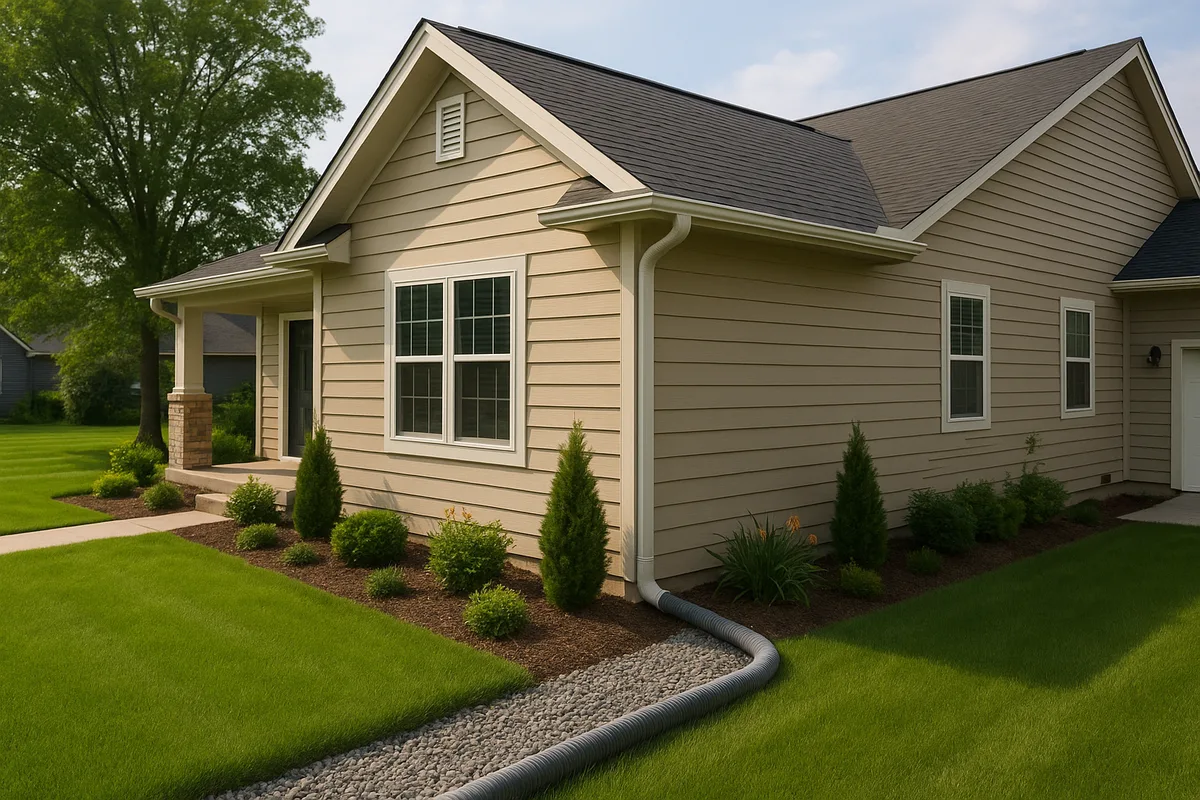
Re-grading around a Sacramento home is one of the most cost-effective drainage improvements available. By ensuring that surface water flows away from the foundation rather than toward it, you reduce the volume of water that infiltrates the soil adjacent to the foundation and contributes to hydrostatic pressure. For properties with limited space between the foundation and property lines or hardscaping, swales (shallow, graded channels) can redirect water to appropriate drainage points.
French Drains and Subsurface Drainage
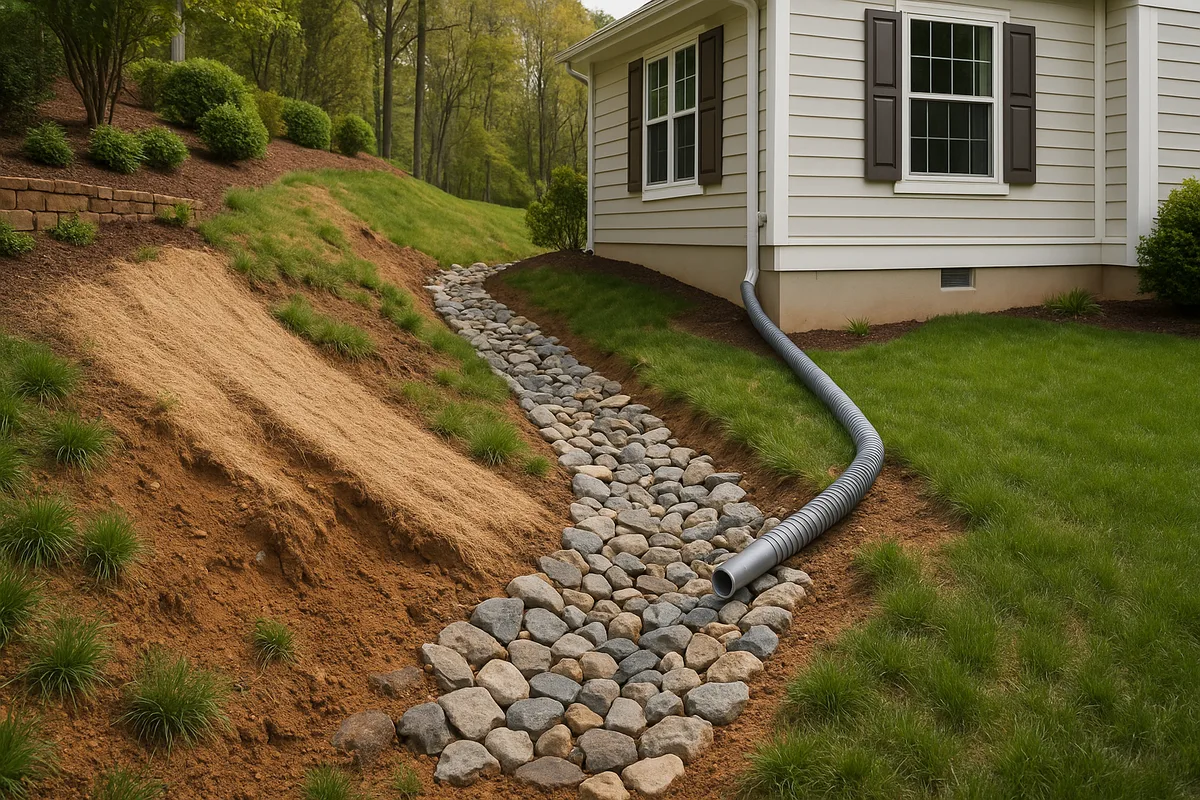
Exterior French drains — trenches filled with gravel and containing perforated pipe — intercept subsurface water before it reaches the foundation. In Sacramento's high water table environment, French drains are most effective when installed at or slightly below the foundation footing level and connected to a sump pump or gravity outlet.
The design of a French drain system for Sacramento conditions should account for the region's clay soils, which can clog drain fabric and reduce system effectiveness over time. Using clean, washed gravel (typically 3/4-inch to 1-1/2-inch diameter), high-quality geotextile filter fabric, and rigid or semi-rigid perforated pipe (rather than flexible corrugated pipe) improves longevity. A properly designed and installed French drain system in Sacramento should function effectively for 15 to 25 years before requiring rehabilitation.
Landscape Design for Wet Conditions
Sacramento homeowners with high water table properties can turn a challenge into an aesthetic asset by selecting landscape plants adapted to wet conditions. Native and climate-appropriate species such as California sedge (Carex praegracilis), blue-eyed grass (Sisyrinchium bellum), and valley oak (Quercus lobata) tolerate seasonal saturation and provide habitat value.
Rain gardens — shallow, planted depressions designed to capture and infiltrate stormwater — are increasingly popular in Sacramento and can complement a property's drainage system by managing roof and hardscape runoff. When designed for Sacramento's clay soils, rain gardens typically include an amended soil mix and an underdrain connected to the stormwater system, since native clay soils alone may not infiltrate water quickly enough to prevent prolonged ponding.
Avoid planting large trees within 10 to 15 feet of the foundation, as root systems can exploit cracks in foundations and drainage pipes. Conversely, removing mature trees near a foundation in high water table areas can cause the water table to rise locally (since the trees were consuming significant groundwater through transpiration), potentially worsening moisture problems. Any major tree removal near a foundation in Sacramento should be evaluated in the context of its potential impact on local soil moisture.
What to Negotiate When Buying a Sacramento Home with Water Table Concerns
Armed with knowledge about Sacramento's high water table, buyers are in a strong position to negotiate intelligently. The goal isn't necessarily to walk away from every property with moisture concerns — that would eliminate a significant portion of Sacramento's housing stock — but to ensure that the purchase price and terms reflect the true cost of ownership.
Price Adjustments and Repair Credits
If a home inspection reveals active moisture intrusion, inadequate drainage, or a non-functional sump pump system, buyers should request repair credits or price reductions that reflect the cost of professional remediation. A comprehensive crawl space moisture remediation — including vapor barrier installation, ventilation improvements, and sump pump installation — can cost $8,000 to $20,000 in the Sacramento market. French drain installation typically runs $3,000 to $10,000 depending on the linear footage and site conditions. Re-grading around a foundation may cost $1,500 to $5,000.
These are legitimate, quantifiable costs that should factor into negotiations. Sellers in high water table areas who have already invested in drainage improvements should be prepared to document those improvements and demonstrate their effectiveness — and buyers should view such documentation as a positive sign of responsible ownership.
Seller Disclosures and Due Diligence
California law requires sellers to disclose known material facts about a property, including past flooding, drainage problems, and foundation issues. The Transfer Disclosure Statement (TDS) and Seller Property Questionnaire (SPQ) specifically ask about flooding, drainage, and moisture issues. Buyers should review these disclosures carefully and follow up on any affirmative answers with detailed questions and independent verification.
However, disclosures are only as good as the seller's knowledge and honesty. A seller who has never entered their crawl space may genuinely not know about standing water issues. This is why independent inspection and assessment are irreplaceable — they provide objective data that doesn't depend on anyone's memory or motivation.
Contingency Planning
Buyers purchasing in known high water table areas should consider including specific contingencies in their offer related to drainage and moisture. A contingency that allows the buyer to commission a drainage assessment and negotiate based on findings provides a structured framework for addressing water table concerns without derailing the transaction.
For properties in FEMA-designated flood zones, buyers should obtain flood insurance quotes during the contingency period, as premiums can vary significantly and may affect the overall affordability of the property. The transition to FEMA's Risk Rating 2.0 methodology has changed how flood insurance premiums are calculated, and some Sacramento properties have seen significant premium increases under the new system.
Long-Term Ownership Strategies for High Water Table Properties
Owning a home in a high water table area isn't a crisis — it's a condition that requires ongoing awareness and periodic maintenance. Sacramento homeowners who understand their property's relationship with groundwater and maintain their drainage systems proactively rarely experience the catastrophic failures that generate horror stories.
Seasonal Monitoring and Maintenance
Establish a seasonal routine that includes inspecting your crawl space or slab perimeter in early fall (before the wet season), testing your sump pump, clearing gutters and downspouts, and verifying that surface grading still directs water away from the foundation. After major storms, check for standing water, new cracks, or changes in drainage patterns. Document conditions with photos and dates — this record becomes invaluable for tracking trends and supporting insurance claims if needed.
System Upgrades and Modernization
Drainage technology has improved significantly over the past two decades. If your Sacramento home has an older sump pump system, consider upgrading to a modern unit with a battery backup, Wi-Fi-enabled monitoring, and a high-water alarm. Smart sump pump systems can send alerts to your phone when the pump activates, when the water level is unusually high, or when the pump fails — giving you time to respond before water damage occurs.
Similarly, modern vapor barriers for crawl spaces are far superior to the thin polyethylene sheets used in older installations. A 20-mil reinforced vapor barrier, properly sealed at seams and edges, dramatically reduces moisture transmission and creates a healthier crawl space environment. Combined with a dehumidifier sized for the space, a modern encapsulation system can transform a damp, problematic crawl space into a dry, stable environment.
Building Resilience Through Data
The most effective long-term strategy for managing a high water table property is understanding exactly how water behaves on your specific lot. Generic neighborhood-level data is a starting point, but every property is unique. Factors like micro-topography, soil composition, neighboring construction, and the condition of municipal drainage infrastructure all influence how a specific property interacts with groundwater.
This is where topographic drainage intelligence becomes invaluable. By analyzing high-resolution elevation data, soil characteristics, and drainage patterns specific to your property, you can identify vulnerabilities before they become problems, prioritize improvements for maximum impact, and make informed decisions about landscaping, hardscaping, and structural modifications.
At Low Point Labs, we specialize in exactly this type of analysis. Our drainage assessments combine topographic data, soil intelligence, and hydrological modeling to give Sacramento homeowners and buyers a clear, actionable picture of how water moves on and around their property. Whether you're evaluating a potential purchase, planning drainage improvements, or simply want to understand your property's relationship with Sacramento's high water table, our assessments provide the data-driven foundation for smart decisions. Explore our drainage assessment services to protect your investment and gain confidence in your Sacramento property's long-term performance.
See Drainage Intelligence in Practice
Talk with our team or request an invitation to the platform.
Frequently Asked Questions
The water table in Sacramento typically ranges from 5 to 30 feet below the surface, depending on the specific neighborhood, season, and proximity to rivers. In low-lying areas near the American and Sacramento Rivers, the water table can be as shallow as 3 to 8 feet during wet winter months, which is shallow enough to affect foundations and crawl spaces.
Many Sacramento homes benefit from sump pumps, especially those in areas with high water tables, crawl spaces, or below-grade living areas. Homes near the American River, in the Pocket-Greenhaven area, or in Natomas are particularly likely to need sump pump systems to manage seasonal groundwater intrusion.
Basements are rare in Sacramento due to the high water table and expansive clay soils. While it's technically possible, the cost of waterproofing, structural reinforcement, and ongoing pumping makes basements impractical and expensive for most Sacramento residential construction. Most homes use slab-on-grade or raised foundations instead.
A high water table can affect Sacramento home values if it leads to visible moisture problems, foundation damage, or recurring flooding. However, many Sacramento neighborhoods with high water tables maintain strong property values when homes have proper drainage systems, sump pumps, and well-maintained grading. Buyers should focus on how well a property manages water rather than water table depth alone.
You can check Sacramento's water table using the NRCS Web Soil Survey for soil and drainage data, reviewing well logs from the California Department of Water Resources, and hiring a professional home inspector who evaluates drainage conditions. A topographic drainage assessment can also reveal how surface water interacts with groundwater on a specific property.
Neighborhoods closest to the Sacramento and American Rivers tend to have the shallowest water tables, including parts of Natomas, the Pocket-Greenhaven area, Land Park, and portions of downtown Sacramento. Areas along the Sacramento River's natural floodplain and former agricultural land that has been developed are also prone to higher groundwater levels.
Related Articles

What Sacramento Home Buyers Need to Know About Drainage Before Making an Offer
Soggy Lawn That Never Dries: 9 Common Causes and How to Fix Them