How to Build a High-Margin Service Offering for Drainage Contractors
Every drainage and grading contractor eventually confronts the same uncomfortable reality: labor-intensive, commodity-priced work eats into profits no matter how efficient the crew becomes. The path to sustainable growth isn't simply doing more jobs — it's building high-margin services that command premium pricing because they deliver premium value. In the drainage, grading, and stormwater management space, the opportunity to create profitable service lines has never been greater, thanks to advances in topographic intelligence, remote sensing, and data-driven diagnostics.
This guide is written specifically for contractors, inspectors, and service providers operating in the drainage and water management ecosystem. Whether you're a solo operator looking to escape the race to the bottom or a multi-crew company ready to add a premium tier, the principles here will help you design a service offering that protects your margins while genuinely solving harder problems for your clients.
Why Contractor Margins Are Under Pressure — and What to Do About It
The drainage and grading industry has a structural margin problem. Most contractors compete on the same basic services — French drain installation, downspout extensions, regrading — and homeowners shop primarily on price. When the service is perceived as interchangeable, the lowest bid wins. This dynamic compresses contractor margins to levels that make one bad job or one slow season genuinely threatening to the business.
Several forces are intensifying this pressure in 2026. Material costs for aggregates, pipe, and geotextile remain elevated. Labor markets for skilled excavation and grading crews are tight in most metro areas. And the proliferation of online lead-generation platforms has trained homeowners to collect three to five bids for every project, further commoditizing the service.
The contractors who escape this trap share a common strategy: they shift from selling labor and materials to selling expertise, diagnostics, and outcomes. Instead of quoting "install 60 linear feet of French drain," they sell "eliminate the water intrusion threatening your foundation — here's the data proving why." That reframing is the foundation of every high-margin service in this industry.
The key insight is that margin isn't just about charging more. It's about restructuring what you sell so that the value you deliver is difficult to comparison-shop, rooted in proprietary knowledge, and directly tied to an outcome the client cares deeply about — protecting their home.
The Anatomy of a High-Margin Service in Drainage and Grading
Not all services are created equal when it comes to profitability. Understanding what makes a service offering high-margin helps you design new ones intentionally rather than stumbling into them. High-margin services in the drainage space share four structural characteristics:
1. Diagnostic Depth
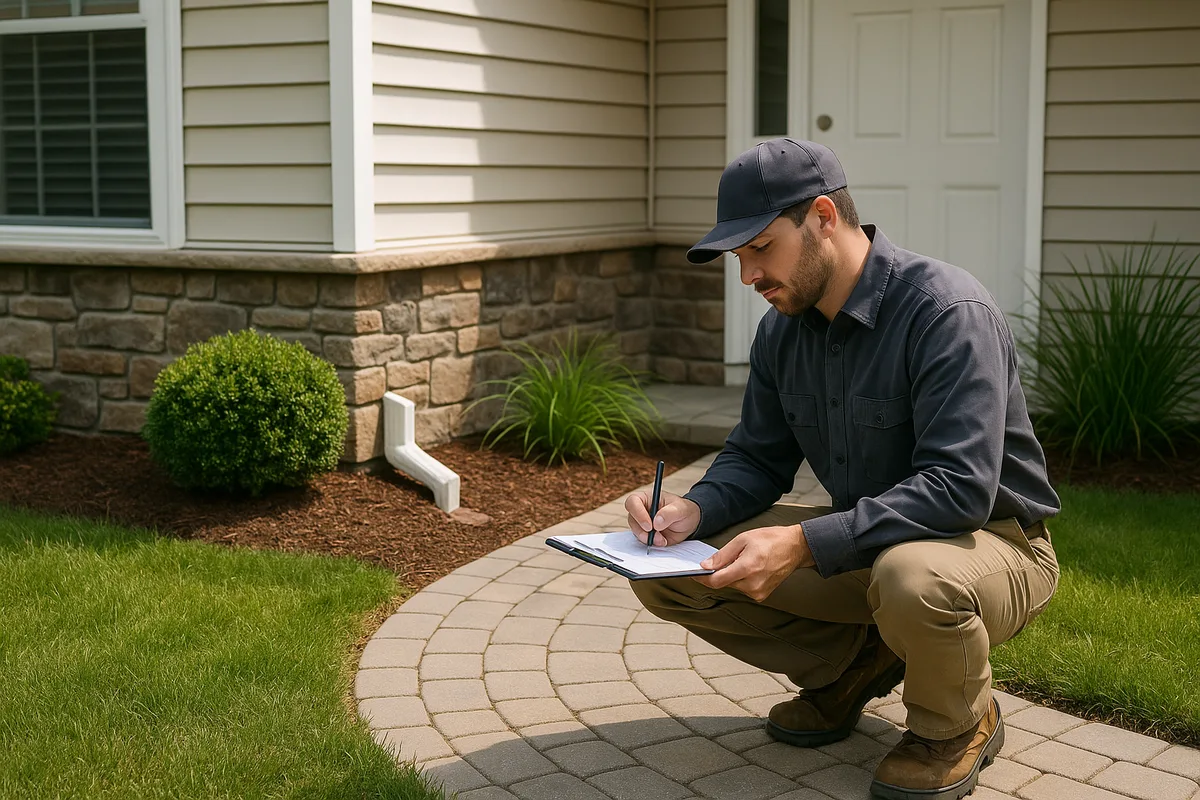
The most profitable service lines begin with a thorough diagnostic phase — a detailed assessment that identifies root causes rather than symptoms. A homeowner with a wet basement can get a dozen quotes to install interior drainage. The contractor who first performs a topographic drainage assessment, identifies the actual low point directing water toward the foundation, and presents a data-backed remediation plan is selling something fundamentally different. That diagnostic work has enormous value to the client and relatively low direct cost to the contractor, which is the textbook definition of margin.
2. Intellectual Property and Proprietary Data
When your service relies on tools, datasets, or analytical methods that competitors don't use, you create a natural moat around your pricing. Contractors who incorporate LiDAR-derived elevation models, soil survey data from the NRCS Web Soil Survey, or hydrologic modeling into their assessments are offering something that can't be replicated by a competitor with a shovel and a laser level. This proprietary layer justifies premium pricing because the client literally cannot get the same product elsewhere.
3. Risk Reduction for the Client
Homeowners will pay significantly more for certainty. A service that reduces the risk of foundation damage, flood insurance claims, or failed landscaping investments commands a premium because the cost of getting it wrong is enormous. Premium services in drainage are fundamentally risk-reduction products — they help homeowners avoid five- and six-figure problems.
4. Low Marginal Cost of Delivery
The best high-margin services have a cost structure where the first delivery is expensive (building the system, acquiring the data, developing the methodology) but each subsequent delivery is relatively inexpensive. A topographic drainage assessment template, once developed and refined, can be applied to hundreds of properties with decreasing per-unit cost. This is where software, data platforms, and standardized reporting become margin multipliers.
Designing Your Premium Service Tiers
The most effective way to capture margin is to create a tiered service structure that gives clients clear options while steering them toward your most profitable offerings. Here's a framework that works well for drainage and grading contractors:
Tier 1: Standard Installation (Baseline)
This is the commodity work — French drains, grading corrections, downspout routing. You should still offer it, but recognize it for what it is: a competitive, price-sensitive market where margins are thin. This tier exists to keep crews busy and serve as an entry point for client relationships.
Tier 2: Diagnostic-Led Solutions (Margin Builder)
This tier adds a formal assessment phase before any installation work begins. The assessment includes topographic analysis, identification of drainage pathways and low points, soil type evaluation, and a written report with prioritized recommendations. The assessment itself is a standalone deliverable — clients pay for the report whether or not they hire you for the installation. This is where contractor margins start to improve dramatically.
Pricing for a comprehensive residential drainage assessment typically ranges from $500 to $2,500 depending on property size and complexity. The direct cost — primarily time, software, and data acquisition — is a fraction of that. When the assessment leads to installation work, the diagnostic phase has already pre-sold the solution, reducing sales friction and virtually eliminating price objections.
Tier 3: Comprehensive Drainage Intelligence (Premium)
This is the top tier — a full property drainage intelligence package that includes high-resolution topographic modeling, watershed analysis, stormwater runoff calculations, regulatory compliance review, and a long-term drainage management plan. This tier targets higher-value properties, real estate transactions, and clients dealing with complex or recurring drainage problems.
At this level, you're not competing with other drainage contractors. You're competing with civil engineers and environmental consultants — and you can often deliver faster, more accessibly, and at a lower price point while still maintaining exceptional margins. Profitable service lines at this tier can command $3,000 to $10,000+ per engagement.
Leveraging Topographic Intelligence as Your Competitive Moat
The single most powerful differentiator available to drainage contractors in 2026 is topographic intelligence — the ability to analyze elevation data, model water flow, and identify drainage vulnerabilities before ever setting foot on a property. This capability transforms you from a tradesperson into a consultant, and consultants command premium rates.
Topographic data has become remarkably accessible. The USGS 3D Elevation Program (3DEP) provides high-resolution elevation data covering the entire United States, much of it at 1-meter resolution or better. This data, combined with the right analytical tools, allows you to generate detailed drainage maps showing exactly where water flows across a property, where it pools, and where it threatens structures.
Here's how to operationalize topographic intelligence into a high-margin service:
Step 1: Data Acquisition. For any given property, pull the relevant elevation data from public LiDAR datasets. Supplement with on-site survey points if higher precision is needed in critical areas (near foundations, retaining walls, etc.).
Step 2: Flow Modeling. Use GIS software or specialized drainage analysis tools to model surface water flow across the property. Identify contributing watersheds — often, a property's drainage problem originates from water flowing in from neighboring parcels, something a visual inspection alone would miss.
Step 3: Vulnerability Assessment. Cross-reference the flow model with structure locations, soil types, existing drainage infrastructure, and local precipitation data. This reveals not just where water goes today, but where it's likely to cause problems under heavy rainfall events.
Step 4: Solution Design. With the diagnostic data in hand, design interventions that address root causes rather than symptoms. This might mean redirecting an entire swale rather than installing a French drain that treats the symptom. Root-cause solutions are more effective, more defensible, and more profitable.
Step 5: Reporting. Package everything into a professional, branded report that the homeowner can understand and act on. This report is your deliverable, your sales tool, and your liability shield all in one. It demonstrates the value of your expertise in a tangible format that no competitor is providing.
Contractors who build this workflow into their business consistently report that it transforms their client conversations. Instead of defending a bid, they're educating a homeowner. Instead of competing on price, they're the only one who truly understands the problem. That positioning is the engine of premium services pricing.
Pricing Strategy: How to Set and Defend Premium Rates
Building a high-margin service is only half the equation. You also need a pricing strategy that captures the value you're creating. Many contractors undercharge for diagnostic and consulting work because they anchor their pricing to hourly labor rates rather than to the value of the outcome.
Value-Based Pricing Principles
The core principle of value-based pricing is simple: price according to the value the client receives, not the cost you incur. A drainage assessment that takes you three hours but identifies a grading deficiency that would have caused $40,000 in foundation damage is worth far more than three hours of your time. Price it accordingly.
Here are specific pricing strategies for profitable service lines in drainage:
Anchor to the cost of inaction. When presenting your assessment findings, quantify the risk. "The current grading directs approximately 2,400 gallons of stormwater toward your foundation per 1-inch rain event. Foundation repair in this area averages $12,000–$28,000." Your $1,500 assessment fee becomes trivial in that context.
Bundle diagnostics with implementation. Offer the assessment as a standalone product, but provide a credit toward installation work if the client proceeds. This makes the assessment feel "free" while ensuring you've already been compensated for the diagnostic work if they don't proceed.
Create recurring revenue. Annual drainage inspections, post-storm assessments, and seasonal maintenance plans create predictable revenue streams with minimal marginal cost. A $300–$500 annual inspection takes 60–90 minutes and reinforces the client relationship.
Charge for reporting, not just labor. The written report is a product. It has value independent of any physical work. Contractors who provide detailed, data-rich reports can charge for the intellectual content, not just the time spent on site.
Overcoming Price Objections
The most common objection to premium pricing is, "The other contractor will do it for less." The correct response isn't to lower your price — it's to clarify what you're selling. You're not selling the same thing at a higher price. You're selling a different thing entirely: a data-driven, diagnostically rigorous solution with documented evidence of the problem and a targeted remediation plan.
When a homeowner says, "I got a quote for $3,000 to install a French drain," your response should be, "That may be the right solution, and it may not. Our assessment will determine whether a French drain addresses the actual source of your water problem or just treats a symptom. Forty percent of the drainage installations we evaluate were designed without understanding the property's topography, and many of them underperform or fail as a result." That reframing — backed by data — is how you defend premium pricing without being adversarial.
Building Operational Efficiency into High-Margin Delivery
Margin isn't just about what you charge — it's also about what it costs you to deliver. The most profitable drainage service businesses obsess over delivery efficiency, finding ways to reduce the time and cost of each engagement without reducing quality.
Standardize Your Workflow
Create a repeatable process for every service tier. Document each step, build templates for reports, and develop checklists for field assessments. Standardization reduces errors, speeds delivery, and allows you to delegate work to less experienced (and less expensive) team members.
A well-designed drainage assessment workflow might look like this:
- Pre-visit data pull (30 minutes): Elevation data, soil survey, flood zone check, aerial imagery review
- On-site assessment (60–120 minutes): Visual inspection, grade measurements, photo documentation, downspout mapping
- Analysis and modeling (60–90 minutes): Flow analysis, vulnerability identification, solution design
- Report generation (30–60 minutes): Populate template with findings, recommendations, and supporting data
- Client presentation (30–45 minutes): Walk through findings, answer questions, present options
Total time per engagement: 4–6 hours. At a $1,500 fee, that's $250–$375 per hour of effective rate — dramatically higher than installation work, where effective rates often fall below $75 per hour after materials, equipment, and overhead.
Invest in Technology That Scales
Every dollar spent on tools that reduce per-engagement delivery time is a direct margin improvement. Key technology investments for high-margin drainage services include:
- GIS and terrain analysis software for rapid flow modeling
- Drone or RTK GPS equipment for site-specific elevation data when public datasets lack sufficient resolution
- Report automation tools that generate professional deliverables from standardized data inputs
- CRM and scheduling software that reduces administrative overhead
- Cloud-based data platforms that allow you to store, retrieve, and compare property data across your entire client base
The upfront investment in these tools is typically recovered within the first 10–20 premium assessments. After that, they're pure margin enhancers.
Train and Certify Your Team
If you plan to scale beyond solo delivery, you need team members who can execute your diagnostic workflow consistently. This requires training — both in the technical skills (reading topographic data, understanding hydrology basics, operating survey equipment) and in the client-facing skills (presenting findings, handling objections, upselling implementation work).
Consider creating an internal certification program for your assessment technicians. This serves two purposes: it ensures quality and consistency, and it becomes a marketing asset. "All Low Point Labs assessments are conducted by certified drainage intelligence analysts" carries weight with discerning homeowners.
Marketing Premium Services: Attracting the Right Clients
High-margin services require a different marketing approach than commodity work. You're not trying to reach every homeowner with a wet yard — you're trying to reach the subset of homeowners who value expertise, distrust cheap solutions, and are willing to invest in doing it right.
Content Marketing and Education
The most effective marketing strategy for premium services is education. When you teach homeowners about the complexity of drainage problems — the role of topography, soil types, watershed dynamics, and grading standards — you simultaneously demonstrate your expertise and disqualify competitors who lack that knowledge.
Publish detailed content about common drainage mistakes, the limitations of DIY solutions, and the hidden costs of improperly designed drainage systems. Case studies are particularly powerful: "How a $1,200 assessment saved a homeowner $35,000 in foundation repairs" tells a compelling story that self-selects for clients who value thoroughness over cheapness.
Strategic Partnerships
Build referral relationships with professionals who serve the same clients but don't compete with you:
- Home inspectors frequently identify drainage concerns but lack the tools and expertise to diagnose them thoroughly. Position your assessment service as the natural next step after an inspection flag.
- Real estate agents need drainage issues resolved quickly and definitively during transactions. Your data-driven assessment provides the documentation that satisfies buyers, sellers, and lenders.
- Foundation repair companies often encounter drainage-related foundation damage. A referral partnership where you handle the drainage diagnosis and they handle the structural repair creates value for both parties.
- Landscape architects designing outdoor spaces need drainage data to inform their plans. Your topographic intelligence becomes an input to their design process.
These partnerships generate leads that are pre-qualified for premium services. A referral from a trusted home inspector carries far more weight than a cold lead from an online ad, and the client arrives already understanding why a thorough assessment matters.
Positioning and Messaging
Your marketing language should consistently reinforce the diagnostic, data-driven nature of your service offering. Avoid language that sounds like commodity contracting ("free estimates," "lowest prices," "fast service"). Instead, emphasize precision, thoroughness, and outcomes:
- "Data-driven drainage diagnostics for homeowners who want it done right"
- "We find the source of your water problem — not just the symptom"
- "Topographic intelligence that protects your home and your investment"
- "The drainage assessment your property deserves"
This messaging naturally filters out price-shoppers and attracts clients who are willing to pay for quality — exactly the clients you want for your high-margin services.
Measuring and Optimizing Your Margin Performance
Once your premium service tiers are operational, you need to track margin performance rigorously. Many contractors have a general sense that their assessment work is more profitable than their installation work, but without precise data, they can't optimize effectively.
Key Metrics to Track
Monitor these metrics for each service tier on a monthly and quarterly basis:
- Gross margin per engagement: Revenue minus direct costs (labor hours, data costs, materials, subcontractors). Target 65–80% gross margin for diagnostic and assessment services, compared to 35–50% for installation work.
- Effective hourly rate: Total revenue divided by total hours invested (including sales, delivery, and follow-up). This is the truest measure of how well your time is being compensated.
- Conversion rate from assessment to implementation: What percentage of assessment clients hire you for the remediation work? A healthy rate is 50–70%. Below 40% suggests your assessment isn't effectively selling the solution; above 80% might mean you're underpricing the assessment.
- Client acquisition cost by tier: How much does it cost (in marketing spend and sales time) to acquire a client for each tier? Premium clients often cost more to acquire individually but generate far more revenue per acquisition dollar.
- Repeat and referral rate: High-margin services should generate disproportionate referrals because the client experience is exceptional. Track what percentage of your premium clients refer others or return for additional services.
Continuous Improvement
Use your margin data to make informed decisions about where to invest your growth energy. If your Tier 2 assessments are generating 72% gross margins but your Tier 3 comprehensive packages are at 81%, that tells you where to focus your marketing and business development efforts. If a particular type of property or problem consistently yields higher margins, specialize in it.
Review your report templates and workflows quarterly. Look for steps that consume time without adding client-perceived value, and eliminate or automate them. Conversely, identify moments in the client experience that generate the most positive feedback and double down on them.
Scaling Without Sacrificing Margin
The final challenge is growth. Many contractors find that their margins erode as they scale because they add overhead (office staff, vehicles, insurance) faster than they add revenue. Scaling a high-margin service business requires discipline.
Scale the Diagnostic Layer First
Before hiring more installation crews, maximize the capacity of your diagnostic and assessment services. These are your highest-margin offerings and they're the easiest to scale because they're less labor-intensive and more knowledge-intensive. One well-trained analyst with the right tools can complete 8–12 assessments per week, generating $8,000–$30,000 in revenue with minimal direct costs.
Subcontract the Commodity Work
Consider subcontracting installation work to trusted crews while keeping the diagnostic and project management layers in-house. This allows you to capture margin on the full project without carrying the overhead of installation crews during slow periods. You maintain the client relationship and the intellectual property; the subcontractor provides the labor.
License Your Methodology
As your diagnostic methodology matures, consider licensing it to contractors in non-competing markets. This creates a revenue stream with near-zero marginal cost and extends your brand's reach. A licensing model might include access to your report templates, training in your assessment workflow, use of your brand's assessment certification, and ongoing data platform access.
Build Recurring Revenue
The most valuable businesses have predictable, recurring revenue. Annual drainage maintenance plans, seasonal inspection programs, and post-construction monitoring contracts all create recurring revenue streams that smooth out the seasonality inherent in drainage work. A base of 200 clients on $400 annual inspection plans generates $80,000 in predictable revenue — enough to cover significant fixed costs and provide stability during slow months.
Building high-margin services in the drainage and grading space isn't about finding a gimmick or inflating prices artificially. It's about genuinely solving harder problems with better tools and deeper expertise. The contractors who invest in topographic intelligence, diagnostic rigor, and premium client experiences are building businesses that are more profitable, more resilient, and more rewarding to operate.
At Low Point Labs, we're building the topographic intelligence platform that powers this transformation. Our drainage assessment tools give contractors and inspectors the data-driven edge they need to deliver premium services that command premium pricing. If you're ready to move beyond commodity contracting and build a service offering that reflects the true value of your expertise, explore how Low Point Labs can become the foundation of your most profitable service line.
See Drainage Intelligence in Practice
Talk with our team or request an invitation to the platform.
Frequently Asked Questions
High-margin services for drainage contractors are diagnostic and consulting offerings — such as topographic drainage assessments, stormwater analysis, and comprehensive property drainage reports — that generate 65–80% gross margins compared to 35–50% for standard installation work. They rely on expertise and data rather than labor and materials.
Residential drainage assessments typically range from $500 to $2,500 depending on property size and complexity. Comprehensive drainage intelligence packages for high-value properties or complex situations can command $3,000 to $10,000+. Price based on the value of the outcome, not the hours invested.
Anchor your pricing to the cost of inaction — quantify the risk of foundation damage, landscape failure, or recurring flooding that your assessment helps prevent. Present data showing that a significant percentage of drainage installations fail because they weren't designed with proper topographic analysis, making your diagnostic service a cost-saving investment.
Key tools include GIS or terrain analysis software for flow modeling, access to LiDAR elevation data from sources like USGS 3DEP, report generation templates, and optionally a drone or RTK GPS for site-specific surveys. The upfront investment is typically recovered within 10–20 premium assessments.
In most jurisdictions, you can perform drainage assessments, topographic analysis, and remediation recommendations without an engineering license, as long as you don't stamp engineered drawings or certify structural designs. Check your state's licensing requirements, and consider partnering with a licensed engineer for projects that require stamped plans.
Build referral relationships with home inspectors, real estate agents, and foundation repair companies who encounter drainage issues regularly. Invest in educational content marketing that demonstrates your expertise. These strategies attract clients who value thoroughness over cheapness and are pre-qualified for premium pricing.
Related Articles
How to Turn a Basic Yard Maintenance Customer into a High-Ticket Drainage Client

Tired of Losing Bids to Cheaper Competitors? The Data-Driven Pitch for Drainage Contractors