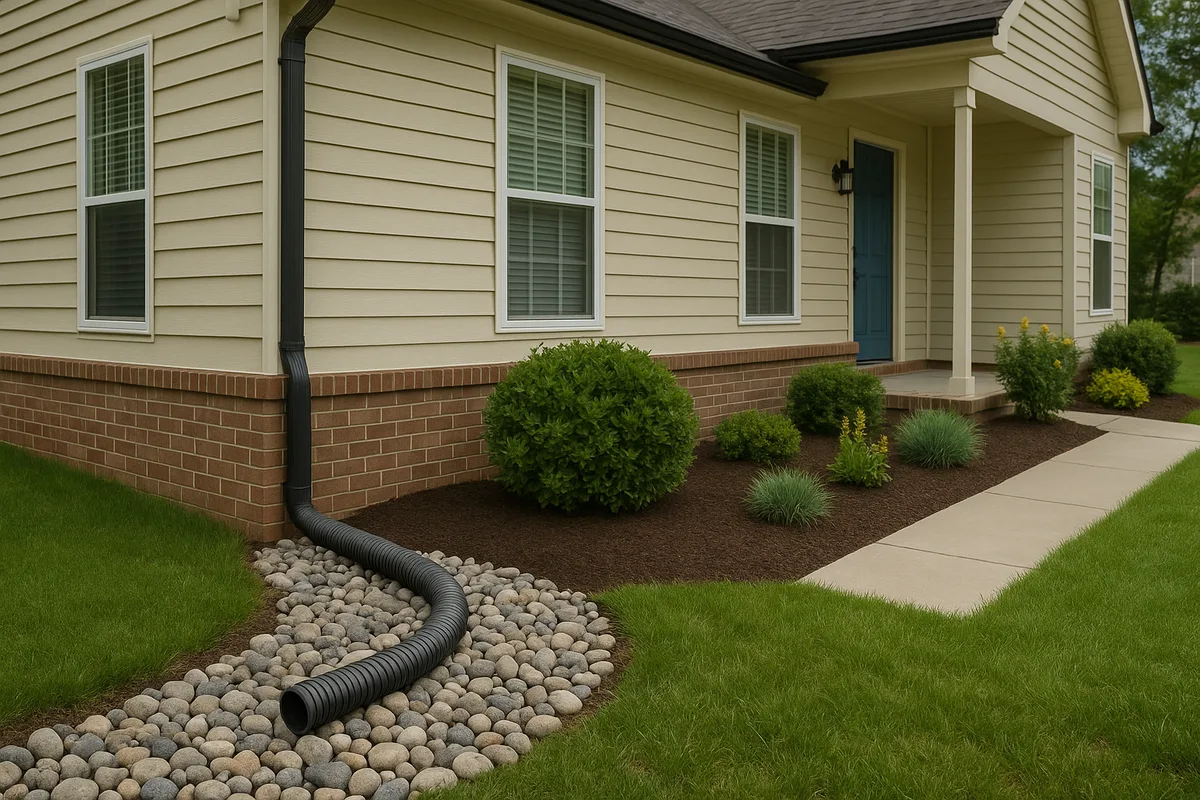
How to Become the Premium Contractor in Your Market
Every market has contractors who compete on price — and then there's the premium contractor who commands top dollar, attracts the best clients, and builds a reputation that generates referrals on autopilot. The difference between these two positions isn't luck, tenure, or even raw skill. It's strategy.
If you're a contractor working in drainage, grading, stormwater management, or any related trade, you've probably felt the squeeze of price competition. Homeowners get three bids and pick the cheapest one. You slash your margins to win work. You end up exhausted, underpaid, and wondering why you ever started this business. But there's another path — one where clients seek you out, where your proposals are accepted without haggling, and where your calendar stays full at rates that actually build wealth. This article lays out the complete playbook for becoming the premium contractor in your market.
Understanding What "Premium" Actually Means in Contracting
Before diving into tactics, it's critical to understand what premium contractor positioning really is — and what it isn't. Being premium doesn't mean being the most expensive for the sake of it. It means delivering a level of value, expertise, and client experience that justifies higher pricing. Premium is a perception backed by substance.
Think about the brands you associate with quality in any industry. They share common traits: consistency, expertise, transparency, and an obsessive focus on the client's outcome rather than the transaction. A premium contractor operates the same way. Every touchpoint — from the first phone call to the final walkthrough — communicates competence and care. The client never has to wonder what's happening, chase you for updates, or worry about the quality of work.
In the drainage and grading world specifically, premium positioning is remarkably achievable because the bar is often low. Many contractors in this space still operate with handshake estimates, vague scopes of work, and minimal documentation. If you show up with a professional proposal, topographic data, engineered solutions, and clear communication, you've already separated yourself from 80% of the competition. That gap is your opportunity.
Premium also means selectivity. Not every project is the right fit, and not every client values quality over cost. The premium contractor understands their ideal client profile and has the discipline to decline work that doesn't align. This might feel counterintuitive — especially when you're building your business — but saying no to the wrong projects creates space for the right ones.
Building a Premium Brand That Communicates Authority
Contractor branding goes far beyond a logo and truck wrap, though those matter too. Your brand is the sum total of every impression you make — online, in person, and through your work. For a high-end contractor, every element must communicate professionalism and expertise.
Visual Identity and First Impressions
Start with the basics: a clean, professional logo; a website that loads fast, looks modern, and showcases your best work; uniforms or branded apparel for your crew; and well-maintained, organized vehicles and equipment. These seem superficial, but they're the first signals a homeowner receives about your operation. A client considering a $15,000 drainage project will absolutely judge your competence based on whether your website looks like it was built in 2008 or 2025.
Your website deserves special attention. It should feature detailed case studies with before-and-after photos, clear descriptions of your services, and content that demonstrates your expertise. Include a page about your process — how you assess properties, what data you use, how you design solutions, and what clients can expect at each stage. This transparency builds trust before you ever meet the client.
Content and Thought Leadership
The most effective contractor branding strategy in 2026 is content. When you publish educational articles, videos, or social media posts that help homeowners understand drainage problems, grading standards, or stormwater management, you accomplish two things simultaneously: you attract potential clients through search engines and social algorithms, and you position yourself as the authority in your field.
Consider creating content around topics your clients actually search for: "Why is water pooling in my yard?" "How much slope do I need away from my foundation?" "What causes basement flooding?" Each piece of content is an opportunity to demonstrate your knowledge and attract homeowners who value expertise. The contractor who educates wins the trust — and the contract.
This is also where data-driven tools become a massive differentiator. If you can reference topographic data, soil surveys from the NRCS Web Soil Survey, or local precipitation data in your content and proposals, you're operating at a level most competitors can't match. You're not just a contractor — you're a consultant who happens to also do the work.
Reviews, Testimonials, and Social Proof
Premium positioning requires proof. Aggressively collect reviews on Google, and don't be shy about asking satisfied clients for detailed testimonials. The best testimonials aren't generic ("Great work, would recommend!") — they tell a story: what the problem was, what the client was worried about, how you solved it, and what the result has been months or years later.
Video testimonials are even more powerful. A 60-second clip of a homeowner standing in their dry basement or newly graded yard, explaining how you solved their problem, is worth more than any ad you could run. These testimonials become assets you use on your website, in proposals, and across social media.
Developing a Premium Pricing Strategy That Sticks
Pricing is where most contractors get stuck. They know they should charge more, but they're afraid of losing bids. Here's the truth: a premium pricing strategy doesn't work in isolation — it only works when it's supported by everything else discussed in this article. You can't just raise your prices; you have to raise your value proposition first.
Pricing Based on Value, Not Hours
The commodity contractor prices by the hour or by the linear foot. The premium contractor prices by the outcome. When a homeowner has water intrusion threatening their foundation, they're not buying "40 hours of labor and 200 feet of drain tile." They're buying a dry basement, a protected foundation, and peace of mind. Price accordingly.
This means your proposals should lead with the problem and the solution, not with a line-item breakdown of materials and labor. Of course, transparency matters — and you should be prepared to explain your pricing — but the framing should always be outcome-first. "This solution will redirect surface water away from your foundation, eliminate the standing water in your side yard, and protect your home's structural integrity for decades" is a fundamentally different conversation than "Here's what the pipe costs per foot."
The Three-Tier Proposal Strategy
One of the most effective premium pricing techniques is offering three tiers of service: Good, Better, and Best. The "Good" option solves the immediate problem. The "Better" option solves it more thoroughly or with higher-quality materials. The "Best" option is a comprehensive solution that addresses root causes, includes preventive measures, and comes with extended warranties or maintenance plans.
Psychologically, this works because most clients will choose the middle option — which should be your target price point. The top tier makes the middle feel reasonable by comparison, and the bottom tier exists so no one feels forced into a price they can't afford. You're not pressuring anyone; you're giving them informed choices.
Communicating Price Confidence
How you present your price matters as much as the number itself. Premium contractors present their pricing with confidence and without apology. They don't say, "I know this might seem high, but..." They say, "Based on our assessment, here's what it will take to solve this properly." If a client pushes back on price, the premium contractor doesn't flinch — they explain the value, reference their track record, and let the client decide.
Walk away power is essential. If you're desperate for every job, clients can sense it, and your pricing authority evaporates. Building a pipeline of leads (through the branding and content strategies above) gives you the confidence to hold your price because you know another qualified lead is coming.
Differentiating Through Data and Technology
In the drainage and grading industry, technology adoption is one of the fastest paths to premium contractor status. Most competitors are still eyeballing slopes with a level and sketching solutions on the back of a napkin. If you bring data-driven precision to your assessments and proposals, you instantly leap ahead.
Topographic and Drainage Intelligence
Understanding the topography of a property — where water flows, where it pools, where the low points are — is the foundation of any drainage solution. Tools that analyze elevation data and identify drainage patterns give you insights that are impossible to get from a visual inspection alone. This is exactly the kind of intelligence that Low Point Labs provides: precise, property-specific drainage analysis that reveals what's happening beneath the surface and across the terrain.
When you walk into a client meeting with a topographic drainage map showing exactly where water is flowing and why it's accumulating at their foundation, you've changed the entire dynamic. You're not guessing. You're not relying on anecdotal experience. You're presenting data — and data builds trust.
The USGS 3D Elevation Program (3DEP) has made high-resolution elevation data widely available across the United States, and platforms that translate this raw data into actionable property intelligence are becoming essential tools for forward-thinking contractors. Incorporating this data into your workflow isn't just a nice-to-have — it's a competitive moat.
Soil Analysis and Hydrologic Context
Beyond topography, understanding soil composition and hydrologic soil groups helps you design solutions that actually work long-term. A French drain installed in Group D clay soil behaves very differently than one in Group A sandy soil. When you reference specific soil data in your proposals — explaining why you're recommending a particular approach based on the soil conditions present on the property — you demonstrate a level of expertise that justifies premium pricing.
Documentation and Deliverables
Premium contractors don't just do great work — they document it. Before-and-after photos, as-built drawings, drainage maps, warranty documents, and maintenance guides should all be part of your deliverable package. When the project is complete, the client should receive a professional binder or digital package that documents everything that was done, why it was done, and how to maintain it.
This documentation serves multiple purposes: it reinforces the client's confidence in their investment, it becomes a referral tool (clients show it to neighbors), and it protects you legally by creating a clear record of the scope and quality of work performed.
Delivering a Client Experience That Justifies the Premium
The client experience is where premium positioning is either validated or destroyed. You can have the best brand, the smartest proposals, and the most advanced technology — but if the actual experience of working with you is frustrating, disorganized, or stressful, none of it matters.
Communication as a Competitive Advantage
The number one complaint homeowners have about contractors isn't quality of work — it's communication. They can't get callbacks. They don't know when the crew is coming. They're surprised by changes or delays. The premium contractor eliminates all of this friction.
Establish a communication protocol and stick to it. Send a confirmation the day before work begins. Provide daily updates during multi-day projects — even if it's just a quick text with a photo. Alert clients immediately if there's a change in schedule or scope, and explain why. After the project, follow up at 30 days and again at 6 months to check on the work. These touches cost you almost nothing but create an experience that clients rave about.
Consider using project management software or a simple CRM to automate some of these touchpoints. A scheduled email that goes out 30 days post-completion asking "How is everything holding up?" takes zero effort once it's set up but makes a lasting impression.
Jobsite Professionalism
How your crew conducts themselves on-site is a direct reflection of your brand. Premium means the crew shows up on time, introduces themselves, respects the property (shoe covers, drop cloths, careful equipment placement), and leaves the site cleaner than they found it at the end of each day. These aren't just nice gestures — they're brand-building actions that the homeowner notices and remembers.
Train your team on client interaction. They should be able to answer basic questions about what they're doing and why. They should never be on their phones excessively, playing loud music, or using inappropriate language on a client's property. This sounds obvious, but the reality is that many contractors fail at these basics, and every failure is your opportunity to shine.
Warranty and Aftercare
A premium contractor stands behind their work with meaningful warranties. Not a vague "we'll come back if there's a problem" — a written warranty with clear terms, duration, and process for making a claim. For drainage work, consider offering a 5-year or even 10-year warranty on workmanship, with an option for an annual maintenance plan.
Maintenance plans are a brilliant business strategy for premium contractors. They create recurring revenue, keep you connected to past clients (who become referral sources), and ensure your work continues to perform well — which protects your reputation. A simple annual drainage inspection and cleanout service can generate meaningful income while reinforcing your premium positioning.
Specialization: The Fastest Path to Premium Positioning
Generalists compete on price. Specialists command premiums. If you're trying to be everything to everyone — drainage, landscaping, hardscaping, fencing, decks — you're diluting your brand and making it impossible to be perceived as the expert in any single area.
The most successful premium contractors choose a niche and dominate it. In the drainage and grading world, this might mean specializing in:
- Foundation drainage and waterproofing for existing homes
- New construction grading and drainage for builders
- Stormwater management and compliance for commercial or municipal projects
- Luxury landscape drainage for high-end residential properties
- Drainage inspection and assessment for real estate transactions
When you specialize, everything becomes easier. Your marketing is more targeted and effective. Your expertise deepens faster. Your proposals are more credible. Your referral network becomes more specific and productive. And your pricing power increases because there are fewer direct competitors.
This doesn't mean you can never do work outside your specialty — it means your brand, marketing, and positioning are focused. If a landscaping project comes along and you want to take it, fine. But your website, your content, and your reputation should all point to your area of expertise.
Building a Referral Network Around Your Specialty
Specialization also makes it easier to build strategic referral partnerships. If you specialize in drainage, your natural referral partners include foundation repair companies, home inspectors, real estate agents, landscape architects, and general contractors. Each of these professionals encounters clients who need drainage expertise, and if you're the recognized specialist in your market, you become their go-to recommendation.
Invest time in building these relationships. Meet with potential referral partners, explain what you do and how you can help their clients, and offer to reciprocate referrals. Provide them with your marketing materials — or better yet, co-create content that serves both audiences. A joint webinar with a home inspector on "Drainage Red Flags Every Homebuyer Should Know" positions both of you as experts and generates leads for both businesses.
Scaling Premium Without Sacrificing Quality
One of the biggest challenges for a premium contractor is growth. How do you take on more projects without diluting the quality and experience that justify your pricing? This requires intentional systems and strategic hiring.
Systematize Everything
The premium experience you deliver should not depend on you personally being on every jobsite. It should be embedded in your systems. Create standard operating procedures (SOPs) for every phase of your process: lead intake, site assessment, proposal creation, project scheduling, crew deployment, quality checkpoints, client communication, and post-project follow-up.
When your systems are strong, you can delegate with confidence. New team members can deliver the same premium experience because the process guides them. This is the difference between a premium contractor and a skilled tradesperson — the contractor has built a business that delivers consistent excellence, not just personal expertise.
Hiring for Culture and Training for Skill
When you're ready to grow your team, hire people who align with your values and your commitment to client experience. Technical skills can be taught; attitude, work ethic, and professionalism are much harder to instill. Look for team members who take pride in their work, communicate well, and genuinely care about doing things right.
Invest in training — both technical and client-facing. Your crew should understand not just how to install a drainage system but why each component matters. When a crew member can explain to a curious homeowner why the pipe is being laid at a specific grade or why a particular aggregate is being used, it reinforces the premium perception at every level.
Strategic Growth Over Rapid Expansion
Premium contractors grow deliberately. Rather than chasing volume, focus on increasing your average project value and your profit margins. It's better to complete 50 projects at $15,000 each with 35% margins than 150 projects at $5,000 each with 15% margins. The math is clear: fewer projects, higher value, better margins, less stress, and more time to deliver excellence on each one.
Consider raising your prices annually — even modestly. If you're delivering genuine value and your reputation is growing, the market will support it. Clients who valued you at $12,000 last year will value you at $13,000 this year, especially if your skills, technology, and service have improved.
Measuring and Protecting Your Premium Reputation
Becoming the premium contractor in your market is an achievement. Staying there requires vigilance. Your reputation is your most valuable asset, and it must be actively managed and protected.
Track Key Metrics
Monitor the metrics that matter for a premium business:
- Close rate: What percentage of proposals are accepted? A healthy premium contractor closes 40-60% of proposals. If you're closing 90%, you're probably priced too low. If you're closing 15%, something in your positioning or proposal process needs work.
- Average project value: This should trend upward over time as your reputation grows and you attract higher-value projects.
- Client satisfaction scores: Use a simple post-project survey to measure satisfaction. Track it over time and address any downward trends immediately.
- Referral rate: What percentage of your new clients come from referrals? For a premium contractor, this should be 40% or higher. Referrals are the ultimate validation of your positioning.
- Review velocity: Are you consistently generating new reviews? A steady stream of recent, positive reviews is more powerful than a large number of old ones.
Handle Problems Like a Premium Brand
Even the best contractors encounter problems — weather delays, unexpected site conditions, material issues, or the occasional mistake. How you handle these problems defines your brand more than anything else. The premium contractor communicates proactively, takes responsibility, and makes things right without being asked.
If a drainage system you installed isn't performing as expected, don't wait for the client to call and complain. Reach out, schedule an inspection, diagnose the issue, and fix it — at your expense if it's your responsibility. This kind of response turns a potential negative review into a glowing testimonial about your integrity and commitment.
Continuously Improve Your Craft
The premium contractor never stops learning. Stay current on new materials, techniques, codes, and technology. Attend industry conferences and training. Invest in certifications that validate your expertise. Follow developments in stormwater management regulations, building codes, and best practices. The moment you stop growing is the moment a hungry competitor starts closing the gap.
Pay attention to what's happening in adjacent industries too. Advances in GIS technology, remote sensing, and property intelligence platforms like Low Point Labs are creating new opportunities for contractors who are willing to adopt them. The contractors who leverage these tools today will be the undisputed premium players tomorrow.
Your Path to Premium Starts Now
Becoming the premium contractor in your market isn't an overnight transformation — it's a deliberate, strategic evolution. It starts with a decision: you refuse to compete on price, and you commit to competing on value, expertise, and experience instead. From there, every investment you make in your brand, your technology, your systems, and your team compounds over time.
The drainage and grading industry is ripe for premium positioning. Homeowners are increasingly aware of the importance of proper drainage for foundation protection, and they're willing to pay for contractors who can demonstrate real expertise. The question is whether you'll be the contractor they find — or whether they'll find someone else who's already made the leap.
At Low Point Labs, we provide the topographic drainage intelligence that helps premium contractors stand out. Our property-specific drainage assessments give you the data you need to diagnose problems accurately, design solutions confidently, and present proposals that clients trust. If you're ready to elevate your business with data-driven drainage analysis, explore how Low Point Labs can become your competitive advantage.
See Drainage Intelligence in Practice
Talk with our team or request an invitation to the platform.
Frequently Asked Questions
Most contractors begin seeing measurable results within 6-12 months of implementing premium positioning strategies. Building a strong reputation and consistent referral pipeline typically takes 2-3 years, but you can start commanding higher prices almost immediately by improving your proposals, branding, and client experience.
Yes, but you need to compensate with other value signals. Invest in technology, data-driven assessments, professional branding, and exceptional communication. Clients pay premium prices for confidence in the outcome, not just years in business. Certifications, detailed proposals, and strong reviews can establish credibility quickly.
Losing some bids is expected and healthy for a premium contractor. If you're closing every bid, you're likely priced too low. Aim for a 40-60% close rate. The clients you lose on price were likely not your ideal clients. Focus on attracting homeowners who value quality and expertise over the lowest number.
Lead with the outcome and the long-term value, not the line-item costs. Explain what differentiates your approach — data-driven assessments, quality materials, warranties, and documented results. Use case studies and testimonials to show the cost of doing it wrong. Clients who still choose the cheapest option aren't your target market.
Specialization is one of the fastest paths to premium positioning. When you're known as the expert in a specific area like drainage or foundation waterproofing, you attract higher-quality leads, face less competition, and can charge more. You can still accept work outside your specialty, but your marketing should focus on your core expertise.
Start with topographic drainage analysis tools that help you understand water flow patterns on a property. Platforms like Low Point Labs provide property-specific drainage intelligence that elevates your assessments. Also invest in a professional website, project management software, and a CRM for client communication and follow-up.
Related Articles

The Contractor's Guide to Writing an Ironclad Scope of Work for Drainage

How to Use Landscaping Design Software to Justify a $15,000 Drainage Bid