Writing Contractor Proposals That Build Confidence and Close Drainage Deals
Every drainage contractor knows the frustration: you spend hours assessing a property, diagnosing complex grading issues, and crafting a solution — only to lose the project to a competitor who submitted a lower bid on a half-page estimate. The problem isn't your technical skill. It's your contractor proposal. The way you present your expertise, scope of work, and pricing determines whether a homeowner sees you as a trusted professional or just another bid to compare on price alone.
A well-crafted drainage proposal does more than list line items. It educates the client, demonstrates your understanding of their specific problem, and builds the kind of confidence that makes price a secondary consideration. In the drainage and grading industry — where projects are often invisible once completed and where the consequences of poor work may not appear for years — your proposal is your most powerful sales tool.
This guide breaks down the anatomy of a winning drainage proposal, from the initial site assessment documentation through scope definition, pricing strategy, and the closing language that converts prospects into clients.
Why Most Drainage Proposals Fail to Convert
The average homeowner requesting drainage bids has limited understanding of what separates competent work from inadequate work. They can't evaluate whether a French drain needs to be 18 inches deep or 36 inches deep, whether the aggregate should be washed #57 stone or pea gravel, or whether the outlet should discharge to a pop-up emitter or a daylight drain. When every proposal they receive looks like a generic list of tasks and a total price, they default to the only variable they can compare: cost.
This is where most contractors sabotage themselves. By submitting proposals that mirror their competitors' format — sparse, technical, and impersonal — they commoditize their own expertise. A drainage proposal that reads like a parts list tells the homeowner nothing about why your approach is superior, why your materials will last longer, or why your understanding of the property's topography leads to a more effective solution.
The second common failure is the opposite extreme: proposals that are so lengthy and technical that homeowners feel overwhelmed rather than informed. A 15-page document filled with engineering jargon, soil permeability coefficients, and hydraulic calculations might impress another contractor, but it alienates the person writing the check. The goal of proposal writing is not to demonstrate everything you know — it's to demonstrate that you understand the client's problem and have a clear, trustworthy plan to solve it.
Finally, many proposals fail because they lack a clear call to action and timeline. A homeowner who receives three bids and sets them on the kitchen counter will sign the one that makes the next step easiest. If your proposal doesn't tell them exactly how to approve it, when work will begin, and what to expect on day one, you've created friction that costs you the project.
Starting With the Site Assessment: Building Your Case Before You Write
The foundation of every winning proposal is laid during the site visit, not at your desk. The quality of your assessment directly determines the quality of your proposal, and the thoroughness you demonstrate on-site is the first signal to the homeowner that you're different from the competition.
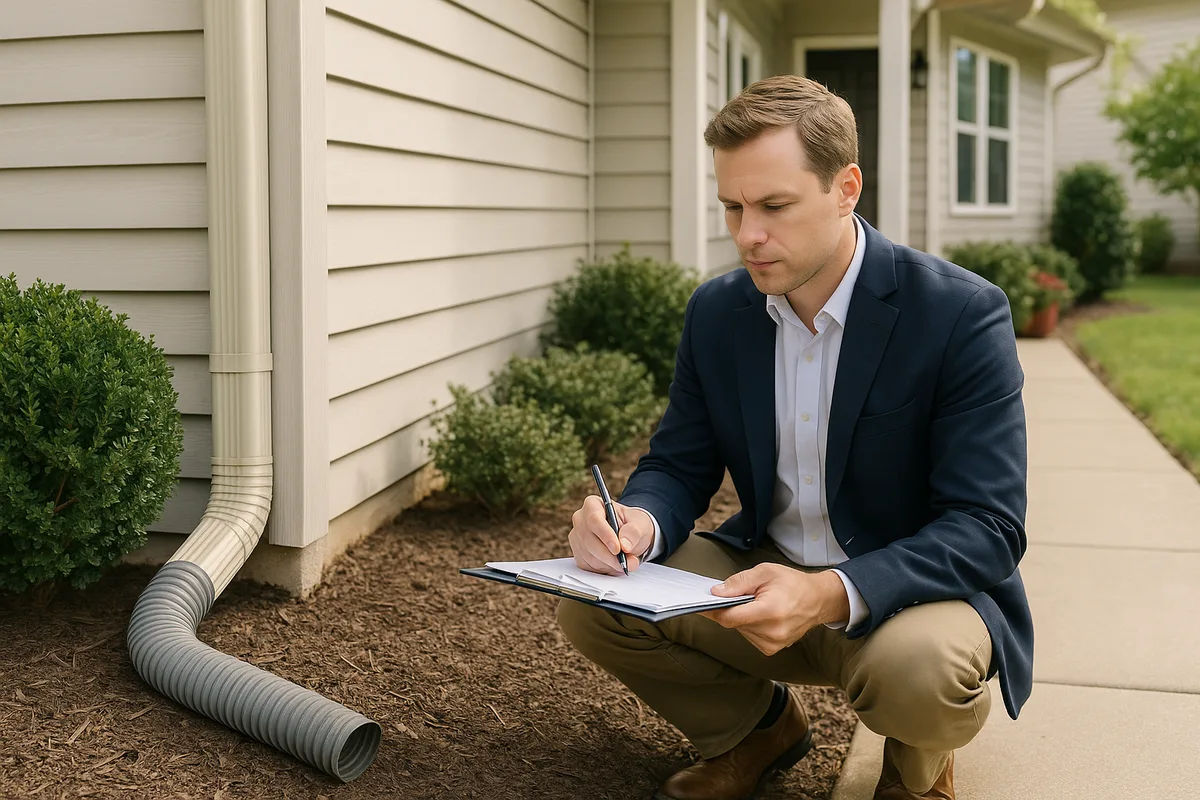
During your site assessment, document everything with photos and notes — not just the problem areas, but the entire drainage context of the property. Photograph the downspout discharge points, the grade along the foundation perimeter, the low spots in the yard, the condition of existing drainage infrastructure, and any evidence of water damage or erosion. Measure slopes with a level or transit. Note the soil type by feel and observation. Identify where water is coming from, where it's collecting, and where it needs to go.
This documentation serves two purposes. First, it gives you the information needed to design an effective solution. Second, it provides the visual evidence that transforms your proposal from an abstract bid into a compelling narrative. When a homeowner sees a photo of their own foundation wall with a caption explaining that the grade slopes toward the house at -3% instead of the recommended minimum +2% away, the problem becomes real and urgent in a way that words alone cannot achieve.
Consider using topographic data to supplement your field observations. Resources like the USGS 3D Elevation Program provide high-resolution elevation data that can help you understand the broader drainage patterns affecting a property — information that demonstrates a level of analysis most competitors never attempt. When you can show a homeowner that their lot sits at the low point of a three-property drainage shed, you've established credibility that transcends price comparison.
Take the time during the site visit to ask the homeowner about their experience with the problem. When does water appear? How long does it persist? Has it gotten worse over time? Have they attempted any previous fixes? These details accomplish two things: they make the homeowner feel heard, and they give you language to use in the proposal that mirrors their own description of the problem. When a client reads a proposal that echoes their exact concerns, they feel understood — and understanding breeds trust.
Structuring Your Drainage Proposal for Maximum Impact
A proposal template for drainage work should follow a logical structure that guides the homeowner from problem recognition through solution understanding to confident approval. The most effective structure includes seven core sections, each serving a specific psychological and informational purpose.
The Executive Summary
Open with a concise summary — three to five sentences — that restates the problem, names your recommended solution, provides the total investment, and states the expected outcome. This section exists for the decision-maker who may not read every detail. It should be compelling enough to stand alone and clear enough to eliminate ambiguity.
Example: "Based on our assessment of your property on May 15, 2026, the primary drainage issue is negative grading along the east and south foundation walls, combined with inadequate downspout management, resulting in water intrusion into the basement during moderate to heavy rain events. We recommend a comprehensive regrading of the foundation perimeter combined with underground downspout extensions and a curtain drain along the east wall. The total investment for this scope of work is $8,750. Upon completion, surface water will be directed away from the foundation at a minimum 5% slope for the first 10 feet, and subsurface water along the east wall will be intercepted and conveyed to a daylight drain at the rear property line."
This format immediately communicates competence. The homeowner knows you've identified a specific problem, designed a specific solution, and can articulate a specific outcome.
Problem Documentation
This section expands on the issues identified during your site assessment. Include annotated photos showing problem areas, measurements of existing grades, and descriptions of the drainage deficiencies in plain language. Avoid jargon where possible, or define technical terms when they're necessary.
Organize problems by priority or location, and explain the consequences of each issue if left unaddressed. Homeowners are more motivated by understanding what will happen if they don't act than by understanding the technical details of the fix. A statement like "The current grade directs approximately 400 square feet of roof runoff toward your foundation during every rain event, which over time can compromise the structural integrity of the footing and create conditions favorable to mold growth" is far more persuasive than "negative grade observed at east wall."
Proposed Solution
This is the heart of your proposal. Describe your recommended approach in clear, sequential terms. Break complex projects into phases or zones so the homeowner can follow the logic of your plan. For each element of the solution, briefly explain why you've chosen that approach over alternatives.
For example, rather than simply listing "Install 80 LF of 4-inch perforated pipe in gravel trench," expand the description: "We will install 80 linear feet of 4-inch perforated corrugated pipe within a 12-inch-wide by 24-inch-deep trench along the east foundation wall. The trench will be lined with non-woven geotextile fabric to prevent soil migration into the aggregate, then backfilled with washed #57 stone to within 4 inches of grade. This design intercepts subsurface water before it reaches the foundation wall and conveys it by gravity to a daylight outlet at the rear of the property. We specify washed stone rather than pea gravel because the angular profile of #57 stone provides superior void space and long-term drainage performance."
This level of detail doesn't overwhelm — it educates. It tells the homeowner that you've made deliberate material choices for specific reasons, which distinguishes you from contractors who use whatever materials are cheapest or most convenient.
Materials and Specifications
Include a section that lists the key materials you'll use, along with relevant specifications. This serves as both a transparency measure and a quality signal. Homeowners may not know the difference between Schedule 40 PVC and single-wall corrugated pipe, but the fact that you've specified materials by name and grade communicates professionalism.
This section also protects you from scope disputes. When materials are documented in the proposal, there's no ambiguity about what was agreed upon. If a homeowner later questions why you used a particular product, you can reference the approved proposal.
Pricing and Payment Terms
Present your pricing with confidence and clarity. There are two schools of thought on pricing format: lump-sum and itemized. Both can work, but each carries different implications for drainage proposals.
Lump-sum pricing presents a single total for the entire scope. This approach is simpler, reduces the temptation for homeowners to cherry-pick line items, and positions the project as a complete solution rather than a collection of parts. However, it can feel opaque to homeowners who want to understand where their money is going.
Itemized pricing breaks the total into components — demolition, excavation, materials, labor, restoration, etc. This approach feels more transparent and allows homeowners to see the relative cost of each element. The risk is that it invites line-item negotiation and comparison shopping, where a homeowner might ask another contractor to match your price on excavation while using cheaper materials.
The most effective approach for winning proposals is a hybrid: present the total investment prominently, then provide a cost breakdown by project phase or zone rather than by individual line item. This gives the homeowner a sense of where the money goes without exposing granular unit costs that invite commoditization.
Always include your payment terms. A common structure for drainage projects is a deposit upon contract signing (typically 25-35%), a progress payment at a defined milestone (such as completion of excavation), and a final payment upon project completion and client walkthrough. Clearly state accepted payment methods and any conditions related to change orders.
Timeline and Process
Homeowners want to know when work will happen and what to expect during construction. Provide an estimated start date, project duration, and a brief description of the daily workflow. Address practical concerns proactively: Will you need access to the backyard? Should vehicles be moved from the driveway? Will there be noise or equipment that affects neighbors? How will you protect existing landscaping?
For drainage projects specifically, address weather contingencies. Grading and excavation work is weather-dependent, and homeowners should understand that rain delays are possible and how they'll be communicated.
Terms, Warranties, and the Close
End your proposal with clear terms and conditions, warranty information, and a simple approval mechanism. State your warranty coverage explicitly — what's covered, for how long, and what's excluded. For drainage work, a common warranty structure covers workmanship for two to five years and passes through manufacturer warranties on materials like pipe and fabric.
Make approval frictionless. Include a signature line, date field, and clear instructions: "To approve this proposal, sign below and return with the deposit. We will confirm your start date within 48 hours." The easier you make it to say yes, the more often you'll hear it.
The Psychology of Pricing: Positioning Value Over Cost
Price sensitivity in drainage work is largely a function of perceived value, not absolute cost. Homeowners who understand the severity of their problem and the quality of your solution will accept a higher price than those who view drainage work as a commodity. Your proposal is the primary vehicle for shaping that perception.
One of the most effective pricing strategies is anchoring. Before presenting your price, establish the cost of inaction. If a homeowner is experiencing basement water intrusion, reference the average cost of foundation repair ($5,000-$15,000), mold remediation ($1,500-$9,000), or diminished property value. When your $8,750 drainage solution is framed against a potential $25,000 foundation repair, it becomes an investment rather than an expense.
Another powerful technique is tiered proposals. Instead of presenting a single option, offer two or three tiers: a baseline solution that addresses the immediate problem, a recommended solution that provides comprehensive protection, and a premium solution that includes additional features like landscape restoration or smart monitoring. Research in behavioral economics consistently shows that when presented with three options, most people choose the middle one. By making your preferred recommendation the middle tier, you increase the likelihood of closing at your target price point.
Transparency about what drives cost also builds confidence. Many homeowners assume that contractor pricing is arbitrary or inflated. When you explain that 40% of the project cost is materials, 45% is skilled labor, and 15% covers equipment, permits, and overhead, you demystify the number and make it feel fair. You don't need to open your books — just provide enough context to show that the price reflects real inputs, not arbitrary markup.
Avoid the temptation to discount preemptively. Contractors who lead with "I can probably come down a bit" signal that their initial price was inflated. If you've priced the job fairly, present the price with confidence. If a homeowner pushes back, adjust scope rather than margin: "I understand budget is a concern. We could defer the landscape restoration phase and focus on the drainage infrastructure now, which would bring the investment to $6,900. You could complete the restoration yourself or have us return to do it later."
Differentiating Your Proposal From the Competition
In a competitive bidding environment, your contractor proposal needs to answer an implicit question the homeowner is asking: "Why should I choose you?" Most contractors answer this with vague claims — "20 years of experience," "fully licensed and insured," "quality workmanship guaranteed." These statements are table stakes, not differentiators. Every contractor says them. None of them create meaningful separation.
True differentiation comes from demonstrating specific expertise that's relevant to the homeowner's specific problem. If you've completed similar projects in the same neighborhood, mention it (with permission). If you've solved a particularly challenging drainage problem using an innovative technique, describe it briefly. If you hold certifications relevant to the work — such as erosion and sediment control certification or stormwater management training — include them with context about why they matter.
Visual differentiation is equally important. A proposal that arrives as a professionally formatted PDF with your logo, consistent typography, annotated site photos, and a clean layout communicates a level of professionalism that a handwritten estimate on a yellow legal pad simply cannot match. Invest in a polished proposal template that you can customize for each project. The template should be branded, well-organized, and easy to read on both screens and paper.
Include a brief section about your process and quality control measures. Do you photograph the installation at key stages? Do you perform a post-installation grade check with a level? Do you provide a final walkthrough with the homeowner? These details signal that you take your work seriously and that the homeowner will be informed and involved throughout the project.
Social proof is another powerful differentiator. Include two or three brief testimonials from past clients, ideally from projects similar in scope to the one you're proposing. A testimonial that says "They solved our backyard flooding problem that two other contractors couldn't fix" is worth more than a dozen generic five-star reviews.
Finally, consider including a brief explanation of what happens if the proposed solution doesn't fully resolve the problem. This might seem counterintuitive — why introduce the possibility of failure? — but it actually builds enormous confidence. A statement like "In the unlikely event that the installed system does not adequately address the drainage issue, we will return at no additional cost to assess and adjust the system within the warranty period" tells the homeowner that you stand behind your work and that they're not taking a risk by choosing you.
Common Proposal Mistakes That Cost You Projects
Beyond the structural and strategic elements, several tactical mistakes consistently undermine otherwise solid drainage proposals. Recognizing and avoiding these pitfalls can meaningfully improve your close rate.
Vague Scope Language
Phrases like "drainage improvements as discussed" or "grading work in backyard" are invitations for misunderstanding and disputes. Every element of the scope should be specific enough that a third party could read the proposal and understand exactly what work will be performed. Specify quantities, dimensions, materials, and locations. If something is explicitly excluded from the scope, state that as well. "This proposal does not include repair or replacement of existing downspout connections" is a sentence that can prevent a significant conflict.
Missing Exclusions
Related to vague scope, failing to state what's not included is a common and costly mistake. Drainage projects frequently encounter conditions that require additional work — buried utilities, rock excavation, tree root removal, permit fees, or landscape restoration beyond the immediate work area. If your proposal doesn't address these possibilities, you'll either absorb unexpected costs or face an uncomfortable conversation with the homeowner mid-project.
Include a clear exclusions section: "This proposal excludes: permit fees (if required), rock excavation, utility relocation, repair of pre-existing structural damage, and restoration of areas beyond the immediate work zone." Also include a clause about how change orders will be handled if unforeseen conditions arise.
No Expiration Date
A proposal without an expiration date is a proposal that can come back to haunt you months later, when material costs have increased and your schedule has changed. Include a validity period — typically 30 to 60 days — after which the proposal must be re-evaluated. This also creates a subtle urgency that encourages timely decision-making.
Ignoring the Emotional Component
Drainage problems are stressful. Homeowners dealing with a flooded basement, a soggy yard their kids can't play in, or a foundation crack that's getting wider are not just looking for a technical solution — they're looking for relief. Proposals that acknowledge the emotional dimension of the problem and promise a specific, positive outcome connect on a level that purely technical documents cannot.
A closing paragraph like "After this project is complete, you'll be able to enjoy your backyard after a rainstorm without worrying about standing water, and you'll have confidence that your foundation is protected for years to come" speaks to the outcome the homeowner actually cares about. They're not buying a French drain. They're buying peace of mind.
Failing to Follow Up
A proposal that isn't followed up is a proposal that's forgotten. Within 48 hours of submitting your proposal, contact the homeowner to confirm receipt, ask if they have questions, and offer to walk through the document with them. This follow-up call or email is often where deals are won. It gives you the opportunity to address concerns, clarify misunderstandings, and reinforce the relationship you began during the site visit.
Establish a follow-up cadence: initial contact at 48 hours, a second touchpoint at one week, and a final check-in at two weeks. After that, if you haven't heard back, a brief message acknowledging that they may have gone in a different direction — while leaving the door open — is appropriate. Persistence demonstrates professionalism; pestering does not.
Leveraging Technology to Elevate Your Proposals
Modern tools can dramatically improve both the quality and efficiency of your proposal writing process. Digital proposal platforms allow you to create branded templates, embed photos and videos, track when proposals are opened and viewed, and collect electronic signatures — all of which streamline the process and provide valuable data about client engagement.
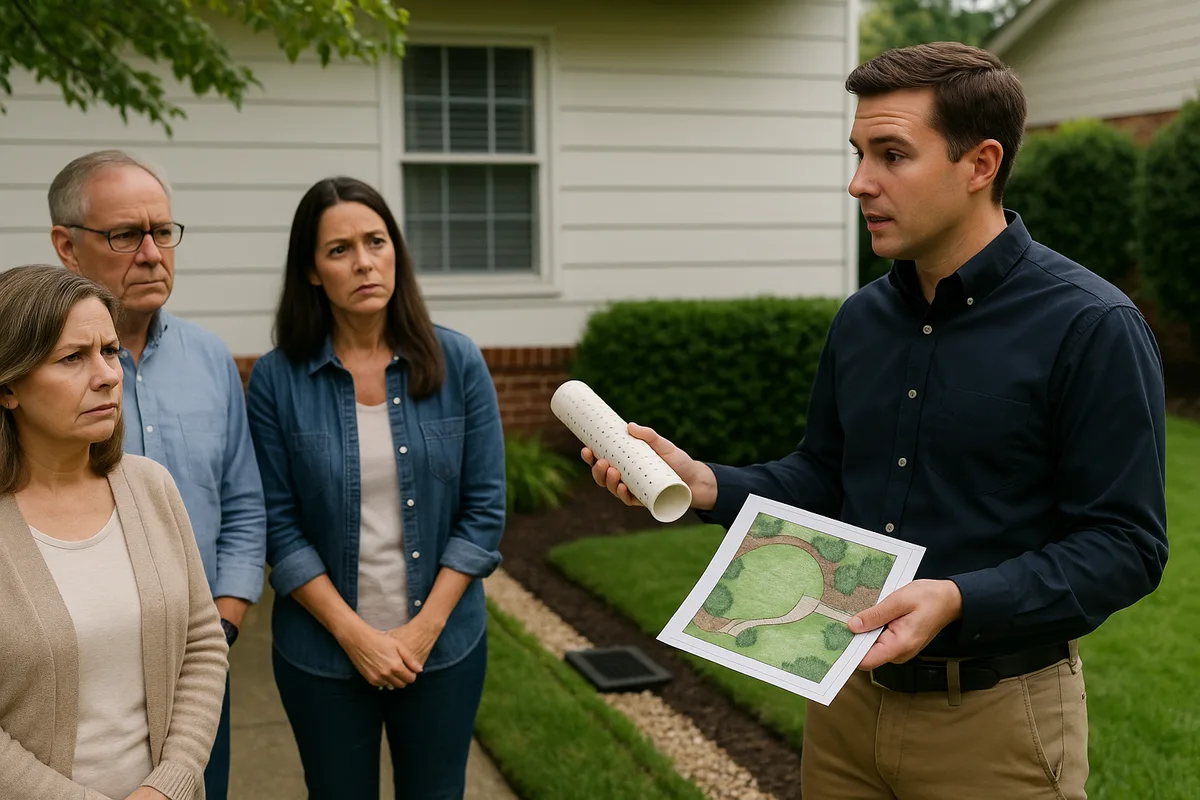
For drainage-specific proposals, consider incorporating visual aids that help homeowners understand the planned work. Simple site diagrams showing the location of proposed drainage infrastructure, flow direction arrows, and discharge points make the scope tangible. You don't need CAD software — even a clean sketch overlaid on a satellite image of the property can be highly effective.
Topographic analysis tools add another layer of professionalism. When you can include a slope analysis or drainage flow map of the homeowner's property, you're providing a level of insight that most competitors cannot match. At Low Point Labs, we specialize in exactly this kind of topographic drainage intelligence — turning elevation data into actionable insights that inform better drainage solutions.
Photo documentation software that allows you to annotate images with arrows, circles, and text callouts turns raw site photos into compelling evidence. A photo of a foundation wall is just a photo. The same photo with an arrow pointing to an efflorescence line, a measurement overlay showing the height of past water intrusion, and a caption explaining the implication becomes a persuasive piece of your proposal narrative.
Consider also including a brief video walkthrough of the property with your verbal assessment. Many proposal platforms support embedded video, and a two-minute video of you standing in the homeowner's yard, pointing to problem areas, and explaining your recommended approach creates a personal connection that written words and photos cannot replicate. It also demonstrates that you were physically present, engaged, and thorough — qualities that build trust.
Putting It All Together: Your Proposal as a Trust-Building Document
The most successful drainage contractors understand that a proposal is not a formality — it's the culmination of your sales process and the beginning of your client relationship. Every element of the document should reinforce a single message: "I understand your problem, I have the expertise to solve it, and you can trust me to deliver."
Winning proposals share several characteristics regardless of project size or complexity. They are specific rather than generic. They are visual rather than purely textual. They educate rather than overwhelm. They address both the technical problem and the emotional concern. They make approval easy and next steps clear.
As you refine your proposal template over time, pay attention to patterns in client feedback. Which questions do homeowners consistently ask after receiving your proposal? Those questions reveal gaps in your document that should be addressed proactively. Which sections do clients reference when explaining why they chose you? Those sections should be emphasized and expanded.
Track your close rate and average project value over time. As your proposals improve, you should see both metrics increase — not just because you're winning more projects, but because you're winning them at higher price points. A contractor who closes 40% of proposals at an average of $10,000 generates more revenue than one who closes 60% at an average of $5,000. Quality proposals attract quality clients who value expertise over price.
Drainage work is uniquely challenging to sell because the best outcome is invisible — water that doesn't pool, basements that don't flood, foundations that don't crack. Your proposal must make the invisible visible, translating technical expertise into a narrative that homeowners can understand, trust, and act on.
At Low Point Labs, we help drainage contractors and homeowners alike by providing detailed topographic drainage analysis that reveals exactly how water moves across a property. Our assessments give you the data foundation to write proposals that are grounded in evidence, not guesswork. If you're a contractor looking to elevate your proposals with professional-grade drainage intelligence — or a homeowner seeking clarity about your property's drainage challenges — explore our drainage assessment services and discover how topographic data can transform the way you understand and solve drainage problems.
See Drainage Intelligence in Practice
Talk with our team or request an invitation to the platform.
Frequently Asked Questions
A comprehensive drainage contractor proposal should include an executive summary, documented site assessment with photos, a detailed scope of work with materials and specifications, clear pricing and payment terms, a project timeline, warranty information, and terms and conditions. The best proposals also include annotated site photos and a clear approval mechanism.
Most effective drainage proposals are 3 to 6 pages, depending on project complexity. The goal is to be thorough enough to build confidence and answer likely questions, but concise enough that the homeowner reads the entire document. Use visuals like photos and diagrams to convey information efficiently.
A hybrid approach works best: present the total investment prominently, then break costs down by project phase or zone rather than individual line items. This gives homeowners transparency about where their money goes without exposing granular unit costs that invite line-item comparison shopping with competitors.
Differentiate through specificity and professionalism. Include annotated site photos, explain why you chose specific materials and methods, provide relevant testimonials, and present the document in a polished, branded format. Demonstrating that you understand the homeowner's specific problem — rather than submitting a generic template — is the most powerful differentiator.
Follow up within 48 hours of sending your proposal to confirm receipt and offer to answer questions. Follow up again at one week and two weeks if you haven't received a response. Timely follow-up demonstrates professionalism and gives you the opportunity to address concerns before the homeowner makes a decision.
Yes, offering two or three tiered options is an effective strategy. Present a baseline solution, a recommended comprehensive solution, and a premium option. Research shows most clients choose the middle option, which allows you to position your preferred scope and price point as the recommended tier.
Related Articles

How to Use Landscaping Design Software to Justify a $15,000 Drainage Bid
The Contractor's Guide to Writing an Ironclad Scope of Work for Drainage