Diligence Demands Data
and a Focused Inspection
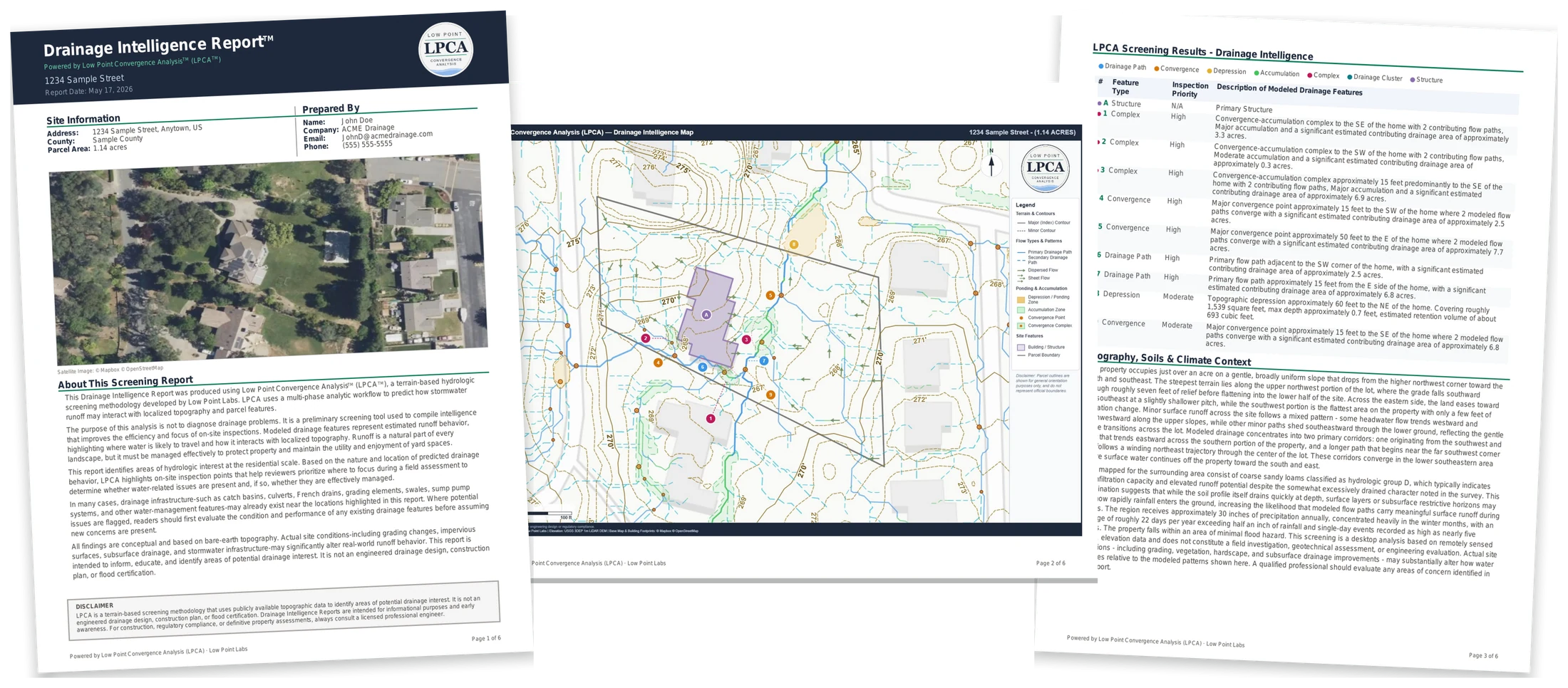
Drainage patterns aren't visible during a showing — they're written into the terrain. A Drainage Intelligence Report™ shows how water may move across the property, giving you and your inspector specific areas to examine more closely.
Using USGS LiDAR elevation data at ~1-meter resolution — no site visit required.
One report for a single property. One-time payment.
Give Your Inspector a Head Start
Home inspections evaluate the structure — foundation, roof, plumbing, electrical. Terrain-based drainage analysis adds another layer, showing your inspector exactly where to look more closely on the property.
Average cost of drainage-related repairs. Understanding terrain patterns before closing helps you ask the right questions and plan ahead — whether that means budgeting, planning repairs, or simply knowing what to monitor.
Water damage is the most common homeowner insurance claim — more than fire, theft, and natural disasters combined. A terrain-based drainage screening adds valuable context to your due diligence.
Drainage patterns are written into the terrain — subtle slopes and convergence zones that aren't visible during a walkthrough. The report makes them visible so you and your inspector know where to focus.
"The best time to understand a property's drainage is before you own it."
The Right Time to Know
A Drainage Intelligence Report™ gives you information you can act on — whether you're evaluating a property, planning your inspection, or planning improvements after closing.
During the Inspection Period
The ideal window. Order while your inspection contingency is still active so you have terrain-based drainage data on hand as you and your inspector evaluate the property.
Before Making an Offer
Screen for drainage patterns before you commit — especially on properties with visible slopes, low-lying lots, or proximity to waterways. Give yourself and your inspector a head start.
When Water Features Are Noted
If the property has grading, water management features, a sump pump, or drainage improvements, the report shows how these relate to the terrain's natural flow patterns — so you can ask informed follow-up questions.
Properties Near Slopes or Low Areas
Lots at the bottom of hills, near creeks, or in areas with visible grading should always get a drainage check. The terrain may be directing water from a large catchment area toward the property.
Documented Due Diligence
Add an independent, data-backed drainage screening to your due diligence file. You'll have a clear written record of how the terrain directs water across the property — useful for your own planning and for conversations with your inspector or agent.
After Closing — Planning Improvements
Already closed? Understand your property's drainage before investing in landscaping, additions, or grading. Build with the terrain, not against it.
Don't Close Blind
Enter the property address to check coverage and get your Drainage Intelligence Report™.
What the Report Shows
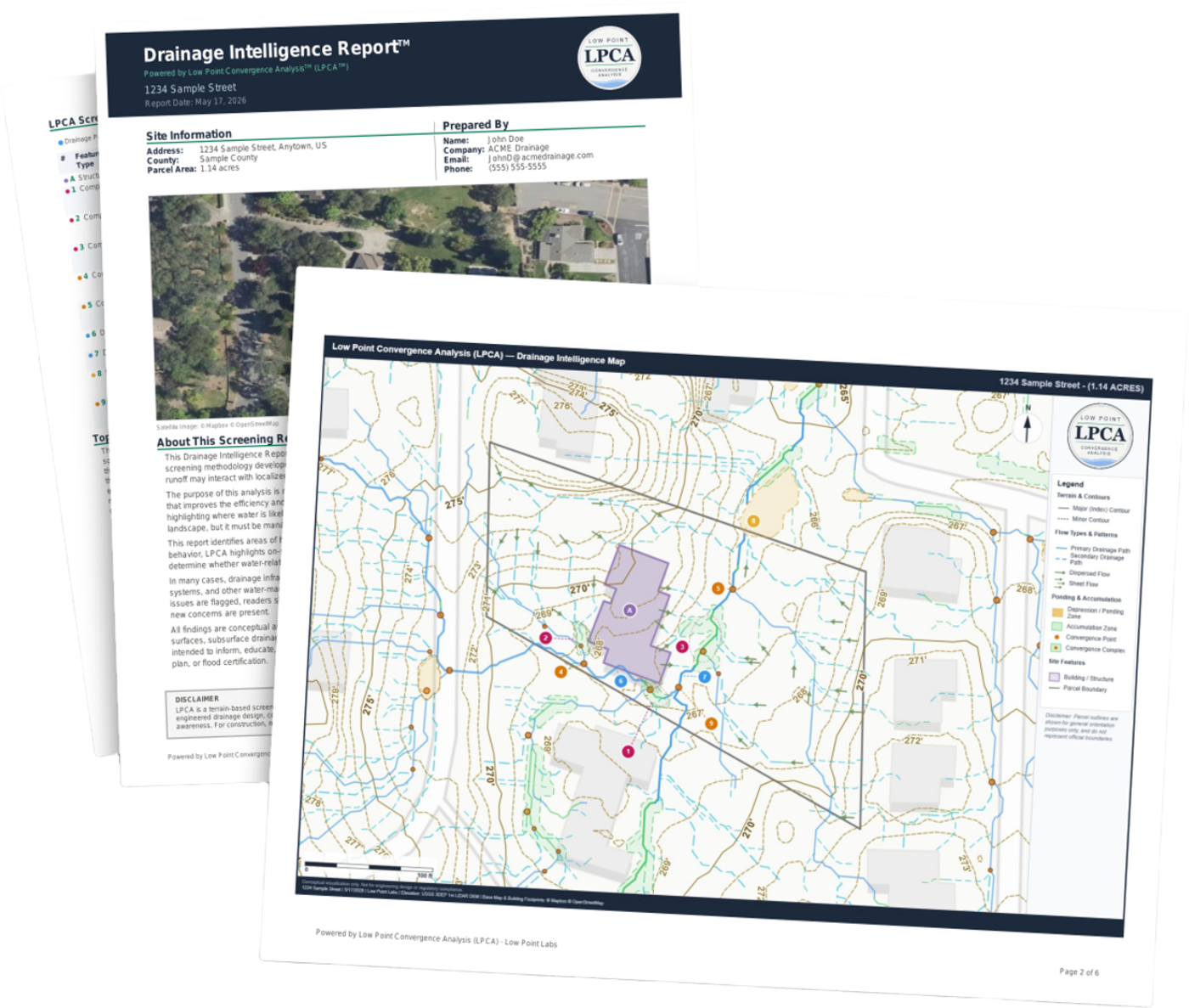
Each Drainage Intelligence Report™ gives you a clear, property-specific picture of how water interacts with the terrain you're considering buying — and how soil and local rainfall shape the way it drains.
Flow Path Mapping
See exactly where water travels across the property after rainfall — including paths hidden by landscaping or grading that aren't visible during a showing.
Ponding Potential Zones
Identify topographic depressions where water is likely to collect and pool. Know if the yard, driveway, or areas near the foundation are in a collection zone.
Convergence Analysis
See where multiple drainage flows merge into concentrated runoff — areas that may experience erosion, saturated soil, or accelerated water accumulation.
Contour Visualization
Professional contour maps show the subtle elevation changes driving drainage patterns. Understand the grade around the home before you own it.
Structure Proximity
See how drainage patterns relate to buildings on the property. Is water being directed toward the foundation, garage, or other structures?
Contributing Factor Context
Explains the factors behind the findings — terrain, soil type, and local rainfall — so you understand why the property drains the way it does. No engineering background needed, just clear answers.
We've Heard These Before
"The home inspection should cover this"
Standard inspections evaluate the structure — foundation, roof, plumbing, HVAC. The surrounding terrain and how it directs water? That's outside the scope. Your inspector checks the house. This report checks the land around it.
"It's probably fine"
37% of homeowners experience water-related concerns. Drainage patterns are shaped by terrain that doesn't change between showings. "Probably fine" means you're making a decision without the data. For $69, you can see what the terrain actually says.
"I'll deal with it after closing"
Understanding drainage patterns before closing means you can plan ahead — whether that's budgeting for improvements, asking your inspector to focus on specific areas, or simply knowing what to watch for as a homeowner. Informed buyers make better long-term decisions.
Questions from Homebuyers
Know What the Terrain Says Before You Sign
A $69 report that gives you the drainage intelligence to make an informed decision. Enter the property address to check coverage and order your Drainage Intelligence Report™.
One report for a single property. One-time payment.