How to Build a Landscaping Sales Presentation Homeowners Can't Refuse
Every landscape contractor knows the frustration: you spend hours on a site visit, prepare a thoughtful proposal, and then hear nothing back. Or worse, the homeowner goes with a cheaper competitor who didn't even mention the drainage problem that's slowly destroying their foundation. The difference between winning and losing that job almost always comes down to the landscaping sales presentation — not the price.
The contractors who consistently close at 60%, 70%, even 80% rates aren't doing magic. They're presenting differently. They lead with problems the homeowner didn't know they had, they back every recommendation with data, and they build such a compelling case that closing the sale feels like a natural conclusion rather than a high-pressure moment. This guide breaks down exactly how to build that kind of presentation — one rooted in topographic intelligence, visual storytelling, and genuine expertise that homeowners can see, feel, and trust.
Why Most Landscaping Sales Presentations Fail
The typical landscaping sales presentation follows a predictable — and ineffective — pattern. The contractor walks the property, takes some measurements, goes home, and emails a flat proposal with line items and a total. The homeowner sees a number, compares it to two other numbers from other contractors, and picks the lowest one. This commoditized approach strips away every advantage a skilled contractor has.
The core problem is that most presentations focus on what the contractor will do rather than why the homeowner needs it done. A line item that reads "French drain installation — $4,200" tells the homeowner nothing about the water pooling against their foundation wall, the hydrostatic pressure building in their clay soil, or the $45,000 foundation repair bill they're heading toward. Without context, every proposal looks like an expense rather than an investment.
Another common failure is the lack of visual evidence. Homeowners are not drainage experts. They can't visualize how water moves across their property, where low points collect runoff, or how a 1% slope toward the house is silently causing damage. When you show up with nothing but words and a spreadsheet, you're asking them to take your expertise on faith — and faith doesn't close deals in a competitive market.
Finally, many contractors fail to differentiate themselves. If your presentation looks identical to every other contractor's proposal, you've given the homeowner no reason to choose you specifically. The presentation itself is your first deliverable. Its quality signals the quality of your work.
Start With the Problem, Not the Solution
The most powerful landscaping sales presentations begin long before you talk about what you'll install. They begin with a clear, visual, data-backed diagnosis of the homeowner's property. Think of it like a doctor's visit: no patient accepts a treatment plan without first understanding the diagnosis. Your homeowner is no different.
Before your site visit, do your homework. Pull the property's soil data from the NRCS Web Soil Survey to understand what you're working with — is it Group C or D clay soil with poor infiltration? Check whether the property sits in or near a flood zone using FEMA's flood map tools. Review available elevation data and aerial imagery. When you arrive at the site, you should already know more about the property's drainage characteristics than the homeowner does.
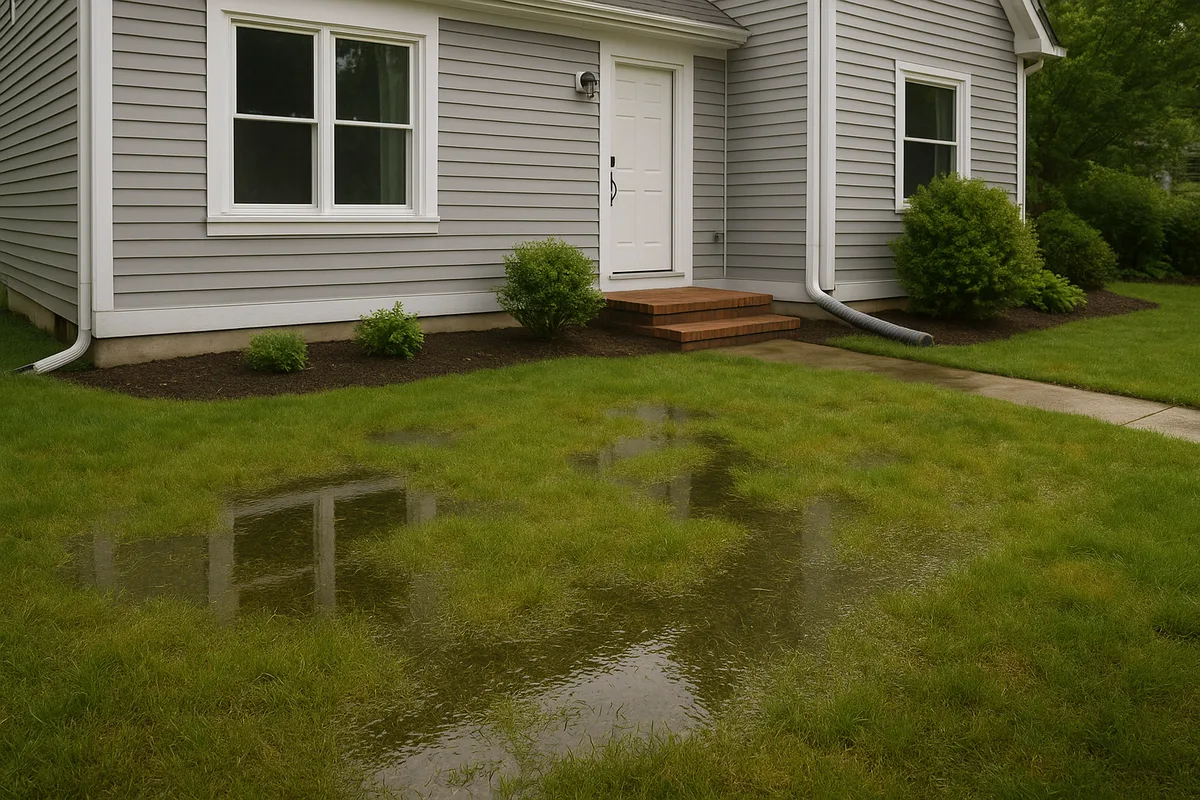
During the site visit, document everything visually. Photograph standing water, staining on foundation walls, erosion channels, downspout discharge points, and any areas where the grade slopes toward the structure. Use a laser level or digital level to measure actual slopes. Take notes on gutter conditions, neighboring property runoff, and impervious surface coverage. Every one of these observations becomes ammunition for your presentation.
The key shift here is psychological. When you present the problem first — with photos, measurements, and data — you're not selling. You're educating. You're showing the homeowner something real about their property that they didn't fully understand. This positions you as an advisor rather than a salesperson, and that distinction is everything when it comes to closing the sale.
Build a Visual Story With Topographic Data
Data without visualization is just numbers. Numbers don't sell landscaping projects — stories do. The most effective landscaping sales presentations transform raw topographic and drainage data into a visual narrative that any homeowner can immediately understand.
Start with an overhead view of the property. Annotate it with arrows showing the direction of water flow based on the existing grade. Mark low points where water collects. Highlight areas where the slope directs water toward the foundation rather than away from it. Color-code zones by risk level — red for areas with active water intrusion risk, yellow for areas with inadequate slope, green for areas that are properly graded. This single image often does more selling than twenty minutes of verbal explanation.
Next, create a simple cross-section diagram showing the existing grade versus the recommended grade. The International Residential Code calls for a minimum 6-inch drop over the first 10 feet from the foundation — that's a 5% slope. If your measurements show the homeowner's property has a 1% slope, or worse, a negative slope toward the house, showing this visually makes the problem undeniable. Draw the existing grade line in red and the corrected grade line in green. The gap between those two lines is your sale.
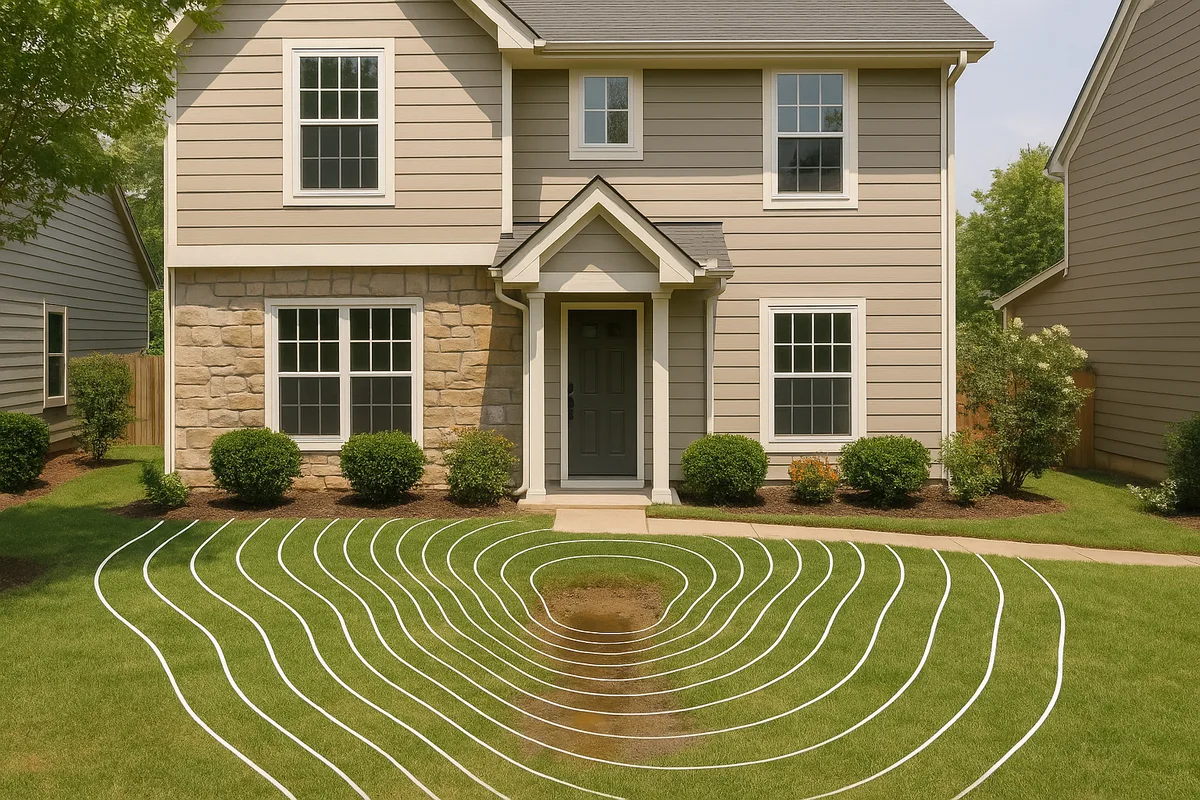
If you have access to elevation data or drone survey capabilities, take it a step further. Create a simple topographic overlay showing contour lines across the property. Most homeowners have never seen their property represented this way, and the novelty alone commands attention. When they can see that their backyard has a bowl-shaped depression that collects water from three directions, the need for a drainage solution becomes self-evident.
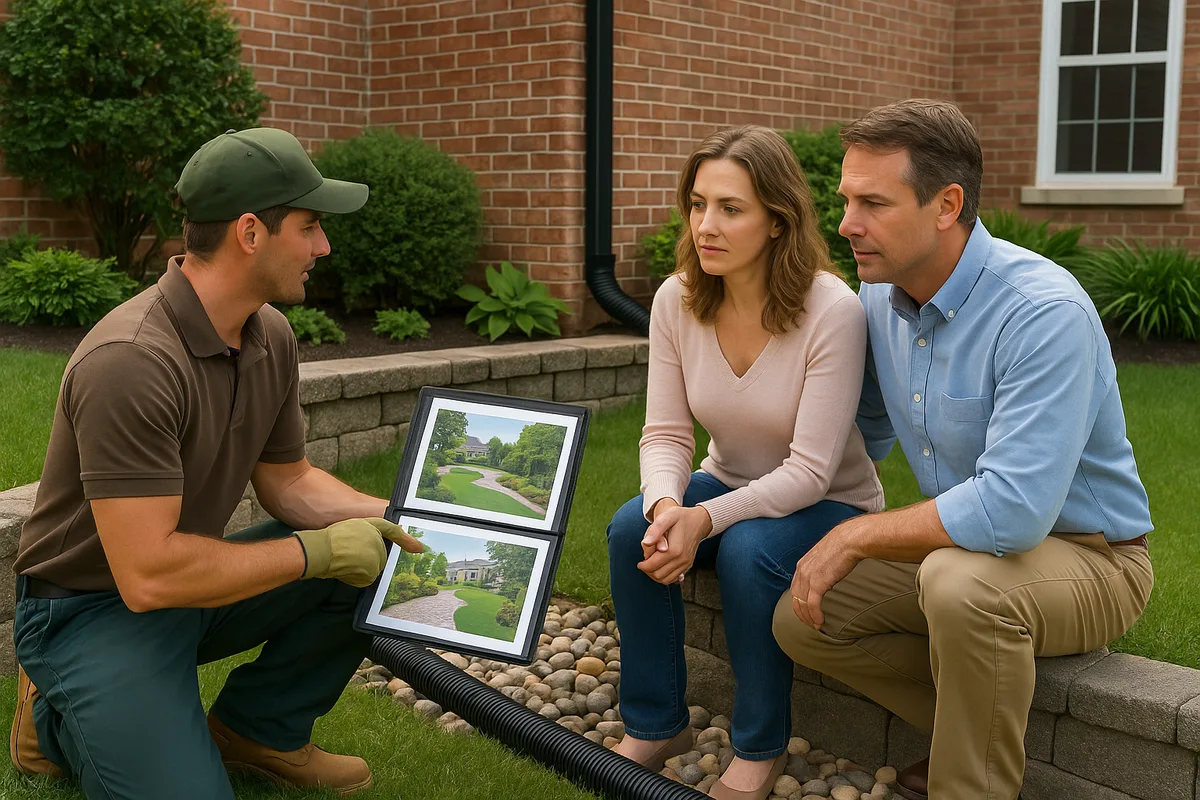
Include before-and-after visualizations whenever possible. If you're proposing a dry creek bed, a French drain system, or a regrading project, show what the property looks like now alongside a rendering or annotated photo of what it will look like after. Software tools ranging from simple photo markup apps to full landscape design platforms can help here. The goal is to make the future state feel tangible and desirable.
Structure Your Presentation for Maximum Impact
The order in which you present information matters enormously. Cognitive psychology research consistently shows that people make decisions based on emotional engagement first and rational justification second. Your presentation structure should mirror this reality.
Open With What You Found
Spend the first five to seven minutes of your presentation walking through the site assessment. Show the photos you took. Share the soil data. Present the slope measurements. Explain, in plain language, what's happening with water on their property. This section should create a mild sense of urgency without being alarmist. Phrases like "Here's what concerns me" and "This is something I want you to be aware of" are effective because they position you as someone who cares about the homeowner's property, not someone who's trying to scare them into a purchase.
Present the Consequences of Inaction
This is where you bridge from diagnosis to motivation. Explain what happens if the drainage issues go unaddressed. Be specific: foundation cracks can cost $5,000 to $50,000 to repair. Persistent moisture against a foundation wall can lead to mold growth, which creates health risks and can cost $10,000 or more to remediate. Erosion can undermine retaining walls, patios, and walkways. Saturated soil can kill expensive landscaping plants and trees. Standing water breeds mosquitoes. Every consequence you mention is a reason to act, and every reason to act brings the homeowner closer to saying yes.
You're not fabricating these consequences — they're real, well-documented outcomes of poor drainage. Presenting them honestly is a service to the homeowner, not a sales tactic.
Introduce Your Recommended Solution
Only after you've established the problem and its consequences should you present your proposed solution. By this point, the homeowner is primed to hear it. They understand what's wrong, they understand what's at risk, and they're looking for someone who can fix it. That someone is you.
Present your solution as a system, not a list of tasks. Instead of "Install 80 linear feet of French drain," say "We'll create a subsurface drainage corridor that intercepts water before it reaches your foundation and redirects it to a discharge point at the lowest corner of your property." Describe how each component works together. Show the visual plan you've prepared. Explain why you chose this approach over alternatives.
Close With Value, Not Price
When you finally present pricing, frame it in the context of value. Compare the cost of your solution to the cost of the problems it prevents. Break down the investment into components so the homeowner understands what they're paying for. If you offer financing, present monthly payment options — a $6,000 project at $150 per month feels very different from a $6,000 lump sum.
Leverage Drainage Intelligence as Your Differentiator
In a market where dozens of contractors offer similar services at similar prices, differentiation is survival. And the single most powerful differentiator available to landscape contractors today is drainage intelligence — the ability to analyze, visualize, and solve water management problems that other contractors overlook or ignore.
Most landscaping companies treat drainage as an afterthought. They'll install a patio without checking the grade. They'll build a retaining wall without considering where the water behind it will go. They'll plant a garden bed in a low spot that floods every time it rains. When you make drainage analysis the foundation of every project you propose, you immediately separate yourself from this crowd.
Incorporate drainage data into every landscaping sales presentation, even when the homeowner called you about something unrelated. If they want a new patio, show them how you'll ensure proper slope for sheet drainage. If they want a retaining wall, explain the weep holes and drainage aggregate you'll install behind it. If they want a new lawn, talk about the grading work that will ensure the turf thrives rather than drowning.
This approach does two things. First, it demonstrates a level of expertise and thoroughness that builds trust. Second, it often increases the project scope — and the project value — because the homeowner sees the wisdom of addressing drainage as part of the larger project. A $3,000 patio job becomes a $5,500 patio-plus-grading job, and the homeowner feels good about the upgrade because you've shown them why it matters.
Master the Art of Closing the Sale in Person
The best presentation in the world means nothing if you can't close. And closing the sale in landscaping isn't about pressure tactics or manipulative language — it's about removing the barriers that prevent a homeowner from saying yes.
The first barrier is almost always uncertainty. The homeowner isn't sure if they really need the work, isn't sure if your solution is the right one, or isn't sure if you're the right contractor. Your presentation should have addressed the first two concerns. For the third, come prepared with social proof: testimonials from past clients, before-and-after photos of similar projects, online reviews, and any relevant certifications or training credentials.
The second barrier is financial. Be transparent about pricing and offer options. Present a tiered proposal with a "good, better, best" structure. The base tier addresses the most critical drainage issues. The middle tier adds aesthetic enhancements. The top tier is the full vision. This approach gives the homeowner a sense of control and makes it more likely they'll choose at least one option rather than walking away entirely.
The third barrier is timing. Homeowners procrastinate. They want to "think about it" or "get a few more quotes." Combat this with gentle urgency. If the drainage issue is seasonal, mention that fall rains are coming and the problem will worsen. If your schedule fills up, be honest about lead times. Offer a small incentive for committing within a defined window — not a discount that devalues your work, but perhaps a complimentary gutter assessment or a free seasonal maintenance visit.
When it's time to ask for the commitment, be direct but not aggressive. A simple "Based on everything we've discussed, I'd recommend we move forward with Option B. I can have the crew out here within three weeks. Would you like to get this on the schedule?" is far more effective than an open-ended "So, what do you think?" The first question is easy to say yes to. The second invites hesitation.
Use Technology to Elevate Your Presentation
The landscape industry has been slower than many trades to adopt technology in the sales process, which means there's a massive opportunity for contractors who embrace it. A tech-enhanced landscaping sales presentation signals professionalism, builds credibility, and makes your proposal memorable.
At a minimum, present on a tablet rather than paper. A tablet lets you pinch-zoom on site photos, swipe through before-and-after comparisons, and pull up supplementary data on the spot. If the homeowner asks a question about their soil type, you can navigate to the NRCS Web Soil Survey right there at the kitchen table. If they want to see what their neighbor's drainage looks like from above, you can pull up satellite imagery. This responsiveness builds confidence in your expertise.
Consider investing in drone photography for your site assessments. A drone flyover of the property provides a perspective the homeowner has literally never seen. It reveals drainage patterns, low spots, and grading issues that are invisible from ground level. The footage itself becomes a compelling element of your presentation, and the investment in a quality drone pays for itself many times over in closed deals.
For larger projects, 3D modeling software can transform your proposal from a flat plan into an immersive experience. Tools that render your proposed landscape in three dimensions — showing how a swale will look planted with native grasses, or how a rain garden will integrate with the existing patio — help the homeowner emotionally connect with the finished product. And emotional connection drives purchasing decisions.
Finally, build a digital leave-behind. After your in-person presentation, email the homeowner a polished PDF that recaps everything you discussed: the site assessment findings, the proposed solution, the visual plan, and the pricing options. This document serves as a reference when they discuss the project with their spouse, and it makes it easy for them to say yes without having to recall every detail from memory.
Build Trust Through Education, Not Pressure
The most successful landscape contractors understand that a landscaping sales presentation is not a one-time pitch — it's the beginning of a relationship. Homeowners who feel educated and empowered during the sales process become loyal clients who refer their friends, approve add-on projects, and return year after year for maintenance.
Educate the homeowner during your presentation. Explain how French drains work. Show them why a 2% minimum slope matters. Teach them the difference between surface drainage and subsurface drainage. When you share knowledge freely, you demonstrate that your value goes beyond physical labor — you're a consultant, a problem-solver, and a trusted advisor.
Don't be afraid to tell a homeowner when something is outside your scope or when a less expensive solution will work. If a simple downspout extension will solve their problem, say so — even if it means a smaller invoice. This honesty builds trust that pays dividends over time. The homeowner who you saved $3,000 today will call you first for their $15,000 backyard renovation next year.
Follow up after your presentation regardless of the outcome. If they said yes, confirm next steps and timelines promptly. If they said they need to think about it, check in after three to five days with a brief, non-pushy message. If they went with another contractor, ask for feedback graciously. Every interaction is an opportunity to reinforce your professionalism.
The landscape contractors who thrive long-term are the ones who view every presentation as a chance to demonstrate mastery — of drainage, of grading, of the complex relationship between water and land. When you lead with intelligence and integrity, closing the sale becomes the easiest part of the process.
Putting It All Together: Your Presentation Checklist
Building a winning landscaping sales presentation is a repeatable process. Once you develop the framework, each subsequent presentation becomes faster to prepare and more effective to deliver. Here's the step-by-step workflow that top-performing contractors follow:
- Pre-visit research — Pull soil data, flood zone status, elevation data, and aerial imagery for the property before you arrive.
- Comprehensive site assessment — Measure slopes, document drainage issues with photos and video, assess gutter and downspout conditions, and note neighboring property influences.
- Data analysis — Identify the primary drainage concerns, calculate required grades, and determine the most effective solution approach.
- Visual plan creation — Build an annotated site plan showing existing conditions and proposed improvements, including flow arrows, slope measurements, and component locations.
- Presentation assembly — Structure your presentation in the problem-consequence-solution-value sequence described above.
- In-person delivery — Present on a tablet or screen, walk through the visual story, and engage the homeowner in dialogue rather than monologue.
- Tiered proposal — Offer good-better-best options with clear explanations of what each tier includes and why.
- Direct close — Ask for the commitment with a specific, actionable question.
- Digital leave-behind — Email a polished recap document within 24 hours of the presentation.
- Follow-up — Check in within three to five days if no decision has been made.
This process works because it's built on substance rather than salesmanship. You're not convincing homeowners to buy something they don't need — you're showing them a reality about their property that demands action, and you're positioning yourself as the most qualified person to take that action.
At Low Point Labs, we believe that drainage intelligence is the foundation of every great landscaping project — and every great landscaping sales presentation. Our topographic drainage assessments give contractors the data, visuals, and insights they need to walk into every homeowner meeting with confidence and authority. If you're ready to transform your close rate and build a reputation as the contractor who truly understands how water moves across a property, explore our drainage assessment services and see what data-driven selling can do for your business.
See Drainage Intelligence in Practice
Talk with our team or request an invitation to the platform.
Frequently Asked Questions
An effective landscaping sales presentation should include a documented site assessment with photos and measurements, soil and drainage data, visual plans showing existing conditions and proposed improvements, a tiered pricing proposal, and social proof such as testimonials and before-and-after photos from past projects.
Close more landscaping sales by leading with the problem rather than the solution, using visual data to make drainage and grading issues undeniable, presenting tiered pricing options, and asking directly for the commitment with a specific next step. Removing uncertainty, financial barriers, and timing hesitation are the three keys to closing the sale.
Drainage data is a powerful differentiator. Most contractors overlook drainage analysis, so including soil type, slope measurements, and water flow patterns in your proposal immediately sets you apart. It also increases project scope and value because homeowners see the importance of addressing drainage alongside aesthetic improvements.
Present pricing in a tiered good-better-best format that gives homeowners a sense of control. Frame costs in terms of value by comparing the investment to the cost of problems it prevents, such as foundation repair or mold remediation. Offering financing options with monthly payments also makes larger projects more accessible.
Technology improves presentations through tablet-based delivery, drone photography for aerial site views, 3D landscape modeling software, and digital leave-behind documents. These tools signal professionalism, help homeowners visualize proposed work, and make your proposal more memorable compared to paper-based competitors.
Follow up within three to five days with a brief, non-pushy message. Mention any relevant seasonal urgency, such as upcoming rainy seasons that could worsen drainage issues. Ensure you've left them a polished digital recap document they can review with their spouse or partner, making it easy to say yes without a second meeting.
Related Articles
How to Turn a Basic Yard Maintenance Customer into a High-Ticket Drainage Client
How Contour Lines Reveal Drainage Problems on Your Property