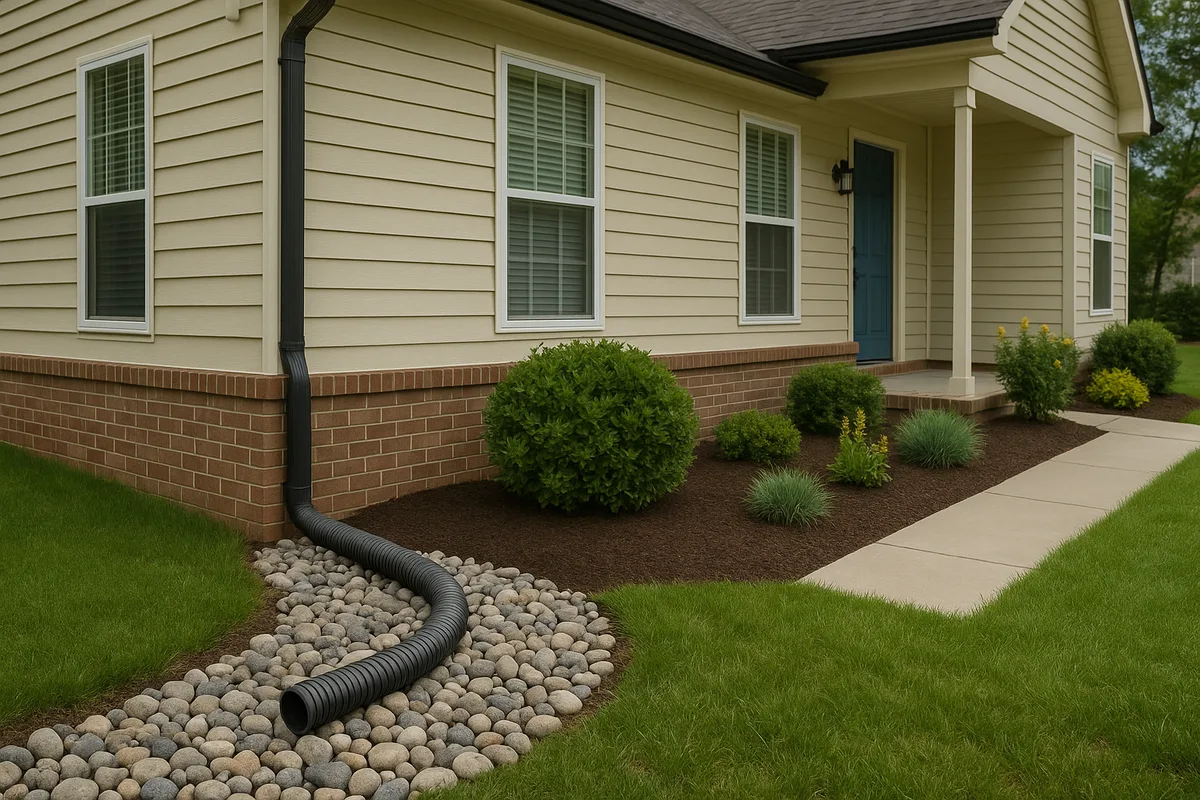
Tired of Losing Bids to Cheaper Competitors? The Data-Driven Pitch for Drainage Contractors
Every drainage contractor knows the sting. You spent two hours on-site, crawled under a deck, walked the entire property, identified the real problem, and put together a thorough proposal — only to lose the job to someone who quoted half your price and plans to throw a pop-up emitter at the end of a corrugated pipe. It is one of the most frustrating dynamics in the residential contracting world, and it is not going away on its own. But here is the thing: you are not actually losing on price. You are losing on perception of value. And the fastest way to change that perception is to stop selling drainage work like a commodity and start selling it like the technical, data-driven discipline it actually is.
Drainage contractor sales have evolved. Homeowners have access to more information than ever, yet most of them still do not understand what separates a $1,200 quick fix from a $6,500 engineered solution. That gap between what you know and what the homeowner understands is where your bids go to die. The contractors who are winning in 2026 are the ones who close that gap — not with slick sales talk, but with data, visuals, and quantified risk that make the value of proper drainage impossible to ignore.
This article is a complete playbook for drainage contractors who are tired of losing bids to cheaper competitors. We will cover how to restructure your sales process around data, the specific tools and deliverables that differentiate your proposals, how to quantify risk in dollar terms homeowners actually respond to, and how to position yourself as the expert — not just another guy with a trencher.
Why Drainage Contractors Lose Bids (And Why Price Is Rarely the Real Problem)
Let us start with an uncomfortable truth: when a homeowner chooses a cheaper competitor, they are not saying your price is too high. They are saying they do not see enough difference between what you offer and what the other contractor offers to justify the gap. In their eyes, both of you are proposing to "fix the drainage." If the outcome looks the same, why would they pay more?
This is a communication failure, not a pricing failure. Most drainage contractors present their bids as a list of materials and labor — 60 feet of 4-inch SDR-35, two catch basins, grading, sod repair, and a number at the bottom. The cheaper competitor presents the same format with fewer line items and a lower number. To the homeowner, these two documents look like two versions of the same thing. There is no narrative, no diagnosis, no explanation of why the scope is what it is.
The root cause of losing bids in drainage work is the absence of a diagnostic framework. A doctor does not walk into an exam room and say, "I think we should do surgery — here is the price." They run tests, show you images, explain the diagnosis, outline what happens if you do nothing, and then present a treatment plan. The patient does not shop that diagnosis against a cheaper doctor because the entire experience has built trust and demonstrated expertise. Drainage contractors need to adopt the same model.
There is also a psychological dimension at play. Behavioral economics research consistently shows that people are more motivated by avoiding losses than by achieving gains — a principle known as loss aversion. When you present a bid as "here is what we will install," you are selling a gain. When you present a bid as "here is what is happening to your foundation right now, here is what it will cost you if we do nothing, and here is how we stop it," you are framing the conversation around loss avoidance. That reframing alone can be worth thousands of dollars in perceived value.
The Data-Driven Proposal: What It Looks Like in Practice
A data-driven drainage proposal is not just a bid with a chart stapled to it. It is a fundamentally different deliverable that positions you as a diagnostician rather than a laborer. Here is what it includes and why each element matters for drainage contractor sales.
Topographic Context and Flow Analysis
The single most powerful thing you can add to a drainage proposal is a visual representation of how water moves across the property. Most homeowners have never seen their property from a topographic perspective. When you show them a contour map or a flow-path analysis that clearly illustrates where water collects and why it ends up against their foundation, you have already separated yourself from every competitor who showed up with a tape measure and a verbal explanation.
Topographic data is more accessible than ever. LiDAR-derived elevation models from the USGS 3D Elevation Program cover most of the United States at 1-meter resolution or better, and platforms like Low Point Labs can translate that raw data into property-specific drainage intelligence that contractors can use directly in their proposals. You do not need a surveying license or a GIS degree to leverage this information — you need the right tools and the willingness to present your work differently than your competitors.
Include a simple map or diagram in your proposal that shows the property's topographic low points, the direction of surface flow, and the contributing drainage area. When a homeowner can see that 4,000 square feet of uphill terrain is draining directly toward their basement wall, the conversation shifts from "how much does this cost" to "how soon can you start."
Rainfall and Volume Calculations
Cheap competitors almost never size their systems to handle actual storm events. They guess, or they default to a single 4-inch pipe because that is what they always use. You can differentiate your proposal instantly by showing the math.
Use NOAA Atlas 14 precipitation frequency data to determine the design storm for your area — typically the 10-year, 1-hour event for residential drainage. Calculate the contributing drainage area in square feet, apply a runoff coefficient based on the surface types (roof, lawn, pavement), and use the Rational Method (Q = CiA) to determine peak flow in cubic feet per second. Then show that your pipe sizing, basin selection, and outlet design are engineered to handle that volume.
Here is a concrete example you can adapt: "Based on NOAA rainfall data for this location, a 10-year storm produces 2.1 inches of rain per hour. With 3,200 square feet of contributing impervious area (roof and driveway) and 1,800 square feet of lawn, the peak runoff reaching your foundation is approximately 0.38 cubic feet per second — or roughly 170 gallons per minute. Our system is designed to capture and convey that full volume. A single 4-inch pipe can only handle about 80 GPM at the grades available on your property, which is why our design uses dual inlets and a 6-inch main line."
That paragraph, included in your proposal, makes it nearly impossible for a homeowner to look at a cheaper bid with a single 4-inch pipe and feel confident in it. You have not badmouthed the competitor — you have simply shown the math.
Soil Data and Infiltration Context
Soil type dramatically affects drainage system design, and most homeowners have no idea what kind of soil they have or why it matters. Pull the soil data for the property from the NRCS Web Soil Survey and include a brief summary in your proposal. Identify the hydrologic soil group (A through D), the typical infiltration rate, and what that means for the project.
For example: "Your property sits on Brookston silty clay loam, classified as Hydrologic Soil Group D. This is the slowest-draining soil category, with infiltration rates below 0.05 inches per hour. This means surface water does not soak in — it runs off. Drainage solutions that rely on infiltration, such as dry wells or French drains without positive outlets, will not perform effectively on this soil type. Our design accounts for this by providing a positive gravity outlet to the street storm system."
This kind of detail does three things simultaneously: it demonstrates expertise, it educates the homeowner, and it preemptively disqualifies inferior solutions that a cheaper competitor might propose. It is devastatingly effective in drainage contractor sales.
Quantifying the Cost of Inaction
The most powerful sales tool in residential drainage is not a discount — it is a clear articulation of what happens if the homeowner does nothing. Most homeowners seeking drainage bids are already experiencing a problem, but they often underestimate the financial risk of ignoring it. Your job is to make that risk concrete and specific.
Foundation Damage Costs
Foundation repair is one of the most expensive home repairs, and poor drainage is the leading cause. According to industry data, the average foundation repair in the United States costs between $5,000 and $15,000, with complex structural repairs exceeding $30,000. Basement waterproofing — which is often a symptom-treatment approach when the real problem is exterior grading and drainage — averages $5,000 to $10,000.
Include these figures in your proposal, not as scare tactics, but as context. Frame it this way: "The drainage correction we are proposing costs $5,800. The foundation damage that ongoing water intrusion causes typically costs $8,000 to $20,000 to repair, not including the disruption to your home and the impact on resale value. This project is not an expense — it is insurance against a much larger one."
Mold Remediation and Health Costs
Standing water and chronic moisture in crawl spaces and basements create ideal conditions for mold growth. Professional mold remediation costs $3,000 to $10,000 or more depending on the extent of contamination. For homeowners with family members who have respiratory conditions, this is not an abstract risk — it is a health issue. Mentioning this in your proposal (tactfully and factually) adds another dimension to the value equation.
Property Value and Insurability
Homes with documented drainage problems sell for less. Appraisers and home inspectors flag poor drainage as a material defect, and in many markets, it can reduce a home's value by 5% to 15%. For a $400,000 home, that is $20,000 to $60,000 in lost equity. Additionally, homes in flood-prone areas or with histories of water damage face higher insurance premiums or may struggle to obtain coverage at all.
When you quantify these downstream costs in your proposal, the homeowner is no longer comparing your $5,800 bid against a competitor's $2,400 bid. They are comparing your $5,800 investment against a potential $20,000+ loss. That is a completely different decision.
Visual Deliverables That Win Jobs
Human beings process visual information faster and more convincingly than text. The contractors who are winning the most bids in 2026 are the ones who show, not just tell. Here are the visual deliverables that have the highest impact on close rates.
Before-and-After Grading Diagrams
Create a simple cross-section diagram showing the current grade around the home and the proposed grade after your work. Mark the existing slope (or negative slope) in red and the corrected slope in green. Include the actual measurements — for example, "Current grade: -1.5% toward foundation (water flows toward house). Proposed grade: +5% away from foundation over the first 10 feet (water flows away from house)." Even a hand-drawn version of this diagram is more effective than a paragraph of text.
Photo Documentation with Annotations
During your site visit, take photos of every problem area and annotate them. Use arrows to show flow direction, circles to highlight ponding areas, and text callouts to explain what the homeowner is looking at. Tools as simple as a phone's markup feature work fine. Include these annotated photos in your proposal as a "Site Assessment" section before you present the scope of work.
This approach transforms your proposal from a price sheet into a diagnostic report. It also creates a record that the homeowner can reference when they are reviewing multiple bids side by side — and your annotated photos will be sitting right next to a competitor's plain-text email that says "drain tile and sump pump — $2,400."
Drainage Area Maps
Show the homeowner a property map with the drainage contributing area highlighted. Shade the area that drains toward the problem zone and label its size in square feet. This visual makes the scope of the problem tangible. A homeowner who thinks they have a "small wet spot by the basement" will see that 5,000 square feet of their neighbor's yard and their own roof are all contributing to that spot. Suddenly the problem feels bigger — and a comprehensive solution feels more justified.
Restructuring Your Sales Process Around Expertise
The tools and deliverables described above are powerful, but they only work if your sales process is structured to support them. Here is how to restructure your approach from first contact to signed contract.
Step 1: The Discovery Call
Before you visit the property, have a 10-minute phone or video call with the homeowner. Ask targeted diagnostic questions: When did the problem start? Is it worse after specific types of rain events? Have they noticed any cracks in the foundation? Has the problem gotten worse over time? Have they had any previous drainage work done?
This call accomplishes two things. First, it gives you information that helps you prepare for the site visit. Second, it signals to the homeowner that you are approaching this as a diagnostic process, not a sales call. You are already differentiating yourself from the contractor who just said, "I can come take a look Tuesday."
Step 2: The Site Assessment
Treat the site visit as an inspection, not an estimate appointment. Bring a level, a tape measure, and a camera. Measure slopes. Note downspout locations and discharge points. Identify soil type visually and confirm it against NRCS data later. Walk the entire property, not just the problem area — drainage problems are often caused by conditions 50 or 100 feet away from where the symptoms appear.
Take your time. A thorough site assessment that takes 45 minutes to an hour signals expertise. A contractor who shows up, walks around for 10 minutes, and texts a price that evening signals commodity work. The homeowner notices the difference, even if they do not articulate it.
Step 3: The Proposal Presentation
Do not email your proposal. Present it. Whether in person or via a video call, walk the homeowner through your findings, your diagnosis, and your recommended solution. Use the visuals — the topographic context, the annotated photos, the rainfall calculations, the cost-of-inaction analysis. Explain why each element of your scope exists.
This is where the data-driven approach pays for itself. When you walk a homeowner through a 10-page diagnostic report with maps, photos, calculations, and a clear explanation of the problem and solution, they are not going to feel comfortable hiring the contractor who texted them a one-line estimate. You have changed the frame of reference entirely.
Step 4: The Follow-Up
After presenting, give the homeowner time to review and compare. But follow up within 48 hours — not to pressure, but to answer questions. Often, homeowners will share details from competing bids during this conversation, which gives you the opportunity to (professionally) point out differences in scope, materials, or approach. You are not badmouthing competitors; you are helping the homeowner understand what they are comparing.
Handling the Price Objection Directly
Even with a data-driven proposal, some homeowners will still ask why you cost more. Here is how to handle that conversation with confidence rather than defensiveness.
Reframe the Comparison
When a homeowner says, "Your competitor quoted $2,400 for the same thing," your response should be: "Let me take a look at what they proposed so we can compare apples to apples." In most cases, the scopes are not the same. The cheaper bid often omits catch basins, uses corrugated pipe instead of solid-wall PVC, skips regrading, or does not address the root cause of the problem. Point out these differences factually.
If you have done the rainfall calculation, this is where it becomes decisive: "Their bid includes a single 4-inch corrugated pipe. Based on the rainfall data for this area and the size of the drainage area on your property, that pipe can handle about half the volume of a moderate storm. It will work for light rain, but the heavy events — the ones causing your problem — will overwhelm it. Our system is sized to handle the 10-year storm event, which means it will work when you need it most."
Use the Warranty and Callback Frame
Ask the homeowner: "What happens if the cheaper solution does not work?" In most cases, budget drainage contractors do not offer meaningful warranties. If they do, they may not be in business long enough to honor them. Position your warranty, your track record, and your willingness to stand behind your work as part of the value proposition.
You can also share (anonymously) examples of jobs where you have been called in to redo failed drainage work from other contractors. These stories resonate because they illustrate the real cost of choosing the cheapest option — the homeowner pays twice.
Offer Phased Solutions, Not Discounts
If the homeowner genuinely cannot afford the full scope, offer a phased approach rather than cutting your price. "We can address the most critical area — the foundation drainage on the north side — in phase one for $3,400, and then complete the backyard grading and swale in phase two next spring for $2,800." This preserves your margins, demonstrates flexibility, and keeps the homeowner in your pipeline for future work.
Never discount your price to match a cheaper competitor. The moment you do, you confirm the homeowner's suspicion that your original price was inflated. Instead, hold your price and add value — an extended warranty, a post-installation drainage assessment, or a maintenance visit after the first major storm.
Building a Reputation That Sells Before You Show Up
The best drainage contractor sales happen before you ever set foot on the property. When a homeowner contacts you already believing you are the expert, the conversation starts from a position of trust rather than skepticism. Here is how to build that reputation systematically.
Educational Content Marketing
Create content that demonstrates your expertise. Write blog posts about common drainage mistakes, film short videos explaining how French drains work (and when they do not), or post before-and-after project walkthroughs on social media. Every piece of educational content you publish is a trust-building asset that works for you 24 hours a day.
The contractors who invest in content marketing report that their inbound leads are warmer, their close rates are higher, and their average project value increases — because the homeowner has already been educated about what good drainage work looks like before they pick up the phone.
Reviews and Case Studies
After every successful project, ask for a detailed review. Coach the homeowner (gently) to mention specifics: the problem they had, what you proposed, how the process went, and how the result has held up. Generic five-star reviews are fine, but a review that says, "They showed us exactly why water was pooling against our foundation using topographic data and designed a system that has handled three major storms without a single drop in the basement" is worth ten generic ones.
Build case studies from your best projects. Include before-and-after photos, the diagnostic data you used, the solution you implemented, and the outcome. Post these on your website and reference them in proposals. Case studies are proof that your process works.
Strategic Partnerships
Build relationships with home inspectors, real estate agents, foundation repair companies, and landscapers. These professionals encounter drainage problems regularly and need a trusted contractor to refer. Position yourself as the data-driven expert — the contractor who provides diagnostic reports, not just estimates. When a home inspector flags a drainage issue and hands the homeowner your card with a personal recommendation, you have already won the bid before the competition even knows about the job.
The Technology Edge: Tools That Scale Your Expertise
The data-driven approach described in this article might sound time-intensive, and it can be if you are building every deliverable from scratch. The key to making it scalable is leveraging technology that automates the data gathering and visualization so you can focus on the diagnosis and the relationship.
Drainage intelligence platforms like Low Point Labs provide property-specific topographic analysis, flow-path mapping, and low-point identification using high-resolution elevation data. Instead of spending an hour pulling USGS data and building a contour map in GIS software, you can generate a professional drainage assessment for any property in minutes. That assessment becomes the centerpiece of your proposal — a deliverable that no budget competitor can match.
Mobile tools for photo annotation, proposal generation, and digital signatures further streamline the process. The goal is to spend your time on the high-value activities — the site assessment, the diagnosis, the client conversation — and let technology handle the data processing and document creation.
Contractors who adopt these tools report that the time investment per proposal actually decreases compared to their old process, even though the quality of the deliverable increases dramatically. The data-driven approach is not about working harder — it is about working smarter and presenting your expertise in a format that homeowners can see, understand, and trust.
Stop Competing on Price — Start Competing on Intelligence
The drainage contracting industry is at an inflection point. Homeowners are more informed, storms are more intense, and the consequences of poor drainage work are more expensive than ever. Contractors who continue to compete on price will continue losing bids to whoever is willing to go lowest — and they will watch their margins shrink until the business is no longer sustainable.
The alternative is clear. Compete on intelligence. Use topographic data, rainfall calculations, soil analysis, and visual diagnostics to build proposals that no budget competitor can replicate. Quantify the cost of inaction so homeowners understand that your price is not an expense — it is a fraction of what they will pay if the problem is not solved correctly. Structure your sales process around expertise, not urgency. And invest in the tools and content that build your reputation as the contractor who gets it right the first time.
Drainage contractor sales are not about convincing homeowners to pay more. They are about helping homeowners see more — more data, more context, more risk, and more value. When you give them that visibility, the price objection disappears, and the conversation becomes what it should have been all along: "When can you start?"
If you are ready to elevate your drainage proposals with property-specific topographic intelligence, explore what Low Point Labs can do for your business. Our drainage assessment platform gives contractors the data, visuals, and diagnostic tools to win more bids at higher margins — without spending hours on manual research. Visit Low Point Labs to see how topographic drainage intelligence can transform the way you sell.
See Drainage Intelligence in Practice
Talk with our team or request an invitation to the platform.
Frequently Asked Questions
Drainage contractors typically lose bids because their proposals fail to communicate the difference in value between a properly engineered solution and a budget fix. When both proposals look like a list of materials and a price, homeowners default to the lower number. Adding diagnostic data, visuals, and risk quantification to your proposals makes the value gap visible.
Justify higher prices by showing the engineering behind your design — rainfall calculations, pipe sizing based on actual storm data, soil analysis, and topographic flow maps. Also quantify the cost of inaction: foundation repairs ($5,000–$30,000), mold remediation ($3,000–$10,000), and property value loss (5–15%) all dwarf the cost of proper drainage work.
A strong data-driven proposal includes topographic flow analysis showing how water moves across the property, rainfall volume calculations using NOAA Atlas 14 data, soil type and infiltration rates from NRCS data, annotated site photos, and a drainage area map showing the contributing area. These elements demonstrate expertise and differentiate your bid from competitors.
Ask to compare scopes side by side. In most cases, the cheaper bid uses smaller pipes, fewer inlets, lower-quality materials, or skips critical elements like regrading. Use your rainfall calculations to show that an undersized system will fail during the storms that matter most. Offer phased solutions if budget is genuinely an issue, but never discount your price to match a competitor.
Platforms like Low Point Labs provide property-specific topographic drainage analysis and flow-path mapping using high-resolution elevation data. NOAA Atlas 14 provides local rainfall intensity data for pipe sizing. The NRCS Web Soil Survey provides soil type and infiltration data. Photo annotation apps and proposal software help create professional visual deliverables quickly.
Yes. Contractors who present diagnostic-quality proposals with visual data, engineering calculations, and risk quantification consistently report higher close rates and higher average project values. The approach builds trust, demonstrates expertise, and reframes the decision from a price comparison to a value assessment — making homeowners more willing to invest in the right solution.
Related Articles
The Psychology of the $20k Yard Drainage Sale: From Guesswork to Proof
How to Build a High-Margin Service Offering for Drainage Contractors