Does Fixing Drainage Before Listing Increase Your Sacramento Home's Value?
Selling a home in Sacramento means navigating one of California's most unique drainage environments. With its Mediterranean climate delivering 70–80% of annual rainfall between November and March, Sacramento properties face intense seasonal drainage demands that can leave visible evidence — standing water, foundation stains, soggy lawns, and eroded landscaping. For homeowners preparing to list, the question of whether drainage repair ROI in Sacramento justifies the upfront investment is more than academic. It can mean the difference between a smooth closing and a deal that falls apart during inspection.
The short answer is that fixing drainage before selling in Sacramento almost always pays for itself — and frequently delivers a net positive return. But the full picture depends on the severity of the problem, the type of repair, your neighborhood's price point, and how the local market is performing. This guide breaks down the real numbers, the buyer psychology, and the strategic calculus behind pre-listing drainage repairs in the Sacramento metro area.
Why Drainage Problems Are a Dealbreaker in Sacramento Real Estate
Sacramento sits at the confluence of the American and Sacramento Rivers, and much of the metropolitan area was historically floodplain. The region's soils — ranging from heavy clay in Natomas and Elk Grove to sandy loam in Fair Oaks and Orangevale — create wildly different drainage conditions from one neighborhood to the next. Buyers and their inspectors know this. A home inspection that flags drainage issues in Sacramento carries more weight than the same finding might in an arid market like Phoenix or Las Vegas.
When a buyer's home inspector identifies poor drainage, the consequences cascade quickly. The inspector's report doesn't just note standing water — it raises the specter of foundation damage, mold, wood rot, and soil instability. In Sacramento's competitive real estate market, buyers have options. A drainage flag gives them leverage to negotiate $10,000–$30,000 off the asking price, request extensive repairs as a contingency, or simply walk away. According to data from the National Association of Realtors, foundation and water-related issues are among the top five reasons real estate deals fall through during the inspection period.
The psychological impact compounds the financial one. Buyers who see evidence of water problems — efflorescence on foundation walls, mildew in crawl spaces, or a yard that clearly pools after rain — begin questioning what else might be wrong with the property. A drainage problem becomes a proxy for deferred maintenance. Even if the rest of the home is immaculate, that one issue reframes the buyer's entire perception.
Sacramento's Soil and Climate Make Drainage Non-Negotiable
Sacramento County's dominant soil types include Americanos, San Joaquin, and Redding series — many of which fall into Hydrologic Soil Group C or D, meaning they have slow to very slow infiltration rates. When winter storms deliver 2–4 inches of rain over a few days, these soils simply cannot absorb the volume. Water has to go somewhere, and if your property's grading and drainage infrastructure don't direct it away from the foundation and off the lot, the evidence will be visible.
The NRCS Web Soil Survey allows homeowners to look up the exact soil classification for their parcel. If your property sits on Group C or D soils, buyers' inspectors will likely be even more attentive to drainage conditions, making pre-listing repairs even more strategically important.
The Real Cost of Common Drainage Repairs in Sacramento
Understanding French drain Sacramento cost and other repair price points is essential for calculating your potential return. Sacramento's drainage repair market is well-established, with dozens of licensed contractors specializing in residential grading and stormwater management. Here's what homeowners can expect to pay as of early 2026:
French Drains
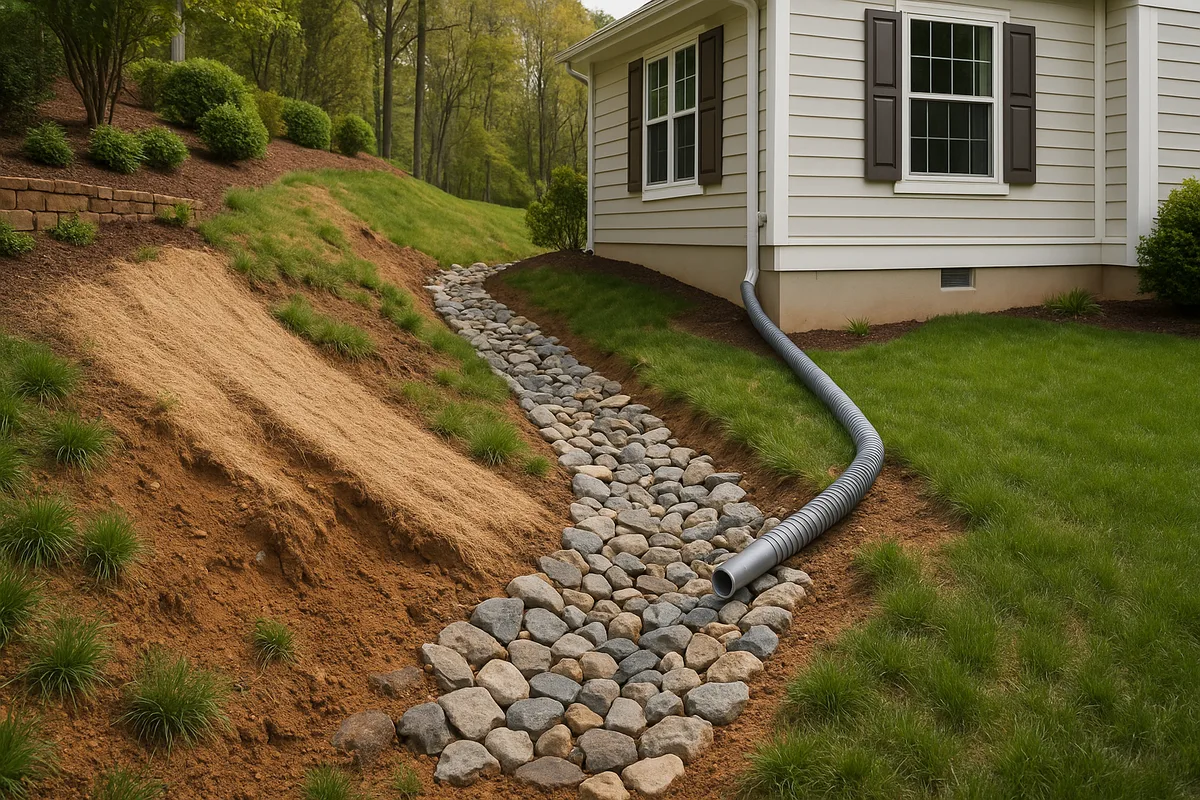
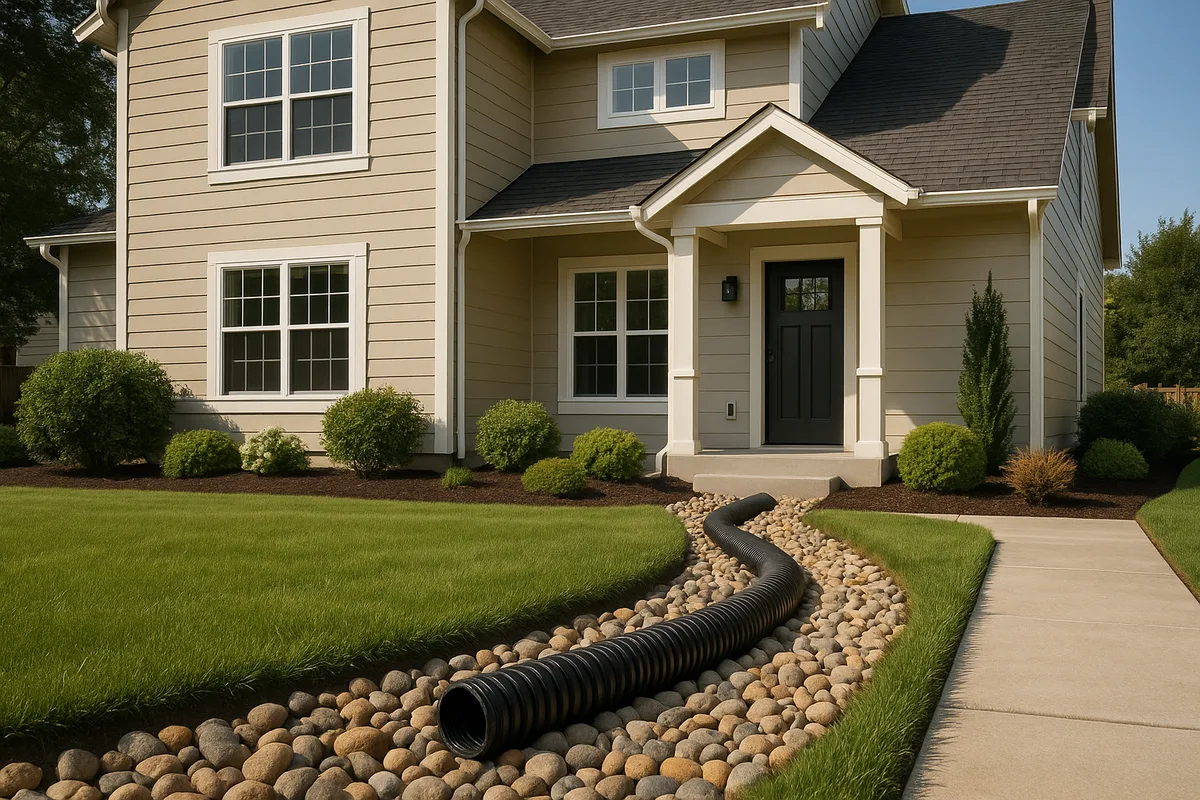
A French drain is the most common drainage solution for Sacramento yards. It consists of a perforated pipe surrounded by gravel, installed in a trench that intercepts subsurface water and redirects it to a discharge point — typically a pop-up emitter, dry well, or connection to the municipal storm drain.
- Linear foot cost: $25–$60 per linear foot, depending on depth, pipe diameter, and soil conditions
- Typical residential installation: 50–150 linear feet
- Total project range: $1,500–$9,000 for most Sacramento properties
- Complex installations (deeper trenches, multiple branches, hardscape removal): $8,000–$15,000
Surface Grading and Resloping
Proper grading is the first line of defense. The International Residential Code (IRC) specifies a minimum 6-inch drop over the first 10 feet from the foundation — equivalent to a 5% slope. Many Sacramento homes, especially those built in the 1960s through 1980s, have experienced soil settlement that has flattened or even reversed this grade.
- Minor regrading (small areas, no hardscape involved): $500–$2,500
- Full-yard regrading with soil import: $2,000–$8,000
- Regrading with hardscape modification (walkways, patios): $5,000–$15,000
Channel Drains and Catch Basins
For properties where surface water flows toward the home from driveways, patios, or neighboring lots, channel drains (also called trench drains) intercept the flow at the surface.
- Channel drain installation: $50–$100 per linear foot
- Catch basin with underground piping: $800–$2,500 per basin
Sump Pump Systems
Some Sacramento homes — particularly those in areas like Pocket, Land Park, or parts of Natomas with high water tables — require sump pump systems in crawl spaces or basements.
- Sump pump installation: $1,000–$3,500
- Battery backup system addition: $500–$1,500
Downspout Extensions and Underground Discharge
One of the highest-ROI drainage improvements is simply extending roof downspouts and routing them underground to discharge away from the foundation.
- Underground downspout routing (per downspout): $200–$600
- Full-home system (6–8 downspouts): $1,200–$4,800
Calculating Drainage Repair ROI in Sacramento
The return on investment for Sacramento pre-listing drainage repair comes from three distinct sources: avoided price reductions, faster time on market, and actual value addition. Let's examine each.
Avoided Price Reductions
This is where the math becomes most compelling. When a buyer's inspector flags drainage problems, the negotiation almost never reflects the actual cost of repair. Instead, buyers and their agents inflate the issue — reasonably — to account for uncertainty. A $3,000 French drain installation might trigger a $8,000–$15,000 price reduction request because the buyer factors in:
- The cost of getting their own bids post-closing
- The inconvenience of managing a construction project in their new home
- A "risk premium" for potential hidden damage they can't yet see
- The possibility that the drainage problem has already caused foundation movement
By investing $3,000–$8,000 in drainage repair before listing, you remove the leverage that would cost you two to three times that amount at the negotiating table. This alone often makes pre-listing drainage repair a 200–300% ROI proposition.
Faster Time on Market
Sacramento's median days on market fluctuates seasonally, but homes with visible defects consistently take longer to sell. Every additional week on the market costs you — in mortgage payments, utilities, insurance, maintenance, and the psychological burden of keeping a home show-ready. Homes that linger also develop a stigma; buyers wonder why no one else has made an offer.
A clean inspection report — one without drainage flags — removes one of the most common obstacles to a quick close. In Sacramento's spring selling season (March through June), when inventory is tightest and competition among buyers is fiercest, a move-in-ready home with no drainage concerns can sell in days rather than weeks.
Actual Value Addition
Beyond avoiding losses, quality drainage improvements can genuinely increase your home's appraised value. Appraisers evaluate the overall condition of a property, and a well-drained yard with proper grading, clean gutters, and professional drainage infrastructure signals a well-maintained home. While appraisers don't assign a specific line-item value to a French drain, they do adjust their condition rating — and the difference between "average" and "good" condition can represent 1–3% of the home's value.
For a Sacramento home valued at $550,000 (close to the metro median as of early 2026), that 1–3% adjustment translates to $5,500–$16,500 in appraised value. When your drainage repair cost $4,000–$8,000, the numbers speak for themselves.
Which Sacramento Neighborhoods Benefit Most from Pre-Listing Drainage Work
Not all Sacramento neighborhoods face equal drainage risk, and the ROI of pre-listing drainage repair varies accordingly. Here's a neighborhood-by-neighborhood breakdown of where drainage improvements deliver the highest returns.
High-Priority Areas
Natomas (North and South): Built largely on reclaimed floodplain with heavy clay soils, Natomas properties are notorious for drainage challenges. Buyers in this area are acutely aware of water issues, and a proactive drainage solution is practically expected. The ROI here is among the highest in the metro area because buyers will aggressively discount homes with any evidence of water problems.
Pocket-Greenhaven: Situated in a low-lying area near the Sacramento River, Pocket homes frequently deal with high water tables and seasonal saturation. Sump pump systems and French drains are common, and homes without them can face significant buyer resistance.
Elk Grove (older subdivisions): Many Elk Grove homes built in the late 1990s and early 2000s are now experiencing the effects of soil settlement. Original grading has shifted, and yards that once drained properly now pool near foundations. Regrading and French drain installation deliver strong ROI in these neighborhoods.
Land Park and Curtis Park: These established neighborhoods feature mature trees, older homes, and infrastructure that has been in place for decades. Root intrusion into drain lines, settled soil, and outdated drainage systems are common. Buyers pay a premium for these neighborhoods, and they expect the infrastructure to match.
Moderate-Priority Areas
Fair Oaks, Orangevale, and Citrus Heights: These areas tend to have sandier, better-draining soils, but properties on slopes or with hardpan layers can still experience significant drainage issues. The ROI is moderate — drainage problems are less expected here, so they can be more alarming to buyers when found.
Folsom and El Dorado Hills: Higher-end properties in these areas command premium prices, and buyers expect turnkey condition. Even minor drainage deficiencies can trigger outsized price negotiations. The absolute dollar ROI can be significant simply because the home values are higher.
Lower-Priority (But Still Worthwhile) Areas
Roseville and Rocklin: Newer construction in these areas generally has better-engineered drainage, and the soils tend to be more permeable. However, homes older than 15–20 years may have experienced enough settlement to warrant regrading. The ROI is positive but more modest.
What Buyers and Inspectors Actually Look For
Understanding the inspection process helps you prioritize which drainage repairs will have the most impact on your sale. Sacramento home inspectors follow standardized protocols, but experienced inspectors in this market pay particular attention to water-related issues because of the region's climate and soil conditions.
Exterior Inspection Points
- Foundation perimeter grading: Inspectors will check whether the soil slopes away from the foundation at the required minimum grade. They'll note any areas where soil has settled against the foundation or where flower beds have been built up to create reverse grades.
- Gutter and downspout condition: Missing, damaged, or improperly routed downspouts are among the most commonly cited deficiencies. Inspectors want to see downspouts discharging at least 4–6 feet from the foundation.
- Evidence of standing water: Staining on hardscape, algae growth, mosquito breeding areas, and dead grass in low spots all signal drainage problems.
- Retaining walls and slopes: Any retaining wall should have weep holes and proper backfill drainage. Slopes should be stable with no evidence of erosion or soil movement.
Interior and Crawl Space Inspection Points
- Crawl space moisture: Inspectors will enter the crawl space (if accessible) and check for standing water, moisture on framing members, vapor barrier condition, and any evidence of past flooding.
- Foundation cracks: While not all cracks indicate drainage problems, horizontal cracks or stair-step cracks in block foundations can suggest hydrostatic pressure from saturated soil.
- Musty odors and mold: These are immediate red flags that suggest chronic moisture intrusion.
How to Pass Inspection with Flying Colors
The goal of pre-listing drainage repair isn't just to fix the problem — it's to eliminate any visual evidence that a problem ever existed. This means:
- Regrade soil so the slope away from the foundation is obvious and measurable
- Install drainage infrastructure (French drains, channel drains) with clean, professional-grade materials
- Route all downspouts underground to discharge points well away from the foundation
- Address crawl space moisture with vapor barriers, ventilation, and sump pumps if needed
- Document everything — keep receipts, photos, and permits to present to buyers as evidence of professional remediation
- Allow time for landscaping to recover — fresh sod or seed needs 4–8 weeks to establish before showing
Strategic Timing: When to Schedule Drainage Repairs Before Listing
Timing your drainage repairs correctly is crucial for maximizing both the practical effectiveness and the visual impact of the work. Sacramento's climate creates a natural rhythm for this work.
The Ideal Timeline
October–November (Pre-Rain Season): This is the optimal window to complete drainage repairs. The ground is dry enough for efficient excavation, contractors are available (before their busy season), and prices may be more competitive. Completing work in fall gives you the entire rainy season (December–March) to verify that the system performs as designed.
January–February (Mid-Season Verification): If you completed repairs in fall, use this period to inspect the system during actual rain events. Walk the property during and after storms. Check that French drains are flowing, pop-up emitters are discharging, and no new pooling areas have developed. Document the system's performance with photos and videos — this evidence is gold when listing in spring.
March–April (Pre-Listing Prep): With drainage verified, focus on cosmetic restoration. Reseed or resod any disturbed lawn areas. Refresh mulch in beds. Clean and repair gutters. Make sure the yard looks pristine for photography and showings.
May–June (Listing): Sacramento's peak selling season. Your home hits the market with a verified drainage system, a lush yard, and documentation proving the system works. You're in the strongest possible position.
What If You're on a Compressed Timeline?
Not every seller has the luxury of a 6-month runway. If you need to list within 30–60 days and have drainage problems, prioritize repairs in this order:
- Downspout extensions (1–2 days, immediate visual impact)
- Surface regrading near the foundation (2–3 days)
- French drain installation in the most problematic area (3–5 days)
- Cosmetic restoration (ongoing until listing)
Even partial drainage improvements demonstrate to buyers and inspectors that you've taken the issue seriously and invested in solutions.
Comparing Drainage Repair to Other Pre-Listing Investments
Homeowners preparing to sell face countless decisions about where to invest their pre-listing improvement budget. How does drainage repair stack up against other common investments?
Drainage Repair vs. Kitchen Updates
A minor kitchen remodel in Sacramento costs $15,000–$35,000 and typically returns 70–80% of the investment according to Remodeling Magazine's Cost vs. Value Report. Drainage repair, at $3,000–$10,000, can return 150–300% when you factor in avoided price reductions. The kitchen update is visible and exciting; the drainage repair is invisible but financially superior.
Drainage Repair vs. Bathroom Renovation
Bathroom renovations run $10,000–$25,000 with similar 60–70% returns. Again, drainage repair delivers better ROI per dollar invested, though the two aren't mutually exclusive.
Drainage Repair vs. Interior Paint
Fresh interior paint ($2,000–$5,000 for a whole house) is one of the few pre-listing investments that rivals drainage repair in ROI. Both are high-return, relatively low-cost improvements. The smart seller does both.
Drainage Repair vs. Landscaping
General landscaping improvements ($3,000–$10,000) return 100–150% in Sacramento's market. But here's the key insight: landscaping without proper drainage is a wasted investment. New sod, plants, and mulch will deteriorate quickly if the yard floods every winter. Fix the drainage first, then invest in landscaping — the two together create a compounding effect.
The Bottom Line on Comparative ROI
Drainage repair is one of the highest-ROI pre-listing investments available to Sacramento homeowners, primarily because of the asymmetric negotiation dynamics it eliminates. A $5,000 drainage repair that prevents a $15,000 price reduction is a 300% return — better than virtually any cosmetic improvement.
How to Choose the Right Drainage Contractor in Sacramento
Selecting the right contractor for your pre-listing drainage repair is critical. A poorly executed repair can be worse than no repair at all — it gives inspectors even more to flag and raises questions about the quality of all work done on the property.
What to Look For
- C-36 Plumbing License or C-12 Earthwork License: In California, drainage work that involves subsurface piping typically requires a licensed contractor. Verify licenses through the California Contractors State License Board (CSLB).
- Sacramento-specific experience: Drainage solutions that work in other markets may not be appropriate for Sacramento's soil and climate conditions. Ask for references from projects in your specific neighborhood.
- Permit knowledge: Some drainage work in Sacramento requires permits, particularly if you're connecting to the municipal storm drain system or performing significant grading. Your contractor should know the requirements and handle the permitting process.
- Warranty: Look for contractors who offer at least a 2-year warranty on materials and workmanship. This warranty transfers to the buyer and provides additional peace of mind during the sale.
Red Flags to Avoid
- Contractors who propose solutions without first assessing the property's topography, soil type, and existing drainage infrastructure
- Bids that are dramatically lower than competitors (often indicates shortcuts in materials or installation depth)
- Contractors who can't explain where the water will discharge and why that discharge point is appropriate
- Anyone who suggests drainage work that would redirect water onto a neighboring property (this creates legal liability)
Getting the Most Value from Your Contractor
Ask your contractor to provide:
- A written scope of work with a diagram showing drain locations, slopes, and discharge points
- Before and after photos of the installation
- A brief summary letter describing the problem identified and the solution installed — this document becomes part of your seller's disclosure package and demonstrates transparency
- Any applicable permits and inspection sign-offs
Disclosure Obligations and Legal Considerations in California
California's seller disclosure requirements are among the most comprehensive in the nation. Understanding your obligations around drainage issues is essential for a smooth transaction.
What You Must Disclose
California's Transfer Disclosure Statement (TDS) and Seller Property Questionnaire (SPQ) specifically ask about drainage, flooding, and water intrusion. You are legally required to disclose:
- Any known past flooding or drainage problems, even if they've been repaired
- The existence of any drainage systems (French drains, sump pumps, etc.)
- Any water intrusion into the home, crawl space, or garage
- Whether the property is in a flood zone (also covered by the Natural Hazard Disclosure)
How Repairs Strengthen Your Disclosure Position
Here's where pre-listing drainage repair becomes a legal asset as well as a financial one. When you disclose a past drainage problem AND the professional repair you've completed, you demonstrate:
- Transparency: You're not hiding anything
- Responsibility: You've addressed the issue proactively
- Documentation: You have receipts, permits, and contractor details
This positions you far more favorably than a seller who either fails to disclose a known problem (risking post-sale litigation) or discloses a problem without having addressed it (inviting aggressive price negotiations).
Flood Zone Considerations
Some Sacramento properties fall within FEMA-designated flood zones, which triggers additional disclosure requirements and may require the buyer to obtain flood insurance. You can check your property's flood zone designation through the FEMA National Flood Map Service Center. If your property is in a flood zone, drainage improvements won't change the designation, but they demonstrate that you've taken steps to manage water on the property — a meaningful signal to buyers who may be concerned about the flood zone classification.
Making the Decision: A Framework for Sacramento Sellers
Not every drainage issue requires a major investment before listing. Here's a practical decision framework to help you determine the right level of intervention for your situation.
Tier 1: Must-Fix Before Listing (High ROI, High Risk if Ignored)
- Standing water against the foundation during or after rain
- Visible foundation damage (cracks, displacement) related to water
- Water intrusion into the crawl space or living areas
- Reverse grading that directs water toward the home
- Failed or collapsed existing drainage systems
These issues will be flagged by every competent inspector and will either kill the deal or cost you significantly more in negotiations than the repair would have cost.
Tier 2: Strongly Recommended (Good ROI, Moderate Risk)
- Minor pooling in the yard away from the foundation
- Downspouts discharging too close to the home
- Erosion along fence lines or property boundaries
- Gutters in poor condition or undersized for roof area
These issues may or may not derail a sale, but they contribute to an overall impression of deferred maintenance and give buyers negotiating ammunition.
Tier 3: Nice to Have (Modest ROI, Low Risk)
- Upgrading from surface drainage to underground systems
- Adding drainage to areas that are functional but not optimal
- Installing decorative drainage features (dry creek beds, rain gardens)
These improvements enhance the property's appeal but aren't strictly necessary from a risk-mitigation standpoint.
The Decision Matrix
Ask yourself three questions:
- Will an inspector flag this? If yes, fix it. The cost of repair is almost always less than the cost of negotiation.
- Can a buyer see evidence of the problem? If yes, fix it. Visual evidence of water problems creates emotional resistance that's hard to overcome with price alone.
- Does my neighborhood have a reputation for drainage issues? If yes, proactive repairs differentiate your property from competing listings.
If you answered yes to any of these questions, the ROI of pre-listing drainage repair in Sacramento is overwhelmingly positive.
Take the First Step: Understand Your Property's Drainage Profile
The most effective pre-listing drainage strategy starts with understanding your property's unique topographic and drainage characteristics. Yard drainage and home value in Sacramento are inextricably linked, and the sellers who achieve the best outcomes are those who address drainage proactively rather than reactively.
At Low Point Labs, we specialize in topographic drainage intelligence that gives homeowners a clear, data-driven picture of how water moves across their property. Our assessments identify low points, flow paths, and areas of concern — giving you the information you need to make smart decisions about pre-listing drainage repairs. Whether you're months away from listing or weeks, understanding your property's drainage profile is the foundation of a successful sale strategy.
Don't let a preventable drainage issue cost you thousands at the negotiating table. Explore Low Point Labs' drainage assessment services and take control of your home's value before you list.
See Drainage Intelligence in Practice
Talk with our team or request an invitation to the platform.
Frequently Asked Questions
French drain installation in Sacramento typically costs $25–$60 per linear foot, with most residential projects requiring 50–150 linear feet. Total project costs range from $1,500 to $9,000 for standard installations, with complex projects involving deeper trenches or hardscape removal reaching $8,000–$15,000.
Yes, fixing yard drainage can increase your Sacramento home's value both directly and indirectly. Proper drainage can improve an appraiser's condition rating by 1–3%, translating to $5,500–$16,500 on a median-priced home. More significantly, it prevents buyer-driven price reductions of $10,000–$30,000 that commonly result from inspector-flagged drainage issues.
Yes, California law requires sellers to disclose known drainage problems, past flooding, water intrusion, and the existence of any drainage systems on the Transfer Disclosure Statement (TDS) and Seller Property Questionnaire (SPQ). Completing professional repairs before listing strengthens your disclosure position by demonstrating transparency and responsible homeownership.
The ideal time is October–November, before Sacramento's rainy season begins. This allows you to complete repairs while the ground is dry, verify system performance during winter rains (December–March), and list your home during the peak spring selling season (May–June) with a proven, functioning drainage system.
Home inspectors don't pass or fail homes, but they will flag drainage deficiencies in their report. In Sacramento's market, drainage flags are taken seriously by buyers due to the region's clay soils and seasonal rainfall. Flagged drainage issues commonly lead to price renegotiations, repair demands, or buyers walking away from the deal.
Drainage repair before selling in Sacramento typically delivers 150–300% ROI. A $3,000–$8,000 drainage repair can prevent $10,000–$30,000 in buyer-negotiated price reductions, reduce time on market, and improve the appraiser's condition rating. It is one of the highest-return pre-listing investments available to Sacramento homeowners.
Related Articles
French Drains in Sacramento: Costs, Permits, and What to Expect
Soggy Lawn That Never Dries: 9 Common Causes and How to Fix Them