How Long Should Standing Water Last After Rain? A Drainage Guide
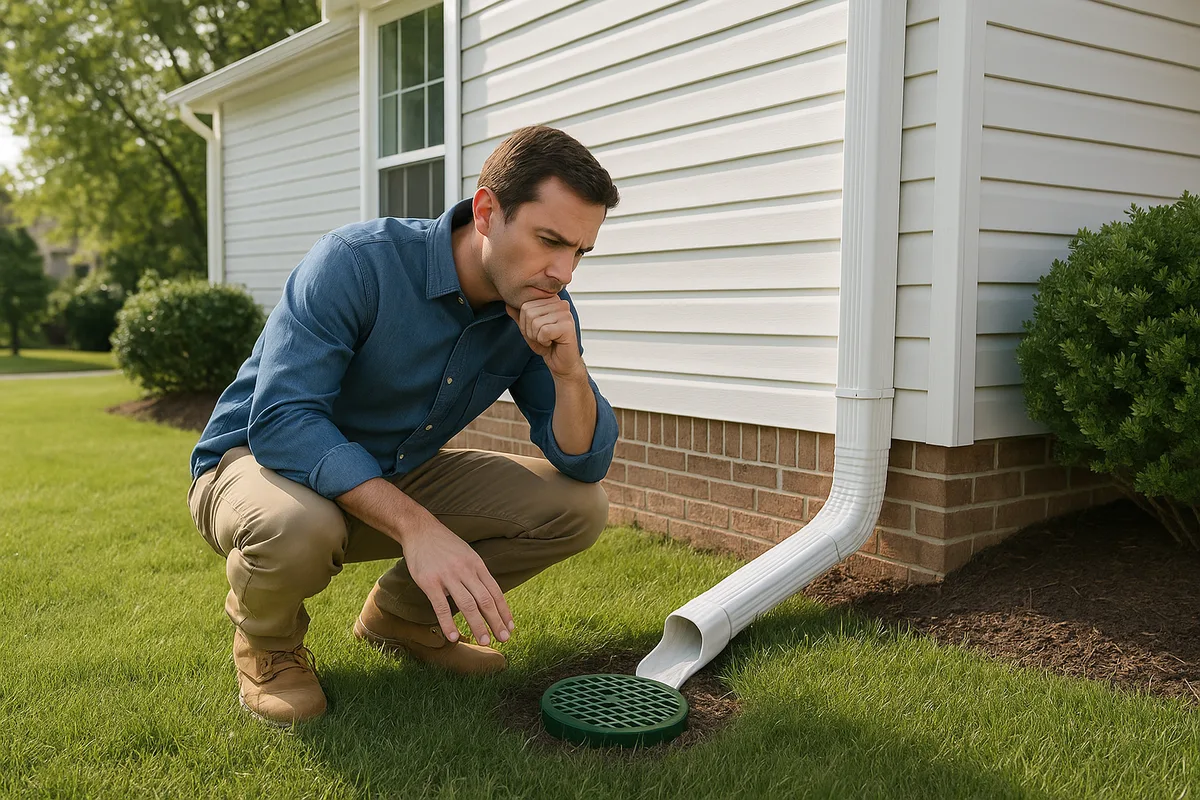
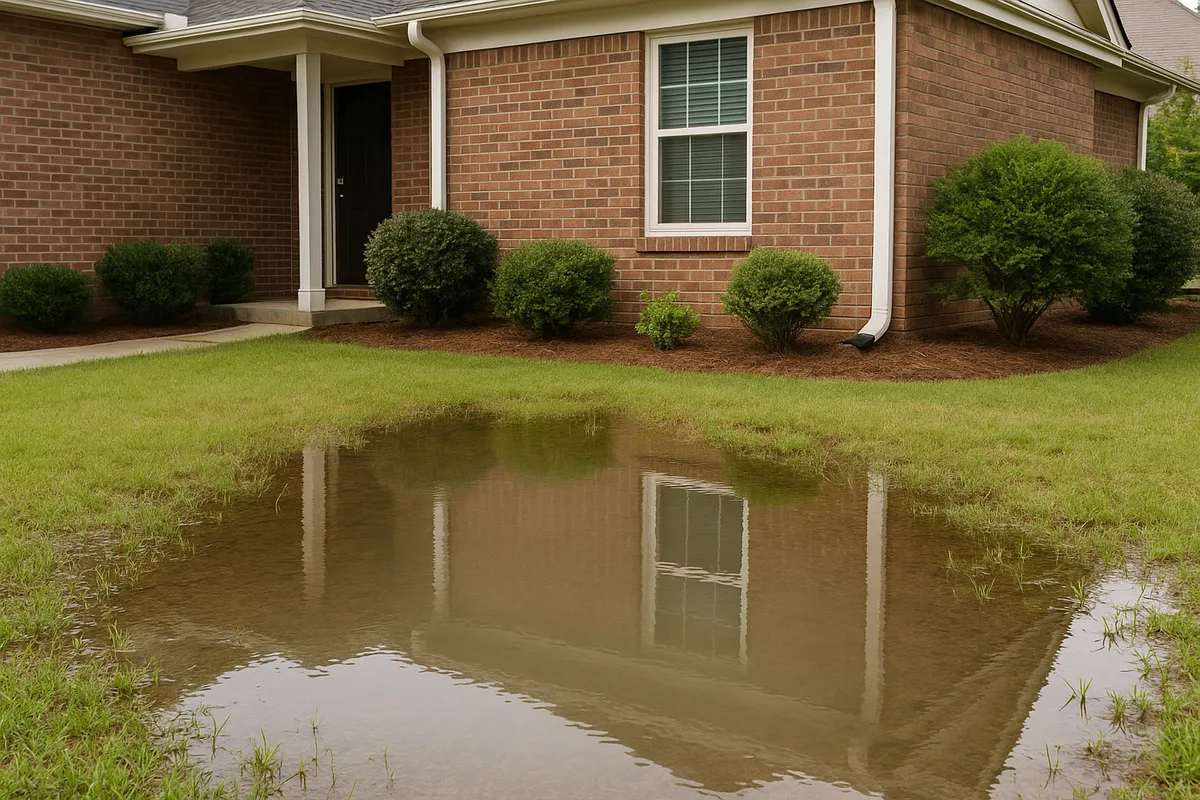
After a rainstorm, it's normal to see puddles in your yard, driveway, or garden beds. But when those puddles are still sitting there the next day — or the day after that — you have a legitimate concern. Standing water after rain should drain within a predictable window, and when it doesn't, the consequences can range from mosquito infestations to serious structural damage to your home's foundation.
Understanding how long water should reasonably persist after rainfall is one of the most practical pieces of drainage knowledge a homeowner can have. It tells you whether your property's grading, soil, and drainage infrastructure are functioning as designed — or whether something has gone wrong. In this guide, we'll break down the expected drainage timelines, explain the factors that influence them, and walk you through what to do when water is not draining from your property the way it should.
The 24–48 Hour Rule: What's Normal
The widely accepted benchmark among drainage professionals, civil engineers, and home inspectors is that standing water should drain from a residential yard within 24 to 48 hours after rainfall stops. This applies to typical lawn areas, garden beds, and other permeable surfaces on a property with reasonably functional drainage.
Within the first few hours after a storm, you should see active recession — puddles shrinking, saturated areas beginning to firm up, and water visibly moving toward drainage paths or infiltrating into the soil. By the 12-hour mark, most surface water on a well-graded property should be gone or nearly gone. The 24-to-48-hour window accounts for heavier storms, clay-heavy soils, and areas where subsurface drainage takes longer to draw water down through the soil profile.
There are a few important caveats to this rule. First, it applies to typical rainfall events — say, storms delivering 0.5 to 2 inches of rain over several hours. Major storm events that drop 3 or more inches in a short period can overwhelm even well-designed drainage systems temporarily, and a slightly longer drainage window may be acceptable. Second, the rule assumes permeable ground. Hardscaped areas like concrete patios and driveways don't absorb water; they rely entirely on surface grading and stormwater infrastructure to move water away, which is a different calculation.
If standing water persists beyond 48 hours under normal rainfall conditions, that's a clear signal that something in your property's drainage system — whether it's the grading, the soil, or the infrastructure — is not performing adequately. At 72 hours and beyond, you're no longer looking at a slow-draining yard; you're looking at a drainage failure that demands attention.
Why the Timeline Matters: Risks of Prolonged Standing Water
Standing water after rain isn't just an aesthetic nuisance. The longer water sits on or near your property, the more damage it can cause across multiple dimensions — structural, biological, and financial.
Foundation and Structural Damage
The single greatest risk of prolonged standing water is its effect on your home's foundation. Water that pools near the foundation wall creates hydrostatic pressure — the lateral force that saturated soil exerts against basement walls and footings. Over time, this pressure can cause cracks, bowing, and water infiltration into basement or crawl space areas. Even slab-on-grade foundations are vulnerable: persistent moisture beneath the slab can cause soil expansion and contraction cycles that lead to cracking and settlement.
Most building codes and best practices call for a minimum 6-inch drop in the first 10 feet away from the foundation (approximately a 5% slope). This standard exists precisely to prevent water from lingering near the structure. When standing water appears within that critical 10-foot perimeter and doesn't drain within hours, the risk to your foundation escalates rapidly.
Mosquitoes and Public Health
Mosquitoes can complete their egg-to-larva cycle in as little as 7 to 10 days in warm weather, but they only need standing water to begin laying eggs. Even shallow puddles that persist for 4 to 5 days can become breeding grounds. In regions where mosquito-borne illnesses like West Nile virus or Eastern equine encephalitis are concerns, eliminating standing water is a public health priority, not just a comfort issue.
Lawn and Landscape Damage
Most turfgrass species — including common varieties like Kentucky bluegrass, Bermuda, and fescue — cannot tolerate waterlogged root zones for more than 24 to 48 hours without suffering stress. Prolonged saturation deprives roots of oxygen, leading to root rot, fungal diseases, and eventual die-off. You'll often see the evidence as yellowing patches, thinning turf, or the appearance of moss and algae in chronically wet areas. Ornamental plantings and trees are similarly vulnerable; many common landscape species will decline or die in persistently saturated soil.
Soil Degradation
Repeated cycles of prolonged saturation break down soil structure over time. Healthy soil contains a mix of solid particles, organic matter, air pockets, and moisture. When water sits for extended periods, it collapses the air pockets that roots and beneficial soil organisms depend on. In clay soils, this can lead to increased compaction, which further reduces drainage capacity — creating a worsening feedback loop.
Factors That Determine How Fast Water Drains
If you're seeing standing water after rain that lingers longer than it should, the cause almost always traces back to one or more of these key factors. Understanding them is the first step toward diagnosing and solving the problem.
Soil Type and Infiltration Rate
Soil composition is the single most influential factor in how quickly water drains from your yard. The USDA Natural Resources Conservation Service (NRCS) classifies soils into four hydrologic soil groups based on their infiltration and runoff characteristics:
- Group A (Sandy soils): High infiltration rate, even when saturated. Water drains through quickly — often within hours. Infiltration rates of 0.30 to 0.45 inches per hour or higher.
- Group B (Silt loam soils): Moderate infiltration rate. These soils drain reasonably well but may hold surface water for 12 to 24 hours after heavy rain.
- Group C (Sandy clay loam): Slow infiltration rate. Surface water may persist for 24 to 48 hours even with adequate grading.
- Group D (Clay soils): Very slow infiltration rate — sometimes as low as 0.00 to 0.05 inches per hour when saturated. These soils are the most common culprit behind chronic standing water problems.
You can look up your property's soil type using the NRCS Web Soil Survey, which provides detailed soil maps and hydrologic group classifications for any address in the United States. Knowing your soil group gives you a realistic baseline for drainage expectations.
Grading and Slope
Surface grading — the shape of the ground — determines where water goes when it hits your property. On a properly graded lot, rainwater flows away from structures and toward designated drainage points: swales, storm drains, street gutters, or natural low points at the property's edge.
The critical metric is slope percentage. A minimum 2% slope (approximately a 1/4-inch drop per foot) is generally needed for water to move across a lawn surface. Steeper slopes move water faster. Flat areas or areas with negative grading (ground that slopes toward the house instead of away) will trap water and create persistent puddles.
Over time, grading can change. Soil settles, especially in areas where fill was used during construction. Landscaping projects, tree root growth, and erosion can all alter the original grade. A yard that drained perfectly five years ago may have developed low spots that now collect water.
Compaction
Soil compaction dramatically reduces infiltration rates regardless of soil type. Compacted soil has fewer and smaller pore spaces, which means water can't penetrate the surface efficiently. Common causes of compaction include:
- Heavy foot traffic (paths, play areas)
- Vehicle parking on lawn areas
- Construction activity (heavy equipment crushes soil structure)
- Natural settling over time
A compacted clay soil can have an effective infiltration rate near zero, meaning virtually all rainfall becomes surface runoff — and if the surface grading doesn't move that runoff away efficiently, it pools.
Depth to Water Table
The water table is the level below ground where soil is permanently saturated. When the water table is high — say, within 1 to 3 feet of the surface — there's simply less soil volume available to absorb rainwater. Properties with high water tables, particularly in coastal areas, river valleys, and low-lying terrain, will naturally experience longer drainage times after storms.
Seasonal fluctuations matter too. A property that drains fine in summer may develop standing water problems in spring when snowmelt and seasonal rains push the water table higher.
Drainage Infrastructure
Many residential properties rely on built drainage infrastructure — gutters, downspouts, French drains, catch basins, curtain drains, or underground piping — to manage stormwater. When these systems are clogged, damaged, undersized, or improperly installed, water has nowhere to go. A single crushed or root-clogged drain pipe can turn a functioning drainage system into a ponding problem overnight.
How to Diagnose Why Water Is Not Draining
When you notice water not draining from your yard within the expected timeframe, a systematic approach to diagnosis will save you time and money. Here's how to evaluate the problem like a professional.
Step 1: Map the Problem Areas
After the next rain event, walk your property and note exactly where water is collecting. Take photos with timestamps. Pay attention to:
- How close the standing water is to your foundation
- Whether the water is in a defined low spot or spread across a broad area
- Whether the water is connected to a flow path (swale, gutter outlet, etc.) or isolated
- How deep the water is and how long it persists
This mapping exercise often reveals patterns. You may discover that all your standing water traces back to a single gutter downspout that's dumping water into a flat area, or that a subtle depression in the lawn is acting as an unintended catch basin.
Step 2: Check Your Grading
Using a simple line level, string, and stakes — or even a long carpenter's level — you can check the slope of the ground around your home. Measure the elevation change over a 10-foot run from the foundation wall outward. If you're not getting at least a 6-inch drop (5% slope) in that zone, or if the ground is level or sloping back toward the house, you've identified a grading problem.
For areas farther from the house, look for the low points in the landscape. These are the spots where water naturally collects. In a well-designed yard, low points should be located at the property's edges or connected to drainage infrastructure. Low points in the middle of the yard with no outlet are guaranteed ponding zones.
Step 3: Test Your Soil
A simple percolation test can tell you a lot about your soil's drainage capacity. Dig a hole approximately 12 inches deep and 12 inches in diameter. Fill it with water and let it drain completely — this pre-saturates the soil. Then fill it again and measure how long it takes to drain. In well-draining soil, the water level should drop at least 1 inch per hour. If it takes more than 4 hours to drain, you're dealing with poorly draining soil that contributes to standing water.
Step 4: Inspect Drainage Infrastructure
Walk your gutter and downspout system during a rain event. Look for overflows, leaks, and downspouts that discharge too close to the foundation. Check any French drains, catch basins, or underground pipes for clogs or damage. A garden hose inserted into a clean-out or drain inlet can help you verify whether underground pipes are flowing freely.
Step 5: Consider Seasonal and Regional Factors
If the standing water problem is new or seasonal, think about what has changed. Has a neighbor's property been regraded, redirecting runoff onto your lot? Has a new patio or driveway increased impervious surface area? Has a mature tree been removed, reducing the transpiration that was helping to dry the soil? These contextual clues can point you toward the root cause.
Solutions for Standing Water That Won't Drain
Once you've identified why water is lingering on your property, you can match the right solution to the specific problem. Here are the most effective approaches, organized from simplest to most involved.
Regrading and Surface Corrections
For many properties, the most effective solution is also the most fundamental: fix the grade. Regrading involves adding or redistributing soil to create proper slopes that direct water away from structures and toward appropriate drainage points.
Small-scale regrading — filling a low spot, building up the grade against a foundation wall — is often a manageable DIY project. You'll want to use a quality fill dirt (not topsoil, which is too organic and will settle) and compact it in lifts to prevent future settling. Top it with 4 to 6 inches of topsoil for planting. For larger regrading projects or situations where the grade needs to change significantly, a professional grading contractor with laser-guided equipment will deliver more precise and lasting results.
Swales and Grading Channels
A swale is a shallow, vegetated channel designed to collect and convey surface water. Swales are one of the most effective and natural-looking solutions for redirecting water that's pooling in the wrong place. A properly designed swale has a gentle longitudinal slope (typically 1% to 3%) that moves water toward a designated outlet — a rain garden, dry well, storm drain, or property edge.
Swales work particularly well for intercepting sheet flow across a yard and channeling it away from problem areas. They're relatively inexpensive to construct and, when vegetated with turf or native grasses, blend seamlessly into the landscape.
French Drains and Subsurface Drainage
When surface grading alone can't solve the problem — particularly in flat yards or areas with high water tables — subsurface drainage becomes necessary. A French drain is a trench filled with gravel and a perforated pipe that collects groundwater and channels it to a discharge point.
Key specifications for an effective French drain:
- Depth: Typically 18 to 24 inches, though deeper installations may be needed near foundations
- Width: 12 inches minimum
- Pipe: 4-inch perforated corrugated or rigid PVC pipe (rigid PVC is more durable and less prone to crushing)
- Slope: Minimum 1% grade (1/8 inch per foot) toward the outlet
- Filter fabric: Wrap the gravel and pipe in non-woven geotextile fabric to prevent soil infiltration and clogging
- Gravel: Clean, washed 3/4-inch to 1-1/2-inch stone (not crusite or limestone dust)
The discharge point is critical. French drains must have a legal, functional outlet — a daylight point at a lower elevation, a dry well, or a connection to the municipal storm sewer (where permitted). A French drain with no outlet is just an underground bathtub.
Dry Wells
A dry well is an underground chamber — typically a perforated barrel, concrete vault, or purpose-built plastic structure — that receives stormwater and allows it to slowly infiltrate into the surrounding soil. Dry wells are excellent solutions for properties where there's no convenient surface outlet for drainage, provided the surrounding soil has adequate percolation capacity.
Dry wells are commonly sized to handle the runoff from a specific source — a single downspout, a patio area, or a French drain terminus. A typical residential dry well holds 30 to 50 gallons and is surrounded by a gravel jacket that provides additional storage volume.
Rain Gardens and Bioretention
A rain garden is a shallow, planted depression designed to capture and infiltrate stormwater runoff. Rain gardens are engineered with a specific soil mix — typically 60% sand, 20% compost, and 20% topsoil — that drains much faster than native soil while supporting plant growth. They're designed to drain within 24 to 48 hours, which prevents mosquito breeding while allowing infiltration.
Rain gardens are particularly effective for managing runoff from roofs, driveways, and other impervious surfaces. They also provide habitat value and aesthetic appeal, making them a popular choice for homeowners who want a functional and attractive solution.
Downspout Extensions and Gutter Improvements
Sometimes the simplest fix is the most impactful. If your standing water problem is concentrated near downspout discharge points, extending those downspouts to carry water at least 4 to 6 feet away from the foundation — and ideally to a slope that continues to carry it farther — can eliminate the problem entirely. Underground downspout extensions using solid (non-perforated) 4-inch PVC pipe are the most reliable long-term solution, as they move water to a discharge point without creating surface erosion.
Aeration for Compacted Soils
If soil compaction is the primary issue, core aeration can significantly improve infiltration rates. Core aeration removes small plugs of soil from the lawn, creating channels for water and air to penetrate the compacted layer. For severely compacted soils, deep tine aeration or even ripping with a subsoiler may be necessary.
Aeration is most effective when combined with topdressing — spreading a thin layer (1/4 to 1/2 inch) of compost or sand over the aerated surface. The amendment fills the aeration holes and gradually improves the soil structure over time. This is not a one-time fix; compacted soils typically need annual aeration for several years to see meaningful, lasting improvement in drainage.
When Standing Water Signals a Bigger Problem
Some standing water situations go beyond simple yard drainage and indicate larger issues that require professional evaluation.
Rising Water Tables and Groundwater Issues
If you're seeing water seeping up from the ground — not just collecting on the surface from rainfall — you may be dealing with a rising water table or a natural spring. These situations can't be solved with surface grading alone. Subsurface drainage systems, sump pumps, or even structural waterproofing may be necessary. A geotechnical engineer or hydrogeologist can assess groundwater conditions and recommend appropriate solutions.
Neighboring Property Runoff
Water flows downhill, and it doesn't respect property lines. If a neighboring property has been developed, regraded, or had impervious surfaces added, the resulting increase in runoff may be flowing onto your property. In many jurisdictions, property owners have a legal obligation not to alter the natural drainage pattern in ways that damage adjacent properties. If you suspect this is happening, document the issue thoroughly and consult your local building or code enforcement department. You may also want to review local drainage ordinances and, if necessary, consult an attorney who specializes in property or water law.
Flood Zone Considerations
If standing water after rain is a recurring, property-wide issue rather than a localized puddle, it's worth checking whether your property is in or near a designated flood zone. FEMA's flood maps, available through the National Flood Map Service Center, show flood risk zones for properties across the country. Properties in high-risk flood zones (Zone A or Zone V) face different drainage challenges and may require more comprehensive stormwater management strategies, as well as flood insurance.
Foundation Water Infiltration
If standing water near your foundation is accompanied by moisture, dampness, or actual water inside your basement or crawl space, the problem has moved beyond a yard drainage issue into a structural concern. Signs to watch for include:
- Efflorescence (white mineral deposits) on basement walls
- Musty odors in below-grade spaces
- Visible cracks in foundation walls, especially horizontal cracks
- Peeling paint or bubbling drywall near the floor in basement areas
- Mold growth on walls, floors, or stored items
These symptoms warrant a professional inspection by a structural engineer or qualified foundation contractor. Addressing the exterior drainage problem is essential, but interior waterproofing measures may also be needed.
Preventive Maintenance: Keeping Water Moving Year-Round
The best drainage system is one that works reliably before, during, and after every storm — and that requires ongoing maintenance.
Gutter and Downspout Maintenance
Clean gutters at least twice a year — more often if you have overhanging trees. Clogged gutters overflow and dump concentrated water directly against the foundation, which is worse than having no gutters at all. Verify that downspouts are firmly connected, that extensions are in place, and that discharge points are clear of debris and sediment.
Drain System Inspection
If you have French drains, catch basins, or other subsurface drainage, inspect them at least annually. Check inlet grates for debris. Flush underground pipes with a garden hose to verify flow. Look for sinkholes or depressions along drain lines, which may indicate a pipe collapse.
Grading Checks
Make it a habit to walk your property after heavy rains and note any new areas where water is collecting. Soil settles, erosion occurs, and grades change over time. Catching a developing low spot early — before it becomes a chronic ponding area — is far easier and cheaper than dealing with the consequences later.
Vegetation Management
Healthy, deep-rooted turf and plantings improve drainage by maintaining soil structure, promoting infiltration, and transpiring moisture. Bare soil areas are prone to compaction and erosion, both of which worsen drainage. Maintain good turf coverage, address bare spots promptly, and consider deep-rooted native plants in areas that tend to stay wet — they'll help draw moisture from the soil more effectively than shallow-rooted ornamentals.
Seasonal Preparation
Before the wet season — whether that's spring thaw, hurricane season, or your region's rainy period — do a comprehensive drainage check. Clear all inlets and outlets, verify that sump pumps are operational, test backup power systems, and address any grading changes you've noticed. The worst time to discover a drainage problem is during the storm that exposes it.
The Bottom Line on Standing Water After Rain
Standing water after rain is your property's way of communicating with you. When water disappears within 24 to 48 hours, the message is that your drainage system — the combination of grading, soil, and infrastructure — is doing its job. When water lingers beyond that window, it's telling you that something in the system has failed or is inadequate.
The consequences of ignoring that message are real and escalating: foundation damage, landscape destruction, pest problems, and declining property value. But the solutions are well-understood and, in many cases, achievable without massive expense. Whether the fix is as simple as extending a downspout or as involved as installing a comprehensive French drain system, the key is accurate diagnosis followed by targeted action.
If water is not draining from your yard within a reasonable timeframe, don't wait for the problem to worsen. Start with the diagnostic steps outlined above, understand the specific factors at play on your property, and implement the solution that addresses the root cause — not just the symptom. Your foundation, your landscape, and your peace of mind will thank you.
See Drainage Intelligence in Practice
Talk with our team or request an invitation to the platform.
Frequently Asked Questions
Standing water should drain from a residential yard within 24 to 48 hours after rainfall stops. If water persists beyond 48 hours under normal rainfall conditions (0.5 to 2 inches), it indicates a drainage problem that should be investigated and corrected.
Brief, temporary pooling during and immediately after heavy rain is normal, especially in clay soils or flat areas. However, the water should visibly recede within a few hours and be completely gone within 24 to 48 hours. Persistent pooling beyond that window is not normal and signals a grading, soil, or drainage infrastructure issue.
The most common causes of water not draining are poor grading (flat or negatively sloped ground), clay or compacted soil with low infiltration rates, clogged or damaged drainage infrastructure, and a high water table. Often, multiple factors contribute to the problem simultaneously.
Yes. Standing water near your foundation creates hydrostatic pressure against basement walls and saturates the soil beneath footings, which can lead to cracking, bowing, water infiltration, and settlement over time. Water should always drain away from the foundation, with a minimum 6-inch drop in the first 10 feet.
Perform a simple percolation test: dig a 12-inch-deep, 12-inch-wide hole, fill it with water, let it drain, then fill it again and time how fast the water level drops. Well-draining soil should drop at least 1 inch per hour. If it takes more than 4 hours to drain, your soil is contributing to standing water problems.
Call a professional if standing water persists more than 72 hours, if water is pooling against your foundation, if you notice water seeping into your basement or crawl space, if the problem is caused by neighboring property runoff, or if you suspect groundwater or water table issues. A drainage contractor, civil engineer, or geotechnical engineer can provide expert assessment.
Related Articles
What Is a Drainage Assessment and Why Do You Need One?
Dry Wells Explained: When They Work and When They Fail