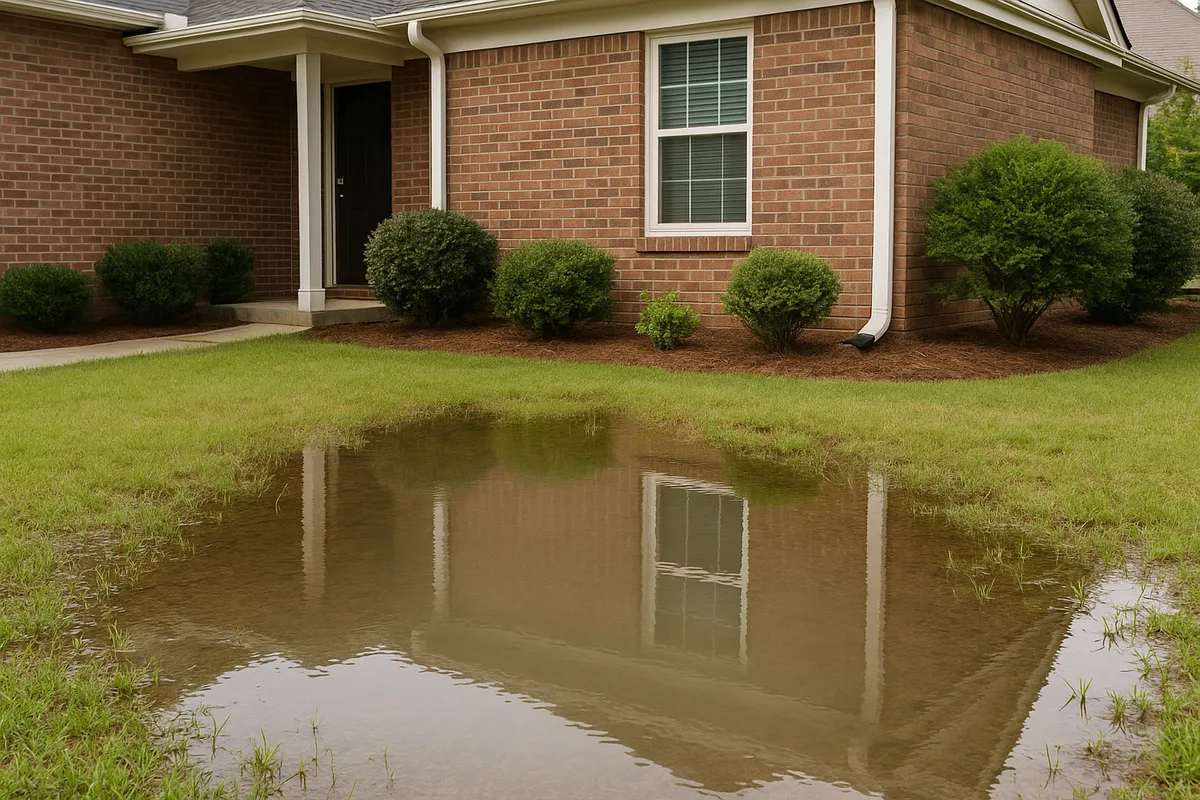
Can You Legally Redirect Stormwater Off Your Property?
Every homeowner who has dealt with a soggy yard, a flooded basement, or standing water after a storm eventually asks the same question: can I just redirect this water somewhere else? The impulse is understandable. Water is pooling where you don't want it, and the obvious solution is to send it somewhere it won't cause you problems. But redirecting stormwater off your property is a decision with serious legal, practical, and ethical dimensions that most homeowners don't fully appreciate until they're already facing a lawsuit or a code violation.
The short answer is: sometimes yes, sometimes no, and almost always "it depends." Surface water laws in the United States vary dramatically by state and even by municipality. What's perfectly legal in Texas may expose you to significant liability in Louisiana. What your neighbor tolerates today, their successor may litigate tomorrow. This article breaks down the legal frameworks that govern stormwater redirection, explains your rights and responsibilities as a property owner, and provides practical guidance for managing drainage without creating legal headaches.
The Three Legal Doctrines That Govern Surface Water
American law recognizes three primary doctrines for handling disputes over surface water — water that flows across the land from rain, snowmelt, or springs before it enters a defined watercourse like a stream or river. The doctrine your state follows fundamentally determines what you can and cannot do when redirecting stormwater off your property.
These doctrines evolved over centuries, shaped by geography, agricultural needs, development patterns, and court decisions. Understanding which one applies in your jurisdiction is the single most important step before you touch a shovel, install a pipe, or regrade your yard.
The Common Enemy Doctrine
The common enemy doctrine treats surface water as exactly what its name implies — a common enemy that every landowner has the right to fight. Under this doctrine, you can take virtually any action to protect your property from surface water, including building barriers, filling low spots, and redirecting flow onto neighboring properties. Your neighbor, in turn, has the same right to protect their land from the water you've sent their way.
Historically, states like New York, New Jersey, Massachusetts, Virginia, and many others followed this doctrine. It was well-suited to an era of agricultural development when landowners needed broad latitude to drain and improve their land. The logic was simple: if surface water is everyone's enemy, everyone should be free to defend against it.
However, nearly every state that originally adopted the common enemy doctrine has since modified it with a "reasonable use" qualifier. Pure common enemy doctrine — where you could flood your neighbor's property with impunity — is essentially extinct in modern American law. Today, even in common enemy states, courts will impose liability if your actions are unreasonable, negligent, or cause unnecessary harm to neighboring properties.
The Civil Law Rule (Natural Flow Doctrine)
The civil law rule, also called the natural flow doctrine, takes the opposite approach. Under this doctrine, every landowner is entitled to receive surface water in its natural state of flow. Lower-lying properties (the "servient estate") must accept water that naturally drains from higher properties (the "dominant estate"), but the upper landowner cannot alter the natural drainage pattern in ways that increase the volume, velocity, or concentration of water flowing downhill.
States with strong civil law rule traditions include Louisiana, California, and several other states influenced by French or Spanish legal traditions. Under a strict application of this doctrine, almost any alteration to natural drainage — building a house, paving a driveway, regrading a yard — could theoretically create liability if it changes the flow of water to a neighbor's detriment.
Like the common enemy doctrine, the civil law rule has been softened in most jurisdictions. Courts recognize that some alteration to natural drainage is inevitable when land is developed. The modern trend is toward a reasonableness standard that considers the necessity of the alteration, the harm caused, and whether the landowner took steps to mitigate damage.
The Reasonable Use Rule
The reasonable use rule is the modern compromise that most states have gravitated toward, either by adopting it outright or by modifying one of the two older doctrines to incorporate reasonableness standards. Under this rule, a landowner may alter surface water drainage as long as the alteration is reasonable and does not cause unnecessary harm to neighboring properties.
Courts evaluating reasonableness typically consider several factors:
- Necessity of the alteration — Was the drainage change necessary for reasonable use and enjoyment of the property?
- Care taken to minimize harm — Did the landowner take steps to reduce the impact on neighbors?
- Foreseeability of harm — Should the landowner have anticipated that their actions would cause damage?
- Severity of harm vs. benefit — Does the harm to the neighbor outweigh the benefit to the landowner?
- Reciprocity — Could the affected neighbor take reasonable steps to protect themselves?
The reasonable use rule doesn't give you a blank check to redirect stormwater wherever you want, but it also doesn't freeze your property in its natural state. It requires you to be thoughtful, take precautions, and consider the impact of your drainage decisions on others.
What "Redirecting Stormwater" Actually Means in Practice
When we talk about redirecting stormwater, we're not just talking about installing a French drain or extending a downspout. The legal concept encompasses any action that changes the natural or existing pattern of surface water flow on your property. Understanding the full range of activities that constitute "redirection" helps you identify where legal risk might lurk.
Common Drainage Modifications That Trigger Legal Scrutiny
Regrading your yard is one of the most common — and most legally significant — drainage modifications homeowners make. Changing the slope of your land, even by a few inches, can redirect thousands of gallons of stormwater per year. A yard that previously absorbed water or directed it toward a swale may suddenly channel concentrated flow toward a neighbor's foundation.
Installing impervious surfaces dramatically increases runoff volume. A natural lawn might absorb 80–90% of rainfall in moderate storms. A concrete patio, asphalt driveway, or even a compacted gravel pad can reduce infiltration to near zero. The water that used to soak into the ground now has to go somewhere, and that "somewhere" is often a neighbor's property.
Downspout extensions and discharge pipes are another frequent source of disputes. Connecting your roof drainage to a pipe that outlets at your property line — or worse, onto your neighbor's land — is one of the most direct forms of stormwater redirection. Even if the volume seems trivial, concentrating flow that was previously dispersed can cause erosion, saturate soil, and damage structures.
Other modifications that constitute redirection include building retaining walls that block natural flow paths, installing berms or swales that channel water in new directions, removing vegetation that previously absorbed runoff, and filling low areas that served as natural detention basins.
The Critical Distinction: Diffuse Flow vs. Concentrated Flow
Courts and regulators pay special attention to whether your drainage modifications convert diffuse surface flow into concentrated flow. Diffuse flow — water spreading broadly across a surface — generally causes less damage than concentrated flow, which is channeled through pipes, swales, or narrow pathways.
When you collect water from your roof, your driveway, and your patio into a single pipe that discharges at one point, you've concentrated flow that was previously diffuse. This concentration increases velocity, erosive force, and the potential for damage. Courts across all three doctrines are more likely to impose liability when a landowner has concentrated surface water and directed it onto neighboring property.
The practical takeaway: if you must redirect stormwater, dispersing it broadly across your own property is almost always safer — legally and practically — than concentrating it and sending it toward a property line.
State and Local Regulations Beyond Common Law
The three common law doctrines provide the background rules for surface water disputes, but they're far from the only legal constraints on redirecting stormwater. State statutes, local ordinances, building codes, and environmental regulations create additional layers of obligation that homeowners must navigate.
Municipal Stormwater Ordinances
Most cities and counties have stormwater management ordinances that regulate how property owners handle runoff. These ordinances often require that post-development runoff not exceed pre-development levels — a standard that can be surprisingly difficult to meet when you're adding impervious surfaces or changing grades.
Many municipalities require a grading permit for any earthwork that changes drainage patterns, even on residential properties. The threshold varies: some jurisdictions require permits for any grading work, while others set minimums (such as moving more than 50 cubic yards of earth or changing grades by more than 12 inches). Performing grading work without the required permit can result in stop-work orders, fines, and mandatory restoration of original grades.
Some communities have adopted stormwater utility fees based on the amount of impervious surface on your property. These fees fund municipal stormwater infrastructure and may come with requirements for on-site stormwater management. Failing to comply can result in increased fees or enforcement actions.
Environmental Regulations
If your property is near a wetland, stream, or other regulated water body, redirecting stormwater may trigger federal or state environmental regulations. The Clean Water Act, administered by the EPA through the NPDES permit program, regulates discharges to waters of the United States. While individual homeowners are rarely subject to NPDES permitting for routine drainage modifications, large-scale grading projects that disturb more than one acre of land typically require a construction stormwater permit.
State-level regulations may be more restrictive. Many states have their own water quality standards, wetland protection laws, and erosion control requirements that apply to residential properties. Discharging stormwater into a wetland, diverting water away from a stream that depends on surface flow, or causing sedimentation in a water body can all create regulatory liability.
Homeowner Association (HOA) Rules
If your property is subject to an HOA, the covenants, conditions, and restrictions (CC&Rs) may impose additional limitations on drainage modifications. HOAs commonly regulate grading, landscaping, and the installation of drainage structures. Some HOAs maintain common drainage infrastructure and prohibit individual homeowners from making changes that could affect the system's performance.
Violating HOA drainage rules can result in fines, mandatory restoration, and legal action. Before making any drainage changes in an HOA community, review your CC&Rs and consult with the architectural review committee.
Drainage Easements and Their Legal Implications
Drainage easements are legal rights that allow water to flow across one property for the benefit of another. They're one of the most important — and most commonly misunderstood — legal concepts in residential drainage.
Types of Drainage Easements
Express easements are created by written agreement between property owners and recorded in the deed or plat. They specify the location, width, and purpose of the easement and are binding on future owners. If your property has an express drainage easement, you cannot block or alter the drainage path without the easement holder's consent.
Prescriptive easements arise when water has flowed across a property in a particular pattern for a long enough period (typically 10–20 years, depending on the state) that the law recognizes a right to continued flow. If your neighbor's property has drained across your land for decades, they may have acquired a prescriptive easement that prevents you from blocking the flow — even if no written agreement exists.
Implied easements can arise from the circumstances of a property's development. If a subdivision was designed with a particular drainage pattern in mind, courts may recognize an implied easement even without explicit documentation. This is common in planned developments where lots were graded to drain in a specific direction.
How Easements Affect Your Redirection Options
If a drainage easement crosses your property, you generally cannot build structures, plant trees, or make changes within the easement area that would impede water flow. Conversely, if you benefit from a drainage easement on a neighbor's property, you typically cannot increase the volume or change the character of the flow beyond what the easement contemplates.
Before redirecting stormwater, check your property deed, subdivision plat, and any recorded easements. Your county recorder's office maintains these records, and a title search can reveal easements you may not know about. Many homeowners are surprised to discover that their property is burdened by drainage easements they never knew existed.
Liability Risks When You Redirect Stormwater
The financial consequences of improperly redirecting stormwater can be severe. Understanding the types of liability you face helps you make informed decisions about drainage modifications.
Property Damage Claims
If your drainage modifications cause water damage to a neighbor's property, you may be liable for the cost of repairs. This can include foundation damage, basement flooding, landscape destruction, erosion, and loss of use. In serious cases, damages can reach tens or even hundreds of thousands of dollars.
Courts may award damages for both the immediate harm and the ongoing cost of remediation. If your grading change causes chronic flooding on a neighbor's property, you could be liable not just for the first flood but for all subsequent damage until you correct the problem.
Nuisance Claims
Redirecting stormwater onto a neighbor's property can constitute a private nuisance — an unreasonable interference with the neighbor's use and enjoyment of their land. Nuisance claims can result in monetary damages and injunctive relief, meaning a court can order you to undo your drainage modifications and restore the original flow pattern.
The cost of court-ordered restoration often exceeds the cost of doing the work correctly in the first place. A homeowner who spent $3,000 on a grading project might face $15,000 or more in restoration costs, plus legal fees, if a court finds the work created a nuisance.
Negligence and Strict Liability
In some jurisdictions, certain drainage modifications can trigger strict liability — meaning you're responsible for damage regardless of how careful you were. This is most common when you engage in activities that courts consider "abnormally dangerous" or when you collect and discharge water in unnatural concentrations.
More commonly, liability is based on negligence: you failed to exercise reasonable care in managing stormwater, and that failure caused damage. Hiring a qualified contractor, obtaining proper permits, and following engineering best practices all help establish that you acted reasonably — which is your best defense against negligence claims.
Municipal Enforcement
Beyond private lawsuits, municipalities can enforce stormwater regulations through code enforcement actions. Penalties may include daily fines, mandatory remediation, and in extreme cases, criminal charges for willful violations of environmental regulations. Some jurisdictions allow neighbors to file code complaints that trigger inspections and enforcement.
Practical Strategies for Legal Stormwater Management
Knowing the legal landscape is essential, but homeowners also need practical strategies for managing stormwater without creating liability. The following approaches are generally safer from both a legal and engineering perspective.
Manage Water on Your Own Property First
The safest legal strategy is to manage as much stormwater as possible on your own property. This approach minimizes the chance that your drainage modifications will affect neighbors and reduces your exposure to liability under any legal doctrine.
Rain gardens are shallow, planted depressions designed to capture and infiltrate runoff from roofs, driveways, and other impervious surfaces. A properly designed rain garden can absorb significant volumes of stormwater, reducing the amount that leaves your property. They work best in soils with moderate to good permeability — typically Hydrologic Soil Groups A and B as classified by the NRCS Hydrologic Soil Groups system.
Dry wells are underground chambers filled with gravel or proprietary storage units that collect runoff and allow it to percolate into the surrounding soil. They're particularly useful for managing roof runoff in areas where surface space is limited. A typical residential dry well can handle runoff from 500–1,500 square feet of impervious surface, depending on soil conditions and local rainfall intensity.
Permeable paving — including permeable concrete, porous asphalt, and permeable pavers — allows rainfall to infiltrate through the surface rather than running off. Replacing a conventional concrete driveway with permeable paving can reduce runoff from that surface by 70–90%.
Grade Away from Structures, Not Toward Neighbors
The International Residential Code (IRC) requires a minimum 6-inch drop in grade over the first 10 feet away from a foundation — equivalent to a 5% slope. This standard exists to protect foundations from water damage and is generally considered a reasonable and necessary drainage modification under all three legal doctrines.
However, grading away from your foundation doesn't mean grading toward your neighbor. The goal is to direct water to an appropriate outlet — a swale, a storm drain, a rain garden, or a broad area of your own yard where it can infiltrate. If the natural topography of your lot makes it difficult to achieve proper foundation drainage without affecting neighbors, consult with a civil engineer or landscape architect who can design a solution that protects your foundation while managing the redirected water on your property.
Use Distributed Infiltration Instead of Concentrated Discharge
As discussed earlier, concentrating flow is one of the fastest ways to create legal liability. Instead of collecting all your roof runoff into a single pipe and discharging it at one point, consider distributing it across multiple infiltration points.
For example, rather than connecting all your downspouts to a single underground pipe, you could direct each downspout to its own small rain garden or dry well. This approach mimics the natural distribution of rainfall across your property and avoids the concentrated discharge that triggers both legal scrutiny and physical damage.
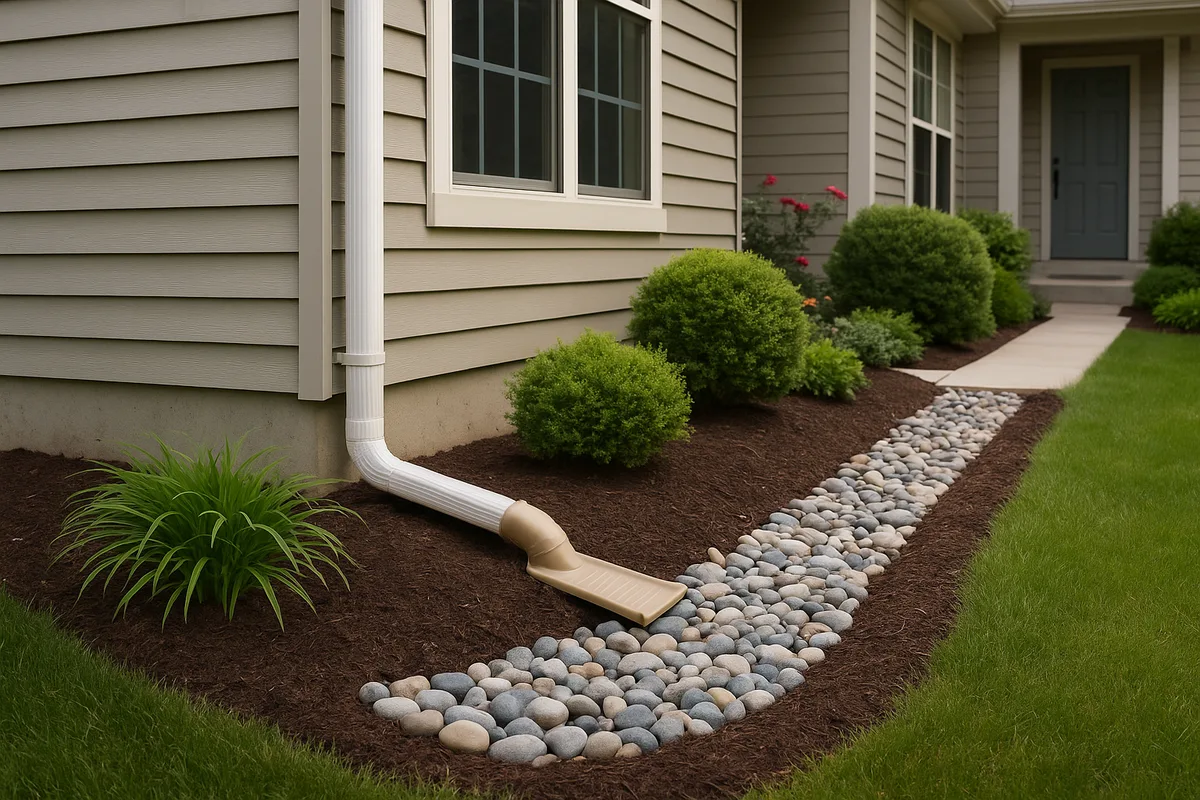
Splash blocks and downspout extensions that spread water across a broad area of lawn are simple, low-cost alternatives to piped discharge. They're not always sufficient for heavy rainfall or poorly draining soils, but they're a good starting point for managing moderate runoff volumes.
Document Everything
If you do make drainage modifications, document the before and after conditions thoroughly. Take photographs, record measurements, and keep copies of any permits, plans, and contractor agreements. If a dispute arises later, this documentation can be invaluable in demonstrating that you acted reasonably and in compliance with applicable regulations.
Consider commissioning a topographic survey or drainage assessment before and after major grading work. Having professional documentation of existing drainage patterns and the changes you made provides strong evidence in any legal proceeding.
When to Involve Professionals
Not every drainage modification requires professional involvement, but many do. Understanding when to call in experts can save you from costly mistakes and legal exposure.
Civil Engineers and Land Surveyors
For any project that involves significant grading, new drainage infrastructure, or potential impacts on neighboring properties, a civil engineer can design a solution that meets both technical and legal requirements. Engineers can calculate runoff volumes, design detention and infiltration systems, and prepare plans that satisfy permitting requirements.
A licensed land surveyor can establish property boundaries, identify existing easements, and create topographic maps that show existing drainage patterns. This information is essential for designing drainage modifications that stay within your property and respect existing drainage rights.
Attorneys Specializing in Property Law
If you're involved in a drainage dispute with a neighbor, or if you're planning modifications that could affect neighboring properties, consulting with a property law attorney is a wise investment. An attorney can advise you on the specific legal doctrine that applies in your jurisdiction, review easements and deed restrictions, and help you understand your rights and obligations.
Mediation is often a more cost-effective alternative to litigation for drainage disputes. Many communities offer mediation services for neighbor disputes, and a skilled mediator can help both parties reach a solution that addresses drainage concerns without the expense and acrimony of a lawsuit.
Drainage Contractors and Landscape Architects
A qualified drainage contractor can implement solutions that a general landscaper might not have the expertise to design or install correctly. Look for contractors who specialize in residential drainage and who are familiar with local codes and permitting requirements.
Landscape architects bring a design perspective that integrates drainage solutions with aesthetics and functionality. They can design grading plans, rain gardens, bioswales, and other green infrastructure that manages stormwater while enhancing your property's appearance and value.
Resolving Disputes With Neighbors Over Stormwater
Drainage disputes between neighbors are among the most common — and most contentious — property conflicts. Water doesn't respect property lines, and what one homeowner sees as a reasonable improvement, the other may see as an act of aggression.
Start With Communication
Many drainage disputes escalate unnecessarily because neighbors don't communicate before making changes. If you're planning drainage modifications that could affect your neighbor, talk to them first. Explain what you're doing, why, and how you plan to manage the redirected water. Most reasonable people will appreciate the courtesy, and you may learn about existing drainage issues you weren't aware of.
If your neighbor has made changes that are sending water onto your property, approach the conversation calmly and factually. Document the problem with photographs and measurements before initiating the conversation. Many neighbors genuinely don't realize their modifications are causing problems and will work with you to find a solution.
Understand Your Evidence Needs
If a dispute escalates beyond neighborly conversation, you'll need evidence to support your position. Key evidence includes photographs and videos of flooding or drainage problems, dated records showing when the problem started, documentation of the neighbor's modifications (photographs, permit records, contractor invoices), professional assessments of drainage patterns and damage, and records of your own property's drainage history.
Local building department records can be valuable evidence. If your neighbor obtained a grading permit, the permit file may contain plans and inspection reports that document exactly what was done. If they didn't obtain a required permit, that fact itself may support your case.
Legal Remedies Available
If communication and mediation fail, several legal remedies may be available depending on your jurisdiction. You may be able to file a complaint with your local code enforcement office if the neighbor's modifications violate local ordinances. Code enforcement can order compliance and impose fines, sometimes resolving the problem without the need for a private lawsuit.
Civil litigation is the last resort but sometimes necessary. In a lawsuit, you might seek monetary damages for property damage already suffered, an injunction requiring the neighbor to restore original drainage patterns, or both. Courts can also award attorney's fees in some jurisdictions, which can offset the cost of litigation.
Small claims court is an option for disputes involving relatively modest damage amounts (typically under $5,000–$10,000, depending on the state). Small claims proceedings are faster, cheaper, and less formal than regular civil court, making them accessible to homeowners who can't justify the cost of full litigation.
Key Takeaways for Homeowners
Redirecting stormwater off your property is a decision that sits at the intersection of engineering, law, and neighborly relations. The legal framework governing surface water laws varies by state, but the trend across all jurisdictions is toward a reasonableness standard that balances your right to use and improve your property against your obligation not to harm your neighbors.
Before making any drainage modifications, research the legal doctrine that applies in your state, check for drainage easements on your property, review local ordinances and permitting requirements, and consider the impact on neighboring properties. When in doubt, consult with professionals — a civil engineer for design, an attorney for legal advice, and a qualified contractor for installation.
The most legally defensible approach to redirecting stormwater is to manage as much water as possible on your own property through infiltration, detention, and distributed discharge. This approach protects you from liability, protects your neighbors from damage, and often produces better results than simply pushing water off your property and hoping for the best.
Stormwater management is ultimately about being a responsible steward of the water that falls on your land. The law reflects this principle: you have the right to protect your property from water damage, but not at the expense of your neighbors. By understanding the legal framework, following best practices, and communicating with those around you, you can manage your property's drainage effectively and legally.
See Drainage Intelligence in Practice
Talk with our team or request an invitation to the platform.
Frequently Asked Questions
It depends on your state's surface water law doctrine and whether the drainage follows natural flow patterns. Under the civil law rule, your neighbor generally cannot alter natural drainage to increase flow onto your property. Under the common enemy doctrine (as modified), they have more latitude but still cannot act unreasonably. If the water follows a natural drainage path, you may be obligated to accept it.
Most municipalities require a grading permit for work that changes drainage patterns, though thresholds vary. Some jurisdictions require permits for any grading, while others set minimums such as moving more than 50 cubic yards of soil. Check with your local building department before starting any grading work to avoid fines and mandatory restoration.
The common enemy doctrine treats surface water as a common enemy that every landowner has the right to repel, including by redirecting it onto neighboring property. However, virtually every state has modified this doctrine to require that drainage modifications be reasonable and not cause unnecessary harm to neighbors.
Yes, you may have legal claims including property damage, private nuisance, or negligence if your neighbor's drainage modifications cause water damage to your property. Document the problem with photographs and professional assessments, and consult a property law attorney to understand your options. Mediation and code enforcement complaints are often faster and cheaper alternatives to litigation.
Check your property deed, subdivision plat, and recorded easements at your county recorder's office. A title search can reveal easements that may not be obvious from the deed alone. You can also hire a land surveyor to identify easement locations and boundaries on the ground.
The safest approach is to manage stormwater on your own property using infiltration methods like rain gardens, dry wells, and permeable paving. Avoid concentrating flow and discharging it toward neighboring properties. If you must redirect water, disperse it broadly, follow local codes, obtain required permits, and consult a civil engineer for projects that could affect neighbors.
Related Articles
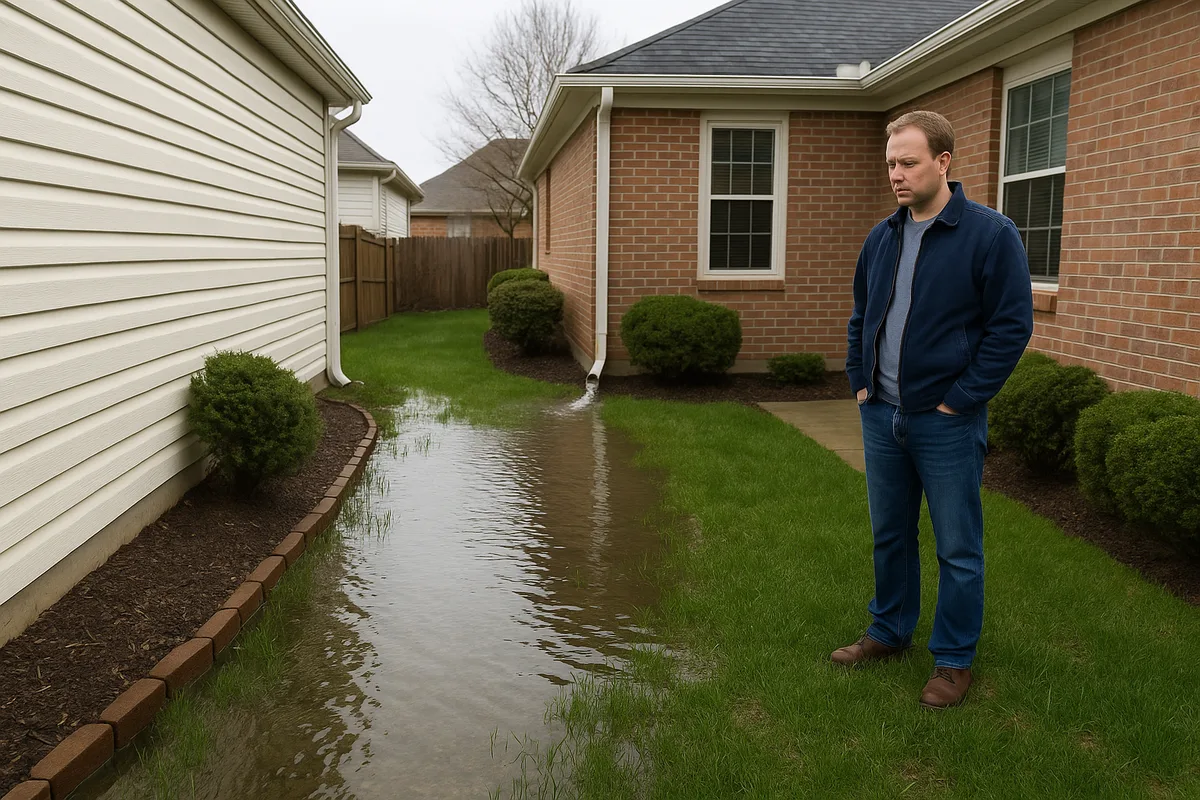
Neighbor's Water Draining Into Your Yard: Your Legal Rights and Practical Options
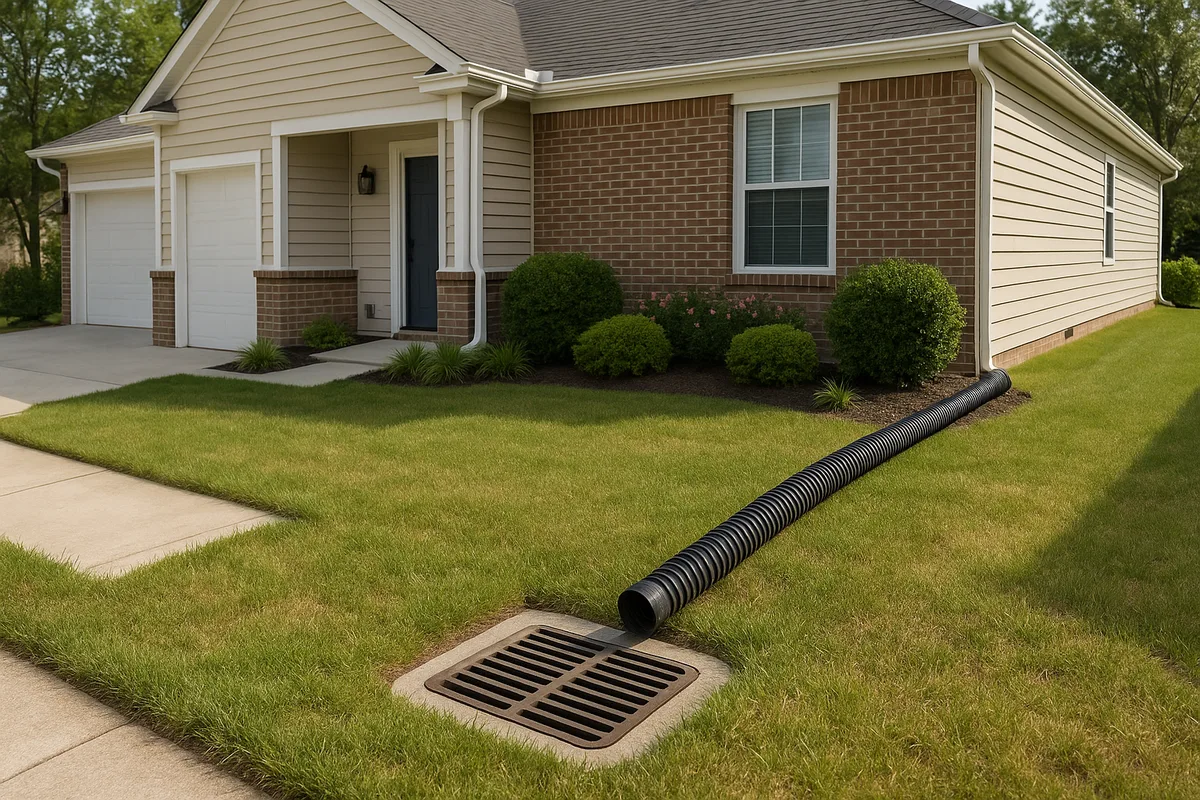
What Is a Drainage Easement and How Does It Affect Your Property?