French Drains in Sacramento: Costs, Permits, and What to Expect
If you're a Sacramento homeowner dealing with standing water, a soggy yard, or moisture creeping toward your foundation, you've likely researched French drain Sacramento cost and wondered whether this classic drainage solution is right for your property. The short answer: French drains remain one of the most effective subsurface drainage systems available, and Sacramento's unique combination of heavy winter rains, expansive clay soils, and flat topography makes them especially relevant. But costs, permit requirements, and installation details vary significantly depending on your specific lot—and getting it wrong can be an expensive mistake.
This guide breaks down everything you need to know about French drain installation in Sacramento, from realistic cost ranges and permit requirements to soil considerations, contractor selection, and long-term maintenance. Whether you're comparing bids, planning a DIY project, or simply trying to understand your options, this article will give you the authoritative, local-specific information you need to make a confident decision.
What Is a French Drain and How Does It Work?
A French drain is a subsurface drainage system designed to intercept and redirect groundwater and surface water away from areas where it causes problems—foundations, yards, patios, and low spots. Despite the name, it has nothing to do with France; it's named after Henry French, a Massachusetts farmer who popularized the technique in 1859.
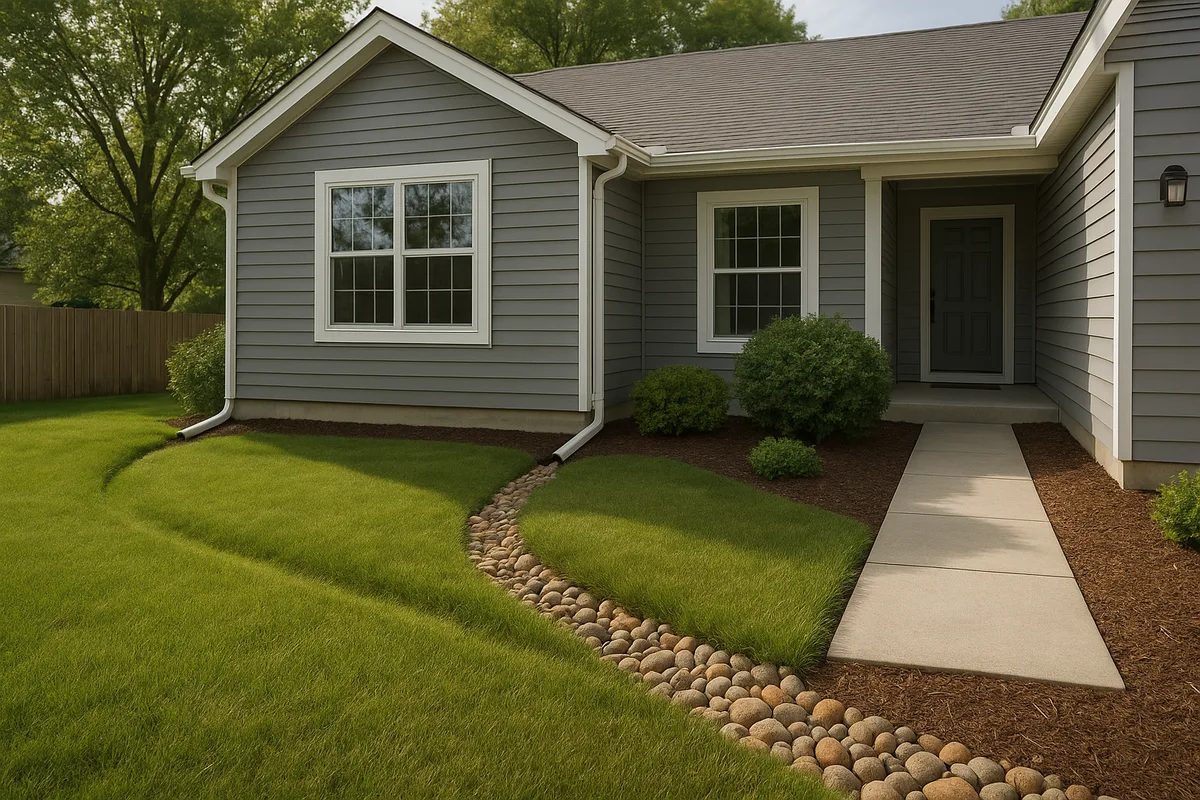
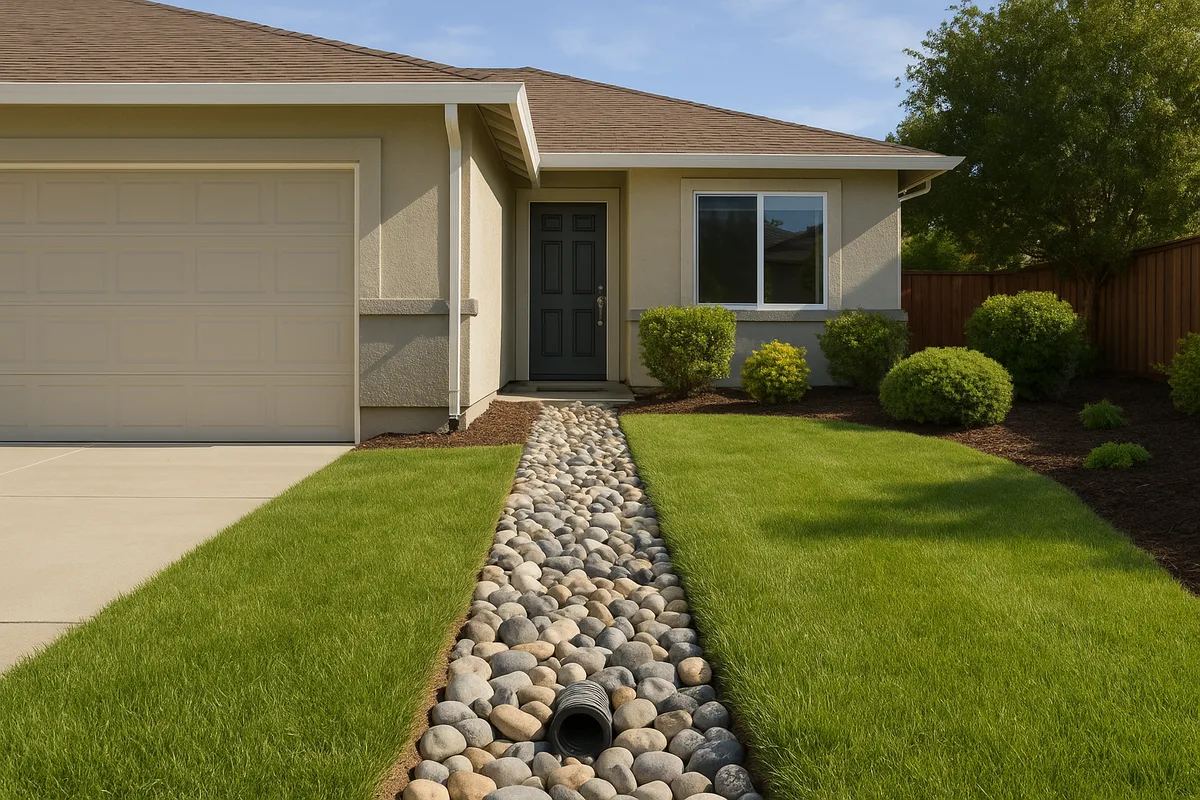
The system consists of a trench (typically 12–24 inches deep and 6–12 inches wide) lined with landscape fabric, filled with washed gravel, and containing a perforated pipe at the bottom. Water enters the trench through the gravel, flows into the perforated pipe through small holes, and is carried by gravity to a discharge point—usually a storm drain, dry well, rain garden, or a lower area of the property.
What makes French drains particularly effective is their ability to handle both surface runoff and subsurface water. Unlike surface drains or channel drains that only capture water flowing across the ground, French drains intercept water moving through the soil itself. In Sacramento, where the water table can rise dramatically during wet winters and clay soils trap moisture near the surface, this subsurface interception capability is critical.
Key Components of a French Drain System
A properly constructed French drain includes several essential components that work together:
- Trench: Excavated with a consistent slope of at least 1% (1/8 inch per foot), though 2% is preferred for optimal flow.
- Filter fabric (geotextile): Lines the trench to prevent soil particles from migrating into the gravel and clogging the system.
- Perforated pipe: Typically 4-inch rigid PVC or corrugated HDPE pipe with holes positioned downward to collect water that has filtered through the gravel.
- Washed drainage gravel: Clean, angular stone (typically 3/4-inch to 1-1/2-inch) that provides void space for water to flow freely.
- Discharge point: Where the collected water exits the system—this must comply with local stormwater regulations.
The quality of each component matters enormously. Using unwashed gravel, skipping the filter fabric, or installing pipe with insufficient slope are among the most common reasons French drains fail prematurely in the Sacramento area.
How Much Does a French Drain Cost in Sacramento?
The question every homeowner asks first—how much does a French drain cost in Sacramento—doesn't have a single answer, but we can provide realistic ranges based on current market conditions in the Sacramento metropolitan area.
Professional Installation Cost Ranges
As of early 2026, Sacramento homeowners can expect the following cost ranges for professional French drain installation:
| Project Type | Cost Range | Details |
|---|---|---|
| Exterior yard French drain | $25–$60 per linear foot | Standard 18–24 inch depth, 4-inch pipe |
| Interior perimeter drain (crawlspace) | $40–$80 per linear foot | Includes vapor barrier work, sump pump |
| Foundation perimeter drain (exterior) | $50–$100+ per linear foot | Deep excavation, waterproofing membrane |
| Simple 50-foot yard run | $1,500–$3,500 total | Basic installation, accessible route |
| Full yard system (100–200 feet) | $4,000–$12,000 total | Multiple runs, complex routing |
| Foundation perimeter system | $8,000–$20,000+ total | Full perimeter, deep dig, restoration |
These ranges reflect Sacramento-specific labor rates, which tend to run 10–20% higher than national averages due to California's prevailing wage requirements, licensing standards, and cost of living. Material costs are relatively consistent, but labor is the primary cost driver.
Factors That Affect Your Specific Cost
Several variables can push your project toward the higher or lower end of these ranges:
Depth and width of the trench. A standard yard drain at 18 inches deep costs significantly less than a foundation drain that may need to reach 4–6 feet to the footing level. Deeper trenches require more excavation, more gravel, and potentially shoring for safety.
Length of the run. Longer systems cost more in total but often have a lower per-foot cost because mobilization and setup expenses are spread across more footage. A 150-foot system might cost $30 per foot, while a 30-foot system could run $50 per foot.
Soil conditions. Sacramento's infamous clay soils are harder to excavate than sandy or loamy soils, adding labor time. If your property has hardpan (a cemented soil layer common in parts of Elk Grove, Natomas, and South Sacramento), excavation costs can increase 20–40%.
Access and obstacles. Fences, concrete walkways, mature trees, utility lines, and irrigation systems all add complexity. If a mini-excavator can't reach the work area, hand digging increases labor costs substantially.
Discharge solution. Connecting to the city storm drain system (where permitted) is relatively straightforward. If no storm drain connection is available, you may need a dry well, pop-up emitter, or rain garden—each adding $500–$2,000 to the project.
Restoration. After trenching, you'll need to restore landscaping, sod, hardscape, or other disturbed areas. Some contractors include basic backfill and gravel top-dressing; others charge separately for sod replacement or concrete repair.
DIY vs. Professional Installation
DIY French drain installation can reduce costs to $8–$15 per linear foot for materials alone, making it tempting for budget-conscious homeowners. However, there are important caveats for Sacramento properties:
Sacramento's clay soils are physically demanding to dig by hand. What might take an afternoon in sandy soil can take a full weekend in compacted clay. You'll also need to ensure proper slope—a laser level or transit is essential, not optional. A French drain with inadequate slope won't drain; it'll just be an expensive gravel-filled ditch.
Additionally, DIY installations frequently fail because homeowners use the wrong materials. Pea gravel (too small, migrates into pipe), sock-wrapped corrugated pipe without additional filter fabric (clogs within 2–5 years in clay soil), and insufficient trench depth are the most common mistakes we see when evaluating failed DIY systems.
For simple, short runs in accessible areas, a capable DIYer can save meaningful money. For anything involving foundation drainage, utility crossings, or connection to public infrastructure, professional installation is strongly recommended.
Sacramento French Drain Permit Requirements
Understanding Sacramento French drain permit requirements is essential before breaking ground. The permitting landscape in the Sacramento region varies by jurisdiction—the City of Sacramento, Sacramento County, and surrounding cities like Elk Grove, Folsom, Rancho Cordova, and Roseville each have their own rules.
When You Need a Permit
In the City of Sacramento, a standard French drain installed in your yard for residential drainage purposes generally does not require a building permit, provided:
- The drain is on your own property and doesn't cross property lines.
- You're not connecting to the public storm drain system.
- The work doesn't involve grading that changes drainage patterns affecting neighboring properties.
- Excavation doesn't exceed certain depth thresholds (typically 5 feet without shoring requirements per Cal/OSHA).
However, you will likely need a permit or approval if:
- You're connecting to the city storm drain system. The City of Sacramento Department of Utilities requires an encroachment permit for any connection to public stormwater infrastructure. This involves an application, plan review, and inspection.
- Your project involves significant grading. Sacramento County and the City of Sacramento require grading permits for projects that move substantial amounts of earth or alter established drainage patterns. The threshold varies, but any project moving more than 50 cubic yards of soil typically triggers a permit.
- You're in a flood zone. Properties in FEMA-designated flood zones (common along the American River, Sacramento River, and in the Natomas Basin) face additional restrictions. Any work that could affect flood conveyance or floodplain storage may require a floodplain development permit.
- Your property has environmental constraints. Properties near waterways, wetlands, or vernal pools—which are surprisingly common in parts of Sacramento County—may trigger review under the Clean Water Act or California Fish and Game Code.
Stormwater Discharge Regulations
Sacramento takes stormwater quality seriously. The Sacramento Stormwater Quality Partnership, which includes the City, County, and several surrounding jurisdictions, operates under an NPDES (National Pollutant Discharge Elimination System) permit that regulates what can enter the storm drain system.
For residential French drains, the key rule is this: you can generally discharge clean groundwater and rainwater to the storm drain system, but you cannot discharge water that contains pollutants—sediment, fertilizers, pesticides, or other contaminants. During construction, you're expected to implement basic erosion controls (silt fence, fiber rolls) to prevent sediment from leaving your property.
The EPA's NPDES permit program provides the federal framework for these regulations, though local implementation in Sacramento adds specific requirements that homeowners and contractors must follow.
Utility Locates: Not Optional
Before any excavation in Sacramento, you are legally required to call 811 (Underground Service Alert) at least two business days before digging. This free service marks the approximate location of underground utilities—gas, electric, water, sewer, cable, and telecom lines.
Sacramento properties frequently have utilities running through yards in unexpected locations. SMUD (Sacramento Municipal Utility District) underground electric lines, PG&E gas lines, and City water and sewer laterals can all be present. Hitting a gas line is dangerous; hitting a sewer lateral is expensive. The 811 call is free, fast, and legally required.
Sacramento's Soil and Climate: Why They Matter for French Drains
Sacramento's environment presents specific challenges that directly affect French drain design, installation, and longevity. Understanding these factors is what separates a drainage solution that lasts 20 years from one that fails in 3.
The Clay Soil Challenge
Much of the Sacramento Valley sits on alluvial clay soils deposited over millennia by the Sacramento and American Rivers. The NRCS Web Soil Survey classifies many Sacramento-area soils as hydrologic soil group C or D—meaning they have slow to very slow infiltration rates.
These clay soils create a paradox for drainage: they're the primary reason you need a French drain (water can't percolate through them), but they also make French drains harder to install and more prone to certain failure modes.
Specifically, Sacramento clay soils:
- Expand when wet and shrink when dry. This seasonal movement can shift pipe alignments over time, potentially creating low spots where sediment accumulates.
- Generate fine particles that clog filter fabric. Standard landscape fabric can blind off (become clogged) within a few years in heavy clay. Using a non-woven geotextile with appropriate flow-through rates is essential.
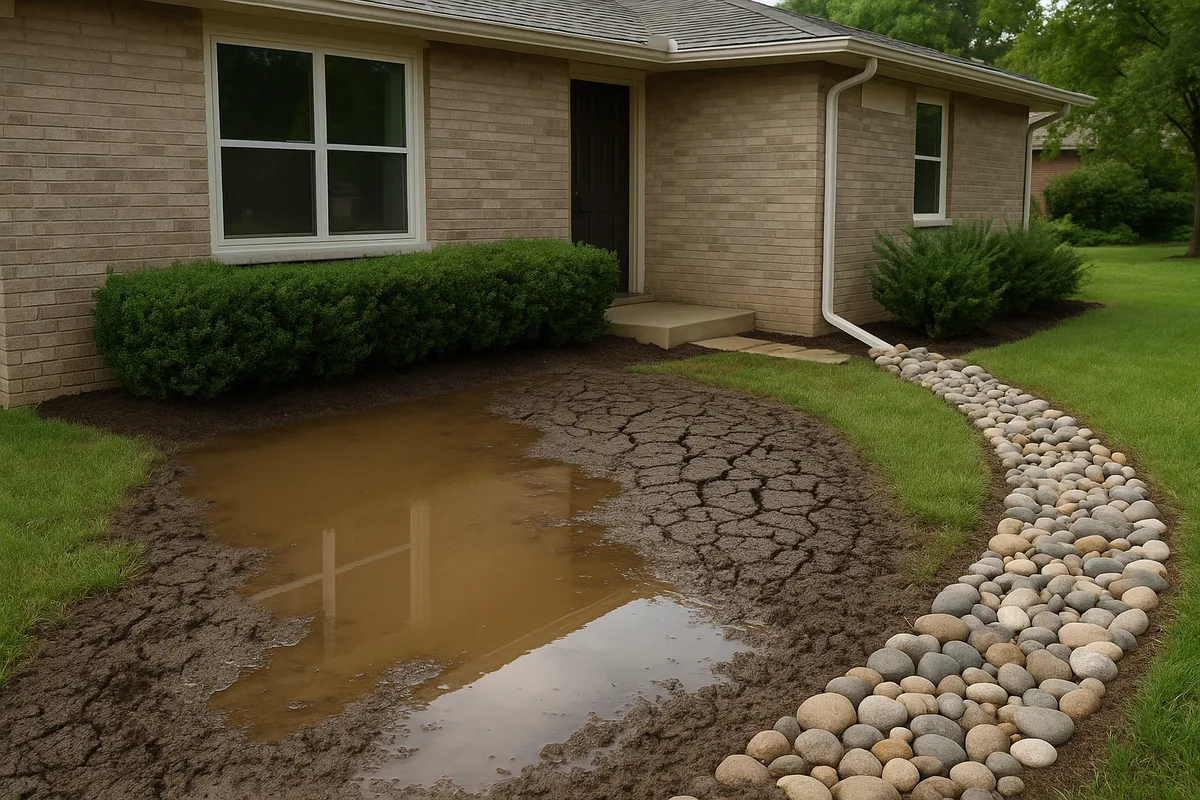
- Create a "bathtub effect." Because the surrounding clay doesn't absorb water, a French drain trench filled with gravel can actually become a reservoir if the discharge point is inadequate. The drain must have a positive outlet—water needs somewhere to go.
- Are difficult to excavate. Dry clay is rock-hard; wet clay is sticky and heavy. The ideal excavation window is when soil moisture is moderate—typically late fall before heavy rains or early spring as soils begin to dry.
Sacramento's Rainfall Patterns
Sacramento receives an average of 18–20 inches of rain annually, but the distribution is extremely uneven. Virtually all precipitation falls between October and April, with December and January typically being the wettest months. Summer is essentially bone dry.
This means your French drain system needs to handle intense, sustained wet periods followed by months of inactivity. Design implications include:
- Capacity must handle peak flows. A system designed for average rainfall will be overwhelmed during atmospheric river events, which can deliver 2–4 inches in 24 hours.
- Dry-season maintenance matters. During Sacramento's long, hot summers, clay soils shrink and crack. These cracks can allow soil to migrate into the gravel envelope when the first rains arrive. Inspecting cleanouts and ensuring filter fabric integrity before the wet season is important.
- Pipe sizing should be generous. While a 4-inch perforated pipe is standard for most residential applications, properties with significant drainage areas or steep slopes feeding water toward the drain may benefit from 6-inch pipe.
Seasonal Timing for Installation
The best time to install a French drain in Sacramento is during the dry season—typically May through October. The ground is accessible (though hard), there's no rain to contend with, and you'll have the system ready before the wet season begins.
Installing during winter is possible but problematic. Saturated clay soil is difficult to work with, trenches can collapse, and you're essentially trying to build a drainage system while actively needing one. Contractors are also busier with emergency drainage calls during winter, potentially increasing costs and wait times.
That said, winter is often when homeowners first discover their drainage problems. If you identify an issue during the rainy season, use that time to document the problem (photos, videos of water flow patterns), get quotes from contractors, and plan for a spring or summer installation.
Choosing the Best Drainage Solution for Your Sacramento Yard
A French drain isn't always the best drainage solution for a Sacramento yard. Understanding when a French drain is the right choice—and when another approach might be more effective—saves money and prevents frustration.
When a French Drain Is the Right Solution
French drains excel in these Sacramento-specific scenarios:
Intercepting subsurface water flow. If water is moving through the soil toward your foundation—common on properties that slope toward the house or sit at the base of a hill—a French drain installed uphill of the foundation can intercept that water before it reaches the structure. This is the classic use case and where French drains perform best.
Draining chronically wet areas. Low spots in your yard that remain soggy for days after rain often have a perched water table—water trapped above a clay layer. A French drain can tap into this perched water and route it to a discharge point.
Supplementing surface grading. In an ideal world, proper grading (minimum 2% slope away from the foundation for 6–10 feet) would handle all surface drainage. But many Sacramento properties—especially those in older neighborhoods like Land Park, East Sacramento, Curtis Park, and Midtown—have constraints that make ideal grading impossible. French drains can compensate for imperfect surface drainage.
Foundation perimeter drainage. For homes with basements or deep crawlspaces (less common in Sacramento but present in some older neighborhoods), a perimeter French drain at the footing level is often the most effective way to prevent water intrusion.
When Another Solution Might Be Better
Surface water only. If your problem is purely surface runoff—water flowing across the ground during rain—a surface solution like a swale, channel drain, or catch basin system may be more cost-effective than a French drain.
Gutter-related issues. A surprising number of Sacramento drainage problems are caused by missing, damaged, or improperly routed gutters and downspouts. Before investing in a French drain, ensure your roof drainage is properly managed. Extending downspouts 4–6 feet from the foundation with solid (non-perforated) pipe is one of the highest-impact, lowest-cost drainage improvements you can make.
Grading deficiencies. If your yard slopes toward your house, regrading to establish proper slope away from the foundation is often the first and most important step. A French drain installed in a yard that slopes toward the house is treating the symptom, not the cause.
Large-volume water management. For properties dealing with significant stormwater volumes—large roof areas, extensive hardscape, or uphill contributing areas—a French drain alone may be insufficient. A comprehensive system combining catch basins, solid pipe conveyance, and French drain components may be necessary.
Combining Systems for Comprehensive Drainage
The most effective Sacramento drainage solutions often combine multiple approaches:
- Proper grading to direct surface water away from the foundation.
- Gutter and downspout management to control roof runoff.
- French drain to intercept subsurface water and handle residual surface flow.
- Appropriate discharge via storm drain connection, dry well, or rain garden.
This layered approach addresses drainage at every level and provides redundancy—if one system is overwhelmed during a major storm, the others continue to function.
Finding and Vetting French Drain Contractors in Sacramento
The Sacramento market has dozens of contractors offering French drain installation in Sacramento, ranging from large landscape companies to small drainage specialists. The quality varies enormously, and choosing the wrong contractor is one of the most common reasons French drains fail.
What to Look For
Contractor's license. California requires a valid CSLB (Contractors State License Board) license for any project over $500 in combined labor and materials. For drainage work, look for a C-36 (Plumbing) license, a C-12 (Earthwork and Paving) license, or a B (General Building) license. Verify the license at the CSLB website—it takes 30 seconds.
Drainage-specific experience. A great landscape contractor isn't necessarily a great drainage contractor. Ask specifically about French drain installations in Sacramento clay soils. How many have they done in the last year? Can they provide references from similar projects? Do they understand the difference between hydrologic soil group B and D soils?
Detailed written proposals. A professional bid should specify:
- Total linear footage and trench dimensions (depth and width)
- Pipe type and diameter (rigid PVC vs. corrugated, 4-inch vs. 6-inch)
- Gravel type and quantity (washed vs. unwashed, size)
- Filter fabric specifications
- Discharge method and location
- Cleanout locations
- Restoration scope (what they'll repair after trenching)
- Permit responsibility (who pulls permits if needed)
- Warranty terms
If a contractor gives you a verbal quote or a one-line written estimate, that's a red flag.
Site visit before bidding. No reputable drainage contractor will give you an accurate quote over the phone or from photos alone. They need to see the property, assess the soil, identify the water source, determine the discharge point, and locate utilities. If someone quotes you a price without visiting your property, move on.
Red Flags to Watch For
- Using corrugated pipe with a filter sock as the only filtration. In Sacramento clay, the sock clogs quickly. A proper system uses filter fabric lining the entire trench, with clean washed gravel surrounding the pipe.
- No cleanouts. Cleanouts (vertical access points) should be installed at every turn and every 50–100 feet of straight run. Without them, the system is essentially unmaintainable.
- Discharging onto neighboring property. This is both illegal and a quick way to create a dispute with your neighbors. Water must be discharged to an appropriate location.
- No discussion of slope or grade. If the contractor doesn't mention ensuring proper pipe slope, they may not understand the fundamentals of drainage design.
- Dramatically low bids. If one bid is 40% below the others, something is being cut—usually material quality or proper installation technique. The cheapest French drain is rarely the best value.
Getting Multiple Bids
We recommend getting at least three bids from licensed contractors. When comparing bids, look beyond the bottom-line number. Compare specifications, materials, warranty terms, and scope of work. A $4,000 bid using rigid PVC pipe, washed gravel, and non-woven geotextile with a 5-year warranty is a better value than a $2,500 bid using corrugated pipe, unwashed gravel, and no warranty.
What to Expect During French Drain Installation
Knowing what the installation process looks like helps you prepare your property and set realistic expectations for timeline and disruption.
Pre-Installation
Utility locates (1–2 weeks before). The contractor (or you) calls 811 to have underground utilities marked. This must happen at least two business days before digging, but scheduling a week or more in advance is wise.
Site preparation. You may need to remove items from the work area—patio furniture, potted plants, garden ornaments, pet enclosures. If the drain route crosses an irrigation system, the contractor will need to cap or reroute affected lines.
Neighbor notification. While not legally required for most residential French drains, it's courteous to let adjacent neighbors know about the work, especially if equipment will be staged near the property line or the discharge point is near their property.
Installation Day(s)
A typical residential French drain installation in Sacramento takes 1–3 days, depending on the system's length and complexity.
Day 1: Excavation. The contractor excavates the trench using a mini-excavator (for accessible areas) or by hand. In Sacramento clay, excavation is the most time-consuming phase. The trench is cut to the specified depth and width, with consistent slope verified using a laser level.
Day 1–2: Pipe and gravel installation. Filter fabric is laid in the trench with enough excess to wrap over the top. A base layer of gravel is placed, the perforated pipe is set on top (holes down), and additional gravel fills the trench to within a few inches of the surface. The filter fabric is folded over the top of the gravel to create a complete envelope. Cleanouts are installed at designated points.
Day 2–3: Discharge connection and restoration. The discharge end is connected to its outlet (storm drain, dry well, pop-up emitter, etc.). The trench surface is finished with gravel, topsoil, sod, or decorative stone, depending on the plan. Disturbed areas are restored.
Post-Installation
After installation, there's typically a settling period of 2–4 weeks where the backfill material compacts. You may notice slight depressions along the trench line—this is normal and can be topped off with additional material.
The real test comes with the first significant rain. Observe how the system performs:
- Is water entering the drain effectively?
- Is the discharge point flowing?
- Are there any areas where water is bypassing the drain?
- Is there any erosion at the discharge point?
Document the system's performance during its first wet season. If adjustments are needed, it's much easier (and usually covered under warranty) to address them early.
Long-Term Maintenance and Lifespan
A well-designed and properly installed French drain in Sacramento should last 15–25 years before major rehabilitation is needed. However, this lifespan assumes regular maintenance—which most homeowners neglect.
Annual Maintenance Checklist
Before the wet season (September–October):
- Flush cleanouts with a garden hose to clear any accumulated sediment.
- Inspect the discharge point for obstructions—leaves, soil, animal nests.
- Check for settling along the trench line and add material if needed.
- Ensure surface grading still directs water toward the drain, not away from it.
- Verify that gutter downspouts are still properly connected and directed.
After the wet season (April–May):
- Inspect cleanouts for sediment accumulation. If significant sediment is present, the filter fabric may be failing.
- Check the discharge point for erosion and repair if needed.
- Note any areas where the system seemed overwhelmed during heavy rains—this information is valuable if you need to expand the system later.
Signs Your French Drain Needs Repair or Replacement
- Standing water returns to areas the drain previously kept dry.
- Sediment in cleanouts that can't be flushed clear.
- Surface settling more than 2–3 inches along the trench line (may indicate pipe collapse).
- Water backing up out of cleanouts during rain (indicates a blockage or capacity issue).
- Soggy soil directly above the drain (suggests the filter fabric has failed and the gravel is clogged).
If your French drain is failing, the repair approach depends on the cause. A simple blockage at the discharge point is an easy fix. A system-wide clog from failed filter fabric typically requires full replacement—essentially digging up the old system and starting over.
Protecting Your Investment
The single best thing you can do to extend your French drain's lifespan in Sacramento is to keep fine soil particles out of the gravel envelope. This means:
- Don't remove or damage the filter fabric during landscaping work.
- Don't allow soil to wash into exposed gravel surfaces—maintain a clean gravel cap or cover with sod.
- Don't plant trees or large shrubs directly over the drain—roots will infiltrate the pipe and gravel.
- Don't drive heavy vehicles over the drain—this can crush the pipe and compact the gravel, reducing its drainage capacity.
Making an Informed Decision for Your Sacramento Property
Every Sacramento property has unique drainage characteristics shaped by its topography, soil composition, lot grading, surrounding development, and proximity to waterways. A French drain is a powerful tool in the drainage toolkit, but it's most effective when designed for your specific conditions—not installed as a generic, one-size-fits-all solution.
Before committing to a French drain, take time to understand where your water is coming from, where it's going (or failing to go), and what's causing it to accumulate where it shouldn't. Walk your property during a rainstorm. Look at where water sheets, pools, and flows. Check your foundation for moisture stains or efflorescence (white mineral deposits). Examine your crawlspace or basement for signs of water intrusion.
This observational data is invaluable—both for your own understanding and for any contractor you hire. A contractor who asks about your observations during rain events is one who takes drainage design seriously.
The investment in a properly designed and installed French drain system pays dividends far beyond a dry yard. Foundation protection, landscape preservation, reduced mosquito habitat, and improved property value are all tangible benefits. In Sacramento's competitive real estate market, documented drainage improvements can be a meaningful selling point.
At Low Point Labs, we specialize in topographic drainage intelligence—helping homeowners, contractors, and inspectors understand exactly how water moves across and through a property. Our drainage assessments use high-resolution elevation data to identify low points, flow paths, and drainage vulnerabilities that aren't visible to the naked eye. If you're considering a French drain or any drainage improvement for your Sacramento property, start with data. Understanding your property's drainage profile ensures that every dollar you spend on drainage solutions is targeted, effective, and built to last. Explore our assessment services to get the topographic intelligence you need before you dig.
See Drainage Intelligence in Practice
Talk with our team or request an invitation to the platform.
Frequently Asked Questions
A typical exterior French drain in Sacramento costs $25–$60 per linear foot for professional installation. A simple 50-foot yard run ranges from $1,500–$3,500, while a comprehensive yard system of 100–200 feet typically costs $4,000–$12,000. Foundation perimeter drains run $8,000–$20,000 or more due to deeper excavation requirements.
Most standard residential French drains in Sacramento do not require a building permit if they stay on your property and don't connect to the public storm drain system. However, you will need an encroachment permit to connect to city storm drains, and a grading permit may be required if you're moving more than 50 cubic yards of soil. Properties in FEMA flood zones may have additional requirements.
A properly installed French drain in Sacramento clay soil should last 15–25 years. Longevity depends heavily on using the right materials—non-woven geotextile filter fabric, washed drainage gravel, and quality perforated pipe. Annual maintenance, including flushing cleanouts before the wet season, significantly extends the system's effective lifespan.
The best time to install a French drain in Sacramento is during the dry season, typically May through October. The ground is accessible, there's no rain to interfere with construction, and the system will be ready before the wet season begins. Winter installation is possible but more difficult and often more expensive due to saturated clay soil conditions.
DIY French drain installation is possible for simple, short runs and can reduce costs to $8–$15 per linear foot for materials. However, Sacramento's heavy clay soil makes hand excavation extremely labor-intensive. Common DIY mistakes—wrong gravel, inadequate slope, poor filter fabric—lead to premature system failure. For foundation drains or systems requiring utility crossings or storm drain connections, professional installation is strongly recommended.
French drain water in Sacramento can be discharged to the public storm drain system (with an encroachment permit), a dry well, a pop-up emitter in a lower area of your yard, or a rain garden. You cannot discharge onto neighboring properties or into the sanitary sewer system. The discharge method must comply with Sacramento's stormwater quality regulations.
Related Articles
Why Clay Soils in Sacramento Cause Drainage Headaches (and How to Fix Them)

What Sacramento Home Buyers Need to Know About Drainage Before Making an Offer