A City Where Drainage Is a Matter of Geology, Fire, and Concrete
Los Angeles sits in one of the most geologically complex urban basins on Earth — a broad alluvial plain rimmed by the Santa Monica Mountains to the north, the San Gabriel Mountains to the northeast, the Puente Hills to the east, and the Baldwin Hills punctuating the basin floor. That geography means that when rain falls on Los Angeles, it doesn't gently percolate into the ground. It accelerates downhill across miles of impervious surface — roughly 54% of the city is paved or built upon — funneling into a storm drain network that was engineered in the mid-20th century to move water out of the basin as fast as possible, not to manage it at the property level.
This creates a paradox that defines drainage in Los Angeles today. The city receives a modest average of about 14.9 inches of rain annually at downtown's weather station (though foothill neighborhoods like La Crescenta and Tujunga can receive 20–25 inches), yet that rain arrives in concentrated bursts between November and March. A single atmospheric river event can deliver 3–5 inches in 24 hours. When that volume hits adobe clay soils that have baked hard through eight months of drought, the water has nowhere to go — and the consequences show up in flooded garages, cracked foundations, saturated retaining walls, and hillside failures.
As California's parent drainage guide notes, the state's relationship with water is defined by the tension between scarcity and sudden abundance. Nowhere is that tension more acute than in Los Angeles, where wildfire burn scars, expansive clay soils, aging infrastructure, and relentless development converge to make drainage one of the most consequential — and most overlooked — property concerns a homeowner can face.
The Soil Beneath Los Angeles: Why Your Property Drains the Way It Does
Understanding drainage in Los Angeles starts underground. The city's soils are not uniform — they vary dramatically by neighborhood, elevation, and proximity to historic waterways — but several dominant soil types create recurring drainage problems across the basin.
Adobe Clay and Expansive Soils
The Los Angeles Basin floor is dominated by clay-rich alluvial soils deposited over millennia by the Los Angeles River, Ballona Creek, and their tributaries. In neighborhoods like Mid-City, Baldwin Hills, Inglewood, Leimert Park, and much of South Los Angeles, the prevailing soil type is adobe clay — a heavy, fine-grained soil with extremely low permeability. When dry, adobe clay shrinks and cracks, creating fissures that can extend several feet deep. When wet, it swells dramatically, exerting lateral pressure on foundations and retaining walls.
This shrink-swell cycle is classified by geotechnical engineers as "expansive soil behavior," and it is one of the most common causes of foundation damage in Los Angeles. The USDA Web Soil Survey classifies many of these soils in the Cropley and Zamora series — heavy clays with a percolation rate as low as 0.06 inches per hour. For context, that means a 1-inch rainstorm on bare clay would take more than 16 hours to infiltrate. On a compacted residential lot with hardscape, it may never infiltrate at all.
Property owners in clay-dominant areas should understand that their soil is not just slow to drain — it actively resists drainage. Surface grading and subsurface drainage systems must be designed specifically for clay conditions, which often means installing drainage aggregate and filter fabric that would be unnecessary in sandier soils. The USDA Natural Resources Conservation Service provides detailed soil maps and drainage classifications that can help homeowners understand what's beneath their property before they invest in solutions.
Sandy Loam in Coastal and Valley Areas
In contrast, neighborhoods closer to the coast — Venice, Playa del Rey, parts of Santa Monica, and the western San Fernando Valley — often sit on sandy loam or decomposed granite soils with much higher permeability. These soils drain quickly, which sounds ideal until you realize that rapid percolation can undermine shallow foundations, erode slopes, and create subsurface water channels that emerge unexpectedly downhill.
In the San Fernando Valley — Encino, Tarzana, Woodland Hills, and Canoga Park — alluvial soils deposited by the Los Angeles River and Tujunga Wash tend to be sandier and more permeable than basin-floor clays, but they're often underlain by hardpan or caliche layers that create perched water tables. During wet winters, homeowners in these areas sometimes discover water seeping into garages or pooling in backyards despite having "good" surface soil — the water is hitting an impermeable layer 2–4 feet down and migrating laterally.
Hillside Soils: A Category of Their Own
The hillside neighborhoods that define so much of Los Angeles's character — Hollywood Hills, Silver Lake, Echo Park, Mt. Washington, the Palisades, Bel Air, Brentwood, and the entire Santa Monica Mountains corridor — present a fundamentally different drainage challenge. Soils here are typically thin, rocky, and underlain by sedimentary bedrock (sandstone and shale of the Modelo and Topanga formations) or decomposed granite. These soils have limited water-holding capacity, and when saturated, they become prone to landslides and debris flows.
The U.S. Geological Survey has extensively mapped landslide susceptibility across Los Angeles's hillside areas, and the data is sobering: thousands of residential properties sit on or adjacent to mapped landslide deposits. Drainage management on hillside properties isn't just about protecting your foundation — it's about slope stability. Improperly managed runoff on a hillside lot can trigger failures that affect not just your property but every property below you.
How Los Angeles's Climate Creates Drainage Emergencies
Los Angeles's Mediterranean climate — warm, dry summers and mild, wet winters — creates a drainage dynamic that is fundamentally different from cities with year-round rainfall. The key challenge is not the total volume of rain but its concentration and intensity.
The Atmospheric River Reality
The National Oceanic and Atmospheric Administration has documented that atmospheric rivers — narrow corridors of concentrated moisture from the tropical Pacific — are responsible for 30–50% of California's annual precipitation. In Los Angeles, a single atmospheric river sequence can deliver an entire season's worth of rain in 48–72 hours. The January and February 2025 events demonstrated this vividly, as back-to-back atmospheric rivers saturated hillsides already weakened by the Palisades and Eaton fires, triggering debris flows and widespread flooding across the basin.
For property owners, this means that drainage systems must be designed for peak intensity, not average conditions. A French drain that handles typical winter drizzle may be completely overwhelmed by a 2-inch-per-hour downpour. The National Weather Service issues flash flood watches and warnings for the Los Angeles area multiple times each winter, and property owners in hillside and canyon areas should treat these warnings as signals to inspect their drainage systems immediately.
The Wildfire-Drainage Connection
No discussion of Los Angeles drainage is complete without addressing the wildfire-to-flood cycle. When wildfire burns through chaparral-covered hillsides, it creates a hydrophobic (water-repellent) layer in the soil. Post-fire, even moderate rainfall can generate runoff volumes 5–10 times greater than pre-fire conditions on the same slope. The U.S. Army Corps of Engineers operates debris basins throughout the San Gabriel Mountains foothills specifically to intercept post-fire debris flows — structures like the Big Dalton, Big Tujunga, and Devil's Gate dams serve this critical function.
But debris basins protect regional infrastructure. They don't protect individual properties. Homeowners in foothill communities — La Cañada Flintridge, Altadena, Tujunga, Sunland, Sylmar, and the Malibu coast — need to understand that post-fire drainage conditions can persist for 3–5 years after a burn. During that recovery window, properties that never experienced drainage problems may suddenly face significant runoff, erosion, and sediment deposition. The events following the 2025 fires reinforced this lesson for thousands of Los Angeles homeowners.
Drought-to-Deluge: The Soil Preparation Problem
Los Angeles's long dry season creates another drainage challenge that homeowners rarely anticipate. After 6–8 months without rain, clay soils contract and harden, forming a surface crust that initially repels water almost as effectively as pavement. The first significant rains of the season generate disproportionate runoff because the soil hasn't had time to rehydrate and soften. This is why October and November storms — even relatively modest ones — often cause more localized flooding than larger storms later in the season: the ground simply isn't ready to absorb water.
Property owners can mitigate this by maintaining mulch cover on exposed soil and running irrigation strategically in early fall to pre-wet clay soils before the rainy season arrives. This is counterintuitive in a city obsessed with water conservation, but the science is clear: pre-moistened clay absorbs rainfall significantly faster than bone-dry clay.
Los Angeles's Regulatory Landscape: What Property Owners Must Know
Los Angeles has one of the most complex stormwater regulatory environments in the nation. Understanding the rules isn't optional — violations can result in significant fines, and ignorance of permit requirements can derail renovation projects.
The MS4 Permit and LID Ordinance
The City of Los Angeles operates under a Municipal Separate Storm Sewer System (MS4) permit issued by the Los Angeles Regional Water Quality Control Board. This permit requires the city — and by extension, property owners undertaking development — to manage stormwater quality and quantity. The city's Low Impact Development (LID) ordinance, adopted in 2012 and updated since, requires that any project creating or replacing 500 square feet or more of impervious surface must manage stormwater on-site through infiltration, capture, or biofiltration.
For homeowners, this means that even relatively modest projects — a new driveway, patio expansion, or garage addition — may trigger LID requirements. You may be required to install a rain garden, permeable paving, a dry well, or other infiltration feature to offset the new impervious area. The Environmental Protection Agency provides guidance on green infrastructure approaches that satisfy these requirements, and the Low Impact Development Center offers design resources specifically for residential applications.
Grading Permits and Hillside Ordinances
The City of Los Angeles requires grading permits for any earthwork exceeding 50 cubic yards or any cut or fill exceeding 5 feet in depth. In Hillside Areas (as designated on the city's zoning maps), requirements are even more stringent. The Baseline Hillside Ordinance and the Baseline Mansionization Ordinance impose limits on grading, impervious coverage, and drainage that directly affect what homeowners can build and how they must manage runoff.
For drainage projects specifically, any work that alters the drainage pattern of a property — redirecting flow, installing subsurface drains that discharge to the street, or modifying retaining walls — may require a permit from the Los Angeles Department of Building and Safety (LADBS). Unpermitted drainage work is not just a code violation; it can create liability if your modifications cause water damage to a neighbor's property.
Flood Zone Designations
FEMA flood maps designate portions of Los Angeles as Special Flood Hazard Areas (SFHAs), primarily along the Los Angeles River corridor, Ballona Creek, Compton Creek, and Tujunga Wash. Properties in Zone AE or Zone AH are subject to mandatory flood insurance requirements if they carry a federally backed mortgage. FEMA maintains the official Flood Insurance Rate Maps (FIRMs), and FloodSmart.gov provides consumer-facing information about flood insurance options and costs.
But FEMA maps don't capture the full picture of flood risk in Los Angeles. Many properties outside designated flood zones experience flooding from localized drainage failures, overwhelmed storm drains, and sheet flow from uphill development. Los Angeles County's Flood Control District maintains its own mapping and monitoring systems that provide more granular data on local flood risk. Property owners should not assume that being outside a FEMA flood zone means they're safe from water intrusion.
Real Estate Disclosure Requirements
California law requires sellers to disclose known material defects, including drainage problems, flooding history, and location within a flood zone. The Transfer Disclosure Statement (TDS) and Natural Hazard Disclosure (NHD) reports are mandatory in residential transactions. However, these disclosures are only as good as the seller's knowledge and honesty. Many drainage problems are intermittent — they only manifest during heavy rain events that may not have occurred during the seller's ownership — and sellers may genuinely not know about them.
This is precisely why pre-purchase drainage assessment is critical in Los Angeles. A property that looks perfectly dry in August may have 3 inches of standing water in the backyard every February. The Department of Housing and Urban Development establishes baseline standards for property condition in federally financed transactions, but these standards don't require the kind of detailed drainage analysis that Los Angeles's unique conditions demand.
Diagnosing Drainage Problems on Your Los Angeles Property
Before spending money on solutions, you need to understand what's actually happening with water on your property. Here's a systematic approach to drainage assessment that accounts for Los Angeles's specific conditions.
Visual Inspection: What to Look For
During dry weather:
- Walk your property's perimeter and look for staining on foundation walls — horizontal tide marks indicate past ponding
- Check for efflorescence (white mineral deposits) on concrete or masonry surfaces, which indicates water migration through the material
- Look for soil erosion channels, especially on slopes and along fence lines
- Inspect the gap between your foundation and the surrounding soil — in clay areas, a gap of 1–3 inches is common during summer and indicates shrink-swell activity
- Check retaining walls for tilting, bulging, or weep hole blockage
- Look for cracks in hardscape (driveways, patios, walkways) that follow a pattern — diagonal cracks often indicate differential settlement caused by moisture variation
During or immediately after rain:
- Observe where water flows across your property — does it sheet toward the house or away from it?
- Check for ponding that persists more than 24 hours after rain stops
- Look at your downspout discharge points — is water pooling at the base of downspouts or flowing toward the foundation?
- Check your crawl space or basement (if applicable) for standing water or dampness
- Walk the street in front of your property — is the gutter flowing freely, or is water backing up?
- Note any water emerging from slopes or retaining walls that wasn't present before the rain
The Slope Test
The single most important drainage factor on any Los Angeles property is surface grading — the slope of the ground around your foundation. Building code requires a minimum slope of 2% (approximately ¼ inch per foot) away from the foundation for the first 6 feet. In practice, many Los Angeles properties — especially those built before 1980 — have lost their original grading due to soil settlement, landscaping modifications, and the cumulative effects of clay soil movement.
You can test your grading with a 4-foot level and a tape measure. Place the level on the ground with one end against your foundation. Level the bubble, then measure the gap between the far end of the level and the ground. If the gap is less than 1 inch over 4 feet, your grading is insufficient. If the ground slopes toward the house (the gap is at the foundation end), you have negative grading — a condition that actively directs water toward your foundation.
The Percolation Test
To understand how your soil handles water, dig a hole approximately 12 inches in diameter and 12 inches deep. Fill it with water and let it drain completely (this pre-saturates the soil). Fill it again and measure how long it takes to drain. In sandy loam, you'll see drainage rates of 1–6 inches per hour. In Los Angeles's adobe clay, you may see rates below 0.5 inches per hour — and in heavily compacted clay, the water may sit for hours with barely any change.
This test tells you whether infiltration-based solutions (dry wells, French drains, rain gardens) will work on your property or whether you need to focus on surface drainage and conveyance systems that move water off-site.
Downspout and Gutter Assessment
A typical 2,000-square-foot Los Angeles home with a conventional roof generates approximately 1,250 gallons of runoff per inch of rainfall. During a 1-inch-per-hour storm — not uncommon during atmospheric river events — that's over 1,250 gallons per hour that must be managed. If your downspouts discharge directly at the foundation, every storm is delivering hundreds of gallons of water to the worst possible location.
Count your downspouts. Measure how far each one discharges from the foundation. If any downspout terminates within 4 feet of the foundation — or worse, discharges into a splash block that has settled and now directs water back toward the house — you've identified a priority fix.
Common Drainage Solutions for Los Angeles Properties
Drainage solutions in Los Angeles must account for the city's specific soil conditions, regulatory requirements, and the reality that most properties have limited space for water management. Here are the most effective approaches, organized from simplest to most complex.
Surface Grading and Re-Grading
What it is: Reshaping the soil surface around your foundation to create positive slope away from the structure.
Why it matters in LA: Grading is the single most cost-effective drainage improvement for most Los Angeles properties. Many homes have lost their original grading due to decades of clay soil movement, landscaping additions, and the accumulation of mulch and debris against foundations.
How it's done: A drainage contractor brings in compactable fill (typically a clay-sand mix appropriate for the existing soil conditions) and reshapes the ground to achieve a minimum 2% slope away from the foundation for at least 6 feet. In clay soil areas, the fill must be carefully compacted in lifts to prevent future settlement.
LA-specific considerations: In hillside areas, regrading may trigger permit requirements and must be designed to avoid redirecting water onto neighboring properties. In clay soil areas, the fill material must be compatible with the existing soil to prevent differential swelling. Avoid using pure sand fill against a clay foundation — the sand creates a preferential drainage path that can actually concentrate water at the foundation.
Typical cost in LA (2026): $1,500–$5,000 for a typical residential lot, depending on the extent of work and access constraints.
Downspout Extensions and Underground Discharge Lines
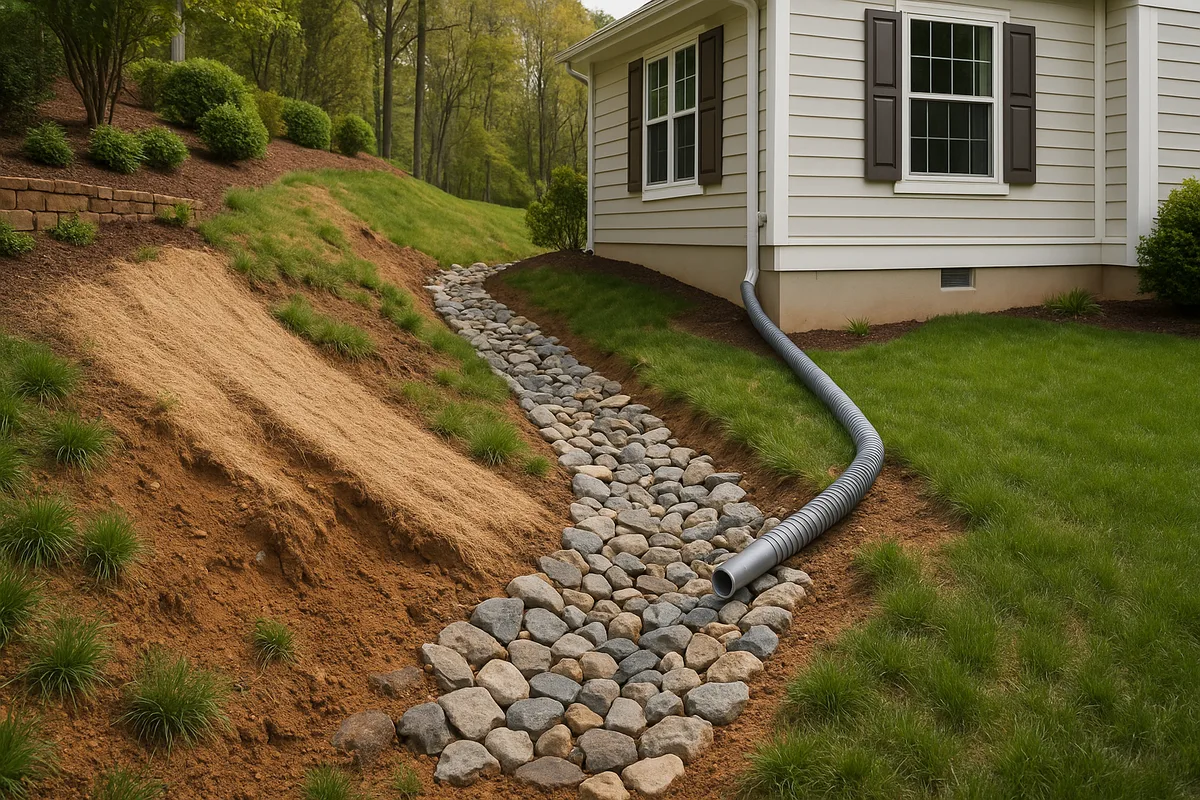
What it is: Extending downspouts to discharge roof runoff at least 6–10 feet from the foundation, ideally via buried PVC pipe to a discharge point at the property's low side or to the street.
Why it matters in LA: Roof runoff is the single largest concentrated water source on most residential properties. Managing it properly eliminates the most common cause of foundation-adjacent saturation.
How it's done: 4-inch Schedule 40 PVC or SDR-35 pipe is trenched from each downspout to a discharge point. In clay soils, the trench should be lined with filter fabric and backfilled with drain rock to prevent clay from migrating into the pipe. Pop-up emitters at the discharge end prevent debris intrusion and allow the system to drain between storms.
LA-specific considerations: The City of Los Angeles allows roof runoff to discharge to the street gutter in most areas, but some neighborhoods have restrictions. In hillside areas, discharge must be managed to prevent erosion on slopes below. For properties with LID requirements, roof runoff may need to be directed to an infiltration feature (dry well, rain garden) rather than discharged off-site. NDS Pro offers residential drainage products specifically designed for these applications.
Typical cost in LA (2026): $300–$800 per downspout for buried discharge lines, including trenching and materials.
French Drains and Subsurface Drainage
What it is: A trench filled with gravel and a perforated pipe that collects subsurface water and conveys it to a discharge point.
Why it matters in LA: French drains are essential for intercepting subsurface water migration, particularly on hillside properties where water moves laterally through soil above bedrock, and in flat areas where perched water tables develop during wet winters.
How it's done: A trench (typically 12–18 inches wide and 18–24 inches deep) is excavated along the path of water migration. The trench is lined with filter fabric, filled with ¾-inch drain rock, and fitted with a perforated pipe (4-inch minimum) that slopes at least 1% toward the discharge point. The filter fabric is wrapped over the top of the rock before backfilling with soil.
LA-specific considerations: In adobe clay soils, French drains require robust filter fabric — clay fines will clog standard landscape fabric within 2–3 years. Use non-woven geotextile rated for clay soil applications. The drain rock must be clean, washed aggregate — not recycled concrete or base material, which can cement together over time. On hillside properties, French drains are often installed as "curtain drains" across the uphill side of the property to intercept sheet flow before it reaches the structure. The American Society of Landscape Architects provides design guidance for integrating subsurface drainage with landscape design.
Typical cost in LA (2026): $40–$85 per linear foot installed, depending on depth, access, and soil conditions. A typical 60-foot residential French drain runs $2,400–$5,100.
Area Drains and Catch Basins
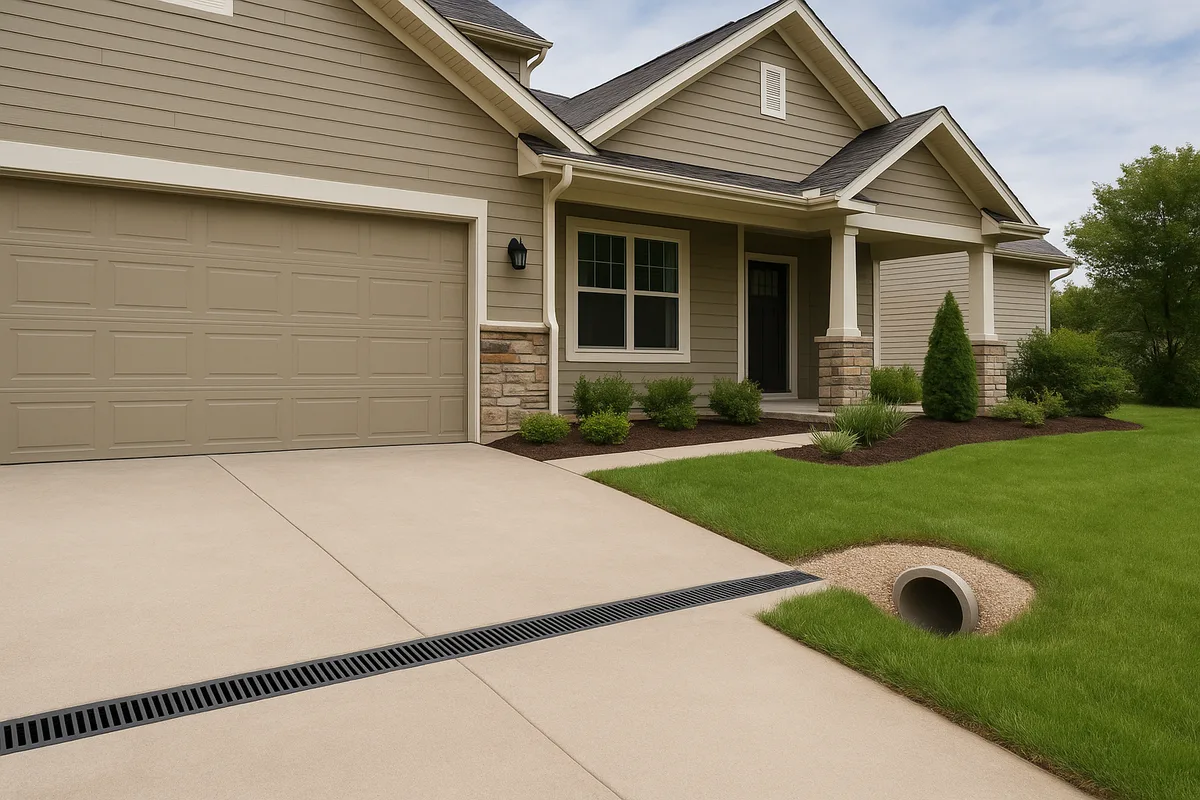
What it is: Surface-level drain inlets that collect standing water from low spots and convey it via buried pipe to a discharge point.
Why it matters in LA: Many Los Angeles properties — particularly those in flat basin areas like the Wilshire corridor, Koreatown, and parts of the Valley — have hardscape-enclosed courtyards, patios, or driveways where surface water has no natural outlet. Area drains provide the only practical solution.
How it's done: A drain grate (9-inch or 12-inch square is typical for residential applications) is set at the low point of the area to be drained. A solid (non-perforated) pipe connects the drain to a discharge point — typically the street gutter or a dry well.
LA-specific considerations: In areas with heavy tree cover (common in neighborhoods like Hancock Park, Pasadena, and the older Valley neighborhoods), area drain grates must be cleaned regularly to prevent leaf blockage. Consider installing drains with sediment traps that can be cleaned without disassembling the system.
Typical cost in LA (2026): $800–$2,000 per drain, including trenching and pipe to discharge point.
Dry Wells and Infiltration Systems
What it is: Underground chambers that collect runoff and allow it to slowly infiltrate into the surrounding soil.
Why it matters in LA: Dry wells satisfy LID requirements for on-site stormwater management and can be the most practical solution where discharging to the street is impractical or prohibited.
How it's done: A pit is excavated (typically 3–4 feet in diameter and 3–4 feet deep), lined with filter fabric, and filled with drain rock or fitted with a manufactured infiltration chamber. Runoff from downspouts or area drains is piped to the dry well.
LA-specific considerations: Dry wells are only effective where soil percolation rates support infiltration. In adobe clay areas of South LA, Mid-City, and the eastern Valley, dry wells may fill during heavy rain and fail to drain between storms. A percolation test is essential before investing in a dry well. In sandy soils near the coast or in the western Valley, dry wells work excellently and can handle significant volumes. The Irrigation Association provides guidance on water management systems that complement dry well installations.
Typical cost in LA (2026): $1,500–$4,000 per dry well, depending on size and soil conditions.
Retaining Wall Drainage
What it is: Drainage systems integrated into retaining walls to relieve hydrostatic pressure and prevent wall failure.
Why it matters in LA: Los Angeles has tens of thousands of residential retaining walls, many dating to the 1920s–1960s hillside development era. A retaining wall without adequate drainage is a retaining wall waiting to fail. Hydrostatic pressure from saturated soil behind a wall can exceed the wall's structural capacity, causing bulging, cracking, and catastrophic collapse.
How it's done: A drainage system behind a retaining wall typically includes a perforated pipe at the base of the wall (the "toe drain"), a gravel drainage blanket against the back face of the wall, weep holes through the wall face at regular intervals, and a waterproofing membrane on the soil side of the wall.
LA-specific considerations: Many older retaining walls in Hollywood Hills, Silver Lake, and Echo Park were built without any drainage provisions — a practice that was common before modern building codes. Retrofitting drainage on an existing wall is expensive but often less expensive than rebuilding a failed wall. If you're purchasing a hillside property with retaining walls, inspect for signs of hydrostatic distress: horizontal cracks, outward tilting, blocked or absent weep holes, and soil erosion at the wall base.
Typical cost in LA (2026): $50–$120 per linear foot for retrofit drainage behind an existing wall, not including wall repair.
Permeable Hardscape
What it is: Driveways, patios, and walkways constructed with materials that allow water to pass through to the soil below.
Why it matters in LA: Permeable paving directly addresses the impervious surface problem that drives urban runoff, and it satisfies LID requirements for new construction and renovation projects.
Options include: Permeable interlocking concrete pavers, porous asphalt, pervious concrete, and gravel-stabilization grids. Each has different performance characteristics, maintenance requirements, and costs.
LA-specific considerations: In clay soil areas, permeable paving must be installed over a substantial aggregate base (12–18 inches minimum) that serves as a reservoir for water that percolates through the surface but cannot quickly infiltrate the clay subgrade. Without this reservoir, water backs up through the surface during heavy rain, defeating the purpose. In sandy soil areas, a thinner base is sufficient because the subgrade itself provides adequate infiltration.
Typical cost in LA (2026): $12–$30 per square foot installed, depending on material choice. Permeable pavers are at the high end; gravel-stabilization grids are at the low end.
Neighborhood-Specific Drainage Challenges
Los Angeles is not one drainage environment — it's dozens. Here's what property owners should know about the most common drainage challenges in specific areas of the city.
Hollywood Hills, Laurel Canyon, and Beachwood Canyon
These iconic hillside neighborhoods face the trifecta of drainage risk: steep slopes, thin soils over sedimentary bedrock, and dense development that concentrates runoff. Properties here frequently deal with slope seepage, retaining wall hydrostatic pressure, and driveway erosion. The narrow, winding streets make contractor access difficult and expensive. Many properties rely on aging terracotta or cast iron subdrain systems installed during original construction in the 1920s–1950s — systems that are often partially collapsed or root-infiltrated.
Silver Lake, Echo Park, and Mt. Washington
Similar hillside challenges to the Hollywood Hills but with generally smaller lots and older construction. Many homes in these neighborhoods were built on cut-and-fill pads, where part of the lot is cut into the hillside and part is built on compacted fill. The interface between cut and fill is a common failure plane for drainage and slope stability. Basement and under-house storage areas carved into hillsides are particularly vulnerable to water intrusion.
Mid-City, Baldwin Hills, and Leimert Park
These neighborhoods sit on some of the heaviest clay soils in the basin. Foundation movement due to expansive soil is extremely common, and drainage management is the primary defense against it. Properties here often have negative grading that has developed over decades as clay soil has settled and shifted. Raised foundation homes (common in this area) with ventilated crawl spaces are vulnerable to moisture accumulation that promotes wood rot and pest infestation.
San Fernando Valley: Encino, Sherman Oaks, Van Nuys, North Hollywood
The Valley's flat topography and alluvial soils create a different drainage profile. Properties here frequently deal with ponding in backyards, saturated lawns, and water intrusion through slab-on-grade foundations. The Valley's summer heat causes clay soils to shrink dramatically, creating gaps around foundations that allow water direct access during the first fall rains. Many Valley properties also have aging pool and irrigation systems whose leaks contribute to chronic soil saturation.
Coastal Communities: Venice, Playa del Rey, Westchester
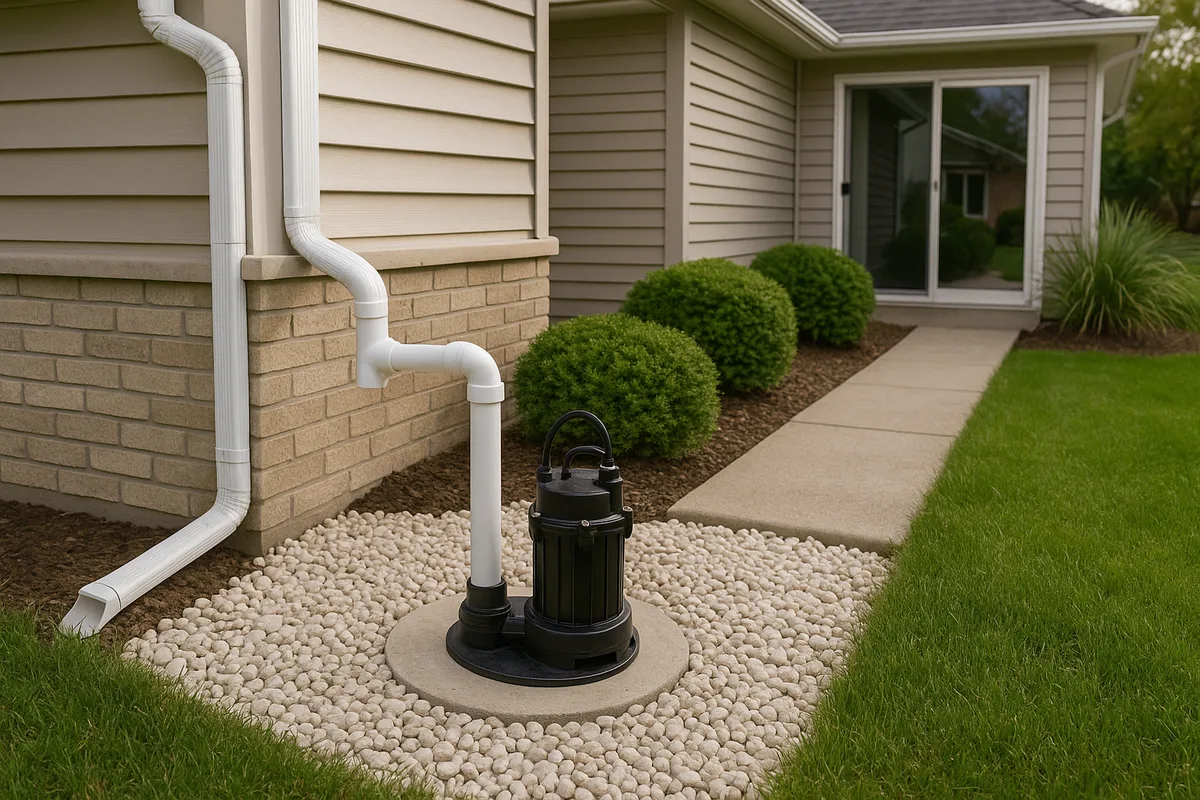
High groundwater tables are the defining drainage challenge in these areas. In parts of Venice, the water table can be as shallow as 3–5 feet below grade during wet winters. This limits the effectiveness of infiltration-based solutions and can cause water to enter basements, garages, and below-grade living spaces through hydrostatic uplift. Sump pump systems are common and necessary in these areas. Sea level rise projections from NOAA's Office for Coastal Management indicate that groundwater conditions in coastal Los Angeles will worsen over the coming decades, making drainage management increasingly critical for property value preservation.
Foothill Communities: Tujunga, Sunland, La Crescenta, Altadena
These communities sit at the base of the San Gabriel Mountains and are directly in the path of debris flows following wildfire. The U.S. Army Corps of Engineers debris basins provide a first line of defense, but they have finite capacity and can be overwhelmed during extreme events. Properties in these areas should maintain clear drainage channels, avoid storing materials in natural drainage paths, and have emergency preparedness plans that account for post-fire debris flow risk. Ready.gov provides specific guidance on preparing for debris flows and flash flooding.
Seasonal Drainage Management for Los Angeles
Effective drainage management in Los Angeles is a year-round activity, but the focus shifts with the seasons.
Pre-Season Preparation (September–October)
This is the most important maintenance window for Los Angeles drainage. Before the first rains:
- Clean all gutters and downspouts. Los Angeles's urban tree canopy — eucalyptus, pine, and jacaranda in particular — drops significant debris in late summer and early fall. A single blocked downspout can redirect hundreds of gallons of water against your foundation during the first storm.
- Inspect and clear area drains, catch basins, and French drain cleanouts. Remove sediment, leaves, and root intrusion.
- Check your grading. Walk the perimeter of your home with a level. If you find areas where soil has settled below the foundation line, add compactable fill and re-establish positive slope.
- Pre-wet clay soils. In clay-dominant areas, run a sprinkler on bare soil areas near your foundation for 30 minutes every few days starting in early October. This allows the clay to gradually rehydrate and close shrinkage cracks before heavy rain arrives.
- Inspect retaining walls. Clear weep holes, check for new cracks or tilting, and ensure drainage paths below walls are unobstructed.
- Test sump pumps. If you have a sump pump, pour water into the pit to verify the pump activates and discharges properly. Replace the battery backup if it's more than 3 years old.
Wet Season Monitoring (November–March)
- Inspect during rain. The only way to truly understand your drainage is to observe it during an active storm. Put on rain gear and walk your property during the next significant rainfall. Note where water flows, where it pools, and where it enters the structure.
- Monitor the NWS. The National Weather Service issues Quantitative Precipitation Forecasts (QPFs) that can help you anticipate heavy rain events days in advance. When a significant atmospheric river is forecast, take proactive steps: clear drains, check sump pumps, and ensure discharge lines are unobstructed.
- Address emergencies immediately. If you discover active water intrusion during a storm, the priority is to redirect water away from the entry point using temporary measures (sandbags, temporary berms, portable pumps) and then address the root cause after the storm passes.
Dry Season Maintenance (April–August)
- Repair and improve. The dry season is when drainage construction should happen. Contractors are more available, soil conditions are stable, and you can work without the pressure of imminent rain.
- Manage irrigation carefully. Over-irrigation is a leading cause of chronic soil saturation in Los Angeles. Many homeowners water their landscapes on autopilot year-round, saturating clay soils near foundations and creating conditions identical to poor drainage. Audit your irrigation system annually and ensure that sprinklers are not spraying against the house or over-watering areas adjacent to the foundation.
- Address vegetation. Tree roots can infiltrate and block drainage pipes. If you have large trees (especially ficus, camphor, or pepper trees) within 15 feet of drainage lines, have the lines inspected with a camera to check for root intrusion.
Costs and Contractor Considerations in Los Angeles
Drainage work in Los Angeles is more expensive than national averages due to high labor costs, permit fees, difficult access on many properties (especially hillsides), and the complexity of working in clay and rocky soils.
Typical Project Costs (2026)
| Project | Typical Cost Range |
|---|---|
| Gutter cleaning and downspout maintenance | $150–$400 |
| Downspout extensions (buried, per downspout) | $300–$800 |
| Surface regrading (typical lot) | $1,500–$5,000 |
| French drain (per linear foot) | $40–$85 |
| Area drain with discharge line | $800–$2,000 |
| Dry well installation | $1,500–$4,000 |
| Sump pump system (installed) | $2,500–$5,500 |
| Retaining wall drainage retrofit (per linear foot) | $50–$120 |
| Comprehensive drainage system (whole property) | $8,000–$25,000+ |
| Permeable paving (per square foot) | $12–$30 |
Hillside properties typically run 30–50% higher than flat-lot equivalents due to access constraints, the need for hand-excavation in areas inaccessible to machinery, and the engineering requirements for slope stability.
Choosing a Contractor
Los Angeles has hundreds of contractors who advertise drainage services, but quality varies enormously. Here's what to look for:
- C-36 license (Plumbing) or C-12 license (Earthwork and Paving). In California, drainage work falls under these contractor license classifications. Verify the license is active through the Contractors State License Board.
- Local experience. A contractor who has worked extensively in your specific neighborhood understands the soil conditions, permit requirements, and access challenges. Ask for references from projects within a few miles of your property.
- Written scope of work. Any reputable contractor will provide a detailed written proposal specifying materials, dimensions, slopes, discharge points, and permit responsibilities. Avoid contractors who quote verbally or provide vague descriptions.
- Permit awareness. If your project requires a permit, the contractor should know this and include permit costs in the proposal. If a contractor suggests skipping the permit "to save money," find a different contractor.
- Warranty. Drainage systems should carry a minimum 1-year warranty on workmanship. Materials warranties (pipe, fittings, geotextile) are typically covered by the manufacturer.
For significant drainage projects, especially on hillside properties, consider engaging a geotechnical engineer or civil engineer to design the system before hiring a contractor to install it. The engineering fee ($2,000–$5,000 for a typical residential project) is a fraction of the cost of a failed installation. The American Society of Civil Engineers and its Los Angeles section can be resources for finding qualified professionals.
Insurance and Financing
Standard homeowners insurance in California typically does not cover flood damage or damage from surface water intrusion. Flood insurance is available through the National Flood Insurance Program and private insurers — FloodSmart.gov is the best starting point for understanding your options. For properties that have sustained damage from drainage-related events, the Small Business Administration offers disaster loans that can be used for drainage improvements as part of damage repair.
When to Get Professional Help
Not every drainage problem requires professional intervention. Cleaning gutters, extending downspouts, and improving surface grading are well within the capability of a handy homeowner. But certain conditions warrant professional assessment:
- Active foundation cracking or movement. If you see new cracks in your foundation, sticking doors or windows, or floors that are no longer level, the cause may be drainage-related soil movement. A geotechnical engineer should evaluate before any drainage work begins.
- Hillside seepage or slope movement. Any sign of water emerging from a hillside, new cracks in the ground surface, or tilting trees or fences on a slope warrants immediate professional evaluation. These can be precursors to landslides.
- Persistent water intrusion. If water enters your home during every significant rain event despite basic maintenance, the problem is systemic and requires engineered solutions.
- Post-fire property. If your property is within or downhill of a recent burn area, consult with a geotechnical engineer about debris flow risk and drainage modifications before the next rainy season.
- Real estate transactions. If you're buying or selling a property in Los Angeles, a professional drainage assessment can identify issues that a standard home inspection may miss — and can save you from inheriting (or failing to disclose) significant problems.
Protecting Your Investment with Drainage Intelligence
Los Angeles real estate represents one of the largest investments most people will ever make. The median home price in Los Angeles County exceeded $850,000 in early 2026, and in many neighborhoods, values are significantly higher. Yet drainage — the single factor most likely to cause ongoing, progressive damage to a property's structure and habitability — is routinely overlooked in purchase decisions, maintenance planning, and renovation projects.
The challenge is that drainage problems are often invisible during the 8–9 dry months of the year. A property that looks perfect in July may have serious water management deficiencies that only reveal themselves during a February atmospheric river. By then, the damage is already happening.
A Low Point Labs Drainage Intelligence Report™ provides what no standard home inspection can: a comprehensive, data-driven analysis of your property's drainage conditions, risk factors, and recommended improvements. Our reports integrate topographic analysis, soil data, FEMA flood zone status, local precipitation patterns, and property-specific observations into an actionable document that tells you exactly where your property stands — and exactly what to do about it.
Whether you're buying a home in the Hollywood Hills, maintaining a property in the Valley, or planning a renovation in Mid-City, understanding your drainage is not optional in Los Angeles. It's essential.
[Get your Drainage Intelligence Report™ today →]
Frequently Asked Questions
The Low Point Labs Drainage Intelligence™ platform is accessible via invitation-led onboarding.