The State Where Water Disappears — and Reappears Where You Least Expect It
Tennessee sits on one of the most hydrologically complex foundations in the eastern United States. Beneath the rolling hills, river bottoms, and suburban subdivisions of this state lies a vast network of limestone karst — a geology defined by soluble bedrock riddled with underground channels, sinkholes, and caverns. In Middle Tennessee alone, the Tennessee Division of Geology has documented thousands of sinkholes, and new ones appear every year, sometimes swallowing portions of yards, driveways, and even homes. This isn't a theoretical concern or a once-in-a-generation event. It's a persistent, ongoing reality that shapes how every property in the state interacts with water.
Combine that karst foundation with heavy clay soils that resist infiltration, an average annual rainfall of 52 inches delivered in increasingly intense bursts, and a development pattern that has paved over enormous swaths of natural floodplain in the last three decades, and you have a state where drainage isn't just important — it's the single most consequential infrastructure system on any residential property. The catastrophic Nashville flood of May 2010 killed 26 people and caused $2 billion in damage, and it fundamentally reshaped how the state thinks about stormwater. But the everyday drainage failures — the wet crawlspaces in Murfreesboro, the foundation cracks in Knoxville, the perpetually soggy yards in Germantown — those cause far more cumulative damage to Tennessee homeowners than any single flood event.
This guide covers the current drainage landscape across Tennessee in practical, actionable detail: what makes your soil behave the way it does, what regulations govern how you manage water on your property, how to diagnose problems before they become expensive, and what solutions actually work in Tennessee's specific conditions.
Tennessee's Drainage Geology: Three Grand Divisions, Three Distinct Challenges
Tennessee is traditionally divided into three Grand Divisions — West, Middle, and East — and this isn't just a cultural distinction. Each region sits on fundamentally different geology, which creates fundamentally different drainage behavior.
West Tennessee: Loess Bluffs and Mississippi Alluvium
West Tennessee, from the Tennessee River to the Mississippi, is defined by two geological features that create opposing drainage problems. The bluffs along the Mississippi River — most prominent in Memphis and Shelby County — are composed of loess, a wind-deposited silt that erodes aggressively when exposed to concentrated water flow. Properties on or near these bluffs face severe erosion risk, and improperly directed downspouts or surface runoff can carve deep gullies in surprisingly short timeframes.
Away from the bluffs, the landscape flattens into the Mississippi Alluvial Plain — some of the flattest terrain in the state. Here, the challenge is the opposite: water has nowhere to go. The soils are heavy alluvial clays with very low permeability, and the water table can be seasonally high. Properties in areas like Tipton County, Lauderdale County, and the lowlands of Shelby County outside Memphis deal with persistent standing water, saturated soils, and the challenge of moving water laterally across terrain with minimal slope. The USDA Web Soil Survey shows large portions of West Tennessee classified as "poorly drained" or "somewhat poorly drained," which directly translates to wet basements, soggy yards, and stressed foundations.
Middle Tennessee: The Karst Capital
Middle Tennessee is where drainage gets genuinely treacherous. The Nashville Basin and surrounding Highland Rim sit on Ordovician-age limestone — rock that dissolves over geological time, creating an underground Swiss cheese of voids, channels, and caverns. This karst topography means that surface water doesn't always behave predictably. A yard that appears to drain well may be funneling water into subsurface voids that eventually collapse into sinkholes. Conversely, a property that seems far from any stream may experience sudden flooding when underground channels become overwhelmed and water surges to the surface through springs and seeps.
The soils overlying this limestone are predominantly residual clays — the insoluble remnants left behind as limestone dissolves. These clays, often classified in the Maury, Mimosa, or Talbott soil series, are dense, plastic, and highly expansive. They shrink dramatically during Tennessee's hot, dry summers, creating deep desiccation cracks, then swell when fall and winter rains return. This seasonal shrink-swell cycle is the primary driver of foundation damage across the Nashville metro area, Murfreesboro, Franklin, Clarksville, and the surrounding counties. You can review the specific soil series on your property through NRCS soil data, which provides drainage classifications, shrink-swell potential, and depth-to-bedrock information critical for any drainage project.
The practical implication: in Middle Tennessee, you cannot assume that directing water away from your foundation means it's "gone." It may be entering the karst system in ways that affect your property or your neighbors' properties unpredictably. Any serious drainage work in this region should account for subsurface conditions.
East Tennessee: Ridge and Valley Complexity
East Tennessee, from the Cumberland Plateau to the Great Smoky Mountains, presents the state's most topographically complex drainage environment. The Ridge and Valley province — running through Knoxville, Chattanooga, and the corridor between — features alternating ridges of resistant sandstone and shale with valleys of soluble limestone and dolomite. This means drainage behavior can change dramatically within a few hundred feet: a property on a ridge may have thin, rocky soil with rapid runoff, while a property in the adjacent valley sits on deep clay with karst features similar to Middle Tennessee.
The Cumberland Plateau, which forms the western boundary of East Tennessee, adds another layer of complexity. Its sandstone caprock creates perched water tables and dramatic seep lines along its escarpments. Properties near the plateau edge — in areas like Signal Mountain, Monteagle, or Crossville — often deal with persistent groundwater seepage that no amount of surface grading can resolve.
The mountains of East Tennessee receive the state's highest rainfall — some areas in the Smokies exceed 80 inches annually — and the steep terrain concentrates runoff into narrow valleys and stream channels with tremendous erosive force. The USGS maintains stream gauge data throughout East Tennessee that documents how quickly these mountain streams can rise during heavy rainfall events, a critical consideration for any property near a watercourse.
Climate Patterns and Their Drainage Implications
Tennessee's humid subtropical climate delivers approximately 52 inches of rainfall annually statewide, but the distribution and intensity of that rainfall matter far more than the total. Several climate patterns create specific drainage challenges:
Intense Spring Storms
March through May is Tennessee's wettest period in most of the state, and spring storms frequently deliver 2-4 inches of rainfall in a matter of hours. These events overwhelm clay soils that are already near saturation from winter precipitation. The result is rapid surface runoff, flash flooding in low-lying areas, and hydrostatic pressure against foundations. The National Weather Service issues flash flood warnings for Tennessee counties more frequently during this period than any other time of year, and property owners should understand that their drainage systems face their greatest test during these spring deluges.
Summer Convective Storms
Tennessee's summer thunderstorms are brief but extraordinarily intense. A single cell can drop 1-2 inches of rain in 30 minutes over a localized area. These storms expose weaknesses in drainage systems that may perform adequately during gentler rains — undersized downspout extensions, shallow swales that overtop, and French drains that can't handle the peak flow rate. Because these storms are so localized, your neighbor may stay dry while your property floods, which can make it difficult to get insurance adjusters or municipal officials to take the problem seriously.
The Autumn Dry-to-Wet Transition
After Tennessee's characteristically dry late summer (July through September typically sees reduced rainfall), the return of regular precipitation in October and November creates a specific foundation risk. Clay soils that have shrunk and cracked during the dry months suddenly rehydrate and swell. This is the season when homeowners across Middle and West Tennessee most commonly notice new foundation cracks, sticking doors, and uneven floors. The damage isn't from a single storm — it's from the cumulative effect of the shrink-swell cycle. According to NOAA climate data, this seasonal precipitation pattern has become more pronounced in recent decades, with drier summers and wetter autumns intensifying the cycle.
Winter Saturation
December through February brings steady, sometimes prolonged rainfall combined with low evapotranspiration (dormant vegetation and cool temperatures mean water stays in the soil longer). This creates the conditions for chronic saturation — the slow, persistent wetness that leads to mold in crawlspaces, efflorescence on basement walls, and the gradual deterioration of foundation materials. Winter is also when frozen ground can prevent infiltration entirely, sending all precipitation across the surface.
Tennessee's Current Regulatory Landscape
Tennessee's stormwater and drainage regulations operate at multiple levels — state, county, and municipal — and understanding them is essential before undertaking any drainage project on your property.
State-Level Requirements: TDEC and the Tennessee Water Quality Control Act
The Tennessee Department of Environment and Conservation (TDEC) administers the state's stormwater program under the Tennessee Water Quality Control Act. For residential property owners, the most relevant state-level requirement is the Construction General Permit (CGP), which applies to any land-disturbing activity of one acre or more. If your drainage project involves significant earthwork — regrading a large lot, installing an extensive French drain system, or creating a detention area — you may trigger this threshold, especially if your project is combined with other construction activity.
TDEC also regulates activities in or near streams and wetlands through the Aquatic Resource Alteration Permit (ARAP) program. If your drainage solution involves directing water to a stream, modifying a stream bank, or filling a wetland area, you'll need to determine whether an ARAP is required. This is particularly relevant in East Tennessee, where many residential properties border or contain small streams. The EPA provides additional guidance on Clean Water Act requirements that apply alongside state regulations, particularly regarding wetlands and waters of the United States.
Municipal Stormwater Ordinances: The MS4 Factor
Tennessee's larger cities and urbanized counties operate under Municipal Separate Storm Sewer System (MS4) permits, which require them to regulate post-construction stormwater runoff from new development and redevelopment. This means that if you live in Nashville-Davidson County, Memphis-Shelby County, Knoxville, Chattanooga, Murfreesboro, Clarksville, Franklin, or any of the other MS4-permitted jurisdictions, there are local ordinances governing how stormwater must be managed on your property.
Nashville's stormwater regulations, administered by Metro Water Services, are among the most comprehensive in the state. They require stormwater management plans for projects disturbing more than 5,000 square feet in critical drainage areas and impose specific requirements for detention, water quality treatment, and erosion control. Nashville also has a dedicated stormwater fee that funds infrastructure maintenance and flood mitigation projects — a direct legacy of the 2010 flood.
Memphis and Shelby County operate under their own stormwater ordinances, with particular emphasis on managing runoff in the Wolf River and Nonconnah Creek watersheds. Knoxville's regulations focus heavily on the Tennessee River system and its tributaries, with specific requirements for properties in the Third Creek and First Creek watersheds.
The practical takeaway: before you install a drainage system, regrade your yard, or redirect water flow, check with your local stormwater department. Failing to obtain required permits can result in fines, required removal of unpermitted work, and liability if your project causes drainage problems on neighboring properties.
Flood Zone Regulations and Disclosure
Tennessee participates in the National Flood Insurance Program (NFIP), and FEMA flood maps cover the entire state. Tennessee has extensive Special Flood Hazard Areas (SFHAs) along the Cumberland River system, the Tennessee River system, the Mississippi River and its tributaries, and hundreds of smaller streams and creeks. Properties in these zones face specific building requirements — including elevation certificates, flood-proofing standards, and restrictions on basement construction — enforced by local floodplain administrators.
Tennessee's real estate disclosure requirements are governed by the Tennessee Residential Property Disclosure Act. Sellers must complete a disclosure form that includes questions about flooding, drainage problems, and water intrusion. However, the form relies on seller knowledge and honesty, and many drainage issues go undisclosed either because sellers genuinely don't understand the problem or because they minimize it. This is precisely why independent drainage assessment — such as a Drainage Intelligence Report™ — provides critical protection for buyers.
Flood insurance is available through the NFIP for properties in participating communities, which includes virtually all of Tennessee. FloodSmart.gov provides consumer-facing information about flood insurance options, and it's worth noting that flood insurance is available even for properties outside designated flood zones — and given that a significant percentage of Tennessee flood claims come from outside SFHAs, it's worth serious consideration regardless of your flood zone designation.
Sinkhole Disclosure
Tennessee does not have a specific sinkhole disclosure statute comparable to Florida's, but known sinkholes on a property would fall under the general disclosure requirements. Given the prevalence of karst features in Middle and East Tennessee, this is a significant gap in consumer protection. A property may have active subsurface karst features that haven't yet manifested as visible sinkholes but that fundamentally affect drainage behavior and long-term stability.
Diagnosing Drainage Problems on Your Tennessee Property
Identifying drainage issues early — before they cause foundation damage, mold growth, or structural problems — can save Tennessee homeowners tens of thousands of dollars. Here's how to conduct a systematic assessment of your property's drainage.
The Rainstorm Walk-Through
The single most valuable diagnostic step you can take is to walk your property during an active rainstorm — specifically, a moderate-to-heavy rain that has been falling for at least 30 minutes. This is when drainage failures reveal themselves. Put on rain gear and observe:
Foundation perimeter: Is water pooling against the foundation walls? Are downspouts discharging too close to the foundation? Is the ground sloping toward the house rather than away from it? In Tennessee's clay soils, even a slight negative grade (slope toward the house) will channel water directly against the foundation.
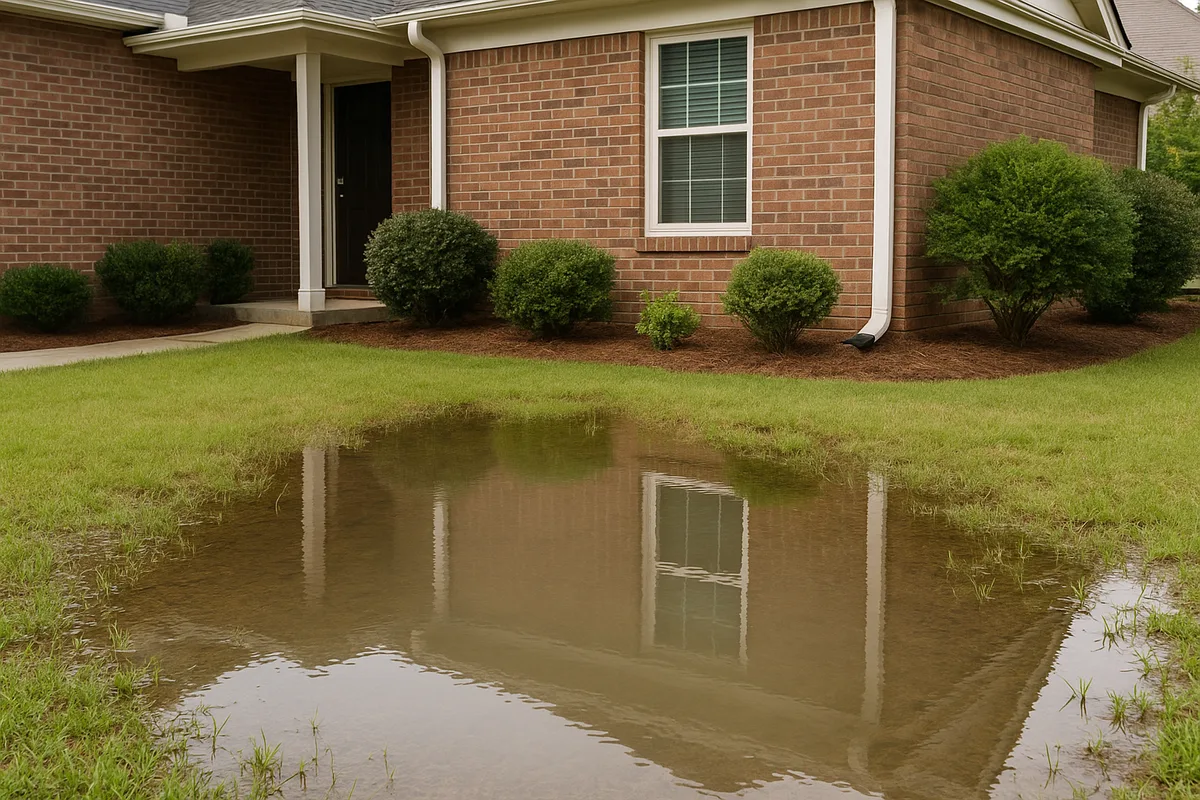
Yard drainage patterns: Where is water flowing? Where is it ponding? Healthy drainage shows water moving steadily across the surface toward a defined discharge point — a street, a swale, a storm drain. Unhealthy drainage shows water circling, ponding, or flowing toward structures.
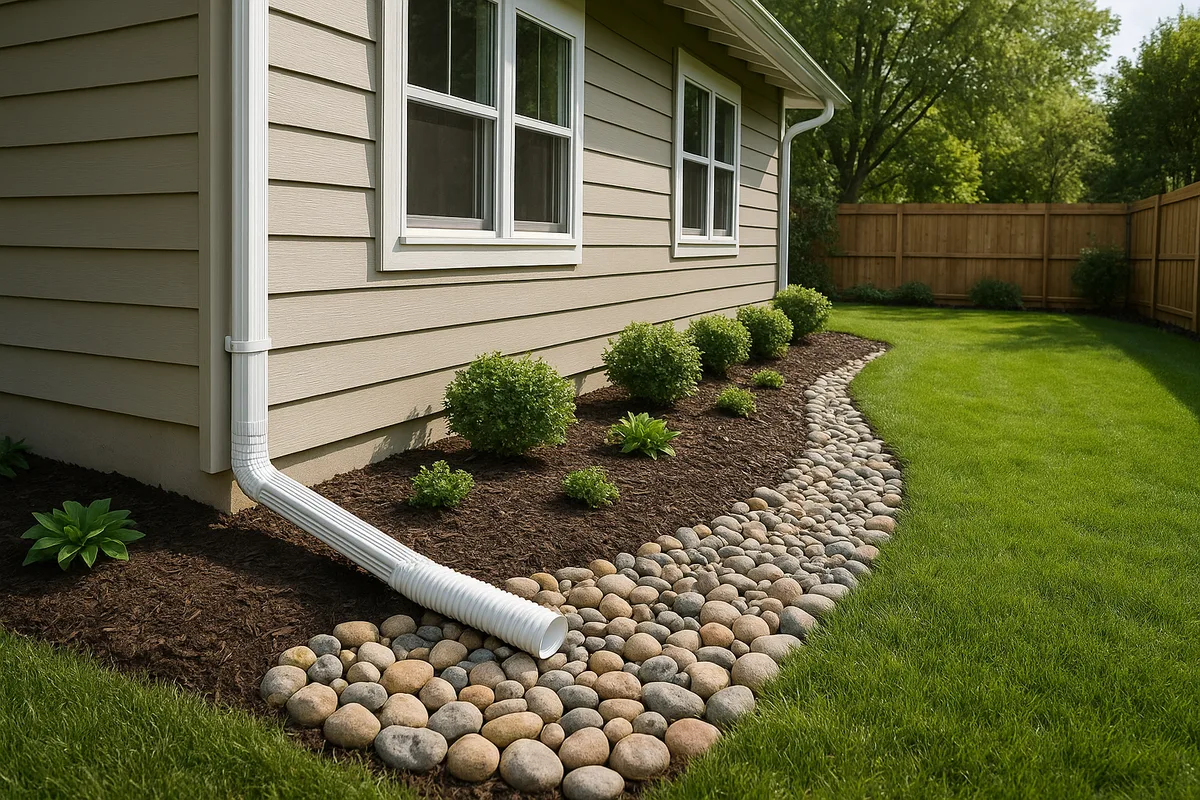
Gutter and downspout performance: Are gutters overflowing? This is extremely common in Tennessee, where spring storms can overwhelm standard 5-inch gutters. Are downspouts connected, intact, and discharging at least 6-10 feet from the foundation? In clay soil, the minimum distance should be even greater — 10-15 feet is preferable because clay's low permeability means water doesn't infiltrate quickly and will flow back toward the foundation if discharged too close.
Neighbor interactions: Is water from your neighbor's property flowing onto yours? Is your runoff flowing onto theirs? Tennessee follows the "reasonable use" doctrine for surface water drainage, which means property owners can be liable for drainage modifications that unreasonably increase the flow of water onto neighboring properties.
Interior Warning Signs
Inside the home, drainage problems manifest in predictable ways:
Crawlspace moisture: Tennessee has an enormous number of homes built on crawlspaces, and moisture in the crawlspace is the state's most common drainage-related problem. Look for standing water, damp soil, condensation on surfaces, mold or mildew growth, and musty odors. A crawlspace should be dry. If it's not, there's a drainage problem — either surface water is entering, groundwater is rising, or both.
Basement water intrusion: For homes with basements (more common in Middle and East Tennessee), look for water stains on walls, efflorescence (white mineral deposits), peeling paint, and active seepage. Check the joint where the floor meets the wall — this is the most common entry point for hydrostatic pressure-driven water intrusion.
Foundation cracks: In Tennessee's expansive clay soils, some cracking is almost inevitable. But monitor cracks for changes: are they widening? Do they open and close seasonally? Stair-step cracks in brick veneer, horizontal cracks in block walls, and diagonal cracks radiating from window and door corners all suggest soil movement driven by moisture fluctuations.
Sticking doors and windows: When clay soils swell unevenly beneath a foundation, they create differential settlement that manifests as doors and windows that stick, floors that feel uneven, and visible gaps between walls and ceilings. These symptoms often worsen in late fall and winter as soils rehydrate.
Exterior Indicators Between Storms
Even when it's not raining, your property provides clues about drainage health:
Soil erosion patterns: Look for areas where topsoil has been washed away, exposing subsoil or roots. Erosion channels (rills and gullies) indicate concentrated water flow that needs to be addressed.
Vegetation patterns: Moss, algae, or hydrophilic plants (like sedges or rushes) growing in your yard indicate persistent moisture. Conversely, areas where grass won't grow despite adequate sunlight may indicate either too much moisture (drowning roots) or too little (a high spot that sheds all water).
Staining on foundation walls: Splash-back staining, mineral deposits, or algae growth on foundation walls indicate chronic water contact.
Sinkhole indicators: In karst areas of Middle and East Tennessee, watch for circular depressions in the yard, areas where the ground feels soft or spongy, leaning fence posts or trees, and cracks in driveways or walkways that form circular or arc patterns. These may indicate subsurface void development. If you suspect sinkhole activity, consult a geotechnical engineer before attempting any drainage modifications — redirecting water flow near an active karst feature can accelerate collapse.
Using Available Data
Before hiring a professional, gather available data about your property:
Soil data: The Web Soil Survey provides free, detailed soil maps and data for every property in Tennessee. Look up your property and note the soil series, drainage class, depth to water table, depth to bedrock, and shrink-swell potential.
Topographic data: USGS topographic maps, available free online through the USGS, show elevation contours, streams, and drainage patterns at a landscape scale. Understanding where your property sits in the broader watershed context is essential.
Flood zone status: Check your property's flood zone designation on FEMA's flood map service. Even if you're not in a Special Flood Hazard Area, understanding your proximity to flood zones and the direction of potential flood flow is valuable.
Historical aerial imagery: Google Earth's historical imagery feature can show you how your property and surrounding area have changed over time — whether upstream development has increased impervious surface, whether nearby streams have been modified, or whether your property was built on fill.
Common Drainage Solutions for Tennessee Properties
Effective drainage solutions in Tennessee must account for the state's specific soil, geology, and climate conditions. What works in sandy coastal soils will not work in Tennessee's dense clays and karst-influenced terrain.
Grading and Surface Drainage
Proper grading is the foundation of all residential drainage. The International Residential Code, adopted by Tennessee, requires a minimum 6-inch fall over the first 10 feet away from the foundation. In Tennessee's clay soils, aim for more — 8-12 inches over 10 feet if possible. This steeper grade compensates for clay's tendency to settle and compact over time, which gradually flattens the grade and can eventually create negative slope.
For properties where regrading alone is insufficient, surface swales — shallow, grass-lined channels — can intercept and redirect sheet flow. Swales are particularly effective in Middle Tennessee's gently rolling terrain, where they can follow natural contours to direct water to a suitable discharge point. The key is ensuring the swale has consistent grade (no low spots where water will pond) and adequate capacity for peak storm flows.
The American Society of Landscape Architects provides design guidance for residential grading and surface drainage that accounts for regional soil and climate conditions.
French Drains and Subsurface Drainage
French drains — trenches filled with gravel and containing perforated pipe — are the workhorse of Tennessee residential drainage. They intercept subsurface water flow and redirect it to a discharge point. In Tennessee, French drain installation requires specific attention to several factors:
Trench depth and width: In clay soils, the trench must be deep enough to intercept the water flow path, which may be deeper than expected because clay's low permeability creates perched water tables. A typical residential French drain in Tennessee clay should be 18-24 inches deep and 12-18 inches wide, though site conditions may require more.
Aggregate selection: Use clean, washed gravel (#57 stone is standard in Tennessee) — not crusher run or limestone screenings, which will compact and reduce drainage capacity over time. In karst areas, avoid limestone aggregate in favor of river gravel, as limestone will slowly dissolve and create fines that clog the system.
Filter fabric: Wrap the entire trench — bottom, sides, and top — in non-woven geotextile filter fabric before backfilling with gravel. Tennessee's clay soils produce enormous quantities of fine sediment that will migrate into and clog an unprotected French drain within a few years. The filter fabric is not optional in Tennessee clay — it's essential for long-term performance.
Pipe selection: Use rigid or corrugated perforated pipe (4-inch diameter minimum for residential applications). Place the pipe at the bottom of the trench with perforations facing down — this allows water to rise into the pipe from below rather than entering from above, which reduces sediment intrusion. NDS manufactures a range of residential drainage products specifically designed for these applications.
Discharge: Every French drain needs a positive discharge point — a location where the collected water can exit the system by gravity. This might be a storm drain, a daylight outlet at a lower elevation on the property, or a dry well. In Tennessee's clay soils, dry wells have limited effectiveness because the surrounding clay can't absorb the discharged water quickly enough. A gravity outlet to a storm system or natural drainage way is strongly preferred.
Interior Drainage Systems
For homes with basements experiencing hydrostatic water intrusion — common in East and Middle Tennessee where homes are built into hillsides or over shallow bedrock — an interior perimeter drainage system (sometimes called a "waterproofing system," though it's technically a drainage system) may be necessary.
This involves cutting a channel around the interior perimeter of the basement floor, installing perforated pipe in a gravel bed, and routing the collected water to a sump pit with a pump that discharges outside the home. This approach is effective but expensive ($8,000-$20,000+ depending on basement size and conditions) and should be considered only after exterior drainage options have been exhausted or determined to be impractical.
Crawlspace Drainage and Encapsulation
Given the prevalence of crawlspace construction in Tennessee, crawlspace drainage is a major category of work. The current best practice combines several elements:
- Exterior perimeter drainage to intercept surface and shallow subsurface water before it reaches the crawlspace
- Interior drainage channels or perforated pipe to collect water that does enter the crawlspace and route it to a sump pump
- Vapor barrier installation (6-mil polyethylene minimum, 20-mil cross-laminated polyethylene preferred) covering the entire crawlspace floor and extending up the walls
- Dehumidification to control moisture levels in the encapsulated space
Crawlspace encapsulation without addressing the underlying drainage problem is a common and expensive mistake in Tennessee. The vapor barrier and dehumidifier manage moisture vapor, but they do not stop liquid water. If water is actively flowing into your crawlspace, you need drainage solutions first, encapsulation second.
Rain Gardens and Bioretention
Rain gardens — shallow, planted depressions designed to capture and infiltrate stormwater — are gaining popularity in Tennessee, and several municipalities (Nashville in particular) actively encourage them. However, their effectiveness in Tennessee's clay soils is limited compared to sandier regions. A rain garden in Tennessee clay requires significant soil amendment — typically excavating 18-24 inches of native clay and replacing it with a engineered soil mix (typically 60% sand, 20% compost, 20% topsoil) that promotes infiltration.
Done correctly, rain gardens can be effective at managing roof runoff from a portion of the home and providing aesthetic value. Done incorrectly — planted directly in unamended clay — they simply become permanent mud pits. The Low Impact Development Center provides design specifications for rain gardens in challenging soil conditions.
Nashville's Green Infrastructure program and Knoxville's stormwater incentive programs both offer resources and, in some cases, financial incentives for residential rain garden installation. Check with your local stormwater department.
Retaining Walls and Terracing
East Tennessee's hilly terrain and Middle Tennessee's rolling landscape frequently require retaining walls as part of a comprehensive drainage solution. Retaining walls in Tennessee must account for the significant hydrostatic pressure that builds behind walls in clay soil. Every retaining wall must include adequate drainage — typically a gravel backfill zone with a perforated pipe at the base — to prevent water pressure from building up and causing wall failure.
Wall failures due to inadequate drainage are among the most common and expensive structural problems in Tennessee's hilly neighborhoods — areas like the hills of East Nashville, the ridges around Knoxville, and the bluffs of Chattanooga see these failures regularly.
Sump Pump Systems
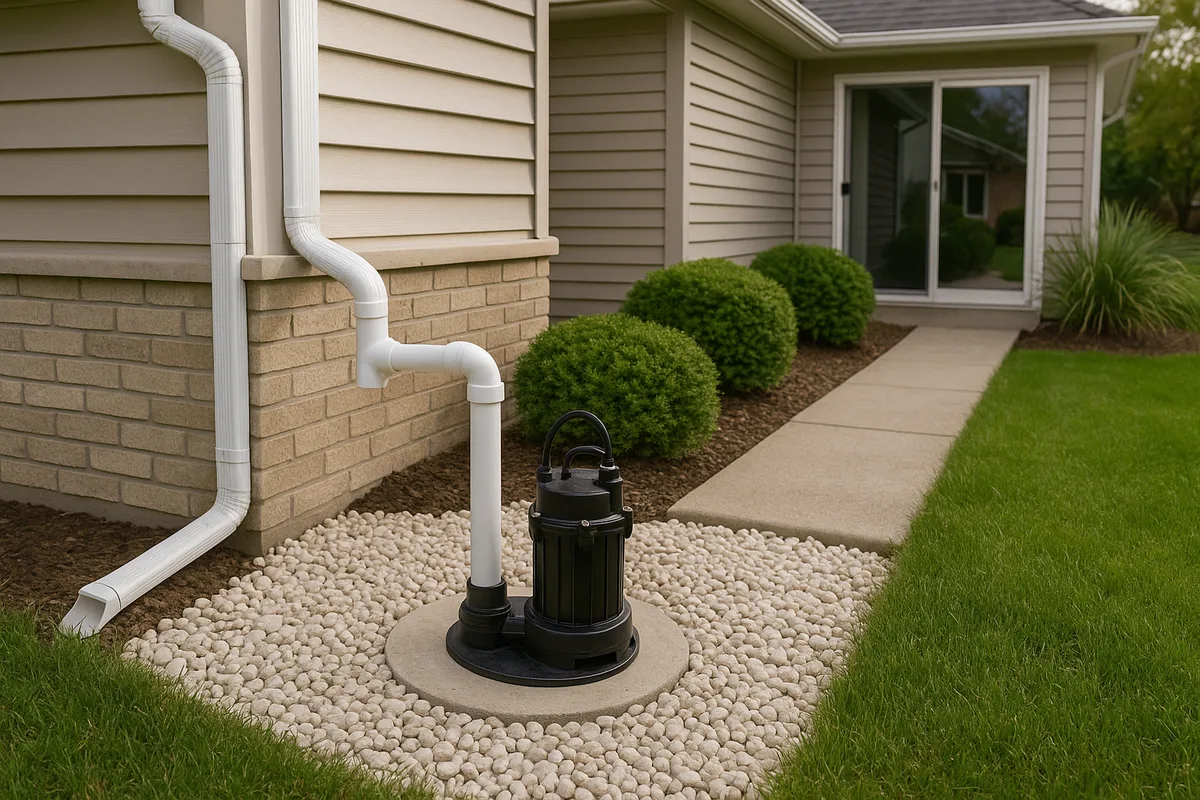
Sump pumps are a necessary component of many Tennessee drainage systems, particularly for homes with basements or low crawlspaces where gravity discharge isn't possible. Key considerations for Tennessee installations:
- Sizing: Tennessee's intense rainfall events require adequate pump capacity. A 1/3 HP pump is the minimum for most residential applications; 1/2 HP or larger is appropriate for properties with significant water intrusion.
- Battery backup: Tennessee's spring storms frequently cause power outages — precisely when the sump pump is needed most. A battery backup system is not a luxury; it's essential.
- Discharge location: Sump pump discharge must be directed away from the foundation and, ideally, to a storm drainage system. Discharging onto the surface in clay soil often just creates a new problem — the water flows back toward the house or onto a neighbor's property. Check local ordinances; some Tennessee municipalities prohibit sump pump discharge to sanitary sewers.
Costs of Drainage Solutions in Tennessee (2026)
Drainage project costs in Tennessee vary significantly by region, soil conditions, and project complexity. The following ranges reflect current market conditions:
| Solution | Typical Cost Range | Notes |
|---|---|---|
| Regrading (foundation perimeter) | $1,500 - $5,000 | Depends on linear footage and soil conditions |
| French drain (exterior, linear foot) | $30 - $75/LF | Higher end in rocky East TN soils |
| French drain (complete perimeter system) | $5,000 - $15,000 | Includes gravel, pipe, fabric, discharge |
| Downspout extensions/underground routing | $200 - $600 per downspout | Rigid pipe preferred over flex in clay |
| Crawlspace encapsulation with drainage | $8,000 - $20,000 | Varies enormously with crawlspace size |
| Interior basement drainage system | $8,000 - $25,000 | Includes sump pump installation |
| Sump pump installation | $1,200 - $3,500 | Add $500-$1,000 for battery backup |
| Rain garden (engineered) | $2,000 - $6,000 | Requires soil amendment in TN clay |
| Retaining wall with drainage | $40 - $120/sq ft of wall face | Material dependent; includes drainage |
| Surface swale construction | $1,000 - $4,000 | Depends on length and grading required |
These costs reflect the labor market in Tennessee's major metro areas. Rural areas may see lower labor costs but potentially higher material delivery charges. East Tennessee projects involving rock excavation (common in the Ridge and Valley province) can add 30-50% to trenching costs.
For properties that have suffered flood damage, the SBA offers disaster loans that can cover drainage improvements as part of rebuilding, and FEMA mitigation grants may be available through your local emergency management agency for properties with repetitive flood losses.
Seasonal Timing for Drainage Work in Tennessee
Timing matters enormously for drainage projects in Tennessee, both for construction practicality and for diagnostic accuracy.
Best Months for Installation
Late summer through early fall (August-October) is generally the best window for drainage construction in Tennessee. Soil moisture is typically at its lowest, making excavation easier and less likely to damage surrounding lawn and landscape. Clay soils are more workable when they're not saturated. However, very dry clay can be extremely hard — almost concrete-like — which can increase excavation costs.
Late fall (November-December) is acceptable but carries the risk of wet weather delays and saturated soil conditions that make equipment access difficult and can cause compaction damage to lawns.
Avoid spring installation (March-May) if possible. This is Tennessee's wettest season, and excavating in saturated clay is messy, difficult, and can compromise the quality of the installation. Trenches fill with water, gravel becomes contaminated with mud, and equipment causes extensive lawn damage.
Best Months for Diagnosis
Late winter through spring (February-May) is the ideal time to diagnose drainage problems because this is when they're most visible. Soils are saturated, water tables are high, and heavy rains expose every weakness in your drainage system. If you're considering purchasing a property in Tennessee, try to inspect it during this period — a property that looks fine in dry September may have serious drainage problems that only manifest in wet March.
The Cooperative Extension System provides region-specific guidance on seasonal soil and water management that Tennessee homeowners can apply to their drainage planning.
Regional Drainage Challenges: A Closer Look
Nashville Metro Area
The Nashville metro — including Davidson, Williamson, Rutherford, Wilson, and Sumner counties — faces the full spectrum of Middle Tennessee drainage challenges. Rapid growth over the past two decades has dramatically increased impervious surface coverage, overwhelming drainage infrastructure designed for a smaller, less developed landscape.
Specific problem areas include:
- Antioch and Southeast Nashville: Much of this area was developed on relatively flat terrain with poor natural drainage. Subdivisions built in the 1980s and 1990s with minimal stormwater management now experience chronic flooding during heavy rain events.
- The Gulch and downtown Nashville: These areas sit in the Cumberland River floodplain and are protected by a combination of levees and the J. Percy Priest Dam upstream. The 2010 flood demonstrated the limits of this protection.
- Bellevue and West Nashville: The Harpeth River watershed creates flood risk for properties along the river and its tributaries, and the karst geology in this area produces sinkholes with some regularity.
- New construction in Williamson County: Rapid development in Franklin, Brentwood, Spring Hill, and Thompson's Station has created significant stormwater management challenges. Newer subdivisions are required to include detention facilities, but the cumulative impact of development on downstream flooding remains a concern.
Nashville's stormwater utility fee funds ongoing infrastructure improvements, and Metro Water Services maintains a database of known flooding locations. If your property floods, report it — repeated reports can trigger infrastructure improvements and may qualify you for mitigation assistance.
Memphis Metro Area
Memphis faces unique drainage challenges driven by its position on the Mississippi River bluffs and the flat alluvial plain to the east. The city's aging stormwater infrastructure — much of it combined storm and sanitary sewers in older neighborhoods — is being gradually separated and upgraded, but the process is ongoing and many areas still experience combined sewer overflows during heavy rain.
Specific concerns include:
- Midtown and East Memphis: Older neighborhoods with mature trees and aging infrastructure. Root intrusion into drainage pipes is a persistent problem, and many properties have inadequate grading due to decades of landscaping changes.
- Cordova and Bartlett: Rapid suburban development has increased runoff into the Wolf River and Loosahatchie River systems, creating downstream flooding concerns.
- South Memphis and Whitehaven: Low-lying areas with high water tables and heavy clay soils that create chronic moisture problems for slab-on-grade and crawlspace homes.
The Army Corps of Engineers maintains the Mississippi River levee system that protects Memphis from catastrophic river flooding, but interior drainage — managing the rain that falls within the protected area — remains the responsibility of local infrastructure and individual property owners.
Knoxville Metro Area
Knoxville's Ridge and Valley terrain creates dramatic variations in drainage conditions over short distances. Properties on ridgetops may have thin, rocky soil with rapid runoff, while properties in valleys deal with deep clay, high water tables, and potential karst features.
- South Knoxville: Hilly terrain with significant erosion risk on slopes and flooding risk in low-lying areas near the Tennessee River.
- West Knoxville and Farragut: Rapid development has increased runoff into the Turkey Creek and Beaver Creek watersheds.
- North Knoxville: Older neighborhoods with aging infrastructure and properties that were built before modern stormwater requirements.
Knox County's stormwater management program provides resources for homeowners, including a stormwater hotline for reporting drainage problems and guidance on residential best management practices.
Chattanooga Area
Chattanooga's position in the Tennessee River gorge, surrounded by Lookout Mountain, Signal Mountain, and Missionary Ridge, creates a dramatic drainage environment. Runoff from the surrounding mountains concentrates in the valley where the city sits, and the Tennessee River itself creates significant flood risk.
- North Shore and Riverview: Low-lying areas adjacent to the Tennessee River with direct flood risk.
- Lookout Mountain and Signal Mountain: Properties on these elevated areas deal with steep-slope drainage, erosion, and the unique challenges of building on sandstone caprock with underlying limestone.
- East Brainerd and Ooltewah: Rapidly developing areas where stormwater management is a growing concern.
When to Call a Professional
While many minor drainage improvements — extending downspouts, improving surface grading near the foundation, cleaning gutters — are within the capability of a handy homeowner, several situations in Tennessee warrant professional involvement:
Any project involving karst terrain: If you're in Middle or East Tennessee and your property shows any signs of karst activity (sinkholes, springs, disappearing streams), consult a geotechnical engineer before modifying drainage patterns. Redirecting water flow near karst features can trigger sinkhole collapse.
Foundation damage: If you're seeing significant cracking, differential settlement, or structural distress, you need a structural engineer's assessment before addressing drainage. The drainage problem may be the cause, but the structural repair needs to be planned in coordination with the drainage solution.
Persistent crawlspace or basement water: If water is actively entering your home despite basic drainage improvements, you likely need a comprehensive drainage system designed by a professional who understands Tennessee's soil and groundwater conditions.
Slope stability concerns: If you have a retaining wall that's leaning, a hillside that's showing signs of movement, or erosion that's threatening structures, get professional help immediately. Slope failures in Tennessee's clay soils can be sudden and catastrophic.
Projects requiring permits: If your project triggers local stormwater permit requirements, you'll typically need engineered plans prepared by a licensed professional.
When selecting a drainage contractor in Tennessee, verify that they hold a valid Tennessee contractor's license, carry adequate insurance, and have specific experience with drainage work in your area's soil and geological conditions. Ask for references from projects in similar conditions, and be wary of contractors who propose solutions without first diagnosing the specific cause of your drainage problem. The American Society of Civil Engineers and the Water Environment Federation both maintain resources for understanding drainage engineering standards that can help you evaluate contractor proposals.
For emergency preparedness related to flooding and severe drainage events, Ready.gov provides comprehensive planning resources that every Tennessee homeowner should review, particularly those in flood-prone areas.
The Real Cost of Ignoring Drainage in Tennessee
Tennessee's combination of expansive clay soils, intense rainfall, and karst geology makes drainage neglect extraordinarily expensive. Consider the cascading costs:
Foundation repair in Tennessee typically costs $5,000-$25,000, and severe cases involving underpinning can exceed $50,000. Most foundation damage in Tennessee is moisture-related and could have been prevented or minimized with proper drainage.
Mold remediation in a crawlspace or basement typically costs $3,000-$15,000, and the health impacts of prolonged mold exposure — respiratory problems, allergic reactions, and worse — have no price tag.
Property value impact: Drainage problems are among the most significant value-reducing conditions in Tennessee real estate. A home with documented water intrusion, foundation damage, or flooding history can lose 10-25% of its value, and these problems must be disclosed to future buyers under Tennessee law.
Insurance limitations: Standard homeowner's insurance does not cover flood damage, groundwater intrusion, or damage resulting from poor drainage maintenance. Flood insurance through the NFIP covers flood events but not chronic drainage problems. This means the financial burden of drainage failure falls almost entirely on the homeowner.
Getting Ahead of the Problem: The Case for Drainage Intelligence
Tennessee's drainage challenges are complex, variable, and consequential. The difference between a property with well-managed drainage and one with neglected drainage can be tens of thousands of dollars in avoided repairs, preserved property value, and protected health.
But most homeowners don't know what they don't know. They don't know what soil series underlies their property, whether they're in a karst-influenced area, how their property fits into the broader watershed, or whether their current drainage infrastructure is adequate for Tennessee's increasingly intense rainfall patterns.
That's exactly what a Low Point Labs Drainage Intelligence Report™ provides. Using property-specific data — topography, soil composition, watershed position, flood zone status, and current drainage infrastructure — we deliver a comprehensive assessment of your property's drainage health, identify current and potential problems, and provide prioritized, actionable recommendations tailored to your specific conditions in Tennessee.
Whether you're purchasing a home in Nashville's competitive market, concerned about water in your Knoxville crawlspace, planning a drainage improvement project in Chattanooga, or simply want to understand your property's relationship with water, a Drainage Intelligence Report gives you the information you need to make smart decisions.
Don't wait for the next spring storm to discover your drainage problem. Get your Drainage Intelligence Report™ today.
Explore our US Drainage Guide for a national perspective on residential drainage.
Frequently Asked Questions
The Low Point Labs Drainage Intelligence™ platform is accessible via invitation-led onboarding.