A City Built on Ice Age Leftovers — And It Shows Every October
Seattle sits on a landscape sculpted by the Vashon glaciation roughly 15,000 years ago, and every drainage problem in the city traces back to that event. The Puget Lobe of the Cordilleran Ice Sheet parked itself over what is now downtown Seattle, compressing the earth beneath it into an almost waterproof layer of glacial till — a dense, gray, clay-rich hardpan that sits anywhere from two to twenty feet below the surface across most of the city. On top of that till, the retreating glacier deposited a chaotic mix of sand, gravel, and silt in wildly inconsistent layers. The result is a city where your neighbor's yard might drain perfectly while yours turns into a pond every November, even though you're on the same block.
This isn't a theoretical problem. Seattle's combination of steep topography, layered glacial soils, and a climate that delivers roughly 38 inches of rain — with nearly 80% of it compressed into the October-through-April wet season — creates drainage conditions that are genuinely unique. Add in the city's aggressive stormwater management regulations, one of the most expensive construction markets in the country, and a housing stock that ranges from 1920s bungalows with no foundation drainage to modern infill projects with engineered systems, and you get a drainage landscape that demands local knowledge.
This guide is built for property owners, buyers, sellers, and professionals working in Seattle. It covers the specific soil conditions under your property, the regulatory environment you're operating in, and the practical steps you can take to diagnose and fix drainage problems before they become structural failures.
Seattle's Glacial Soils: Why Your Yard Won't Drain
To understand drainage in Seattle, you need to understand the layer cake beneath your feet. The Vashon glaciation left behind a distinctive soil profile that repeats — with variations — across most of the city. From top to bottom, it typically looks like this:
- Topsoil and organic layer (0–6 inches): Often thin, especially in yards that were graded during construction.
- Recessional outwash (6 inches to several feet): Sandy, gravelly material deposited as the glacier melted. This layer drains well — sometimes too well, creating erosion channels.
- Vashon till (variable depth, 2–20+ feet below surface): The villain. This is the compacted, unsorted mix of clay, silt, sand, and gravel that the glacier compressed under its own weight. It has extremely low permeability — often less than 0.06 inches per hour — making it functionally waterproof. When water hits this layer, it stops moving downward and starts moving laterally.
- Advance outwash and older deposits (below the till): More permeable sands and gravels, but they're often too deep to matter for residential drainage.
The critical dynamic is the interface between the permeable upper layers and the impermeable till. Water percolates through the sandy topsoil, hits the till, and then flows laterally along the till surface — often emerging as seeps on hillsides, in basements, or at the base of retaining walls. This is why so many Seattle homes experience water intrusion that seems to come from the side rather than from above.
You can explore the specific soil units mapped beneath your property using the USDA Web Soil Survey, which classifies most of Seattle's urban soils under the Alderwood, Everett, and Indianola series. The Alderwood series — by far the most common — is explicitly described as having a "densic contact" (the till layer) that restricts water movement. If your property sits on Alderwood soils, you should assume that subsurface drainage is limited unless an engineered system is in place.
How Soil Layers Vary by Neighborhood
Seattle's glacial deposits aren't uniform. The thickness and depth of the till layer, and the composition of the material above it, vary significantly across the city:
Queen Anne and Capitol Hill: These prominent hills are largely composed of glacial drift with till at varying depths. The steep slopes mean that lateral water movement along the till surface can be rapid, and seeps are common on the downhill sides of properties. Retaining walls in these neighborhoods frequently fail due to hydrostatic pressure from perched water tables.
Ballard and Fremont: Flatter terrain with relatively shallow till. Yards in these neighborhoods often exhibit standing water because there's nowhere for the lateral flow to go. Older homes here frequently lack foundation drains, and crawl spaces are notoriously wet.
West Seattle: The West Seattle ridge sits on thick glacial deposits, and the steep bluffs along the western edge are prone to landslides triggered by saturated soils. The 2020 and 2022 slide events along the bluffs were textbook examples of water perching on till and destabilizing the material above it.
Rainier Valley and the Duwamish corridor: These low-lying areas sit on alluvial and estuarine deposits rather than glacial till. The soils here are silty and often have high water tables, creating different drainage challenges — primarily related to flooding and poor surface drainage rather than perched water.
North Seattle (Northgate, Lake City, Bitter Lake): Glacial outwash deposits are thicker here, and some areas have relatively good drainage. However, the Bitter Lake area sits in a topographic depression with a long history of flooding, and the dense development in Northgate has increased impervious surface coverage dramatically.
Beacon Hill and Columbia City: The Beacon Hill ridge has similar geology to Queen Anne — glacial drift over till — but with less dramatic slopes. Drainage problems here tend to manifest as wet basements and crawl spaces rather than slope failures.
The USGS maintains detailed geologic maps of the Seattle area that show the distribution of glacial deposits, alluvium, and fill. These maps are invaluable for understanding what's beneath a specific property.
Seattle's Climate: The Six-Month Soak
Seattle's reputation as a rainy city is both overstated and understated. The 38-inch annual rainfall total is actually less than cities like New York, Atlanta, or Houston. But the pattern of that rainfall is what creates drainage problems.
From October through April, Seattle receives roughly 30 of its 38 annual inches. This isn't typically delivered as dramatic downpours — it arrives as persistent, low-intensity rain that keeps soils saturated for months. The National Weather Service data for Seattle-Tacoma International Airport shows that the city averages 150+ days per year with measurable precipitation, most of them concentrated in the wet season.
This sustained saturation is worse for drainage than occasional heavy storms. A single 2-inch rainstorm gives soils time to drain between events. Six months of near-daily rain means the soil never dries out, the till layer stays saturated, and perched water tables remain elevated from late November through March. Every additional rain event during this period has nowhere to go.
Climate patterns are also shifting. NOAA data shows that atmospheric river events — narrow corridors of concentrated moisture from the Pacific — are delivering more intense precipitation to the Pacific Northwest than historical averages would suggest. The November 2021 atmospheric river that devastated parts of British Columbia and northwest Washington dumped several inches of rain on Seattle in 48 hours, overwhelming drainage systems across the city. These events are becoming more frequent and more intense, and drainage systems designed for historical rainfall patterns may be undersized for current and future conditions.
The dry season (July through September) creates its own problems. Seattle's glacial soils contain significant clay content, and prolonged drying causes clay particles to shrink and crack. When the fall rains return, water initially rushes through these desiccation cracks rather than infiltrating evenly, creating localized saturation and erosion before the soil has a chance to swell and seal. This is why the first major rainstorms of fall often cause the most dramatic drainage failures — the soil isn't ready to absorb water uniformly.
The Regulatory Landscape: Seattle's Stormwater Code
Seattle has one of the most comprehensive stormwater management regulatory frameworks in the country, driven by its obligations under the federal Clean Water Act, its municipal separate storm sewer system (MS4) permit from the Washington Department of Ecology, and its own environmental priorities. Property owners need to understand how these regulations affect what they can and cannot do on their land.
Seattle's Stormwater Code (SMC 22.800–22.808)
Seattle's Stormwater Code, administered by Seattle Public Utilities (SPU), applies to virtually all development and redevelopment activity that creates or modifies impervious surfaces. The code requires:
On-site stormwater management: New development and significant redevelopment must manage stormwater on-site to the maximum extent feasible. This typically means infiltration, rainwater harvesting, or other green stormwater infrastructure (GSI) before conventional piped systems can be used.
Flow control: Projects that add more than a threshold amount of impervious surface must control the rate and volume of stormwater leaving the site to pre-development levels.
Water quality treatment: Runoff from pollution-generating surfaces (driveways, parking areas) must be treated before discharge.
Minimum requirements for single-family residential: Even single-family homeowners are subject to stormwater requirements when they add impervious surface (new driveways, patios, additions). Projects adding 750 square feet or more of new plus replaced impervious surface trigger on-site stormwater management requirements.
The EPA provides the federal regulatory framework that drives much of Seattle's stormwater program, particularly through the National Pollutant Discharge Elimination System (NPDES) permit program. Seattle's code goes well beyond federal minimums.
Permits You'll Need
Common drainage projects and their permit requirements in Seattle:
French drains and curtain drains: Generally do not require a permit if they don't connect to the city's storm drain system. However, if you're discharging to the right-of-way or a city system, you'll need a side sewer permit from SPU.
Regrading: Any grading that moves more than a threshold volume of soil may require a grading permit from the Seattle Department of Construction and Inspections (SDCI). Grading on steep slopes (40% or greater) or in Environmentally Critical Areas (ECAs) triggers additional review.
Retaining walls: Walls over 4 feet in height require a building permit. Walls in steep slope areas or landslide-prone areas require geotechnical review.
Connecting to the storm system: Any new connection to Seattle's storm drain system requires a side sewer permit and must meet SPU's standards for flow control and water quality.
Rain gardens and bioretention: Seattle actively encourages these through its RainWise program, which offers rebates. Installation through the RainWise program includes permitting support.
Environmentally Critical Areas (ECAs)
Seattle's ECA regulations (SMC 25.09) are critical for drainage work. ECAs include:
- Steep slope areas (40% slope or greater)
- Landslide-prone areas
- Wetlands and wetland buffers
- Riparian corridors
- Flood-prone areas
- Peat settlement-prone areas (notably in parts of the University District and Fremont)
If your property is in or near an ECA, drainage modifications may require environmental review, a geotechnical report, and potentially a critical areas review. The city's GIS mapping system allows you to check whether your property is in an ECA, and any competent contractor should verify this before starting work.
King County Flood Zone Designations
While Seattle itself has relatively limited FEMA-designated flood zones compared to surrounding King County, several areas carry flood designations:
- Portions of the Duwamish River corridor (Zone AE)
- Areas along Thornton Creek in north Seattle
- Low-lying areas near Lake Union and the Ship Canal
- Parts of the Rainier Valley near the former course of the Duwamish
FEMA flood maps are updated periodically, and King County has been through several map revision cycles. Property owners in or near flood zones should understand that these designations affect insurance requirements, building standards, and resale disclosure obligations. The National Flood Insurance Program provides resources for understanding flood insurance options, which are required for federally backed mortgages on properties in Special Flood Hazard Areas.
Disclosure Requirements
Washington State law (RCW 64.06) requires sellers of residential property to complete a seller disclosure statement that includes questions about drainage, flooding, and water intrusion. Specifically, sellers must disclose:
- Known drainage problems
- Past flooding or standing water
- Water intrusion in basements or crawl spaces
- Known landslide or erosion issues
- Whether the property is in a flood zone or other critical area
These disclosures are legally binding, and failure to disclose known drainage issues can result in liability. For buyers, this makes pre-purchase drainage assessment essential — and it's why a Drainage Intelligence Report™ provides value that a standard home inspection cannot match.
Diagnosing Drainage Problems on Your Seattle Property
Before spending money on solutions, you need to understand what's actually happening with water on your property. Here's a systematic approach to drainage assessment that accounts for Seattle's specific conditions.
Step 1: Observe During Rain
The single most valuable thing you can do is walk your property during a sustained rain event — ideally in November or December when soils are saturated. Look for:
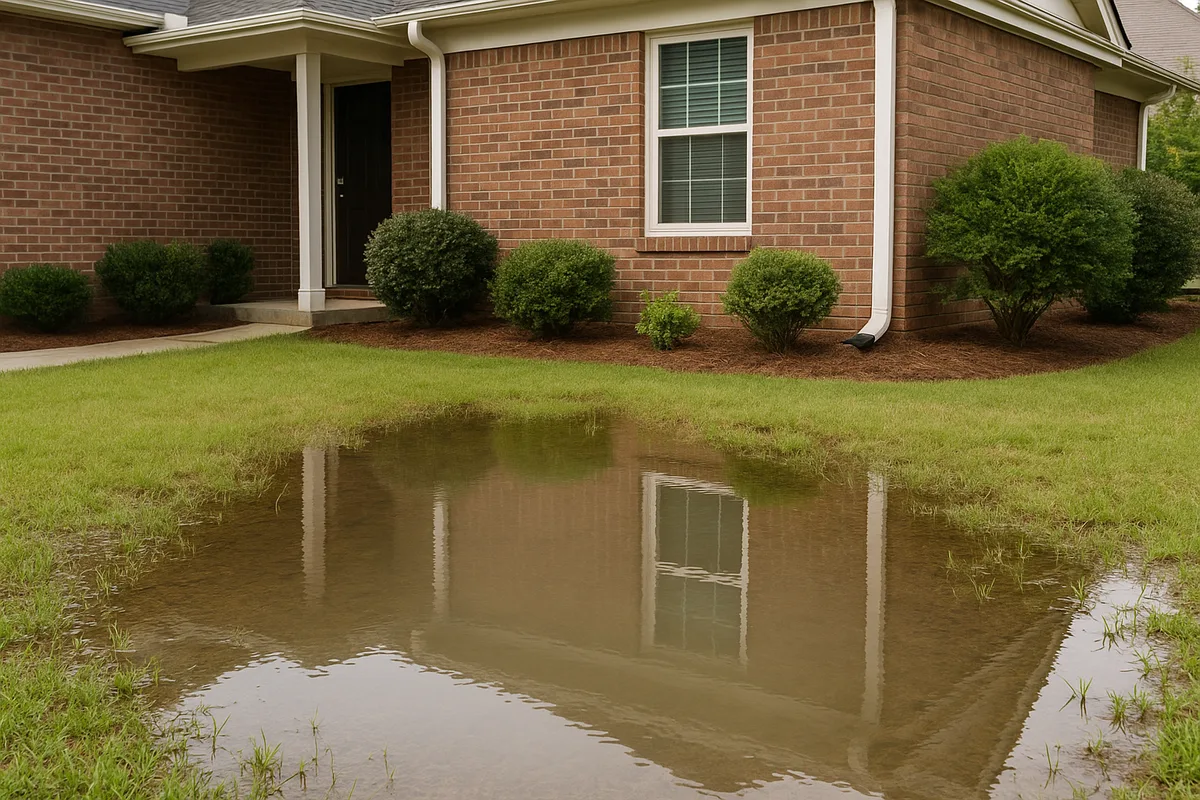
- Surface ponding: Where does water collect? How long does it take to drain after rain stops?
- Flow paths: Where does water travel across your property? Is it sheet flow or concentrated in channels?
- Seeps and springs: Look for water emerging from slopes, retaining walls, or foundation walls. In Seattle's glacial soils, these seeps indicate water flowing laterally along the till surface.
- Downspout discharge: Where does your roof runoff go? Is it directed away from the foundation, or is it pooling against the house?
- Neighbor contributions: Is water flowing onto your property from uphill neighbors? This is extremely common on Seattle's hills.
Step 2: Check Your Foundation and Crawl Space
Seattle has a large stock of homes with crawl space foundations, and these are ground zero for drainage problems. During the wet season:
- Enter the crawl space and look for standing water, wet soil, or moisture on the vapor barrier
- Check for efflorescence (white mineral deposits) on foundation walls — this indicates chronic water movement through concrete
- Look for rot or moisture damage on floor joists and sill plates
- Check whether a perimeter drain (footing drain) exists and whether it's functioning
- Note any sump pump installations and whether they're running
Many pre-1970 Seattle homes were built without perimeter foundation drains. If your home predates 1970 and you don't see a drain pipe at the footing level, assume you don't have one.
Step 3: Evaluate Grading
The International Residential Code calls for a minimum 6-inch drop in the first 10 feet away from the foundation. In practice, many Seattle properties fail this standard because:
- Landscaping and garden beds have been built up against foundations over decades
- Settled soils have changed the original grade
- Additions or decks have altered drainage patterns
- Retaining walls have created flat areas that trap water against the house
Use a long level or a laser level to check the grade around your foundation. Pay particular attention to the uphill side of the house — on Seattle's slopes, this is where water pressure is greatest.
Step 4: Inspect Your Roof Drainage System
Seattle's average roof collects roughly 23,000 gallons of water per year for every 1,000 square feet of roof area. That water has to go somewhere. Check:
- Are gutters present, intact, and properly sized? Seattle's moss-friendly climate means gutters clog frequently.
- Where do downspouts discharge? They should be at least 6 feet from the foundation, or connected to a subsurface drain that carries water away.
- Are downspouts connected to the city's storm drain system? In some older Seattle neighborhoods, downspouts were historically connected to the combined sewer system, and SPU has been actively requiring disconnection.
Step 5: Research Your Property's History
Several resources can reveal drainage-relevant history:
- Seattle DPD/SDCI permit records: Search for past permits that might indicate drainage work, foundation repairs, or grading modifications.
- King County Assessor records: Parcel data can reveal whether your property is in a flood zone, ECA, or other overlay.
- SPU drainage maps: The city maintains maps of its storm drain system, including pipe locations and capacity.
- Geotechnical reports: If your home was built after roughly 1990, or if any significant work was done, there may be a geotechnical report on file that describes subsurface conditions.
Common Drainage Solutions for Seattle Properties
Every drainage solution needs to be matched to the specific problem and the specific site conditions. Here are the most common approaches used in Seattle, with their applications, limitations, and approximate costs in the Seattle market.
French Drains and Curtain Drains
What they do: Intercept subsurface water flowing laterally through soil and redirect it to a discharge point.
Seattle-specific considerations: French drains are the workhorse solution for Seattle's perched water table problems. Because water moves laterally along the till surface, a properly placed curtain drain uphill of a structure can intercept that flow before it reaches the foundation. The key design considerations are:
- Depth: The drain must be deep enough to intercept water at or above the till layer. This varies by location — in some areas the till is 3 feet down, in others it's 10 feet or more. A test pit or geotechnical investigation should determine the appropriate depth.
- Filter fabric and aggregate: Seattle's glacial soils contain fine particles (silt and clay) that can clog drain pipes quickly. Use a high-quality geotextile filter fabric and clean, washed drain rock. Avoid "pea gravel" — it's too fine for long-term performance in these soils.
- Discharge: The drain needs somewhere to go. Options include the city storm drain system (requires a side sewer permit), a daylight outlet on a downhill slope, or a drywell (only viable if you can get below the till into permeable outwash — rare in many Seattle neighborhoods).
- Pipe material: Use rigid, perforated PVC or HDPE pipe, not corrugated "black flex pipe." Corrugated pipe is prone to crushing, root intrusion, and sediment accumulation in Seattle's wet environment.
Typical Seattle cost: $50–$100 per linear foot installed, depending on depth, access, and discharge complexity. A typical residential curtain drain runs 50–150 feet, putting total project costs at $2,500–$15,000. Complex projects with deep excavation or difficult access (common on Seattle's steep lots) can exceed $20,000.
Products from manufacturers like NDS are widely used by Seattle contractors for residential drain systems, including catch basins, channel drains, and pipe fittings.
Foundation Perimeter Drains (Footing Drains)
If your Seattle home lacks a perimeter foundation drain — common in pre-1970 construction — installing one is often the single most impactful drainage improvement you can make.
What's involved: Excavation around the foundation perimeter down to the footing level, installation of perforated drain pipe in a gravel bed, waterproofing membrane on the foundation wall, and connection to a sump pump or gravity outlet.
Seattle-specific considerations:
- Many Seattle homes sit on lots with limited access around the foundation, requiring hand excavation
- Homes on slopes may have full-height basement walls on the downhill side and shallow crawl spaces on the uphill side, requiring different approaches on different sides of the house
- Interior perimeter drain systems (installed inside the basement or crawl space) are sometimes used when exterior access is impossible, but they address symptoms rather than causes
Typical Seattle cost: $8,000–$25,000 for exterior perimeter drain installation, depending on home size, access, and soil conditions. Interior systems are typically $5,000–$15,000.
Grading and Surface Drainage
Sometimes the simplest solution is the most effective. Correcting surface grades to direct water away from the foundation is fundamental, and it's often overlooked.
Seattle-specific considerations:
- On hillside lots, achieving positive drainage on the uphill side may require a swale or berm to redirect surface flow around the house
- Compacted glacial soils resist regrading — you can't just push soil around with a shovel. Equipment access is often limited on Seattle's narrow lots
- Any regrading near the property line needs to account for impacts on neighboring properties. Washington law (and common sense) prohibits diverting water onto a neighbor's property
Typical Seattle cost: $1,500–$8,000 for residential regrading, depending on scope and access.
Rain Gardens and Bioretention
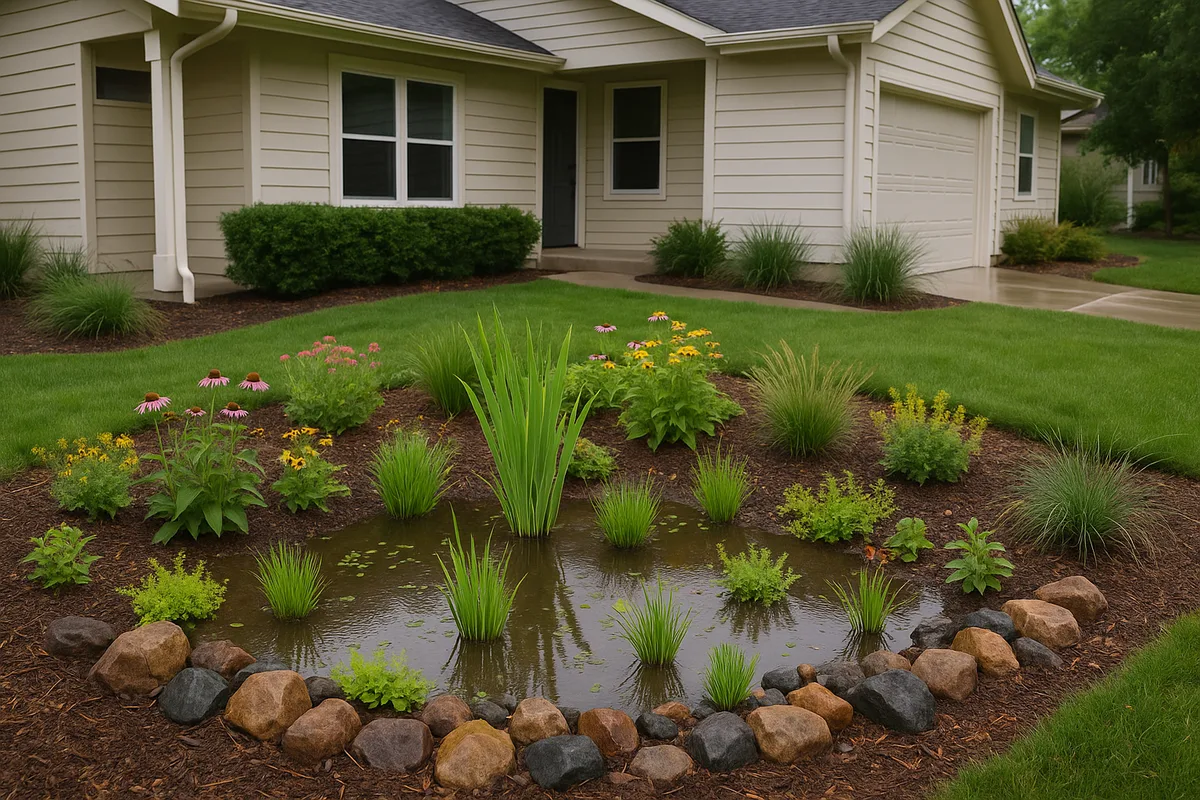
Seattle has been a national leader in green stormwater infrastructure, and the city's RainWise program offers rebates of up to $4,000 or more for qualifying rain garden and cistern installations. Rain gardens are shallow, planted depressions designed to capture and infiltrate stormwater runoff from roofs and paved surfaces.
Seattle-specific considerations:
- Rain gardens work best where there's permeable soil above the till layer — typically in areas with sandy outwash deposits
- In areas with shallow till, rain gardens may need to be designed as "flow-through" systems with an underdrain, since true infiltration is limited
- The RainWise program provides design assistance and contractor referrals, making this one of the most accessible drainage improvements for Seattle homeowners
- Plant selection should focus on native species adapted to Seattle's wet-winter/dry-summer cycle — sword fern, red-twig dogwood, Oregon grape, and sedges are common choices
The Low Impact Development Center provides design guidance for bioretention systems that can be adapted to Seattle's specific conditions. The American Society of Landscape Architects also maintains resources on integrating drainage solutions into landscape design.
Typical Seattle cost: $3,000–$8,000 installed, but RainWise rebates can offset 50–100% of the cost for qualifying projects.
Sump Pumps
In many Seattle homes, particularly those on flat lots with high water tables or in low-lying areas, a sump pump is a necessary component of the drainage system.
Seattle-specific considerations:
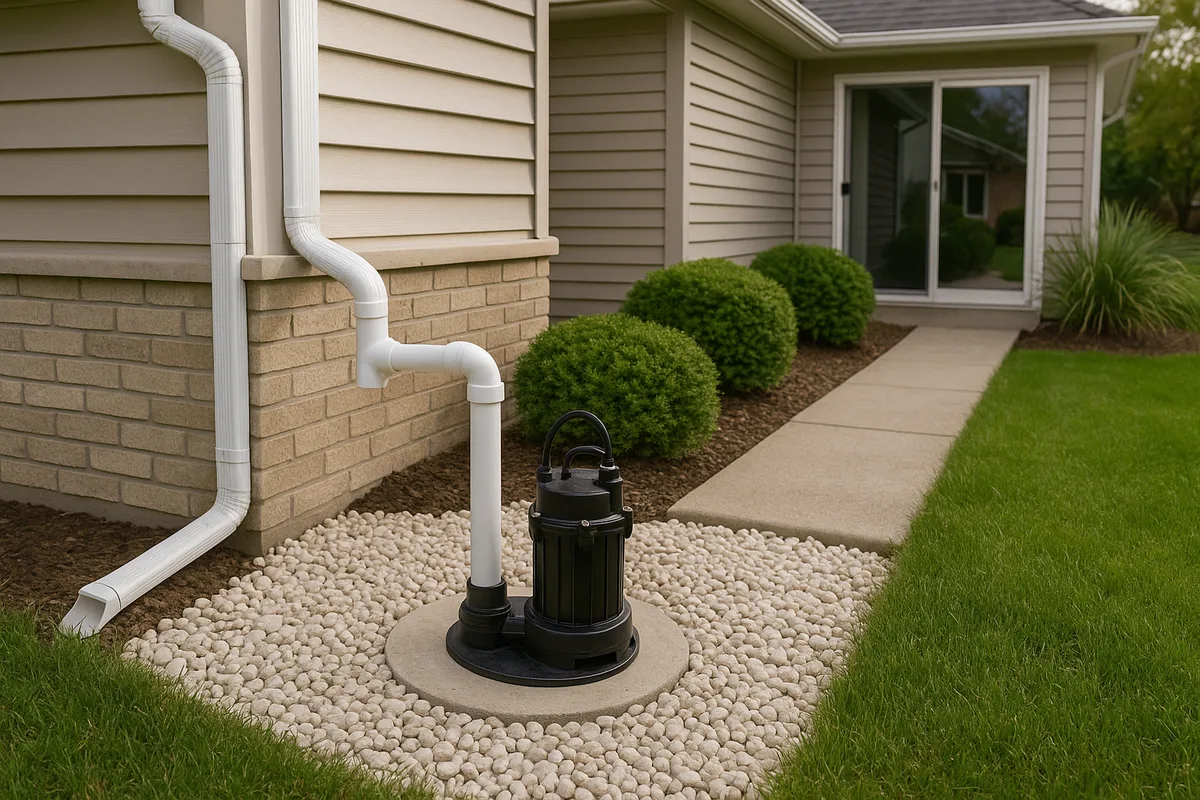
- Sump pumps in Seattle run frequently during the wet season — sometimes cycling every few minutes for months. Reliability is critical. Install a high-quality primary pump with a battery backup.
- Discharge must comply with SPU requirements. Pumping to the sanitary sewer is prohibited. Discharge should be to the storm system, a rain garden, or a surface outlet that doesn't impact neighbors.
- Power outages during winter storms are common in Seattle (windstorms regularly knock out power in November through January). A battery backup or water-powered backup pump is not optional — it's essential.
Typical Seattle cost: $1,500–$4,000 for a sump pump system with battery backup, not including the drain system that feeds it.
Retaining Wall Drainage
Seattle's hilly terrain means retaining walls are everywhere — and poorly drained retaining walls are one of the most common and expensive drainage failures in the city.
What goes wrong: A retaining wall without adequate drainage becomes a dam. Water accumulates behind the wall, building hydrostatic pressure that can crack, tilt, or topple the wall. In Seattle's glacial soils, water perching on the till layer flows downhill and accumulates behind any structure that blocks its path.
Proper design includes:
- A drainage layer of clean gravel behind the wall
- A perforated drain pipe at the base of the gravel layer
- Filter fabric to prevent soil migration into the gravel
- Weep holes through the wall face (for masonry or concrete walls)
- A discharge outlet for the drain pipe
The American Society of Civil Engineers publishes standards for retaining wall design that include drainage requirements. Any wall over 4 feet in Seattle requires engineering and a permit.
Typical Seattle cost: Retaining wall replacement with proper drainage ranges from $200–$500 per face foot, depending on wall height, material, and access. A 50-foot wall at 4 feet of height might cost $40,000–$100,000 — making proper initial drainage design far more cost-effective than retrofit.
Downspout Management
This is the lowest-cost, highest-impact improvement most Seattle homeowners can make. A typical Seattle home's roof generates 20,000–40,000 gallons of runoff per year. If that water is dumping against your foundation, fixing the downspouts alone may resolve your drainage problem.
Options:
- Extend downspouts: Simple splash blocks or extensions that carry water at least 6 feet from the foundation. Cost: $20–$100 per downspout.
- Underground downspout drains: Buried pipes that carry roof water to a discharge point away from the house. Cost: $500–$2,000 per downspout run.
- Rain barrels or cisterns: Capture roof water for summer irrigation use. The RainWise program offers rebates for cisterns. Cost: $200–$3,000 depending on size and installation.
Slope Stability: Seattle's Landslide Risk
Seattle has over 1,200 mapped landslide-prone areas, and virtually all of them are driven by drainage — specifically, by water saturating the soil layers above the glacial till on steep slopes. The city's landslide history is well-documented, with recurring events in neighborhoods like Magnolia, West Seattle, Perkins Lane, and the bluffs above the Duwamish.
If your property is on or near a steep slope, drainage isn't just about keeping your basement dry — it's about keeping your house where it is. Key indicators of slope instability include:
- Leaning trees or fences
- Cracks in the ground surface, particularly crescent-shaped cracks at the top of a slope
- Bulging or bowing at the base of a slope
- New seeps or springs appearing on a slope face
- Doors or windows that suddenly won't close properly (indicating foundation movement)
Properties in mapped landslide-prone areas are subject to Seattle's ECA regulations, and any drainage work on these properties should involve a licensed geotechnical engineer. The USGS maintains landslide hazard information and mapping resources that complement the city's own ECA maps.
For emergency preparedness related to landslides and flooding, Ready.gov provides guidance on developing household emergency plans. The SBA offers disaster loans for property owners who suffer damage from landslides and flooding events.
Seasonal Drainage Calendar for Seattle
Drainage management in Seattle is a year-round responsibility, but the work changes with the seasons.
Spring (March–May)
- Assess winter damage: Walk your property looking for erosion, new settlement, or changes in drainage patterns that developed over the wet season
- Clean gutters: Seattle's prolific moss and tree canopy mean gutters need cleaning at least twice a year. Spring cleaning removes winter debris before the dry season
- Check sump pumps: Test your pump and backup system. Replace batteries in backup systems
- Plan summer projects: This is the time to get bids for drainage work. Seattle's contractor market is extremely busy, and scheduling work for the dry season (July–September) requires advance planning
Summer (June–September)
- Execute drainage projects: This is the optimal construction window. Soils are drier, excavation is easier, and you can see the results before the rains return
- Inspect and maintain existing systems: Flush drain lines, check cleanouts, verify that discharge points are clear
- Address grading issues: Regrading is best done in dry conditions when you can compact soil properly
- Install rain gardens: Summer planting gives plants time to establish before the wet season
Fall (October–November)
- Clean gutters again: Before the rains start, clear all debris from gutters and downspouts
- Test sump pumps: Verify operation before you need them
- Clear drainage inlets: Remove leaves and debris from catch basins, channel drains, and French drain inlets
- Observe the first rains: The first significant rain events of fall reveal problems. Walk your property during rain and note any new issues
Winter (December–February)
- Monitor and respond: This is when drainage systems earn their keep. Check sump pump operation regularly
- Watch for slope movement: If you're on or near a steep slope, be alert for signs of instability during prolonged rain events
- Document problems: Take photos and videos of drainage issues during rain events. This documentation is invaluable for contractor consultations, insurance claims, and Drainage Intelligence Reports™
- Emergency response: Know where your main water shutoff is. Have a plan for sump pump failure. Keep sandbags or other flood barriers available if you're in a flood-prone area
Working with Contractors in Seattle
The Seattle construction market is expensive and competitive. Finding a qualified drainage contractor requires some specific knowledge.
What to Look For
- Licensing: Washington State requires contractors to be registered with the Department of Labor & Industries. Verify registration and check for complaints.
- Insurance: Require proof of general liability insurance and workers' compensation coverage. Drainage work involves excavation, which carries real risk.
- Experience with Seattle soils: Ask specifically about their experience with glacial till. A contractor who has only worked in sandy soils will not understand the challenges of Seattle's layered geology.
- Geotechnical awareness: For any project involving slopes, deep excavation, or foundation work, the contractor should be willing to work with a geotechnical engineer — or should recommend one.
- SPU familiarity: If the project involves connecting to the city's storm system, the contractor should be familiar with SPU's permitting and inspection requirements.
Red Flags
- "We'll just put in a French drain": Any contractor who proposes a solution before investigating the problem is guessing. A proper drainage assessment should precede any proposal.
- Corrugated flex pipe: If a contractor proposes using corrugated black plastic pipe for a permanent installation, find a different contractor. This pipe is cheap but has a short effective lifespan in Seattle's wet, root-rich environment.
- No permit discussion: If the contractor doesn't mention permits, they may not be planning to pull them. Unpermitted work can create problems at resale and may not meet code requirements.
- Drainage to the property line: Any plan that simply moves water to the edge of your property and dumps it is likely to create problems with your neighbor — and potentially legal liability.
Typical Project Timelines
Seattle's contractor market typically requires 4–8 weeks of lead time for scheduling drainage work. Complex projects requiring engineering, permits, and multiple trades can take 3–6 months from initial consultation to completion. Plan accordingly — if you discover a drainage problem in November, you're unlikely to get it fixed before the following summer.
The Irrigation Association provides resources on drainage system design and water management best practices that can help you evaluate contractor proposals.
The Cost of Doing Nothing
Drainage problems don't stabilize — they get worse. In Seattle's environment, unaddressed drainage leads to:
- Foundation damage: Chronic moisture exposure deteriorates concrete and morite, and hydrostatic pressure can crack foundation walls. Foundation repairs in Seattle typically cost $15,000–$50,000+.
- Structural wood decay: Seattle's wet climate and organic soil environment are ideal for wood-destroying fungi. Floor joist and sill plate replacement in a crawl space costs $5,000–$20,000+.
- Mold: Chronic moisture in crawl spaces and basements creates conditions for mold growth, which affects indoor air quality and can require professional remediation ($3,000–$15,000+).
- Slope failure: On hillside properties, unmanaged drainage can trigger landslides that destroy structures and create liability for damage to downhill properties.
- Property value impact: Drainage problems are among the most common issues flagged in home inspections, and they can derail real estate transactions. In Seattle's high-value market, even a modest drainage concern can reduce offers by $20,000–$50,000 or more.
Organizations like the Water Environment Federation and the National Association of Flood and Stormwater Management Agencies document the broader economic impacts of inadequate stormwater management, which extend beyond individual properties to entire communities.
Seattle's Stormwater Infrastructure: What the City Manages (and What It Doesn't)
Seattle Public Utilities operates a stormwater system that includes over 470 miles of storm drain pipes, 40,000+ catch basins, and numerous detention and treatment facilities. However, there's a critical distinction that many property owners miss: SPU is responsible for the public system in the right-of-way. Everything on your property is your responsibility.
This includes:
- Your side sewer connection from the property line to the house
- All drainage systems on your property (French drains, footing drains, swales, etc.)
- Your roof drainage system (gutters, downspouts, underground drains)
- Surface grading on your property
SPU does provide resources for property owners, including the RainWise rebate program, technical assistance for stormwater management, and drainage complaint investigation. If you believe that water from the public right-of-way is impacting your property, SPU will investigate — but the investigation may take weeks or months, and the conclusion may be that the water is coming from your own property or from a neighbor rather than from the public system.
Seattle's combined sewer system — which carries both sewage and stormwater in a single pipe — serves portions of the city's older neighborhoods. During heavy rain events, this combined system can overflow, discharging untreated sewage into Puget Sound and local waterways. The city has invested billions in reducing these combined sewer overflows (CSOs), and part of that effort includes requiring property owners to disconnect their downspouts from the combined system and manage roof runoff on-site. If your home is in a combined sewer area, you may be required to disconnect downspouts as part of the city's CSO reduction program.
The broader context of urban stormwater management, including green infrastructure approaches that Seattle has pioneered, is well-documented by American Rivers, which advocates for natural stormwater solutions in urban environments.
When to Get Professional Help
Some drainage problems are straightforward enough for a knowledgeable homeowner to address. Others require professional expertise. Here's where to draw the line:
DIY-appropriate:
- Extending downspouts away from the foundation
- Cleaning gutters and clearing drain inlets
- Minor regrading (adding soil to create positive slope away from the foundation)
- Installing a simple rain barrel
Contractor-required:
- French drain or curtain drain installation
- Foundation perimeter drain installation
- Sump pump system installation
- Retaining wall construction or repair
- Any work requiring excavation deeper than 2 feet
Engineering-required:
- Any work on or near steep slopes (>25% grade)
- Properties in mapped landslide-prone areas or ECAs
- Foundation drainage problems involving hydrostatic pressure
- Complex drainage systems requiring multiple components
- Any project requiring a geotechnical report for permitting
What a Drainage Intelligence Report™ Reveals That a Home Inspection Doesn't
Standard home inspections in Seattle typically spend 5–10 minutes on drainage. The inspector walks the perimeter, notes whether gutters are present, checks for visible standing water, and moves on. This surface-level assessment misses the conditions that actually cause drainage failures in Seattle:
- Subsurface soil conditions: Is there till beneath the property, and at what depth? Is there a perched water table?
- Topographic analysis: How does water flow across the property and from surrounding properties? Where are the low points?
- System adequacy: If drainage systems exist, are they properly designed for Seattle's soil and rainfall conditions? Are they functioning?
- Regulatory exposure: Is the property in an ECA, flood zone, or other overlay that affects what can be built or modified?
- Risk assessment: What's the probability and potential severity of drainage-related damage over the next 5, 10, or 20 years?
A Low Point Labs Drainage Intelligence Report™ answers these questions with the depth and specificity that Seattle's complex drainage environment demands. Whether you're buying a home in Ballard, selling a property in West Seattle, or trying to figure out why your Capitol Hill basement is wet every winter, a Drainage Intelligence Report™ gives you the information you need to make smart decisions.
Don't let Seattle's glacial soils surprise you. Order your Drainage Intelligence Report™ today and get the drainage intelligence that protects your investment.
Explore our US Drainage Guide for a national perspective.
Frequently Asked Questions
The Low Point Labs Drainage Intelligence™ platform is accessible via invitation-led onboarding.