Drainage in Miami: Engineering Life on a Sponge That's Already Full
Miami sits on one of the most unusual geological foundations of any major American city. The Biscayne Aquifer — a shallow, unconfined aquifer made of highly porous oolitic limestone — lies directly beneath the surface, often within two to four feet of ground level during the wet season. This isn't a typical aquifer buried deep underground; it's essentially a saturated rock sponge that the city was built on top of. When it rains in Miami — and it rains hard, with 54 inches annually concentrated overwhelmingly between May and October — that water doesn't just need somewhere to go on the surface. It needs somewhere to go below the surface, in rock that's already holding water at near-capacity for half the year.
This creates a drainage paradox that makes Miami fundamentally different from most other American cities: the ground is extraordinarily permeable, yet it can't absorb water when it matters most. During king tide events, the water table can actually rise above the ground surface in low-lying neighborhoods like Shorecrest, Little River, and parts of Miami Beach, pushing saltwater up through storm drains and into streets. No amount of conventional grading or French drains can solve a problem where the water is coming from below.
If you own property in Miami, understanding this dynamic isn't optional — it's the single most important thing you can know about your land.
The Geology Beneath Your Property
Miami's subsurface geology is dominated by the Miami Limestone formation, a relatively young oolitic limestone deposited during the Pleistocene. This rock is riddled with solution holes, channels, and voids created by millennia of slightly acidic rainwater dissolving the calcium carbonate. The result is a karst-like landscape hidden beneath a thin veneer of soil, sand, and fill material.
The practical implications for property owners are significant:
- Soil is thin and variable. In many Miami neighborhoods, the "soil" layer above bedrock is only 6 to 18 inches of sand, muck, or fill material. Dig a posthole in Coconut Grove or Coral Gables and you may hit limestone within a foot. This limits traditional drainage solutions that rely on burying pipe in deep trenches.
- Permeability is extreme but inconsistent. The limestone itself can transmit water at rates exceeding 1,000 feet per day in some areas, but solution features create wildly uneven drainage. Your neighbor's yard may drain perfectly while yours holds water because of a clay lens or cemented layer just below the surface.
- Fill material complicates everything. Large portions of Miami's developed land — particularly in areas like Brickell, Edgewater, and much of Miami Beach — sit on fill material placed during development. This fill ranges from clean sand to construction debris, and its drainage characteristics are unpredictable.
You can investigate the specific soil conditions on your property using the USDA Web Soil Survey, which maps soil types across Miami-Dade County. The dominant soil series you'll encounter include Krome (very gravelly loam over limestone), Biscayne (marl over limestone), and various Udorthents (fill material). Each behaves very differently when wet.
The Water Table Problem
The Biscayne Aquifer's water table is the single most important drainage variable in Miami. Unlike cities where the water table sits 20 or 30 feet below grade, Miami's water table routinely rises to within one to three feet of the surface during the wet season. In some neighborhoods — particularly those west of I-95 and in low-lying areas near the Miami River — it can reach the surface itself.
The US Geological Survey maintains monitoring wells throughout Miami-Dade County that track water table levels. These measurements show a clear seasonal pattern: the water table drops during the dry season (November through April), sometimes falling to four or five feet below grade, then rises dramatically during the wet season. But this pattern is also influenced by canal operations, tidal cycles, and long-term sea level rise.
For drainage purposes, this means any solution that relies on infiltrating water into the ground — dry wells, French drains, permeable pavers — has a limited operating window. These systems work reasonably well during the dry season but can become essentially non-functional when the water table is high. A French drain that terminates at 24 inches below grade is useless when the water table is at 18 inches.
Miami's Climate and Rainfall Patterns
Miami's rainfall pattern is one of the most extreme seasonal distributions of any major U.S. city. Roughly 70% of the annual 54 inches falls between May and October, with June through September being the peak months. Individual storm events are often intense — Miami regularly experiences rainfall rates of 2 to 4 inches per hour during summer thunderstorms, and tropical systems can deliver 6 to 12 inches in a single event.
The National Oceanic and Atmospheric Administration classifies Miami's climate as tropical monsoon (Am) under the Köppen system, making it one of the only major cities in the continental United States with a true tropical climate classification. This matters for drainage because the combination of intense rainfall and a seasonally high water table creates a compounding effect: the ground is least able to absorb water precisely when the most water is falling.
Tidal Flooding and King Tides
Miami faces a drainage challenge that most inland cities never encounter: tidal influence on the stormwater system. Much of Miami's stormwater infrastructure drains by gravity to Biscayne Bay, the Miami River, or coastal canals. When tide levels are high — particularly during king tide events in September, October, and November — these outfalls can become submerged, preventing the system from draining.
Worse, during king tides, saltwater can push backward through the storm drain system and emerge from street inlets, flooding low-lying areas from below. This phenomenon is well-documented in neighborhoods like Brickell, Shorecrest, Morningside, and the Roads. The National Weather Service issues coastal flood advisories for these events, which have become more frequent and more severe as sea levels rise.
For property owners in these areas, tidal flooding represents a fundamentally different challenge than rainfall flooding. You cannot solve tidal flooding with better grading or bigger pipes on your property — it requires systemic infrastructure upgrades that the City of Miami and Miami-Dade County are actively pursuing, including backflow preventers on outfalls and pump stations.
Neighborhood-by-Neighborhood Drainage Realities
Miami's drainage challenges vary dramatically by neighborhood due to differences in elevation, proximity to water, age of infrastructure, and underlying geology.
Brickell and Downtown
Brickell sits on some of the highest natural ground in Miami — the Miami Rock Ridge — but rapid high-rise development has dramatically increased impervious surface coverage. Stormwater that once infiltrated through permeable ground now sheets off buildings, parking garages, and plazas. The neighborhood's proximity to the Miami River and Biscayne Bay means tidal influence is significant. Older condo buildings along Brickell Avenue frequently experience flooding in underground parking garages during combined rain and high-tide events.
Coconut Grove
The Grove has some of the most variable topography in Miami, with elevations ranging from near sea level along the bayfront to 15+ feet on the rock ridge. Properties on higher ground generally drain well due to the porous limestone, but lower areas near Peacock Park and the waterfront are vulnerable to both tidal and stormwater flooding. Many older Grove properties have mature tree canopies that help with interception but also create root intrusion issues in aging drainage pipes.
Little Havana and the Roads
These neighborhoods sit in a relatively low-lying area between the Miami River and Coral Gables, with aging infrastructure that predates modern stormwater standards. Street flooding during summer storms is common, particularly along SW 8th Street (Calle Ocho) and in the residential blocks south of it. Many properties have minimal lot grading, and decades of additions and modifications have disrupted original drainage patterns.
Little River and Upper East Side
Little River is one of Miami's most flood-prone areas. The Little River itself — really more of a tidal creek — provides limited drainage capacity, and the surrounding neighborhoods sit at very low elevations. The area has experienced repeated flooding during both heavy rain events and king tides. Properties here often have water tables within one to two feet of the surface during wet season, making subsurface drainage solutions extremely challenging.
Allapattah and Liberty City
These neighborhoods in Miami's interior sit at moderate elevations but have significant impervious surface coverage and aging stormwater infrastructure. Localized street flooding is common during heavy rain events. Many residential lots have been heavily modified over the decades — driveways extended, additions built, yards paved — reducing the limited infiltration capacity that existed.
Coral Way and Silver Bluff
Silver Bluff takes its name from the exposed limestone bluff along Biscayne Bay, and properties along the bluff enjoy excellent natural drainage. But move inland a few blocks and the topography flattens, and drainage becomes more challenging. Coral Way's commercial corridor generates significant runoff that can overwhelm residential side streets during storms.
Understanding Miami-Dade Flood Zones
Flood zone designations in Miami-Dade County are critically important for property owners, affecting insurance requirements, construction standards, and property values. FEMA maintains the Flood Insurance Rate Maps (FIRMs) that define these zones, and Miami-Dade has some of the most complex flood mapping in the country.
The key flood zone designations you'll encounter in Miami include:
- Zone AE: Areas subject to inundation by the 1% annual chance flood (the "100-year flood"). Base Flood Elevations (BFEs) are determined. This covers large portions of Miami near the coast, the Miami River, and low-lying inland areas. Properties in AE zones with federally backed mortgages are required to carry flood insurance.
- Zone VE: Coastal areas subject to both flooding and wave action. Found along Miami's direct bayfront and oceanfront. The most restrictive building requirements apply here.
- Zone X (shaded): Areas with a 0.2% annual chance of flooding (the "500-year flood"). Flood insurance is not required but is strongly recommended. Many Miami neighborhoods that flood regularly during heavy rain events are technically in Zone X.
- Zone X (unshaded): Areas of minimal flood hazard. In Miami, these tend to be on higher ground along the rock ridge.
A critical point for Miami property owners: your flood zone designation does not tell you whether your property will flood. Many properties in Zone X experience regular nuisance flooding from poor drainage, high water tables, or localized stormwater issues. Conversely, well-elevated properties in Zone AE may never see floodwater. The flood zone primarily reflects coastal and riverine flood risk, not drainage adequacy.
FloodSmart.gov provides information about flood insurance options, including coverage for properties outside high-risk zones. Given Miami's drainage challenges, flood insurance is worth serious consideration regardless of your zone designation.
Miami-Dade Stormwater Regulations and Permits
Miami-Dade County and the City of Miami both regulate stormwater management, and the requirements are among the most stringent in Florida.
County-Level Requirements
Miami-Dade County's Department of Regulatory and Economic Resources (RER) administers stormwater permitting. Key requirements include:
- Stormwater retention: New development and significant redevelopment must retain the first inch of rainfall on-site. This is typically accomplished through swales, detention areas, or exfiltration trenches.
- Pre-development discharge rates: Post-development stormwater discharge cannot exceed pre-development rates. This means if you're adding impervious surface — a new driveway, patio, or building addition — you may need to provide compensating stormwater management.
- Fill regulations: Adding fill to raise property elevation requires a permit and must not adversely affect neighboring properties' drainage. This is particularly important in Miami, where raising one lot can redirect water onto adjacent properties.
City of Miami Requirements
The City of Miami has its own stormwater utility and regulations that layer on top of county requirements:
- Stormwater utility fee: Property owners pay a stormwater utility fee based on impervious surface area. This funds the city's stormwater infrastructure maintenance and improvement programs.
- Connection to city system: Any connection to the city's stormwater system requires approval. You cannot simply pipe your yard drainage to the street without proper permitting.
- Sea level rise considerations: The City of Miami has adopted a sea level rise projection of 2 feet by 2060 for infrastructure planning purposes. New construction and major renovations must account for this in their stormwater design.
South Florida Water Management District (SFWMD)
The SFWMD oversees the regional canal and water management system that is foundational to Miami's drainage. The district operates the extensive canal network — including the C-6 (Miami Canal), C-7 (Little River Canal), C-3 (Coral Gables Canal), and others — that serves as the backbone of Miami's stormwater conveyance. The district's Environmental Resource Permit (ERP) program regulates development impacts on water resources, and projects above certain thresholds require an ERP.
The EPA also plays a role through the National Pollutant Discharge Elimination System (NPDES) permit program, which regulates stormwater quality discharged from municipal systems. Miami-Dade County holds an MS4 (Municipal Separate Storm Sewer System) permit that imposes water quality requirements on stormwater discharges.
Disclosure Requirements
Florida law requires sellers to disclose known material defects, which includes known flooding or drainage problems. Miami-Dade County's property appraiser records include flood zone designations, and elevation certificates — when available — are part of the property record. The Department of Housing and Urban Development requires flood zone disclosure for federally backed mortgages.
If you're buying property in Miami, do not rely solely on seller disclosures. Many drainage problems are intermittent or seasonal and may not be apparent during a dry-season showing. A thorough drainage assessment should be part of your due diligence.
Diagnosing Drainage Problems on Your Miami Property
Before spending money on solutions, you need to understand what's actually happening with water on your property. Here's a systematic approach tailored to Miami's specific conditions.
Step 1: Observe During Rain
The single most valuable thing you can do is observe your property during and immediately after a heavy rain event. During Miami's wet season, you'll have no shortage of opportunities. Note:
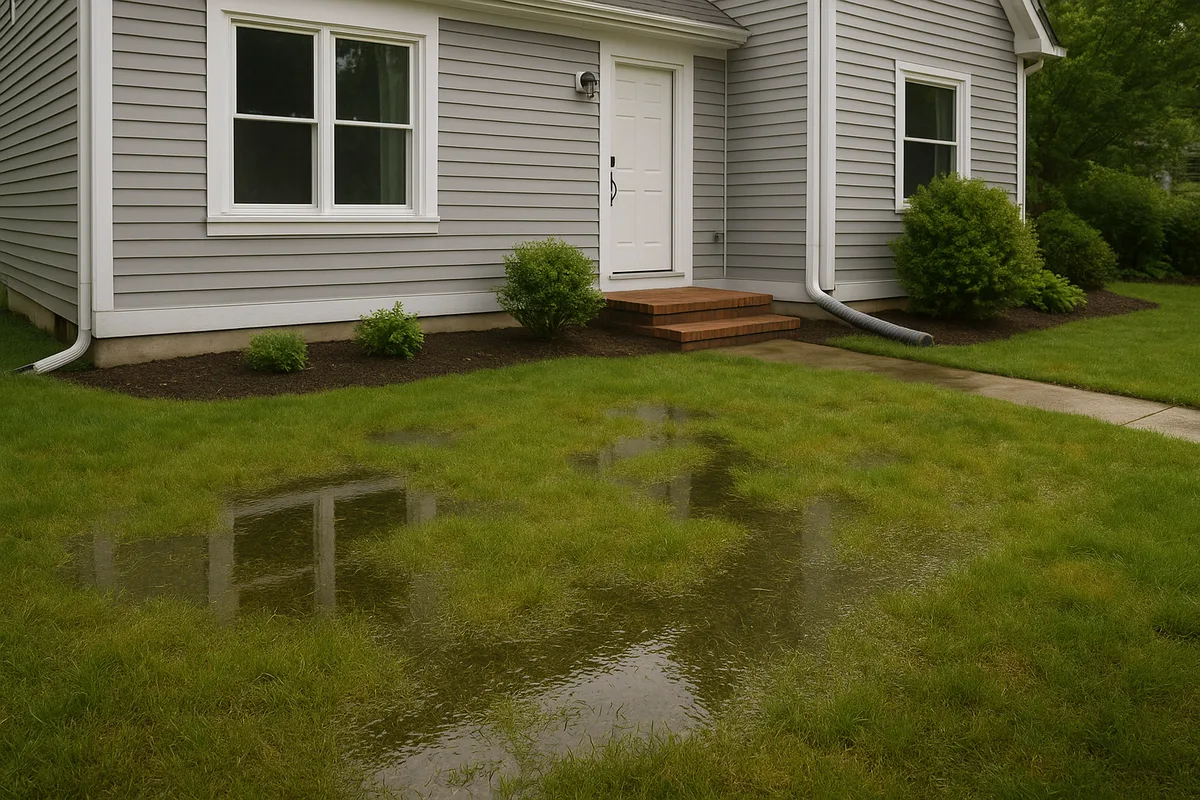
- Where water collects. Look for ponding, standing water, and saturated soil. Mark these areas with stakes or flags so you can find them when it's dry.
- Where water flows. Watch the direction of sheet flow across your yard. Is water flowing toward your house or away from it? Is your neighbor's runoff entering your property?
- How long water persists. In Miami's porous limestone environment, surface water should generally drain within 24 to 72 hours after rain stops. If water is standing longer than that, you have a drainage problem.
- Dry-weather water. If you see standing water or saturated soil when it hasn't rained, you're likely seeing the water table at or near the surface. This is common in wet season in low-lying areas.
Step 2: Check Your Elevation and Grade
Grading — the slope of the ground surface — is the first line of defense in drainage. In Miami, where lots are often very flat, even small grade deficiencies can cause problems.
- Foundation grading: The ground should slope away from your house at a minimum of 2% (about 1/4 inch per foot) for at least 6 to 10 feet. Use a long level or a laser level to check this. In Miami's flat terrain, many homes fail this basic test.
- Lot drainage: Your lot should have a discernible drainage pattern that moves water from high points to low points and ultimately off the property or into a designated drainage feature (swale, inlet, or retention area).
- Relative elevation: Compare your lot elevation to your neighbors and to the street. If your lot sits lower than surrounding properties, you're collecting everyone's water. This is extremely common in Miami neighborhoods where individual lots have been raised with fill over time, leaving some properties as relative low points.
Step 3: Investigate the Subsurface
Miami's unique geology means you need to understand what's happening below grade:
- Dig a test hole. Use a post-hole digger to excavate 2 to 3 feet deep (or until you hit limestone, which may be much shallower). Note the soil layers, the depth to rock, and whether water seeps into the hole. If water appears in the hole within a few hours, you've found the water table.
- Check soil type. Is the material sand, muck, marl, or fill? Sandy soil over porous limestone will drain quickly when the water table is low. Muck or marl over dense limestone will hold water regardless.
- Look for hardpan or cemented layers. Some Miami soils develop a cemented calcium carbonate layer (caliche) that acts as an impermeable barrier. This can trap water above it even though the limestone below is porous.
Step 4: Inspect Existing Infrastructure
Many Miami properties have existing drainage features that may be failing:
- Swales: The shallow drainage channels between properties or along the street frontage. In Miami, swales are required to be maintained by the property owner. Overgrown, filled-in, or improperly graded swales are one of the most common causes of drainage problems.
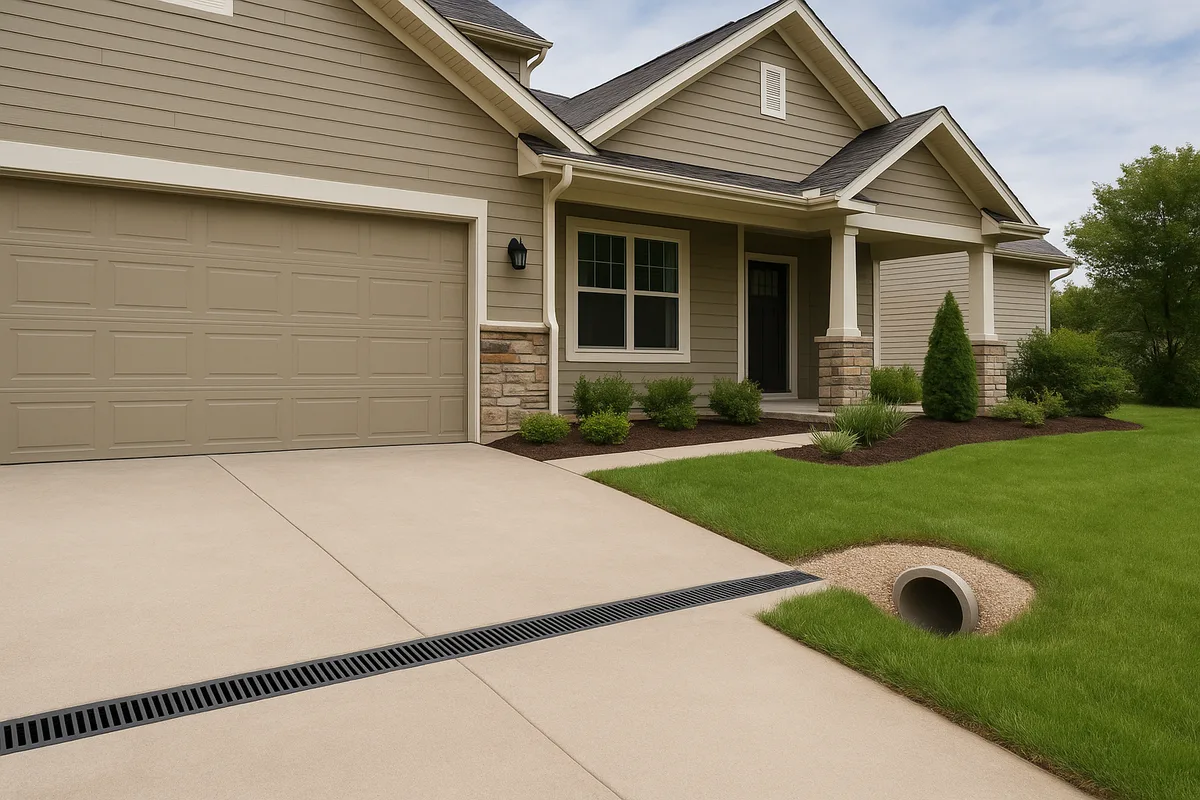
- Catch basins and inlets: If your property has catch basins, check them for debris, sediment buildup, and structural damage. Lift the grate and look inside — you may find them completely clogged.
- Downspout connections: Where do your roof downspouts discharge? If they dump water directly against the foundation, that's a problem. If they connect to underground pipes, verify those pipes are clear and draining properly.
- Exfiltration trenches: Some Miami properties have exfiltration trenches — perforated pipes surrounded by gravel that allow water to infiltrate into the limestone. These can become clogged with sediment over time.
Step 5: Research Your Property's History
Understanding how your property was developed can explain current drainage issues:
- Was fill added? Properties built on fill material may have different drainage characteristics than the surrounding natural grade. Check your property's elevation certificate if one exists.
- Have additions been made? Room additions, expanded driveways, new patios, and pool decks all increase impervious surface and can disrupt drainage patterns that worked when the house was originally built.
- What's upstream? Has development upstream of your property increased runoff onto your land? New construction, parking lots, or even a neighbor's new driveway can redirect water your way.
Common Drainage Solutions for Miami Properties
Given Miami's unique conditions — thin soil, shallow limestone, high water table, intense rainfall — not every drainage solution that works elsewhere will work here. Here's what does work, with Miami-specific considerations.
Swale Restoration and Maintenance
What it is: Restoring the shallow, vegetated drainage channels (swales) that are designed to convey stormwater along property frontages and between lots.
Why it works in Miami: Swales are the backbone of residential drainage in most Miami neighborhoods. When properly maintained, they provide both conveyance (moving water) and some infiltration. Miami-Dade County requires property owners to maintain swales in their right-of-way frontage.
How to do it: Re-grade the swale to ensure positive slope toward the nearest inlet or outfall. The swale should be at least 6 inches deep and slope at a minimum of 0.5% along its length. Remove any fill, landscaping, or obstructions that have been placed in the swale. Re-sod with a flood-tolerant grass like Floratam St. Augustine.
Cost: $500 to $2,500 for typical residential swale restoration in Miami, depending on length and condition.
Limitations: Swales become less effective when the water table is high because there's no capacity for infiltration. They also require ongoing maintenance — mowing, debris removal, and periodic re-grading.
Lot Regrading
What it is: Reshaping the ground surface to create positive drainage away from structures and toward designated drainage points.
Why it works in Miami: Many Miami drainage problems are simply grade problems. Decades of landscaping, additions, and settling have left many properties with flat or negative grades that direct water toward the house rather than away from it.
How to do it: A grading plan should be developed that establishes a minimum 2% slope away from the foundation for at least 10 feet, then directs water to swales, inlets, or retention areas. In Miami, regrading often requires importing fill material because the existing grade may be at or near limestone bedrock.
Cost: $2,000 to $8,000 for typical residential lot regrading in Miami. Costs increase significantly if rock excavation is required.
Permit note: Adding fill to raise grade may require a Miami-Dade County fill permit, especially if the change affects neighboring properties' drainage. Check with RER before beginning work.
Exfiltration Trenches (Miami's French Drain Alternative)
What it is: A trench filled with clean gravel and containing a perforated pipe, designed to collect surface water and allow it to infiltrate into the porous limestone below.
Why it works in Miami: When the water table is below the trench bottom, exfiltration trenches take advantage of the limestone's extraordinary permeability. Water enters the trench, passes through the gravel, and infiltrates into the rock. This is the Miami-specific version of a French drain, and it's the standard stormwater management practice for residential development in Miami-Dade County.
How to do it: Trenches are typically 2 to 4 feet deep and 2 to 3 feet wide, lined with filter fabric, filled with clean #57 stone or similar, and containing a 6-inch or 8-inch perforated HDPE pipe. The trench should be sized based on the drainage area it serves — NDS provides sizing calculators and product specifications for residential drainage systems.
Cost: $30 to $60 per linear foot installed in Miami, depending on depth and rock excavation requirements. A typical residential installation of 50 to 100 linear feet runs $2,500 to $6,000.
Critical limitation: Exfiltration trenches do not work when the water table is above the trench bottom. In low-lying Miami neighborhoods during wet season, this can mean the system is non-functional for months at a time. Design the trench with the seasonal high water table in mind — if the water table reaches 18 inches below grade, a trench that bottoms out at 24 inches has only 6 inches of effective capacity.
Pump Systems
What it is: An electric pump that actively removes water from a collection point and discharges it to a higher elevation, a storm drain, or a drainage canal.
Why it works in Miami: When gravity drainage is insufficient — because the water table is too high, the property is too flat, or the outfall is submerged — pumping is sometimes the only option. The City of Miami itself operates dozens of stormwater pump stations for exactly this reason.
How to do it: A typical residential pump system consists of a sump pit (a buried collection basin), a submersible pump, and a discharge pipe. The sump collects water from surface drains or subsurface drains, and the pump activates automatically when water reaches a set level. Discharge must be directed to an approved location — typically the street swale or a stormwater inlet, not onto a neighbor's property.
Cost: $3,000 to $10,000 installed for a residential system, depending on capacity and complexity. Annual electricity costs are typically $100 to $300. Pumps have a lifespan of 7 to 15 years and require periodic maintenance.
Considerations: Pump systems require electricity and will not function during power outages — exactly when you may need them most during a storm. Battery backup or generator backup should be part of the system design. Also, verify that your discharge location is permitted; discharging pumped water onto public right-of-way or into the storm system may require city approval.
Raised Planters and Landscape Berms
What it is: Using raised landscape features to redirect water flow and create barriers that protect structures from sheet flow.
Why it works in Miami: On flat lots where regrading is impractical, strategically placed berms and raised planters can redirect surface water away from vulnerable areas. This is a low-cost approach that can be combined with other solutions.
How to do it: Build low berms (6 to 12 inches high) using compacted fill, covered with sod or mulch, to redirect sheet flow. Raised planters along foundations can serve double duty as landscape features and water barriers. Ensure berms don't trap water against the house — they should redirect it, not dam it.
Cost: $500 to $3,000 depending on extent and materials.
Rain Gardens and Bioretention
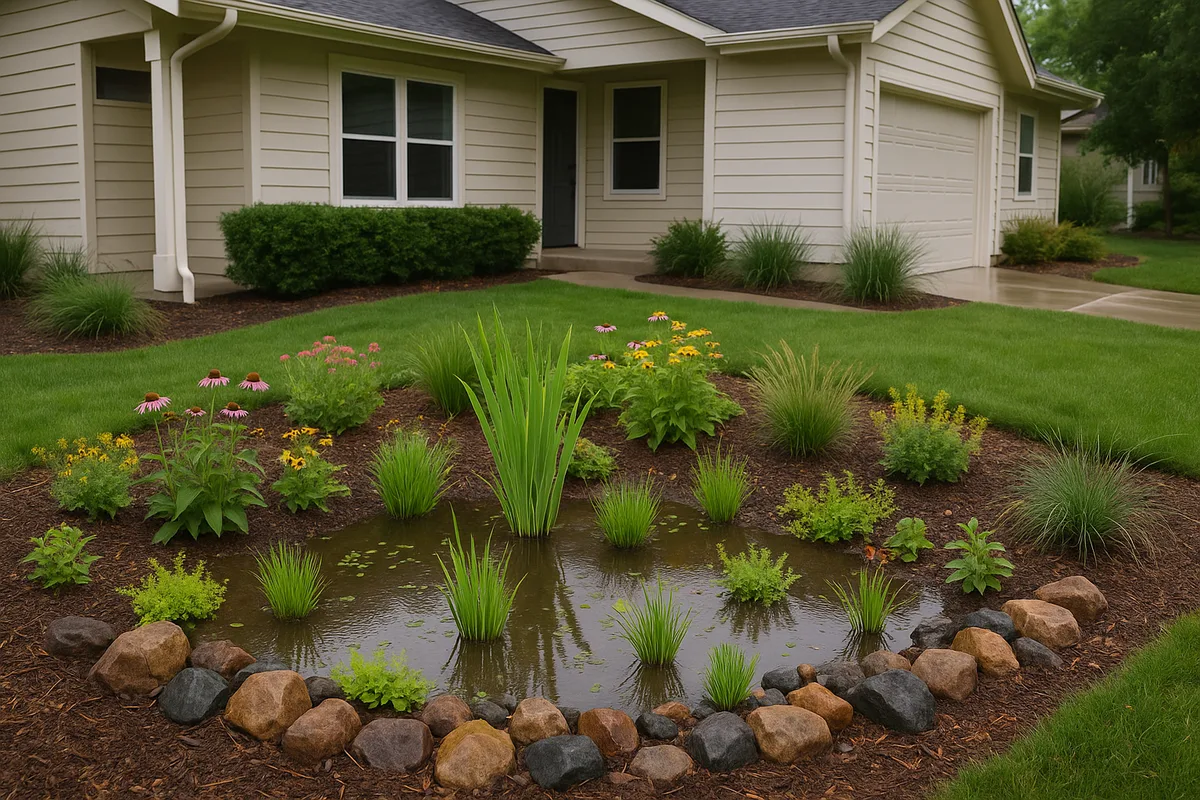
What it is: Shallow, planted depressions designed to capture and infiltrate stormwater runoff, filtering it through an engineered soil mix before it enters the ground.
Why it works in Miami: Rain gardens can be effective in Miami when sited on higher ground where the water table provides adequate separation. They also address water quality — a growing regulatory concern under Miami-Dade's NPDES permit. The Low Impact Development Center provides design guidance for bioretention systems, and the American Society of Landscape Architects offers resources on integrating these features into residential landscapes.
How to do it: Excavate a shallow depression (12 to 18 inches deep), fill with an engineered soil mix (typically 60% sand, 20% compost, 20% topsoil), and plant with native species adapted to wet-dry cycles. South Florida natives like muhly grass, fakahatchee grass, and cocoplum work well.
Cost: $1,500 to $5,000 for a typical residential rain garden in Miami.
Limitation: Rain gardens require a minimum of 2 feet of separation between the bottom of the garden and the seasonal high water table. In many low-lying Miami neighborhoods, this eliminates rain gardens as an option.
Elevating Structures
What it is: Raising a home or building above the base flood elevation, either by lifting the existing structure or building new construction on elevated foundations.
Why it works in Miami: For properties in flood zones that experience repeated flooding, elevation may be the only permanent solution. FEMA's Increased Cost of Compliance (ICC) coverage can help fund elevation projects for properties with flood insurance that have experienced repetitive losses.
Cost: $50,000 to $200,000+ for residential elevation in Miami, depending on the structure type and height of lift. This is obviously a major investment but can dramatically reduce flood insurance premiums and eliminate recurring flood damage.
Seasonal Drainage Management Calendar for Miami
Miami's extreme wet-dry seasonality means drainage management should follow a seasonal rhythm.
Dry Season (November – April)
- Inspect and clean: This is the ideal time to inspect drainage infrastructure, clean catch basins, flush pipes, and assess system condition. The water table is at its lowest, giving you the best access to subsurface features.
- Construct and repair: Schedule drainage construction projects during dry season when possible. Excavation is easier, the water table is lower, and you're less likely to have work interrupted by storms.
- Grade and plant: Regrading work and swale restoration are best done in late dry season (February through April) so new sod can establish before the wet season hits.
- Test systems: Run water through your drainage system with a hose to verify everything is flowing correctly before the rains begin.
Wet Season (May – October)
- Monitor actively: Walk your property during and after rain events to identify problems. Take photos and videos — this documentation is invaluable for diagnosing issues and for any insurance or legal purposes.
- Maintain swales: Keep swales mowed and clear of debris. Grass clippings, leaves, and trash can block flow and cause localized flooding.
- Check pumps: If you have a pump system, test it monthly during wet season. Verify the float switch operates correctly and the discharge is clear.
- Prepare for hurricanes: Ensure all drainage inlets are clear before tropical weather approaches. Stock sandbags if your property is vulnerable to flooding. Ready.gov provides comprehensive flood preparedness guidance.
King Tide Season (September – November)
- Monitor tidal flooding: If you're in a tidally influenced area, track king tide predictions through the National Weather Service. Move vehicles and valuables from low-lying areas during predicted high-water events.
- Document flooding: King tide flooding documentation can support future insurance claims, property tax appeals, and advocacy for infrastructure improvements.
Costs and Contractor Considerations in Miami
Typical Project Costs (2025-2026 Miami Market)
| Project | Typical Cost Range |
|---|---|
| Swale restoration (per property frontage) | $500 – $2,500 |
| Lot regrading (typical residential lot) | $2,000 – $8,000 |
| Exfiltration trench (per linear foot) | $30 – $60 |
| French drain / channel drain system | $2,500 – $7,000 |
| Sump pump system with backup | $3,000 – $10,000 |
| Rain garden installation | $1,500 – $5,000 |
| Catch basin installation (each) | $800 – $2,500 |
| Complete yard drainage system | $5,000 – $15,000 |
| Structural elevation | $50,000 – $200,000+ |
Miami's construction costs tend to run 15-25% higher than the national average due to high demand, material costs, and the specialized knowledge required for working with limestone substrate. Rock excavation, when required, can add $2,000 to $10,000 or more to any project.
Choosing a Contractor
Drainage work in Miami requires contractors who understand the local geology and regulations. Key considerations:
- Licensing: Florida requires a state contractor's license for most drainage work. Verify the contractor's license through the Florida Department of Business and Professional Regulation (DBPR).
- Local experience: Ask specifically about experience working in Miami's limestone environment. A contractor from Orlando or Jacksonville may not understand the challenges of shallow bedrock and high water tables.
- Permitting knowledge: Your contractor should know when permits are required and be willing to pull them. Unpermitted drainage work can create liability issues and complications when you sell the property.
- References in your area: Ask for references from projects in your neighborhood or a similar Miami neighborhood. Drainage solutions that work in Pinecrest may not work in Little River.
- Insurance: Verify the contractor carries general liability insurance and workers' compensation coverage. Drainage work involves excavation, which carries inherent risks.
The American Society of Civil Engineers and the Irrigation Association both maintain resources for finding qualified drainage professionals. For complex projects, consider hiring a licensed professional engineer to design the system and a separate contractor to install it.
Sea Level Rise: The Long-Term Drainage Variable
No discussion of Miami drainage is complete without addressing sea level rise. Miami-Dade County has adopted a unified sea level rise projection based on the Southeast Florida Regional Climate Change Compact, which projects approximately 10 to 17 inches of rise by 2040 and 21 to 54 inches by 2060 (above the 2000 baseline).
For drainage, sea level rise has three compounding effects:
- Higher water table: As sea level rises, the water table rises with it. This reduces the ground's capacity to absorb stormwater and makes subsurface drainage solutions less effective over time.
- Reduced gravity drainage: Stormwater systems that drain by gravity to the bay or canals become less effective as the receiving water level rises. Outfalls that currently function may become permanently submerged.
- Increased tidal flooding: Higher baseline sea levels mean king tides and storm surges reach further inland and affect more properties.
The NOAA Office for Coastal Management provides sea level rise visualization tools that allow you to see projected inundation for different rise scenarios. These tools are essential for long-term property planning in Miami.
For property owners, the practical implication is that drainage solutions should be designed with future conditions in mind, not just current ones. An exfiltration trench that works today with 2 feet of water table clearance may have only 1 foot of clearance in 15 years. A gravity-fed system that drains to the street may need a pump station in the future.
When Drainage Problems Become Structural Problems
In Miami's limestone environment, drainage problems can escalate into structural issues faster than in many other areas:
- Foundation erosion: Water flowing against or under foundations can erode the thin soil layer and undermine footings. Miami homes built on shallow spread footings over limestone are particularly vulnerable.
- Slab moisture: Homes built on slab-on-grade foundations (the dominant construction type in Miami) can experience moisture migration through the slab when the water table is high. This manifests as damp floors, mold growth, and buckling of floor coverings.
- Sinkhole-like settlement: While true sinkholes are more common in Central Florida, Miami's solution-riddled limestone can develop localized voids that cause settlement. Concentrated water flow can accelerate this process.
- Mold and indoor air quality: Miami's warm, humid climate means that any moisture intrusion can quickly lead to mold growth. Drainage problems that allow water to contact the building envelope are a direct pathway to mold issues.
If you're seeing cracks in walls or floors, doors that stick, or uneven floors, have a structural engineer evaluate the property in addition to addressing the drainage issue. Fixing the drainage without addressing structural damage is treating the symptom, not the disease.
Financial Assistance and Insurance Considerations
Miami property owners have several avenues for financial assistance with drainage and flood-related issues:
- FEMA Flood Mitigation Assistance (FMA): Grants available through Miami-Dade County for flood mitigation projects on properties with NFIP policies. These can fund drainage improvements, elevation projects, and property acquisition.
- SBA Disaster Loans: After a declared disaster, the Small Business Administration offers low-interest loans to homeowners for repair and mitigation of flood damage, including drainage improvements.
- Increased Cost of Compliance (ICC): If your property has flood insurance and is substantially damaged or has experienced repetitive losses, ICC coverage can provide up to $30,000 toward bringing the property into compliance with current floodplain management requirements.
- Property tax considerations: Miami-Dade County may provide property tax relief for properties that have experienced documented flooding. Consult with the Property Appraiser's office.
The Role of Regional Infrastructure
Your property's drainage doesn't exist in isolation — it's connected to a vast regional system managed by multiple agencies. Understanding this system helps you understand the limits of what you can control on your own property.
The South Florida Water Management District operates the primary canal system that drains Miami-Dade County. These canals — the C-6 (Miami Canal), C-7 (Little River Canal), C-3 (Coral Gables Canal), C-2 (Snapper Creek Canal), and others — were originally built by the US Army Corps of Engineers as part of the Central and Southern Florida Flood Control Project. They are controlled by a series of water control structures (gates and pumps) that regulate water levels.
During heavy rain events, the district lowers canal levels in advance to create storage capacity. But there are limits — lowering canals too much can cause saltwater intrusion into the Biscayne Aquifer, contaminating the drinking water supply. This is the fundamental tension in South Florida water management: too much water causes flooding, but too little water causes saltwater intrusion.
The City of Miami's stormwater system — the network of pipes, inlets, swales, and pump stations that collects water from streets and properties — feeds into this regional canal system. When the regional system is at capacity, the local system backs up, and your property floods regardless of how well your personal drainage is designed.
Organizations like the National Association of Flood and Stormwater Management Agencies and American Rivers advocate for improved stormwater infrastructure and green infrastructure approaches that can enhance system capacity at the regional level.
Professional Drainage Assessment: When DIY Isn't Enough
While many drainage issues can be identified through careful observation, some situations require professional assessment:
- Recurring flooding with no obvious cause: If your property floods repeatedly but you can't identify the source, a professional survey with elevation data and flow analysis may be needed.
- Disputes with neighbors: If your neighbor's modifications are directing water onto your property, you'll need professional documentation to support any legal or regulatory action.
- Pre-purchase evaluation: If you're buying property in Miami, a drainage assessment before closing can save you from inheriting expensive problems.
- Complex topography or multiple issues: Properties with multiple drainage problems interacting with each other benefit from a comprehensive drainage plan rather than piecemeal fixes.
- Insurance or legal documentation: If you need to document drainage conditions for insurance claims, property tax appeals, or legal proceedings, professional assessment provides the credibility and detail required.
A Drainage Intelligence Report™ from Low Point Labs provides exactly this level of analysis — a comprehensive, property-specific assessment of drainage conditions, risks, and recommended solutions based on Miami's unique geology, climate, and infrastructure. Whether you're a homeowner trying to solve a persistent water problem, a buyer evaluating a potential purchase, or a real estate professional advising a client, a Drainage Intelligence Report™ gives you the detailed, actionable information you need to make informed decisions about property drainage in Miami.
Take the Next Step
Miami's drainage challenges are real, complex, and not going away — in fact, they're intensifying as sea levels rise and development continues. But they're also manageable when you have the right information. The difference between a property that handles water well and one that doesn't often comes down to understanding the specific conditions on that specific piece of land.
A Low Point Labs Drainage Intelligence Report™ delivers that understanding. Using detailed topographic data, soil analysis, flood zone mapping, and local infrastructure assessment, we provide a clear picture of how water interacts with your property — and what you can do about it. Stop guessing about drainage and start knowing. Order your Drainage Intelligence Report™ today.
Explore our US Drainage Guide for a national perspective.
Frequently Asked Questions
The Low Point Labs Drainage Intelligence™ platform is accessible via invitation-led onboarding.