A City Built Between Two Bodies of Water — On a Sliver of Sand
St. Petersburg occupies one of the most hydrologically precarious positions of any major American city. Situated on the southern tip of the Pinellas Peninsula — a narrow finger of land bordered by Tampa Bay to the east and Boca Ciega Bay to the west — the city is essentially surrounded by water on three sides. Much of its developed land sits between 5 and 15 feet above sea level, with some neighborhoods in Shore Acres, Coquina Key, and parts of Old Southeast sitting below 5 feet. The water table beneath much of the city hovers between 1 and 4 feet below the surface during the wet season, and in many neighborhoods it effectively reaches grade level during sustained rainfall events.
What makes St. Petersburg's drainage situation particularly challenging isn't any single factor — it's the convergence of several. The city receives an average of 54 inches of rain per year, with roughly 60% of that falling between June and September in intense, localized thunderstorms that can dump 2 to 4 inches in under an hour. The dominant sandy soils, while theoretically permeable, sit atop a shallow limestone substrate and a water table that's already near capacity for much of the year. And the city's relatively flat topography — most of St. Petersburg has less than 1% natural slope — means gravity provides almost no assistance in moving water away from structures. Every drop that falls on your property essentially has to be engineered off of it.
Understanding St. Petersburg's Drainage Landscape
Soil Composition and What It Means for Your Property
St. Petersburg's soils are dominated by fine sands and sandy loams, with pockets of muck and organic soils in low-lying areas near the bayfront and in historic wetland fill zones. According to data available through the USDA Web Soil Survey, the most common soil series in the city include Myakka fine sand, St. Augustine sand, and various urban land complexes where native soil profiles have been significantly altered by development.
Myakka fine sand — Florida's official state soil — is particularly prevalent across St. Petersburg. It's characterized by a dark, organic-rich spodic horizon (hardpan layer) that typically sits 18 to 30 inches below the surface. This hardpan acts as a semi-impervious barrier, trapping water above it and creating a perched water table effect even when the regional water table is somewhat lower. During the wet season, this means many St. Petersburg properties experience saturated conditions in the root zone and standing water in low spots, even when the soil surface appears sandy and well-drained.
In areas closer to the bayfront — particularly in neighborhoods like Old Northeast, Snell Isle, Coffee Pot Bayou, and parts of downtown — fill material was historically placed over muck and mangrove soils to create buildable land. These fill profiles are inherently unpredictable. You might have 2 feet of clean sand over 3 feet of organic muck over limestone, creating a layered system where water moves laterally along the interfaces between soil types rather than draining vertically. The USDA Natural Resources Conservation Service classifies many of these soils in the "very poorly drained" to "poorly drained" categories.
In the western portions of the city — Jungle Terrace, Azalea, Tyrone — soils tend to be slightly better drained but still contend with the same shallow water table and spodic horizon issues. Properties in these areas may see better performance from infiltration-based drainage solutions, but only during drier months.
Topography: When Flat Isn't Just Flat
St. Petersburg's topography is deceptively simple. On a contour map, the city appears almost uniformly flat, but micro-topographic variations of even 6 to 12 inches can determine whether a property drains adequately or floods repeatedly. The highest points in the city — areas near the Pinellas Trail corridor in the Kenwood and Historic Uptown neighborhoods — sit around 40 to 50 feet above sea level. But the majority of residential development, particularly east of 4th Street and south of 5th Avenue, sits at 10 feet or below.
This creates a situation where the difference between a dry yard and a flooded one often comes down to lot grading — the intentional shaping of the ground surface to direct water flow. Unfortunately, many of St. Petersburg's older neighborhoods were developed before modern stormwater standards were adopted, and lot grading was minimal or has been altered over decades of landscaping, additions, and neighboring development. A property in Euclid-St. Paul or Crescent Heights might have been perfectly graded when built in the 1950s, but 70 years of root growth, soil settlement, patio additions, and fence installations may have completely disrupted the original drainage patterns.
Topographic data from the US Geological Survey shows that many St. Petersburg neighborhoods have effective drainage gradients of less than 0.5% — meaning water moves across the surface so slowly that even minor obstructions (a raised garden bed, a neighbor's fence, a slightly elevated driveway) can create ponding.
Climate Patterns and Seasonal Drainage Stress
St. Petersburg's climate is the engine that drives its drainage challenges. The city's humid subtropical climate produces two distinct hydrological seasons that property owners must understand and plan for.
Wet Season (June–September): This is when drainage systems are tested to their limits. Afternoon and evening thunderstorms are nearly daily occurrences, frequently producing rainfall rates of 2 to 4 inches per hour. These aren't gentle rains — they're intense, localized deluges that can overwhelm even well-designed drainage systems. The National Weather Service regularly issues flood advisories for Pinellas County during this period. The water table rises progressively through the wet season, reducing the soil's capacity to absorb rainfall. By August and September, many properties in low-lying areas are essentially sitting on saturated ground with zero infiltration capacity.
Dry Season (October–May): Rainfall drops significantly, and the water table recedes. This is the period when drainage problems can become invisible — a yard that floods repeatedly in July may look perfectly fine in February. This seasonal variability is one of the biggest traps for homebuyers in St. Petersburg. A property inspection conducted in March may reveal no drainage concerns whatsoever, while the same property may experience standing water for days at a time during August.
Hurricane season (June 1–November 30) adds another dimension. Storm surge is the primary concern for bayfront properties, but even inland St. Petersburg properties face extreme rainfall from tropical systems. NOAA data shows that tropical systems can produce 8 to 15 inches of rainfall over 24 to 48 hours — volumes that exceed the capacity of virtually any residential drainage system.
The Regulatory Environment: What St. Petersburg Requires
City of St. Petersburg Stormwater Ordinances
St. Petersburg operates one of the more sophisticated municipal stormwater programs in Florida, driven by its MS4 (Municipal Separate Storm Sewer System) permit under the Clean Water Act. The city's stormwater management requirements are codified in its Land Development Regulations and enforced through the Engineering and Capital Improvements Department.
For residential properties, the key regulatory triggers are:
- New construction: Any new residential construction must demonstrate adequate stormwater management on-site. This typically means retaining the first inch of rainfall on the property through a combination of grading, swales, retention areas, or other best management practices.
- Additions and impervious surface increases: Adding impervious surface (driveways, patios, pool decks, additions) beyond certain thresholds triggers stormwater review. The general principle is that post-development runoff cannot exceed pre-development runoff.
- Fill and grading permits: Placing fill material or regrading a property typically requires a permit, particularly if it could redirect stormwater onto neighboring properties. This is a common source of neighbor disputes in St. Petersburg — one property owner fills their yard to solve their flooding problem, only to push water onto the adjacent lot.
The Environmental Protection Agency oversees the broader regulatory framework through the National Pollutant Discharge Elimination System (NPDES) program, which requires St. Petersburg to manage both the quantity and quality of stormwater leaving its system.
Pinellas County Flood Zone Designations
Flood zone designations in St. Petersburg are administered through FEMA Flood Insurance Rate Maps (FIRMs) and enforced locally through the city's floodplain management ordinance. Understanding your flood zone is critical — it affects insurance requirements, building restrictions, and property value.
The most common FEMA flood zone designations in St. Petersburg include:
- Zone AE: Areas subject to inundation by the 1% annual chance flood (the "100-year flood"). Base Flood Elevations (BFEs) are determined. Large portions of Shore Acres, Snell Isle, Old Southeast, Coquina Key, and the waterfront areas along Tampa Bay and Boca Ciega Bay fall in Zone AE.
- Zone VE: Coastal high-hazard areas subject to wave action in addition to flooding. Found along the immediate bayfront and some exposed shoreline areas.
- Zone X (shaded): Areas of moderate flood hazard, typically between the 100-year and 500-year flood levels. Many properties in Lakewood Estates, Jungle Terrace, and other mid-peninsula neighborhoods fall in this zone.
- Zone X (unshaded): Areas of minimal flood hazard. While these properties aren't required to carry flood insurance, they are far from immune to drainage problems — the flood zone designation addresses regional flood risk, not lot-level drainage.
Property owners should understand that FEMA flood zones address large-scale flood events (storm surge, river flooding) but do NOT address the localized drainage problems that most St. Petersburg homeowners actually experience. A property in Zone X can absolutely have serious drainage issues from poor grading, high water tables, or inadequate swales. Flood insurance through the National Flood Insurance Program is worth investigating regardless of your zone designation — over 25% of flood insurance claims nationally come from properties outside high-risk zones.
Disclosure Requirements for Real Estate Transactions
Florida law requires sellers to disclose known material defects, which includes known flooding and drainage problems. However, the operative word is "known" — there is no requirement for sellers to conduct drainage assessments or testing. This creates a significant information gap in real estate transactions. A seller who has never experienced a wet season in the property (perhaps they purchased in the dry season and are selling within a year) may genuinely not know about drainage problems.
The Department of Housing and Urban Development requires flood zone disclosure for federally backed mortgages, and lenders will require flood insurance for properties in Zone AE or VE. But again, this addresses flood risk, not drainage adequacy.
This is precisely why independent drainage assessment — before purchase — is so valuable in the St. Petersburg market. A Drainage Intelligence Report™ from Low Point Labs evaluates the specific drainage conditions on a property using topographic data, soil analysis, and hydrological modeling, providing information that a standard home inspection simply doesn't cover.
Diagnosing Drainage Problems on Your St. Petersburg Property
Visual Indicators to Look For
Many drainage problems announce themselves clearly if you know what to look for. Walk your property during or immediately after a heavy rain (ideally a typical summer afternoon thunderstorm) and observe the following:
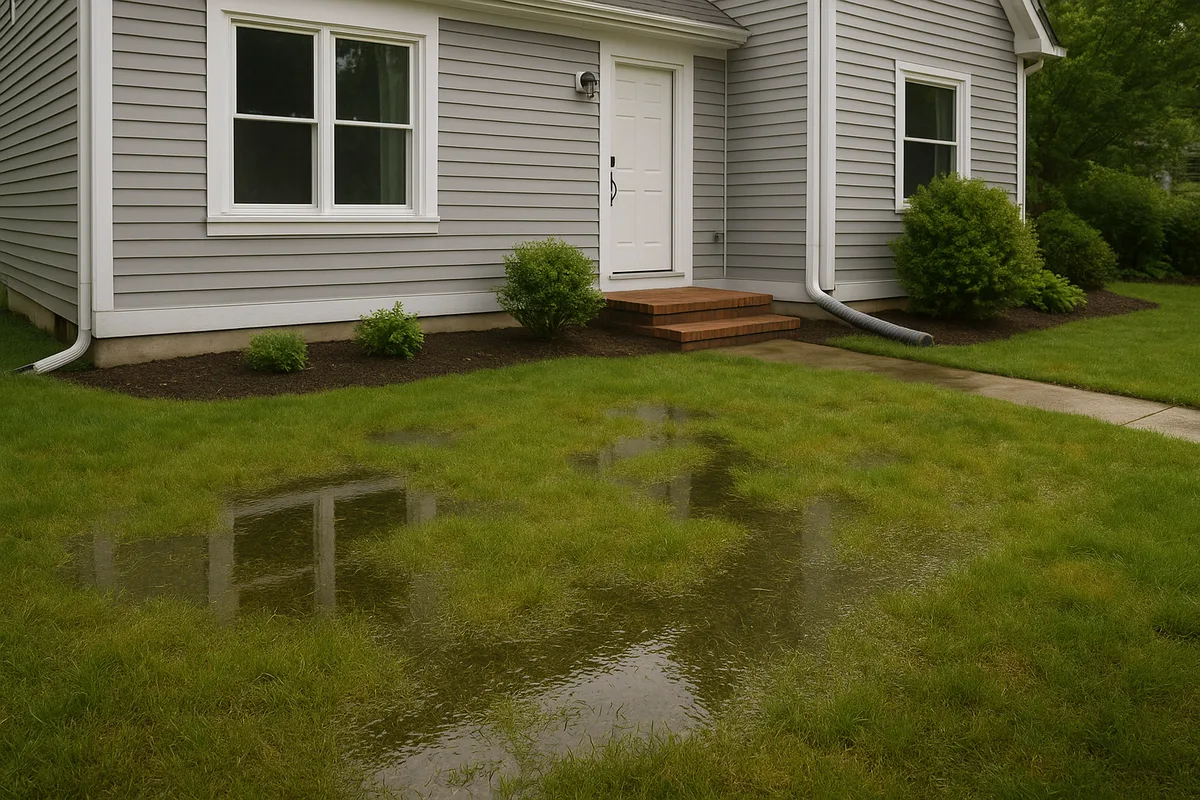
Standing water patterns: Where does water collect? How long does it persist? In St. Petersburg's sandy soils, standing water that persists more than 24 hours after a typical rain event indicates a drainage problem — either the water table is too high for infiltration, the grading is directing water to a low point with no outlet, or subsurface conditions (hardpan, muck layers) are preventing percolation.
Flow direction: Watch where water moves during rain. Is it flowing away from your foundation, or toward it? On a properly graded lot, water should move away from the structure in all directions at a minimum slope of 2% (about 1/4 inch per foot) for the first 6 to 10 feet. In St. Petersburg, I frequently see properties where decades of landscaping, mulch accumulation, and soil settlement have reversed the original grade, creating a bowl effect around the foundation.
Staining and mineral deposits: White, chalky mineral deposits (efflorescence) on foundation walls or block indicate water is wicking through the masonry. Dark staining at the base of exterior walls suggests persistent moisture contact. Green algae growth on concrete or stucco below the first floor level indicates sustained moisture.
Saturated soil indicators: Probe the soil near your foundation with a screwdriver or soil probe. If you can push it in easily to 12 inches or more with minimal resistance, the soil is likely saturated. In St. Petersburg's sandy soils, this is common during the wet season but should not persist into the dry season. Year-round saturation near the foundation suggests a chronic problem.
Mosquito breeding: Persistent mosquito problems around your property often indicate standing water that you may not have identified — in window wells, behind landscaping, in low spots along fence lines, or in clogged gutters and downspout discharge areas.
Foundation-Specific Concerns
St. Petersburg's residential construction is predominantly concrete block (CBS) on concrete slab foundations, with some older frame construction on pier-and-beam foundations in historic neighborhoods. Each type has specific drainage vulnerabilities:
Slab-on-grade (most common): The critical concern is ensuring positive drainage away from the slab edge. Water pooling against the slab perimeter can wick into the concrete, migrate under the slab through capillary action, and cause interior moisture problems including mold growth, flooring failures, and elevated indoor humidity. In St. Petersburg's climate, where outdoor humidity regularly exceeds 80%, any additional moisture intrusion from poor drainage can push indoor conditions past the threshold for mold growth.
Pier-and-beam/crawl space: Less common but found in some older neighborhoods like Old Northeast and Historic Kenwood. These foundations are particularly vulnerable to high water table conditions — during the wet season, the crawl space may partially flood, creating a persistent moisture reservoir beneath the living space. Adequate ventilation and drainage in the crawl space is essential.
The Swale System: St. Petersburg's Primary Drainage Infrastructure
Most St. Petersburg residential lots are designed to drain through a system of swales — shallow, vegetated channels that run between properties and along street frontages. The city's stormwater system depends on these swales functioning properly. Water is intended to sheet-flow from individual lots into the swale system, which then conveys it to storm drains, retention ponds, or outfall structures.
The problem is that swales require maintenance, and many have been compromised over the years:
- Filled or leveled swales: Homeowners who don't understand the swale's function sometimes fill them in to create a flatter yard, eliminating the drainage pathway.
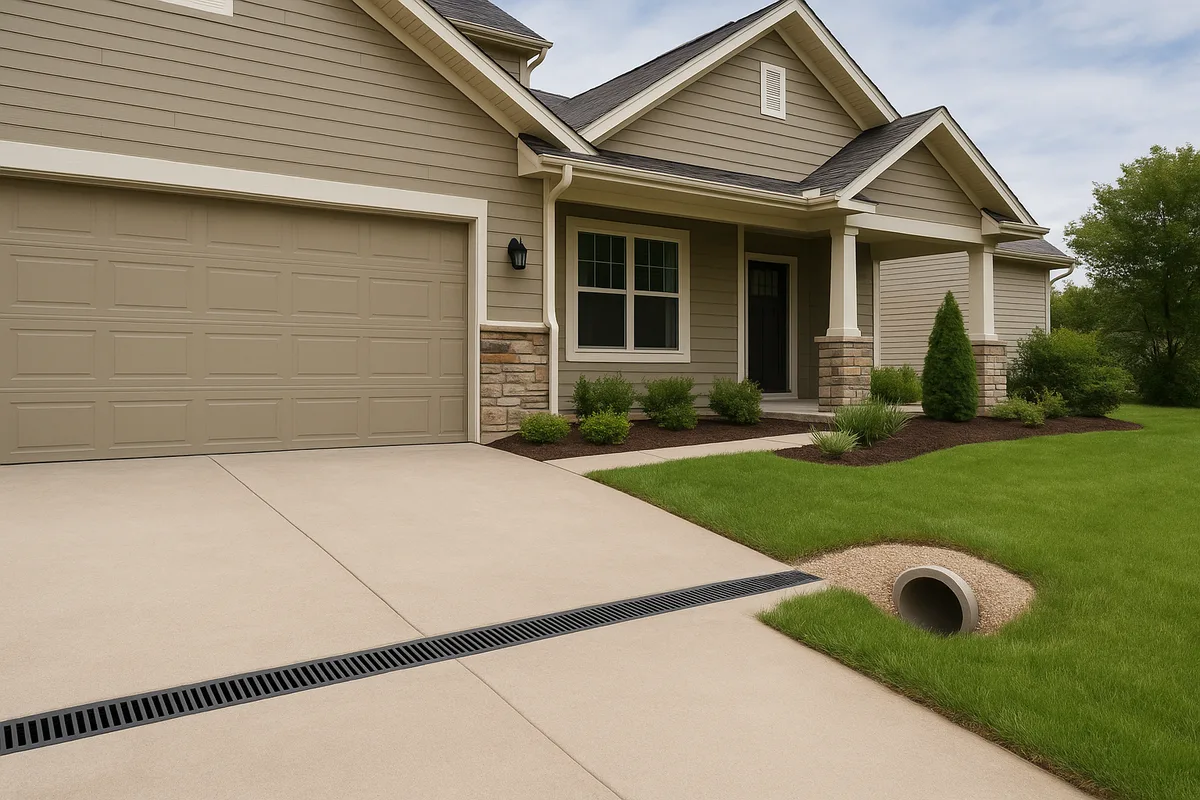
- Driveway culverts: Where driveways cross swales, culvert pipes are supposed to maintain flow. Crushed, clogged, or undersized culverts are one of the most common drainage problems in St. Petersburg.
- Vegetation overgrowth: While grass in swales is beneficial (it slows flow and promotes infiltration), dense landscaping, hedges, or raised beds placed in swales obstruct flow.
- Neighbor modifications: When one property owner fills their swale or redirects water, it affects every downstream property. This is a frequent source of drainage complaints to the city.
St. Petersburg's Code Compliance division does enforce swale maintenance requirements, and the city can require property owners to restore compromised swales. If you believe a neighbor's modification is causing drainage problems on your property, contact the city's stormwater division — they have the authority to investigate and require corrective action.
Neighborhood-Specific Drainage Challenges
Shore Acres
Shore Acres is perhaps St. Petersburg's most well-known flood-prone neighborhood. Located on the northeast bayfront, much of Shore Acres sits at 4 to 7 feet above sea level with direct exposure to Tampa Bay storm surge. The neighborhood experienced devastating flooding during recent hurricane events, and many properties fall within FEMA Zone AE with base flood elevations that exceed existing floor elevations.
But Shore Acres' problems go beyond storm surge. The neighborhood's stormwater infrastructure was designed for a different era — smaller storms, lower sea levels, and a lower water table. During heavy wet-season rainfall, the outfall system backs up because Tampa Bay water levels prevent gravity discharge. The city has invested significantly in pump stations and infrastructure upgrades for Shore Acres, but individual property owners still face chronic lot-level drainage challenges.
If you own property in Shore Acres, elevation certificates, flood insurance, and proactive drainage improvements are not optional — they're essential. Consider consulting FEMA's flood preparedness resources and investigating your options for elevation or flood-proofing.
Old Northeast and Snell Isle
These prestigious waterfront neighborhoods sit on some of the most hydrologically complex land in St. Petersburg. Much of Old Northeast was developed on filled bayfront land, and the soil profiles are highly variable — you might find clean fill sand in one location and organic muck 50 feet away. Snell Isle is entirely a fill island, created by dredging Tampa Bay bottom material.
Drainage challenges in these areas include extremely high water tables (often within 18 inches of the surface during wet season), limited elevation above bay level, and aging stormwater infrastructure. Properties along Coffee Pot Bayou and the waterfront segments of Beach Drive NE are particularly vulnerable.
The mature tree canopy in Old Northeast — while beautiful — creates additional drainage complications. Large root systems can disrupt swale flow, crack underground drainage pipes, and alter surface grading. Tree roots from live oaks and other large species can also create subsurface channels that redirect water in unpredictable ways.
Lakewood Estates and Riviera Bay
These south-side neighborhoods sit at somewhat higher elevations than the bayfront areas but still contend with high water tables and flat topography. The canal system that runs through parts of Lakewood Estates was designed to provide both drainage and waterfront access, but canal water levels are influenced by bay levels, limiting their effectiveness during high-tide rain events.
Properties adjacent to the canals often experience seepage through their seawalls during high water events. The interface between the canal system and individual lot drainage is a common problem area — water that should be flowing into the canal instead backs up onto properties when canal levels are elevated.
Jungle Terrace, Tyrone, and Disston Heights
These mid-peninsula neighborhoods generally have better drainage conditions than the bayfront areas, sitting at 15 to 30 feet above sea level with somewhat deeper water tables. However, they're not immune to problems. The spodic horizon (hardpan layer) in the Myakka soils is often closer to the surface in these areas, creating perched water table conditions that can surprise property owners who assume their sandy soil should drain well.
The older portions of these neighborhoods (developed in the 1950s and 1960s) often lack formal stormwater infrastructure. Drainage relies entirely on lot-level grading and swales, and any disruption to these systems — additions, fences, landscaping changes — can create localized flooding.
Coquina Key and Maximo
These neighborhoods on the southern bayfront face many of the same challenges as Shore Acres — low elevation, storm surge exposure, and aging infrastructure. Coquina Key in particular is essentially a low-lying island connected by causeways, with very limited elevation above bay level. Drainage improvements here are constrained by the lack of anywhere for water to go — the entire neighborhood is surrounded by water, and gravity discharge is only possible when bay levels are low.
Drainage Solutions for St. Petersburg Properties
Grading and Regrading
The single most effective drainage improvement for most St. Petersburg properties is proper grading. Before investing in French drains, pumps, or other engineered solutions, ensure that your lot surface is directing water away from structures and toward appropriate discharge points (swales, storm drains, retention areas).
Proper grading in St. Petersburg means:
- Minimum 2% slope away from foundations for the first 6 to 10 feet (1/4 inch per foot). This applies to all sides of the structure.
- Swale restoration: If your front or side swale has been compromised, restoring it to proper grade and cross-section is often the single most impactful improvement.
- Addressing reverse grading: Many older St. Petersburg properties have developed negative grade (sloping toward the foundation) due to soil settlement, mulch accumulation, or additions. Correcting this may require adding fill material and regrading, which typically requires a city permit.
Cost range in St. Petersburg: $1,500 to $5,000 for basic regrading of a typical residential lot, depending on the extent of work and whether fill material is needed.
French Drains and Subsurface Drainage
French drains — perforated pipes installed in gravel-filled trenches — are one of the most common drainage solutions installed in St. Petersburg. They're effective for intercepting subsurface water flow and redirecting it to an appropriate discharge point. However, there are important considerations specific to St. Petersburg:
- Depth limitations: With the water table often at 2 to 3 feet during wet season, French drains installed deeper than this will essentially be submerged and non-functional during the period when they're needed most. Shallow French drains (12 to 18 inches deep) are often more appropriate in St. Petersburg than the deeper installations common in other parts of the country.
- Discharge point: Every French drain needs somewhere to send the water it collects. In St. Petersburg, this is often the swale system or a storm drain connection. Discharging to a neighbor's property is not acceptable and may violate city ordinances.
- Filter fabric: In St. Petersburg's fine sandy soils, filter fabric (geotextile) wrapping the gravel and pipe is essential to prevent sand migration into the system. Without it, the drain will clog within a few years.
- Maintenance access: French drains are not install-and-forget systems. They require periodic flushing (every 2 to 3 years) to maintain flow capacity. Ensure cleanout access points are included in the installation.
The Irrigation Association provides resources on drainage system design principles, and manufacturers like NDS offer residential drainage products specifically designed for the conditions found in Florida's sandy soils.
Cost range in St. Petersburg: $25 to $50 per linear foot installed, depending on depth, pipe diameter, and site conditions. A typical residential French drain system runs $3,000 to $8,000.
Dry Wells and Infiltration Systems
Dry wells — underground chambers that collect surface water and allow it to infiltrate into the surrounding soil — can be effective in St. Petersburg during the dry season and early wet season when the water table is lower. However, their effectiveness diminishes as the wet season progresses and the water table rises. A dry well that works beautifully in April may be completely ineffective in August.
For this reason, dry wells in St. Petersburg should be considered supplemental drainage solutions rather than primary ones. They work best for managing roof runoff from downspouts in areas where the water table remains at least 3 to 4 feet below the bottom of the well during peak wet season.
Pump Systems
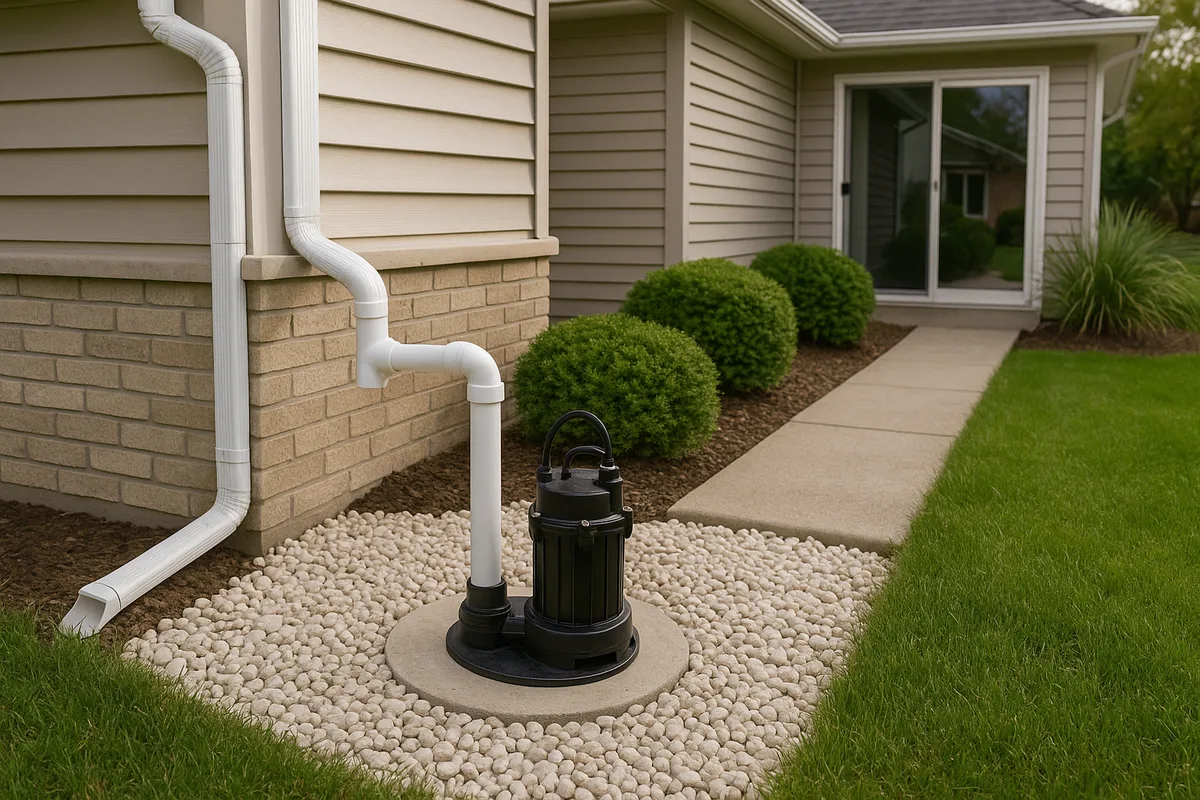
In low-lying areas like Shore Acres, Coquina Key, and parts of Old Northeast, gravity-based drainage solutions may be insufficient because there's simply nowhere lower for water to go. In these situations, sump pumps or drainage pump systems may be necessary.
A typical residential drainage pump system in St. Petersburg includes:
- A collection basin (sump) installed at the lowest point of the property or drainage system
- A submersible pump with float switch activation
- Discharge piping to an approved outfall point
- Battery backup or generator connection for operation during power outages (critical during storm events)
The city requires that pump discharge not create a nuisance for neighboring properties and that discharge meet water quality standards (no sediment-laden or contaminated water pumped directly to the bay).
Cost range: $2,000 to $6,000 for a basic residential pump system, plus ongoing electricity and maintenance costs.
Green Infrastructure Solutions
St. Petersburg has been increasingly supportive of green infrastructure approaches to stormwater management. These solutions work with natural processes to manage water on-site and can be particularly effective for managing the first flush of rainfall:
- Rain gardens: Shallow, planted depressions designed to capture and infiltrate roof runoff and surface water. In St. Petersburg, rain gardens should be designed with species tolerant of both saturation and drought — the seasonal swing is extreme. Native plants like muhly grass, blue flag iris, and coreopsis work well. The American Society of Landscape Architects provides design guidance for residential rain gardens.
- Permeable pavers: Replacing impervious driveways and patios with permeable pavers can significantly reduce runoff from a property. In St. Petersburg's sandy soils, permeable pavers perform well because the underlying sand provides excellent infiltration — as long as the water table isn't at the surface. Resources from the Low Impact Development Center offer guidance on permeable pavement design.
- Rain barrels and cisterns: Capturing roof runoff for later use in irrigation reduces both stormwater volume and irrigation water demand. A typical St. Petersburg home with 2,000 square feet of roof area generates approximately 1,250 gallons of runoff per inch of rainfall. Even a few rain barrels can meaningfully reduce the volume hitting your drainage system during a storm.
- Bioswales: Enhanced versions of traditional swales that incorporate specific soil mixes and plantings to improve both water quality and infiltration capacity. The Water Environment Federation publishes standards for bioswale design that are applicable to St. Petersburg conditions.
Seawall and Bayfront Drainage
For waterfront properties in St. Petersburg, the seawall is a critical drainage component. Seawalls in poor condition can allow bay water to seep through during high tides, saturating the yard from below. Conversely, seawalls without adequate weep holes can trap stormwater behind them, creating flooding on the landward side.
Seawall maintenance and replacement is a significant expense for bayfront property owners — costs typically range from $300 to $800 per linear foot for new seawall construction. But a failing seawall doesn't just affect structural stability; it directly impacts drainage by allowing tidal water intrusion into the lot's soil profile.
Cost Considerations for St. Petersburg Drainage Projects
Typical Project Costs (2026 Market)
| Project Type | Typical Cost Range | Notes |
|---|---|---|
| Lot regrading | $1,500–$5,000 | Depends on area and fill requirements |
| Swale restoration | $800–$2,500 | Per swale; may require permit |
| French drain system | $3,000–$8,000 | 50–200 linear feet typical |
| Dry well installation | $1,500–$3,500 | Per well; effectiveness varies seasonally |
| Sump pump system | $2,000–$6,000 | Including backup power |
| Rain garden | $1,000–$4,000 | Depending on size and plantings |
| Permeable paver driveway | $12–$25/sq ft | Premium over standard pavers |
| Gutter/downspout system | $1,500–$4,000 | Whole-house system |
| Seawall replacement | $300–$800/linear ft | Major investment for waterfront properties |
These costs reflect the St. Petersburg market as of early 2026. Labor costs in Pinellas County tend to run 10 to 20% higher than the state average due to the high cost of living and strong demand for construction services. Always obtain multiple quotes and verify contractor licensing through the Florida Department of Business and Professional Regulation.
Financing Drainage Improvements
For properties that have experienced flood damage, the Small Business Administration offers low-interest disaster loans that can be used for drainage improvements as part of damage repair. These loans are available after a federal disaster declaration and can cover mitigation measures that reduce future flood risk.
Some drainage improvements may also qualify for flood insurance premium reductions. Properties that demonstrate reduced flood risk through elevation, improved drainage, or other mitigation measures may be eligible for lower premiums under the National Flood Insurance Program.
Seasonal Drainage Maintenance Calendar for St. Petersburg
Spring (March–May): Preparation Season
This is the optimal time for drainage improvements in St. Petersburg. The water table is typically at its lowest, making excavation easier and allowing you to see the full extent of any grading problems. Key tasks:
- Inspect and clean all swales, removing debris and sediment buildup
- Check driveway culverts for blockages or damage
- Clean gutters and verify downspout discharge locations
- Inspect French drains and flush if needed
- Test sump pumps and replace batteries in backup systems
- Complete any regrading or new drainage installations before the wet season begins
Summer (June–September): Monitoring Season
This is not the time for major drainage work — the ground is saturated, contractors are busy with emergency repairs, and costs are higher. Instead, focus on monitoring:
- Walk your property during and after rain events to observe drainage patterns
- Document any standing water with photos and notes on duration
- Report swale or storm drain blockages to the city promptly
- Monitor foundation walls for new moisture intrusion signs
- Keep emergency supplies ready — FEMA's preparedness guidance recommends having a plan for flood events even if you're not in a high-risk zone
Fall (October–November): Assessment Season
As the wet season winds down, assess how your drainage system performed:
- Document any areas that experienced persistent flooding
- Note any new erosion channels or soil displacement
- Schedule professional drainage assessment if problems were identified
- Plan and budget for improvements to be completed in the spring
Winter (December–February): Planning and Permitting Season
Use the dry season to plan and permit any drainage improvements:
- Obtain necessary permits from the city
- Select and schedule contractors (booking early ensures availability before the wet season)
- Complete any soil testing or engineering assessments needed for permit applications
When to Get Professional Help
Not every drainage problem requires professional intervention. Simple swale maintenance, gutter cleaning, and minor grading adjustments are within the capability of most handy homeowners. However, you should seek professional help when:
- Water is entering your home or garage. This is an urgent problem that can cause structural damage, mold growth, and health hazards. Don't wait.
- Standing water persists for more than 48 hours after rain. This indicates a systemic drainage failure that requires engineering assessment.
- You notice foundation cracking or settlement. While St. Petersburg's slab foundations are generally stable, persistent moisture can cause soil erosion beneath slabs, leading to settlement and cracking.
- Drainage problems involve multiple properties. If the issue is caused by upstream development, neighbor modifications, or public infrastructure failure, you'll need professional documentation to pursue resolution through the city or legal channels.
- You're planning construction or additions. Any new impervious surface requires stormwater analysis and potentially a permit. A drainage professional can design a system that meets city requirements and protects your property.
When selecting a drainage contractor in St. Petersburg, verify that they hold a valid Florida contractor's license, carry adequate insurance, and have specific experience with the soil and water table conditions in your neighborhood. The American Society of Civil Engineers maintains professional standards for drainage engineering that qualified contractors should be familiar with.
The Role of Climate Change in St. Petersburg's Drainage Future
St. Petersburg is on the front lines of climate-related drainage challenges. Sea level rise projections from NOAA's coastal management division indicate that Tampa Bay could see 1 to 3 feet of additional sea level rise by 2060, depending on emissions scenarios. This has direct implications for drainage:
- Higher baseline water tables: As sea levels rise, the freshwater water table that sits above the saltwater interface will also rise, reducing the soil's capacity to absorb rainfall.
- Reduced gravity drainage effectiveness: Stormwater outfalls that currently discharge at or near sea level will become tidally influenced for longer periods, reducing their capacity during rain events.
- Increased tidal flooding: "Sunny day" tidal flooding — flooding caused by high tides without any rainfall — is already occurring in some St. Petersburg neighborhoods and will become more frequent.
- More intense rainfall events: Climate projections suggest that while total annual rainfall may not change dramatically, individual storm events will become more intense, with more rainfall concentrated in shorter periods.
For property owners, this means that drainage solutions designed for today's conditions may be inadequate within 10 to 20 years. When investing in drainage improvements, consider designing for future conditions — slightly higher water tables, slightly more intense rainfall, slightly higher bay levels. The marginal cost of over-designing now is far less than the cost of retrofitting later.
Organizations like American Rivers advocate for green infrastructure and nature-based solutions that build long-term resilience into stormwater management systems, and many of these approaches are well-suited to St. Petersburg's conditions.
Understanding Your Property's Drainage: The Case for Professional Assessment
The challenge with drainage in St. Petersburg is that it's a system — your lot, your neighbor's lot, the swale, the storm drain, the outfall, the bay level, the water table, and the soil profile all interact. A problem in one component affects every other component. And many of the most important factors — subsurface soil conditions, water table depth, pipe condition, grading accuracy — are invisible from the surface.
A standard home inspection does not evaluate drainage adequacy. Inspectors may note visible standing water or obvious grading deficiencies, but they don't measure slopes, probe soil conditions, assess swale capacity, or model stormwater flow patterns. This is a significant gap in the information available to homeowners and homebuyers.
The National Association of Flood and Stormwater Management Agencies has long advocated for better property-level drainage information as a complement to regional flood mapping. Individual properties can have serious drainage deficiencies even in areas with low regional flood risk.
Get a Drainage Intelligence Report™ for Your St. Petersburg Property
Low Point Labs' Drainage Intelligence Report™ is designed to fill exactly this information gap. Using high-resolution topographic data, soil analysis, historical precipitation records, and proprietary hydrological modeling, we evaluate the specific drainage conditions on your property and provide actionable recommendations.
Whether you're a homeowner dealing with persistent wet-season flooding, a buyer evaluating a property in Shore Acres or Old Northeast, a real estate agent who wants to provide clients with complete property information, or a contractor planning drainage improvements, a Drainage Intelligence Report™ gives you the data you need to make informed decisions.
Don't wait until August to find out your property has a drainage problem. Get ahead of the wet season with a comprehensive drainage assessment from Low Point Labs.
Order your Drainage Intelligence Report™ today and understand exactly what water is doing on your St. Petersburg property — before it becomes a problem you can't ignore.
Explore our US Drainage Guide for a national perspective.
Frequently Asked Questions
The Low Point Labs Drainage Intelligence™ platform is accessible via invitation-led onboarding.