A City Where the Water Table Is Your Neighbor
Tampa sits at the convergence of nearly every drainage challenge Florida has to offer — and then adds a few of its own. The city sprawls across a low-lying coastal plain where the Hillsborough River, the Alafia River, and dozens of smaller tributaries empty into Tampa Bay, creating a complex hydrological web that touches virtually every neighborhood. The average elevation across the city is roughly 15 feet above sea level, but large swaths of South Tampa, Palmetto Beach, and the areas flanking the Hillsborough River sit at 5 feet or less. When you combine that near-sea-level topography with 54 inches of annual rainfall — the vast majority of which falls in intense bursts between June and September — you get a city where drainage engineering isn't optional. It's the difference between a dry house and a flooded one.
What makes Tampa's drainage situation particularly interesting is the geology underfoot. The city is built on a karst landscape — a limestone platform riddled with voids, fractures, and dissolution channels, overlain by a relatively thin veneer of sand and, in low-lying areas, organic muck. This karst geology is why Tampa and Hillsborough County are among the most sinkhole-prone areas in the entire United States. Water doesn't just flow across the surface here; it infiltrates, dissolves, and reshapes the ground itself. For property owners, this means drainage decisions carry consequences that go far beyond puddles in the yard. Poor drainage management can contribute to soil instability, foundation settlement, and in extreme cases, sinkhole activation.
This guide covers what Tampa property owners need to know right now: the specific soil, topography, and climate factors that create drainage problems, the regulatory landscape governing stormwater on your property, how to diagnose issues before they become expensive, and the practical solutions that actually work in this market.
Tampa's Drainage Landscape: Why Water Behaves the Way It Does Here
Soil Composition and What It Means for Your Property
Tampa's soils are deceptively simple on the surface. Walk most residential lots and you'll find fine to medium sand in the top 12 to 24 inches — the kind of soil that seems like it should drain beautifully. And in many cases, it does — temporarily. The problem lies beneath that sandy veneer.
According to data from the USDA Web Soil Survey, the dominant soil series across Tampa include Myakka, St. Johns, Basinger, and Tavares sands. Each of these tells a different drainage story:
Myakka fine sand is the single most common soil in urban Hillsborough County. It's characterized by a spodic horizon — a hardpan layer of cemented organic matter and aluminum typically found 18 to 30 inches below the surface. This hardpan acts as a near-impermeable barrier, trapping water above it and creating perched water tables that can saturate yards for days after heavy rain, even when the surface sand feels dry.
St. Johns and Basinger sands are found in lower-lying areas, particularly near wetlands and along drainage corridors. These soils have seasonal high water tables within 6 to 18 inches of the surface. Properties built on these soils — common in parts of Town 'n' Country, Egypt Lake-Leto, and areas east of the Hillsborough River — experience chronic saturation problems during the wet season.
Tavares sand is the best-draining common soil in the Tampa area, found on slightly elevated ridges and upland areas. It lacks the spodic hardpan and has a water table typically 40 to 72 inches below the surface. Properties in Seminole Heights' higher elevations and parts of New Tampa built on Tavares-series soils generally have fewer surface drainage issues — though they can still face problems from poor grading or impervious surface runoff.
Muck soils (Samsula, Terra Ceia series) are found in former wetland areas, many of which were filled and developed over the decades. These highly organic soils compress and settle over time, creating low spots and drainage reversals that worsen as the fill material consolidates. Parts of Westshore, the area around Rocky Point, and sections along Sweetwater Creek sit on or adjacent to these problem soils.
The USDA Natural Resources Conservation Service classifies most Tampa soils as having "poor" to "very poor" natural drainage — a designation that surprises many homeowners who assume sandy soil equals good drainage. The critical takeaway: in Tampa, surface soil permeability is often irrelevant because the limiting factor is what lies 18 to 36 inches down.
The Karst Factor: Limestone, Sinkholes, and Drainage Interdependence
Beneath Tampa's sand and muck lies the Ocala Limestone and Tampa Member of the Arcadia Formation — porous, soluble rock that forms the backbone of the Floridan Aquifer. This limestone is actively dissolving. Acidic rainwater percolating through organic soils becomes mildly carbonic, slowly eating away at the rock and creating voids, conduits, and cavities.
For drainage purposes, this karst geology creates two competing realities:
In some locations, karst features provide excellent subsurface drainage. Water that reaches the limestone can flow rapidly through dissolution channels into the aquifer. Some Tampa properties essentially have natural French drains built into the bedrock.
In other locations, clay-filled karst features and collapsed voids create impermeable barriers that trap water and create localized flooding. Worse, concentrated water infiltration — from, say, a downspout discharging repeatedly into the same spot — can accelerate limestone dissolution and potentially trigger sinkhole activity.
The US Geological Survey has extensively mapped karst features across the Tampa Bay region, and the data shows that sinkhole occurrence correlates strongly with changes in groundwater levels and surface water loading patterns. This is why drainage management in Tampa isn't just about keeping your yard dry — it's about managing where water goes to avoid destabilizing the ground beneath your property.
Topography: Flat Isn't Really Flat
Tampa's topography appears flat to the casual observer, but subtle elevation changes of just 2 to 4 feet create enormous differences in drainage behavior. The city's terrain can be broadly categorized:
Bayshore and coastal areas (South Tampa, Davis Islands, Harbour Island, Bayshore Beautiful): Elevations of 3 to 8 feet. Tidal influence on stormwater outfalls means drainage systems can back up during high tide events, particularly during king tides in October and November. These areas also face direct storm surge risk.
River corridors (Hillsborough River, Palm River, Alafia River tributaries): Floodplain areas with seasonal flooding. Neighborhoods like Riverside Heights, Virginia Park, and areas along the Palm River in East Tampa experience both riverine flooding and poor lot drainage.
Interior lowlands (Town 'n' Country, Egypt Lake, Carrollwood lowlands, East Tampa): Flat terrain with minimal natural drainage gradient. Water pools in these areas because there's simply no elevation differential to drive it toward an outfall.
Upland ridges (portions of Seminole Heights, Temple Terrace ridgeline, parts of New Tampa): Slightly elevated terrain with better natural drainage, but runoff from these areas flows downhill into the lowlands, often overwhelming downstream properties.
The practical implication: a 2-foot elevation difference between your property and your neighbor's can be the difference between a dry crawlspace and standing water against your foundation. And in Tampa, many of these elevation relationships were established — or disrupted — during initial site development.
Climate: The Wet Season Is the Stress Test
Tampa receives approximately 54 inches of rain annually, but the distribution is wildly uneven. Roughly 60-65% of that rainfall arrives between June and September, driven by afternoon convective thunderstorms that can dump 2 to 4 inches in under an hour. The National Weather Service Tampa Bay office regularly issues flash flood warnings during these events, and localized flooding is a near-daily occurrence somewhere in the metro area during peak wet season.
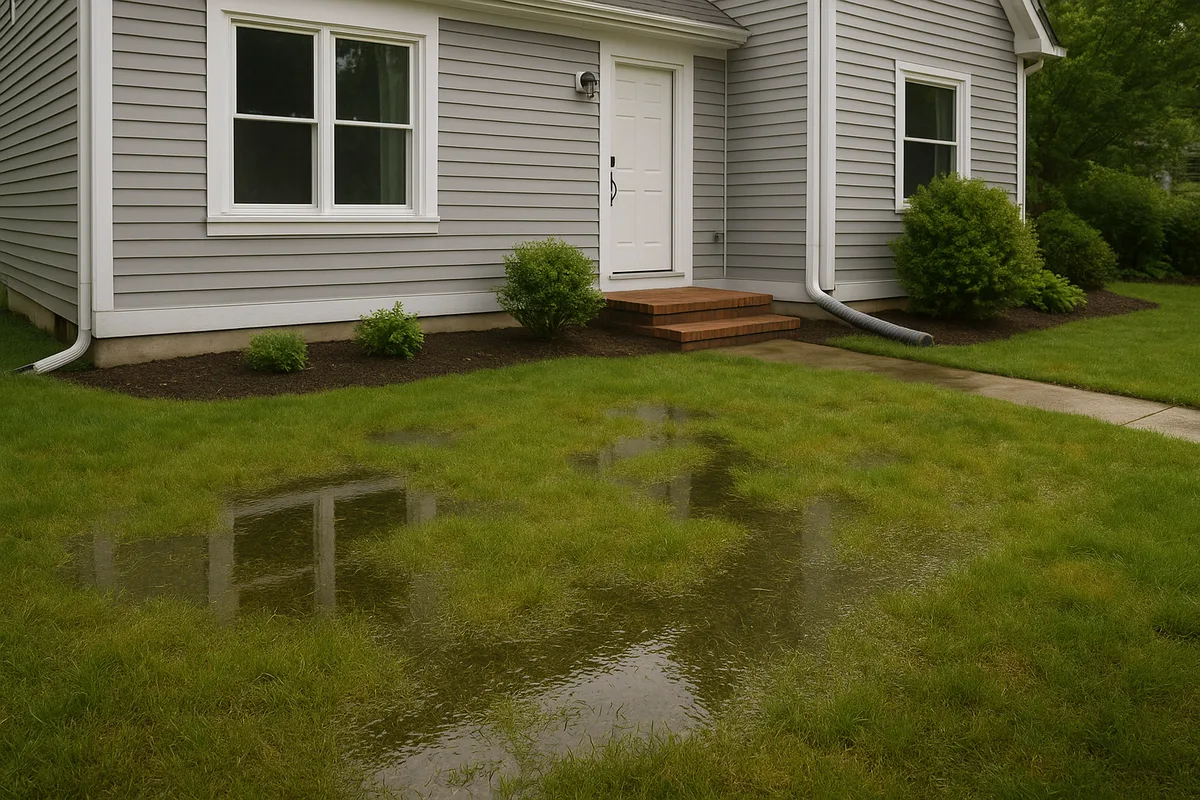
This rainfall pattern creates a specific drainage challenge: systems that work perfectly fine for nine months of the year can be completely overwhelmed during the wet season. A yard that drains adequately after a half-inch winter rain may hold standing water for 48 hours after a 3-inch summer downpour — not because the drainage system failed, but because it was never designed for the intensity of Tampa's wet season rainfall.
NOAA precipitation data shows that Tampa's 24-hour rainfall intensity for a 25-year storm event is approximately 9.5 inches — a staggering amount of water that no residential drainage system can fully handle. The goal isn't to eliminate all surface water during extreme events; it's to ensure water moves away from structures and doesn't persist long enough to cause damage.
Hurricane and tropical storm rainfall adds another layer. Tampa's location on the Gulf Coast makes it vulnerable to tropical systems that can deliver 10 to 20 inches of rain over 24 to 48 hours, often combined with storm surge that blocks normal stormwater outfalls. The city's stormwater infrastructure is designed to handle a 25-year storm event, but tropical systems regularly exceed that threshold.
Regulatory Landscape: What Tampa Property Owners Must Know
City of Tampa Stormwater Ordinances
The City of Tampa's stormwater management program is administered through the Stormwater Department, which operates under Chapter 26 of the Tampa City Code. Key regulations that affect residential property owners include:
Post-construction stormwater standards: Any new construction or significant modification that adds impervious surface area must demonstrate that post-development stormwater runoff does not exceed pre-development levels. For residential properties, this typically applies to additions, pool installations, large patio or driveway expansions, and accessory structures.
Lot grading requirements: The city requires that finished grades direct surface water away from structures and toward approved drainage facilities (swales, storm drains, retention areas). Altering lot grading without ensuring proper drainage conveyance can result in code violations.
Swale maintenance: Many Tampa neighborhoods rely on roadside swales as part of the stormwater conveyance system. Property owners are responsible for maintaining swales adjacent to their property — this means not filling them in, not blocking them with landscaping, and not piping them without city approval. Filled or blocked swales are one of the most common sources of neighborhood drainage complaints in Tampa.
Connection to the public stormwater system: Discharging water directly into the city's stormwater system (storm drains, ditches, retention ponds) requires compliance with water quality standards under the Environmental Protection Agency's National Pollutant Discharge Elimination System (NPDES) program. Tampa operates under an MS4 permit that regulates stormwater quality, and property owners cannot discharge contaminated water (including heavily sediment-laden construction runoff) into the system.
Hillsborough County Environmental Protection Commission
The Hillsborough County Environmental Protection Commission (EPC) oversees environmental regulations including wetland protection, stormwater quality, and surface water management. For properties in unincorporated Hillsborough County or those adjacent to wetlands and surface waters, the EPC's regulations add another layer of compliance:
Wetland buffers: Development activities within 50 feet of jurisdictional wetlands require EPC review and potentially a permit. Many Tampa-area properties, particularly in New Tampa, Riverview, and areas near the Hillsborough River, are adjacent to wetlands that aren't immediately obvious — they may appear as slightly low, seasonally wet areas with specific vegetation.
Surface water setbacks: Construction and grading activities near streams, rivers, and named water bodies have specific setback requirements.
Southwest Florida Water Management District (SWFWMD)
The Southwest Florida Water Management District — locally known as "Swiftmud" — has jurisdiction over Tampa's water resources and requires Environmental Resource Permits (ERPs) for projects that alter surface water flow, wetlands, or stormwater management systems. For residential properties, an ERP is typically required for:
- Projects that create more than 4,000 square feet of new impervious surface
- Any work within or adjacent to wetlands
- Modifications to existing stormwater management systems (including retention ponds in subdivisions)
- Construction of seawalls, docks, or other structures in or over surface waters
Flood Zone Designations and Insurance
Tampa has extensive Special Flood Hazard Areas (SFHAs) mapped by FEMA. The most common flood zone designations affecting Tampa properties include:
Zone AE: Areas subject to inundation by the 1% annual chance flood (the "100-year flood"). Base Flood Elevations (BFEs) are established for these zones. Significant portions of South Tampa, areas along the Hillsborough River, Davis Islands, and East Tampa fall within Zone AE. Properties in this zone with federally backed mortgages are required to carry flood insurance.
Zone VE: Coastal areas subject to wave action in addition to flooding. Parts of Bayshore Boulevard, Davis Islands waterfront, and areas directly on Tampa Bay carry this designation. Building requirements in VE zones are the most stringent.
Zone X (shaded): Areas of moderate flood risk — the 500-year floodplain. Many Tampa neighborhoods that aren't in the 100-year floodplain still fall in this zone, including portions of Carrollwood, Town 'n' Country, and Westchase.
Zone X (unshaded): Areas of minimal flood risk. Even properties in this zone can experience drainage problems — the flood zone designation addresses regional flood risk, not lot-level drainage.
FloodSmart.gov provides tools for homeowners to look up their flood zone and understand insurance options. It's worth noting that Tampa participates in FEMA's Community Rating System (CRS), which provides flood insurance premium discounts to policyholders in the city — currently a Class 6 rating, which translates to a 20% discount on flood insurance premiums for properties in SFHAs.
Disclosure Requirements
Florida law requires sellers to disclose known material defects, which includes known flooding or drainage problems. Under the Johnson v. Davis standard, sellers must disclose facts materially affecting property value that are not readily observable. Drainage issues — particularly recurring flooding, sinkhole activity, or failed drainage systems — fall squarely within this requirement. The Department of Housing and Urban Development also requires flood zone disclosure for properties with federally related mortgage transactions.
Real estate professionals working in Tampa should be particularly attentive to drainage conditions during transactions. A property that appears dry during a January showing may be a different story entirely in August.
Diagnosing Drainage Problems on Your Tampa Property
Before spending money on solutions, you need to understand exactly what's happening with water on your property. Here's a systematic approach tailored to Tampa conditions.
Step 1: Observe During Rain
The single most valuable diagnostic tool is your own observation during a heavy rain event. During Tampa's wet season, you'll have no shortage of opportunities. Go outside during or immediately after a significant rainfall (1 inch or more) and document:
- Where water pools: Note every location where water collects and stands. Photograph it with a timestamp. Pay particular attention to areas within 10 feet of your foundation.
- Flow direction: Watch how water moves across your lot. Does it flow away from the house or toward it? Does water from your neighbor's property flow onto yours?
- Duration: Check standing water at 2 hours, 12 hours, 24 hours, and 48 hours after rain stops. In Tampa's sandy soils, surface water should infiltrate or drain within 24 hours for most soil types. Water standing longer than 48 hours indicates a significant drainage issue — likely a perched water table above a spodic horizon or muck layer.
- Swale function: Does the roadside swale convey water effectively, or does it hold standing water? A functioning swale should drain within 24 to 36 hours.
Step 2: Check Your Grading
Using a simple line level or a 4-foot builder's level, check the grade around your foundation. The International Residential Code requires a minimum 6-inch fall in the first 10 feet away from the foundation. In Tampa's sandy soils, steeper grades are preferable because sand settles and compacts over time, reducing the effective slope.
Common grading problems in Tampa include:
- Settled fill around foundations: Builders typically backfill around foundations with sand, which compacts over the first few years, creating a reverse grade that directs water toward the foundation.
- Landscape modifications: Raised flower beds, added mulch, and grade changes for patios or walkways frequently disrupt the original drainage pattern.
- Root heave and settlement: Tampa's mature live oaks and other large trees can create significant grade changes through root growth and soil displacement.
Step 3: Inspect Your Gutters and Downspouts
Tampa homes take enormous volumes of roof runoff during wet season storms. A 2,000-square-foot roof receiving 3 inches of rain produces approximately 3,740 gallons of water. If that water is concentrated at 4 to 6 downspout locations without proper discharge management, each downspout is delivering 600 to 900 gallons of water into a very small area — more than enough to saturate the soil, create erosion channels, and in Tampa's karst environment, potentially contribute to subsurface void development.
Check that:
- Gutters are clear and properly sloped
- Downspouts extend at least 6 feet from the foundation (10 feet is better in Tampa)
- Downspout discharge areas aren't creating erosion or pooling
- Splash blocks or downspout extensions are directing water toward a drainage conveyance, not just into the yard
Step 4: Evaluate Your Stormwater System
Many Tampa subdivisions built from the 1970s onward have lot-level drainage infrastructure — yard drains, underground pipes, connections to community retention ponds or stormwater mains. Inspect what you can:
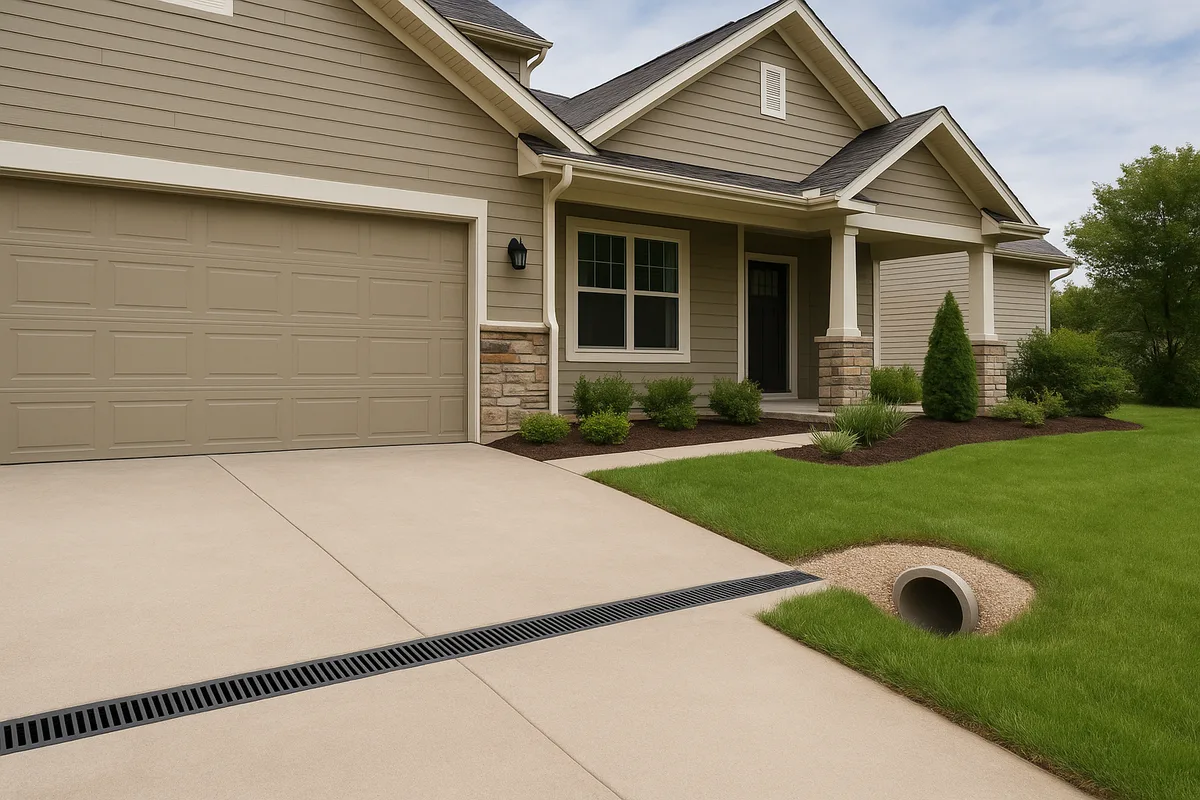
- Yard drains (catch basins): Remove the grate and check for sediment accumulation, root intrusion, or structural damage. A drain filled with sand and debris isn't draining anything.
- Pipe connections: If you can access cleanouts or endpoints, check for pipe collapse, root blockage, or disconnection. Older clay and Orangeburg (bituminous fiber) pipes common in Tampa's older neighborhoods are particularly prone to failure.
- Retention/detention ponds: If your subdivision has a community stormwater pond, observe its water level during dry and wet periods. A pond that stays full during dry weather may indicate a failed control structure or blocked outfall, which affects drainage for the entire community.
Step 5: Check for Sinkhole Indicators
Given Tampa's karst geology, drainage assessment should include awareness of potential sinkhole indicators. While a drainage expert is not a geologist, certain signs warrant professional geotechnical evaluation:
- Circular depressions in the yard that seem to grow or deepen
- Sudden appearance of holes or soft spots
- Foundation cracks — particularly stair-step cracks in block walls
- Doors and windows that suddenly stick or won't close properly
- Fence posts, trees, or other vertical elements that appear to be tilting
- Localized areas where water disappears into the ground unusually fast
If you observe these signs in combination with drainage problems, consult a licensed geotechnical engineer before implementing drainage solutions. Installing drainage that concentrates water flow near a developing sinkhole feature can accelerate the problem.
Step 6: Review Your Flood Zone Status
Even if you believe you know your flood zone, check the current FEMA Flood Insurance Rate Map (FIRM) for your property. FEMA periodically updates these maps, and properties that were once in Zone X may now be in Zone AE, or vice versa. The FEMA Flood Map Service Center provides current maps. Understanding your flood zone status affects insurance requirements, building restrictions, and the types of drainage improvements that may be required or prohibited.
Common Drainage Problems by Tampa Neighborhood
Drainage challenges in Tampa vary significantly by location. Here's what we see most frequently in specific areas:
South Tampa (Hyde Park, Palma Ceia, Beach Park, Bayshore)
South Tampa's drainage challenges are legendary. The peninsula between Hillsborough Bay and Old Tampa Bay is low-lying, with many properties at 5 to 8 feet elevation. The area's aging stormwater infrastructure — some dating to the early 20th century — is undersized for modern rainfall intensities. During heavy rains, streets like Bay to Bay Boulevard, Azeele Street, and sections of Dale Mabry can flood within minutes.
Lot-level problems in South Tampa typically involve:
- Extremely high seasonal water tables (often within 12 inches of the surface in summer)
- Tidal influence on stormwater outfalls — the system can't discharge when the bay is high
- Dense development with high impervious surface ratios, leaving little permeable area for infiltration
- Older homes without gutters or with inadequate downspout management
- Filled former wetland areas that continue to settle
Seminole Heights, Tampa Heights, Riverside Heights
These historic neighborhoods along the Hillsborough River have variable drainage conditions. Properties on the ridge (higher elevations along Florida Avenue and Nebraska Avenue) generally drain well, but properties closer to the river sit in the floodplain and experience both riverine flooding and poor lot drainage. The transition zones between ridge and river — often just a block or two — can have dramatic drainage differences.
Common issues include:
- River flooding during heavy rain events
- Aging infrastructure with undersized pipes
- Mature tree roots disrupting drainage lines and creating grade changes
- Properties with additions or modifications that altered original drainage patterns
New Tampa and Tampa Palms
These master-planned communities developed primarily from the 1990s onward generally have better-engineered stormwater systems, including community retention ponds, interconnected swale systems, and modern pipe infrastructure. However, they face their own challenges:
- Many lots were built on land with seasonal high water tables, requiring fill to achieve building elevation. As fill settles, grades can reverse.
- Community retention ponds require ongoing maintenance by HOAs. Deferred maintenance leads to system-wide drainage degradation.
- Rapid development in the area increased impervious surface coverage faster than downstream conveyance systems were upgraded.
- Proximity to the Lower Hillsborough Flood Detention Area and associated wetlands means many properties are near or within flood zones.
East Tampa and Palm River-Clair Mel
These areas experience some of Tampa's most persistent drainage problems due to a combination of low elevation, poor soils (high muck content), limited infrastructure investment, and proximity to the Palm River and its tributaries. Standing water in yards and streets is common during wet season, and many properties lack basic drainage infrastructure like functioning swales and yard drains.
Town 'n' Country and Westchase
The unincorporated areas west of Tampa in Hillsborough County face drainage challenges related to flat topography and high water tables. Town 'n' Country in particular has older development with limited stormwater infrastructure. Westchase, while newer and better-engineered, has experienced issues with community pond maintenance and outfall capacity as the area has matured.
Channelside, Harbour Island, Davis Islands
These waterfront areas face the unique challenge of coastal flooding combined with stormwater drainage. Sea level rise is measurable in Tampa Bay — NOAA's coastal monitoring shows approximately 1 inch of rise per decade at the St. Petersburg tide gauge. This gradual rise reduces the hydraulic head available to drain stormwater systems that discharge into the bay, effectively reducing system capacity over time. King tide events, which produce the highest tides of the year, increasingly cause nuisance flooding in these areas even without rainfall.
Drainage Solutions That Work in Tampa
Not every drainage solution works equally well in Tampa's specific conditions. Here's what's effective and why.
Grading and Swale Restoration
What it is: Regrading the lot to establish proper slope away from structures and restoring or creating swales to convey surface water to appropriate discharge points.
Why it works in Tampa: Grading corrections address the root cause of most residential drainage problems. In Tampa's sandy soils, regrading is relatively straightforward because the material is easy to work with. Properly graded swales take advantage of Tampa's sandy surface soils to provide both conveyance and infiltration.
Tampa-specific considerations:
- Use compacted fill (not loose sand) for grade corrections near foundations — loose sand will settle and you'll be back where you started within a year
- Swale design should account for Tampa's rainfall intensity — wider, shallower swales perform better than narrow, deep ones for the high-volume, short-duration storms common here
- Sod swales immediately after grading to prevent erosion — Tampa's summer downpours will wash out bare sand in a single storm
- Verify that your swale discharge point connects to the public stormwater system or an approved outfall — don't just redirect water onto your neighbor's property
Typical cost in Tampa: $1,500 to $5,000 for lot regrading; $800 to $2,500 for swale restoration. Complex projects involving significant fill or retaining features can reach $8,000 to $15,000.
French Drains and Subsurface Drainage
What it is: A trench filled with gravel and containing a perforated pipe, designed to intercept and redirect subsurface water.
Why it works in Tampa: French drains are effective for intercepting the perched water table that forms above Tampa's spodic horizons. By placing the drain at or just above the hardpan layer, you can intercept water that would otherwise saturate the root zone and surface.
Tampa-specific considerations:
- The drain must have a positive outlet — in flat Tampa terrain, this often means connecting to a yard drain, dry well, or the public stormwater system. A French drain without an outlet is just an underground swimming pool.
- Use filter fabric to prevent Tampa's fine sand from migrating into the gravel and clogging the system. Sand infiltration is the number one cause of French drain failure in this area.
- Depth matters: if you're trying to intercept the perched water table, the drain needs to reach the spodic horizon. A shallow French drain (less than 18 inches) may be above the problem.
- In areas with known karst activity, avoid deep excavation without understanding what's below. Penetrating a clay plug over a limestone void can create problems.
The Irrigation Association provides guidance on subsurface drainage design that's applicable to residential installations, and NDS manufactures the drainage products most commonly used by Tampa contractors for these systems.
Typical cost in Tampa: $25 to $50 per linear foot installed, including pipe, gravel, filter fabric, and backfill. A typical residential French drain system runs 50 to 150 linear feet, putting total project costs at $1,250 to $7,500.
Dry Wells
What it is: An underground chamber or pit filled with gravel that receives concentrated stormwater (typically from downspouts or yard drains) and allows it to infiltrate into the surrounding soil.
Why it works in Tampa: Where the water table is low enough and the soil above the spodic horizon has adequate permeability, dry wells can effectively manage roof runoff and yard drain discharge. They're particularly useful in Tampa because they don't require a surface outlet — important on flat lots where finding a gravity-fed discharge point is difficult.
Tampa-specific considerations:
- Dry wells only work where the seasonal high water table is at least 2 feet below the bottom of the well. In much of South Tampa and low-lying areas, this eliminates dry wells as an option during wet season.
- Size the well for Tampa's rainfall intensity, not national averages. A dry well designed for a 1-inch rain event will overflow during Tampa's routine 3-inch summer storms.
- Locate dry wells at least 10 feet from foundations and away from known sinkhole-prone areas. Concentrating water infiltration near a building on karst terrain is asking for trouble.
- Consider using manufactured chamber systems (like NDS Flo-Well) rather than simple gravel pits — they provide more storage volume per cubic foot of excavation.
Typical cost in Tampa: $1,000 to $3,000 per dry well installed, depending on size and depth.
Rain Gardens and Bioswales
What it is: Engineered shallow depressions planted with water-tolerant vegetation, designed to capture, filter, and infiltrate stormwater runoff.
Why it works in Tampa: Tampa's year-round growing season means rain garden plants establish quickly and provide effective infiltration and evapotranspiration. Native plants like muhly grass, coreopsis, blue flag iris, and dahoon holly are adapted to Tampa's wet-dry cycle and thrive in rain garden conditions. The American Society of Landscape Architects promotes rain gardens as a key residential stormwater management strategy, and Tampa's climate is nearly ideal for them.
Tampa-specific considerations:
- Plant selection is critical — choose species that tolerate both saturated conditions during wet season and dry conditions during Tampa's dry winter months
- Rain gardens in Tampa should be designed to drain within 24 to 48 hours to prevent mosquito breeding — a significant concern in this climate
- Locate rain gardens in areas that receive runoff from impervious surfaces (driveways, roofs, patios) to maximize their stormwater benefit
- The Low Impact Development Center provides design guidance for rain gardens that can be adapted to Tampa's specific soil and climate conditions
Typical cost in Tampa: $1,500 to $5,000 for a professionally installed rain garden, depending on size and plant selection. DIY installations can be done for $300 to $800 in materials.
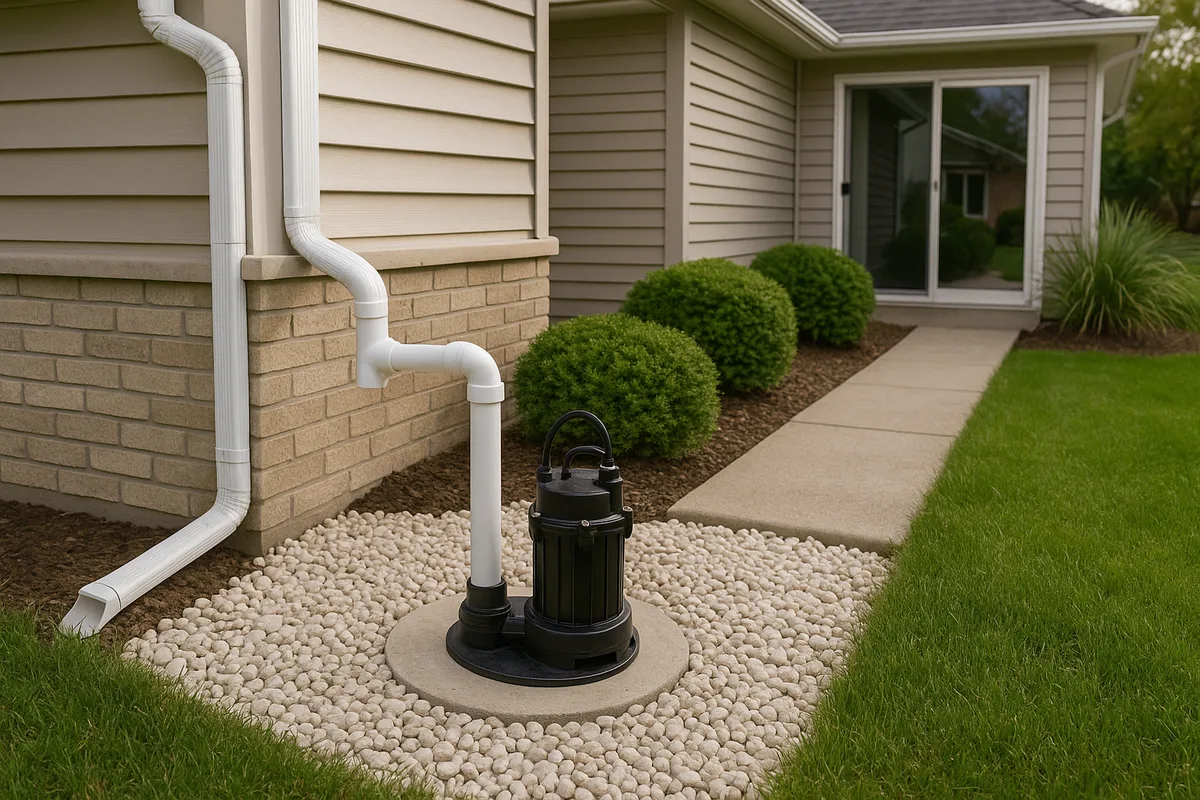
Pump Systems
What it is: Submersible or pedestal pumps installed in sumps or low points to mechanically remove water when gravity drainage isn't possible.
Why it works in Tampa: In the flattest, lowest areas of Tampa — particularly South Tampa, parts of East Tampa, and waterfront properties — there simply isn't enough elevation differential for gravity drainage. Pump systems are sometimes the only viable option for removing water from low spots, window wells, or below-grade spaces.
Tampa-specific considerations:
- Sump pumps in Tampa run frequently during wet season and need to be sized for continuous duty. Residential-grade pumps rated for occasional use will burn out quickly.
- Battery backup is essential. Tampa's wet season thunderstorms frequently cause power outages — exactly when you need the pump most.
- Discharge from pumps must comply with city/county stormwater regulations. You can't pump water into the street, onto neighboring properties, or into waterways without appropriate approvals.
- Consider a pump system as a last resort, not a first solution. If grading, drainage, or other passive solutions can solve the problem, they're always preferable to a mechanical system that requires power, maintenance, and eventual replacement.
Typical cost in Tampa: $1,500 to $4,000 for a sump pump system with battery backup; $3,000 to $8,000 for more complex systems with multiple pumps or extended discharge lines.
Permeable Hardscape
What it is: Driveways, walkways, and patios constructed with permeable pavers, porous concrete, or gravel systems that allow water to infiltrate through the surface rather than running off.
Why it works in Tampa: Reducing impervious surface coverage is one of the most effective ways to manage stormwater on a residential lot. In Tampa, where a typical lot may have 40-60% impervious coverage (roof, driveway, patio, walkways), converting even a portion to permeable surfaces can significantly reduce runoff volume.
Tampa-specific considerations:
- Permeable pavers perform well in Tampa's sandy soils because the base material drains readily
- The sand bedding layer used under permeable pavers is compatible with Tampa's native soils, reducing the risk of differential settlement
- Regular maintenance (vacuuming or pressure washing joints) is necessary to prevent fine sand and organic debris from clogging the permeable surface — Tampa's prolific vegetation means more organic debris than in drier climates
Typical cost in Tampa: $12 to $25 per square foot for permeable pavers installed, compared to $8 to $15 per square foot for standard pavers or concrete.
Seasonal Considerations for Tampa Drainage
Dry Season (November through May)
Tampa's dry season is the ideal time for drainage work:
- Lower water tables make excavation easier and allow contractors to see the full extent of subsurface conditions
- Dry soil compacts more predictably for grading work
- Sod establishment is easier with controlled irrigation rather than monsoon-level rainfall
- Permit processing tends to be faster as the city and county receive fewer emergency drainage complaints
Schedule drainage assessments and construction during this window whenever possible. The best time to fix a drainage problem is when you can see the full picture without standing water obscuring everything.
Wet Season (June through October)
While construction during wet season is more challenging, this period is invaluable for diagnosis:
- Observe and document water behavior during actual storm events
- Test existing systems under real-world conditions
- Identify problems that are invisible during dry months
- Emergency repairs may be necessary if acute flooding threatens structures
If you must do drainage work during wet season, expect higher costs (20-30% premium for wet-condition work), longer timelines, and the need for erosion control measures during construction.
Hurricane Season Preparation
The National Weather Service and Ready.gov both emphasize that preparation is the key to minimizing hurricane damage. For drainage specifically:
- Clear all yard drains, gutters, and downspouts before June 1
- Ensure sump pumps are operational with fresh battery backups
- Know your flood zone and have a plan if storm surge is predicted
- Document your property's drainage condition with photos and video — this documentation is invaluable for insurance claims if flooding occurs
- If you're in a flood zone, verify your flood insurance is current and understand your coverage limits
Hiring Drainage Contractors in Tampa
What to Look For
Tampa has a robust market for drainage contractors, but quality varies significantly. When evaluating contractors:
Licensing: Florida requires contractors performing drainage work to hold appropriate licensing. General contractors (CGC), building contractors (CBC), and specialty contractors with appropriate classifications can legally perform drainage work. Verify licenses through the Florida Department of Business and Professional Regulation.
Insurance: Require proof of general liability insurance ($1 million minimum) and workers' compensation coverage. Drainage work involves excavation, which carries inherent risks.
Local experience: Tampa's specific soil conditions, karst geology, and regulatory requirements demand local knowledge. A contractor experienced in North Florida or another state may not understand the nuances of working in Tampa's karst environment. Ask specifically about their experience with spodic horizons, high water tables, and sinkhole-prone areas.
Permitting knowledge: A good Tampa drainage contractor should know when a permit is required and should handle the permitting process. If a contractor suggests skipping permits, find another contractor.
References in your area: Ask for references from projects in your specific neighborhood. Drainage solutions that work in New Tampa may not be appropriate for South Tampa, and vice versa.
Red Flags
- Contractors who propose solutions without first diagnosing the problem
- One-size-fits-all approaches ("We'll just put in a French drain" before understanding your specific conditions)
- No discussion of discharge points — where will the water go?
- Unwillingness to pull permits when required
- Significantly lower bids than competitors — drainage work has real material and labor costs, and dramatically low bids usually mean corners will be cut
Typical Project Timelines
- Simple regrading: 1 to 2 days
- French drain installation: 1 to 3 days
- Comprehensive drainage system (multiple drains, grading, swale work): 3 to 7 days
- Permeable paver installation: 3 to 5 days for a typical driveway
Add 2 to 4 weeks for permitting if required, and potentially longer during busy season (typically March through May, when homeowners are preparing for wet season).
The True Cost of Ignoring Drainage in Tampa
Drainage problems in Tampa don't stay static — they get worse. The consequences of deferred drainage maintenance include:
Foundation damage: Persistent moisture against foundations in Tampa's sandy soils can cause differential settlement, block deterioration, and structural cracking. Foundation repairs in Tampa typically cost $5,000 to $25,000 — far more than the drainage fix that would have prevented the problem.
Sinkhole risk: While not every drainage problem leads to a sinkhole, concentrated water infiltration in karst terrain is a known contributing factor. Sinkhole remediation costs in Hillsborough County average $10,000 to $100,000+, and insurance coverage for sinkhole damage has become increasingly limited and expensive.
Mold and indoor air quality: Tampa's heat and humidity mean that any moisture intrusion creates ideal conditions for mold growth. Mold remediation costs $2,000 to $15,000 for typical residential projects, and the health impacts can be significant.
Property value impact: Drainage problems are increasingly scrutinized during real estate transactions. Visible standing water, foundation staining, or documented flooding history can reduce property values by 5-15% and extend time on market significantly.
Landscape destruction: Saturated soils kill turf grass, ornamental plants, and even mature trees. Tampa's iconic live oaks are surprisingly vulnerable to root rot from chronic soil saturation.
The American Society of Civil Engineers consistently rates America's stormwater infrastructure as needing significant investment, and Tampa is no exception. While the city continues to upgrade its public stormwater systems, individual property owners bear responsibility for lot-level drainage — and the cost of proactive management is always less than the cost of reactive repair.
When to Get Professional Help
Some drainage issues are straightforward enough for handy homeowners to address — extending a downspout, regrading a small area, or clearing a clogged yard drain. But professional help is warranted when:
- Water is entering your home or reaching your foundation regularly
- You observe potential sinkhole indicators alongside drainage problems
- Your property is in a flood zone and you're considering structural modifications
- Drainage solutions require connection to the public stormwater system
- The problem involves multiple properties or shared drainage infrastructure
- You're buying or selling a property and need objective drainage assessment
- Previous DIY or contractor attempts haven't resolved the problem
For situations involving potential environmental concerns — such as drainage into wetlands, waterways, or protected areas — consulting with professionals who understand EPA stormwater regulations and local EPC requirements is essential to avoid violations that can carry significant fines.
Organizations like the Water Environment Federation and the National Association of Flood and Stormwater Management Agencies provide resources for understanding stormwater management best practices that apply at both the community and property level.
Get Clarity with a Drainage Intelligence Report™
If you own property in Tampa — or you're considering buying one — understanding the drainage conditions on that specific lot isn't optional. It's essential. Tampa's combination of karst geology, high water tables, intense seasonal rainfall, and coastal flood exposure creates a drainage environment where small problems become expensive ones faster than in almost any other market in the country.
A Low Point Labs Drainage Intelligence Report™ gives you objective, data-driven analysis of drainage conditions on a specific property. We evaluate topography, soil conditions, flood zone status, grading, stormwater infrastructure, and site-specific risk factors to give you a clear picture of what's happening with water on your property — and what to do about it.
Whether you're a homeowner dealing with a wet yard, a buyer evaluating a property, a real estate agent advising a client, or an inspector looking for expert drainage analysis, a Drainage Intelligence Report™ provides the actionable intelligence you need to make informed decisions.
Don't wait for the next wet season to find out what your property's drainage is really doing. Get the data now, while you can still act on it.
Explore our US Drainage Guide for a national perspective.
Frequently Asked Questions
The Low Point Labs Drainage Intelligence™ platform is accessible via invitation-led onboarding.