Orlando's Unique Drainage Paradox: Sand That Won't Drain
Orlando sits in one of the most hydrologically complex landscapes in the United States, and most property owners have no idea. The city is built atop a karst terrain — a porous limestone foundation riddled with cavities, underground channels, and voids that have been dissolving for millions of years. On top of that limestone sits a mantle of fine sand and, in lower-lying areas, thick deposits of organic muck. The result is a drainage environment that defies simple assumptions: water can disappear into the ground with startling speed in one neighborhood while pooling stubbornly on the surface just a few blocks away.
What makes Orlando's situation genuinely fascinating — and genuinely problematic — is the interaction between its extremely flat topography, its high seasonal water table, and its explosive growth over the past four decades. The city's average elevation hovers around 82 feet above sea level, but within the metro area, elevation changes of just two or three feet can be the difference between a dry yard and a flooded living room. The Orange County region receives roughly 54 inches of rain annually, with the vast majority falling in intense bursts between June and October. During these months, the water table can rise to within inches of the surface across large swaths of the city, effectively turning Orlando's famously sandy soils into saturated sponges that refuse to absorb another drop.
This guide covers everything a property owner in Orlando needs to know about drainage: the specific soil and geological conditions that create problems, the regulatory landscape governing stormwater, how to diagnose issues on your own property, and what solutions actually work in Central Florida's unique environment.
The Geology Beneath Orlando: Why It Matters for Your Property
Karst Terrain and the Floridan Aquifer
Orlando's foundation is the Floridan Aquifer System, one of the most productive aquifer systems in the world, which sits within a limestone formation that is actively dissolving. This karst geology is directly responsible for the region's most distinctive features: the hundreds of lakes that dot the landscape (most of which are sinkhole lakes), the springs, and — critically for property owners — the ongoing risk of sinkhole formation.
From a drainage perspective, karst terrain creates unpredictable subsurface conditions. Water that enters the ground doesn't always follow predictable paths. It can travel laterally through sand layers, pool above clay lenses, or disappear into limestone solution channels. This means that two adjacent properties can have dramatically different drainage behaviors. The USGS has extensively mapped the Floridan Aquifer and the karst features of Central Florida, and their data shows that Orange County has one of the highest densities of documented sinkholes in the state.
For homeowners, the practical implication is this: you cannot assume that because your neighbor's yard drains well, yours will too. Subsurface conditions in Orlando vary at a granular level, and a proper drainage assessment must account for what's happening below the surface, not just on it.
Sandy Soils: Fast Drainage Until They're Not
The dominant soil types in the Orlando metro area are fine sands — Candler, Tavares, Apopka, and similar series that the USDA Web Soil Survey classifies as excessively well-drained to moderately well-drained under normal conditions. These soils are composed primarily of quartz sand particles with very little clay content, which means they have high permeability when the water table is low.
But here's the critical caveat that catches Orlando homeowners off guard: these sands only drain well when there's somewhere for the water to go. During the wet season, when the water table rises to within one to three feet of the surface across much of Orange County, the effective drainage capacity of these soils drops to near zero. The sand is still permeable, but it's already saturated from below. Any additional rainfall simply sits on the surface or flows overland.
This is why Orlando neighborhoods that seem perfectly dry from November through May can experience significant ponding and flooding during summer storms. The soil hasn't changed — the water table has.
Muck Soils and Low-Lying Areas
Scattered throughout Orlando, particularly around the edges of lakes and in historic wetland areas, are deposits of organic muck soils — dark, rich, decomposed organic material that can be several feet thick. Neighborhoods built on or near these muck deposits face a different set of challenges. Muck soils have poor bearing capacity, meaning they compress and settle over time, especially when dewatered. They also have very low permeability when compacted.
Areas like parts of Pine Hills, Holden Heights, and neighborhoods adjacent to Lake Underhill, Lake Conway, and the Boggy Creek drainage basin often sit on or near muck deposits. Homes in these areas may experience chronic settling, which disrupts the original grading and creates low spots that collect water. The NRCS soil surveys for Orange County document these muck deposits in detail, and any property owner in a low-lying area should review the soil data for their specific parcel.
Orlando's Climate and Rainfall: The Engine of Drainage Problems
The Wet Season Reality
Orlando's rainfall pattern is sharply seasonal. The city receives approximately 54 inches of rain per year, but the distribution is extremely uneven. Roughly 60-70% of annual rainfall occurs between June and September, with July and August typically being the wettest months. During this period, afternoon thunderstorms are nearly a daily occurrence, and individual storms can dump two to four inches of rain in under an hour.
The National Weather Service regularly issues flood advisories for the greater Orlando area during the wet season, and NOAA precipitation data confirms that Orlando's rainfall intensity — the rate at which rain falls during individual storm events — is among the highest in the continental United States. This intensity matters enormously for drainage because even highly permeable soils can't absorb water as fast as it falls during a heavy Central Florida thunderstorm.
Tropical Systems and Extreme Events
Beyond the routine wet season, Orlando is vulnerable to tropical storms and hurricanes that can deliver catastrophic rainfall. The city sits far enough inland to avoid the worst storm surge, but it's fully exposed to the rainfall component of tropical systems. Events like Hurricane Ian in 2022 demonstrated that Orlando can receive 12-18 inches of rain from a single tropical system, overwhelming drainage infrastructure that was designed for routine storms.
Orange County's stormwater system is generally designed to handle a 25-year, 24-hour storm event — roughly 8 to 9 inches of rain in 24 hours. Anything beyond that exceeds design capacity, and flooding becomes a question of topography: water flows to the lowest available point. Property owners who understand their position in the local drainage hierarchy — whether they sit at a high point, a midslope, or a low point — can make far better decisions about protection and preparation.
The Dry Season Complication
Orlando's dry season (roughly November through April) creates its own drainage-adjacent problems. The water table drops significantly, and the sandy soils dry out and can become hydrophobic — meaning they actually repel water temporarily when rain returns. This is why the first heavy rains of the wet season often cause disproportionate runoff: the soil surface has developed a water-repellent layer that must be broken through before infiltration resumes.
Additionally, the dry season is when many homeowners make landscaping and grading decisions, and the conditions can be misleading. A yard that seems perfectly graded in February may reveal serious drainage flaws in July when the water table is three feet higher and afternoon storms are delivering inches of rain.
Orlando's Stormwater Regulations and Legal Landscape
Orange County Stormwater Management
Orange County operates one of the most comprehensive stormwater management programs in Florida, funded through the Stormwater Utility Fee that appears on property tax bills. This program maintains the county's stormwater infrastructure — the ponds, pipes, swales, and outfalls that manage runoff from public roads and developed areas.
For property owners, the most important regulatory framework is Orange County's Land Development Code, which governs how stormwater must be managed on private property during construction or significant site modification. Key provisions include:
- Post-development runoff cannot exceed pre-development levels. If you add impervious surface (driveway, patio, building addition), you must provide compensating stormwater treatment and attenuation.
- Stormwater ponds and retention areas are regulated. If your property includes or is adjacent to a stormwater pond, you have maintenance obligations and restrictions on what you can do near the pond.
- Filling or grading that alters drainage patterns may require a permit. This is a point many homeowners miss — even relatively minor regrading projects can trigger permit requirements if they redirect water onto neighboring properties or into the public system.
The EPA requires municipalities like Orlando and Orange County to operate under Municipal Separate Storm Sewer System (MS4) permits, which mandate specific water quality standards for stormwater discharge. This federal requirement shapes local regulations and means that stormwater management in Orlando isn't just about preventing flooding — it's about protecting water quality in the region's lakes, rivers, and ultimately the Floridan Aquifer.
City of Orlando Stormwater Utility
The City of Orlando operates its own stormwater utility, separate from the county system, for properties within city limits. The city's stormwater fee funds maintenance of the municipal drainage system and capital improvement projects. Orlando has invested significantly in stormwater infrastructure upgrades in recent years, including improvements to the Lake Eola drainage basin, the Shingle Creek watershed, and neighborhoods in the Parramore and College Park areas that have experienced chronic flooding.
Property owners within city limits should be aware that the City of Orlando has its own permitting requirements for work that affects drainage, and these may differ from county requirements. When in doubt, contact the city's Stormwater Utility Division before beginning any project that involves grading, filling, or modifying drainage patterns.
St. Johns River Water Management District
Orlando falls within the jurisdiction of the St. Johns River Water Management District (SJRWMD), which regulates Environmental Resource Permits (ERPs) for projects that affect surface water, wetlands, or stormwater management systems. For residential property owners, ERP requirements typically apply to larger projects — new construction, significant additions, or work that affects wetlands or water bodies. However, even smaller projects can trigger SJRWMD involvement if they affect a regulated water body or wetland.
The practical takeaway: if your property borders a lake, pond, wetland, or drainage canal, assume that any modification to your property's drainage will require some level of regulatory review. The permitting process exists to protect both water quality and the drainage rights of neighboring properties.
Flood Zone Designations in Orlando
Orange County has extensive FEMA-designated flood zones, and they don't always align with what homeowners expect. FEMA flood maps for the Orlando area designate Special Flood Hazard Areas (SFHAs) — zones A, AE, AH, and AO — along major drainage corridors, around lakes, and in low-lying areas. Properties in these zones face mandatory flood insurance requirements if they have a federally backed mortgage, and they're subject to additional building regulations.
But here's what many Orlando homeowners don't realize: FEMA flood maps represent the minimum regulatory standard, not the actual flood risk. Significant portions of Orlando that are outside designated flood zones have experienced flooding, particularly during extreme events. The areas around Boggy Creek, the Little Econlockhatchee River, Shingle Creek, and the many small tributaries that feed Orlando's lake system are particularly vulnerable.
FloodSmart.gov provides consumer-friendly information about flood insurance options, and property owners in Orlando should seriously consider flood insurance even if they're not in a designated flood zone. Policies purchased through the National Flood Insurance Program cover both building and contents damage from flooding, and there's a 30-day waiting period before coverage takes effect — so waiting until a storm is approaching is not a viable strategy.
Disclosure Requirements
Florida law requires sellers to disclose known material defects, which includes known drainage problems, flooding history, and sinkhole activity. However, the disclosure requirement only covers what the seller actually knows — it doesn't require investigation. This creates a significant information gap in real estate transactions. A seller who has never experienced a major wet season event, or who hasn't owned the property long enough to observe drainage patterns, may genuinely not know about problems that exist.
This is precisely why independent drainage assessment is so valuable in the Orlando market. HUD guidelines encourage buyers to obtain thorough property inspections, but standard home inspections rarely include detailed drainage analysis. A dedicated Drainage Intelligence Report fills this gap.
Diagnosing Drainage Problems on Your Orlando Property
What to Look For: Visual Indicators
Orlando property owners can learn a great deal about their drainage situation through careful observation, particularly during and immediately after heavy rain. Here's what to look for:
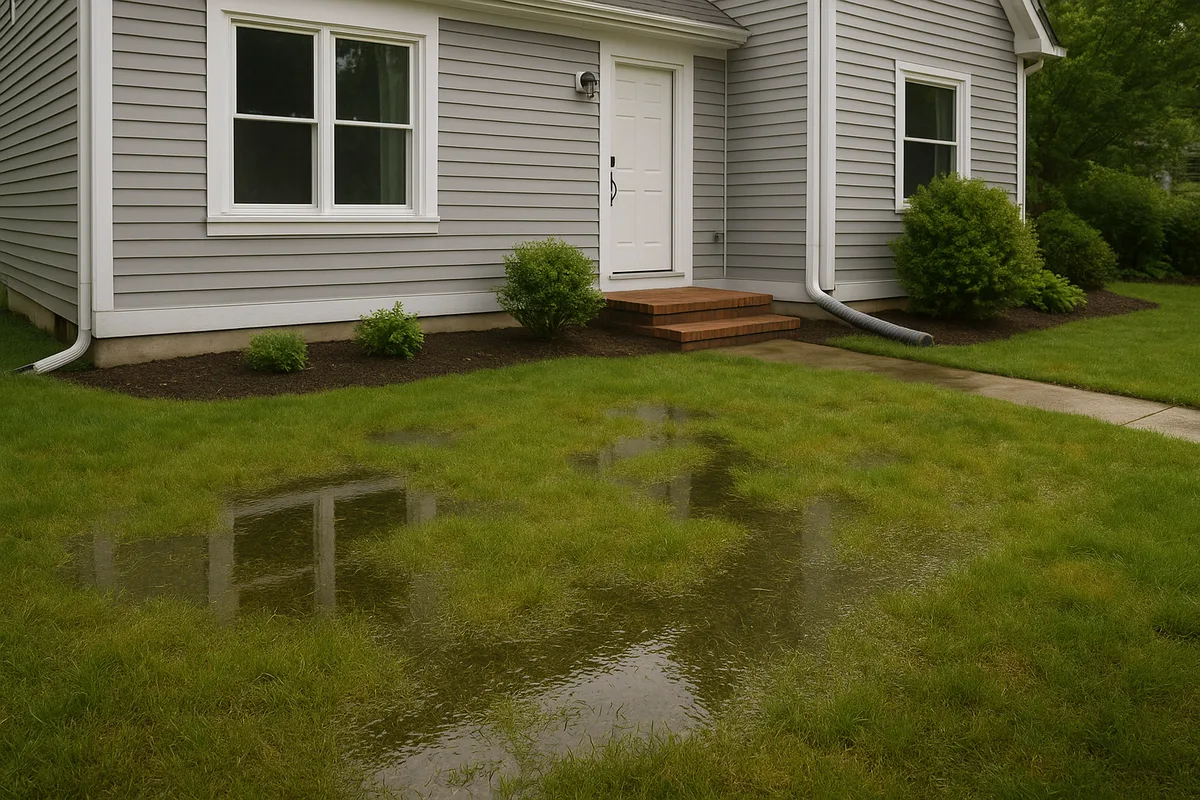
Standing Water: After a typical summer thunderstorm (1-2 inches of rain), standing water should dissipate from a well-drained Orlando yard within 4-8 hours. If water is still pooling 12-24 hours after rain stops, you have a drainage problem. Pay particular attention to areas within 10 feet of your foundation — this is the critical zone where poor drainage translates into structural risk.
Soil Staining and Moss: Look for areas of the yard where the soil is consistently darker than surrounding areas, or where moss, algae, or fungal growth is present. In Orlando's sandy soils, these indicators are particularly telling because sand doesn't retain moisture well under normal conditions. If an area stays wet long enough to support moss, something is directing water there or preventing it from draining.
Foundation Indicators: Inside the home, look for:
- Cracks in drywall, particularly diagonal cracks at window and door corners
- Doors or windows that stick or won't close properly
- Cracks in floor tiles, especially on slab-on-grade construction (which is the dominant foundation type in Orlando)
- Musty odors, particularly in closets or rooms on the ground floor
- Efflorescence (white mineral deposits) on concrete block walls
Exterior Foundation Signs:
- Soil pulling away from the foundation (common in Orlando's sandy soils during dry season)
- Visible erosion channels where water runs along the foundation
- Staining on the lower portion of exterior walls
- Separation between the foundation and sidewalks, driveways, or patios
Landscape Clues: Certain plants thrive in wet conditions, and their presence can indicate chronic moisture. In Orlando, look for volunteer bald cypress seedlings, cattails, sedges, or unusually lush growth of St. Augustine grass in specific areas — these can indicate a high water table or poor drainage in that zone.
The Wet Season Test
The single most valuable diagnostic step an Orlando homeowner can take is to observe their property during a heavy summer thunderstorm. Put on rain gear and walk your property while it's actively raining. Note:
- Where is water flowing? Follow the water from the highest point of your property to the lowest. Is it flowing away from your foundation or toward it?
- Where does it accumulate? Identify the low points where water collects. Are these intentional collection points (swales, retention areas) or unintended depressions?
- Where does it exit? Every property should have a clear path for water to leave. Does your property drain to a swale, a storm drain, a retention pond, or a neighbor's property?
- How fast does it move? Slow-moving sheet flow is generally manageable. Fast-moving concentrated flow creates erosion and can overwhelm drainage systems.
If you can't observe during a storm, check your property within 30 minutes of a heavy rain ending. The patterns will still be visible.
Checking Your Grading
Proper grading is the single most important factor in residential drainage, and it's the element most commonly compromised in Orlando. The standard recommendation is a minimum slope of 1 inch per foot (approximately 8% grade) for the first 6-10 feet away from the foundation, transitioning to a gentler slope beyond that.
You can check your grading with a simple test:
- Place a straight 2x4 board on the ground, with one end against your foundation
- Place a level on top of the board
- Raise the outer end of the board until the level reads level
- Measure the gap between the outer end of the board and the ground
For a 4-foot board, you should see at least 4 inches of gap (the ground should be 4 inches lower at 4 feet from the foundation). If the gap is less than that, or if the ground actually slopes toward your foundation, you have a grading problem that needs correction.
In Orlando, grading problems are extremely common because:
- Sandy soils erode and settle easily
- Landscape modifications (flower beds, mulch buildup, tree planting) gradually alter grade
- Slab-on-grade construction means there's very little tolerance for grade changes
- Original builder grading may have been marginal to begin with, particularly in subdivisions built during rapid growth periods
Understanding Your Position in the Watershed
Every property in Orlando is part of a larger drainage system, and understanding your position in that system is essential. Orlando's major drainage basins include:
- Shingle Creek Basin — drains much of southwest Orlando, including parts of the tourist corridor and neighborhoods south of Sand Lake Road
- Boggy Creek Basin — drains portions of southeast Orlando, including areas around Orlando International Airport
- Little Econlockhatchee River Basin — drains northeast Orlando and parts of east Orange County, including neighborhoods around UCF and Waterford Lakes
- Lake Apopka Basin — drains portions of northwest Orange County
- Various closed lake basins — many of Orlando's neighborhoods drain to individual lakes that have no surface outlet, making water level management critical
Your position within these basins determines where your water goes and, importantly, where other people's water comes from before it reaches you. Properties at the lower end of a drainage basin inherently receive more runoff than those at higher elevations, and this is a permanent condition that must be managed, not eliminated.
Common Drainage Solutions for Orlando Properties
Regrading and Swale Restoration
The most fundamental and often most effective drainage solution in Orlando is correcting the grade around your home. This involves adding or redistributing soil to ensure positive drainage away from the foundation in all directions.
In Orlando's sandy soil environment, regrading has specific considerations:
- Use appropriate fill material. Clean fill sand is readily available in Central Florida and is the standard material for regrading. Avoid using topsoil or organic material close to the foundation — it retains moisture and settles.
- Compact properly. Sandy fill must be compacted in lifts (layers) to prevent future settling. Simply dumping sand against your foundation and spreading it will result in the grade reverting within a year or two.
- Restore swales. Many Orlando properties were originally built with drainage swales — shallow, grass-lined channels that direct water between properties to the street or a collection point. Over time, these swales fill in with sediment, are graded over by landscaping, or are blocked by fences and structures. Restoring them to their original profile is often the single most impactful drainage improvement a homeowner can make.
- Maintain setbacks from property lines. When regrading, you cannot direct water onto a neighbor's property. Florida law is clear on this point, and disputes over redirected drainage are among the most common neighbor conflicts in Orlando.
French Drains and Subsurface Drainage
French drains — trenches filled with gravel and containing perforated pipe — are a staple solution in Orlando, but they require careful design to work in this environment.
The key challenge with French drains in Orlando is the water table. A French drain works by collecting water and conveying it by gravity to a lower discharge point. If the water table is at or above the level of the drain during the wet season, the drain becomes ineffective — it's already submerged. This means that French drains in Orlando must be designed with a clear understanding of seasonal water table levels, and they must have an adequate outlet.
Common French drain configurations in Orlando include:
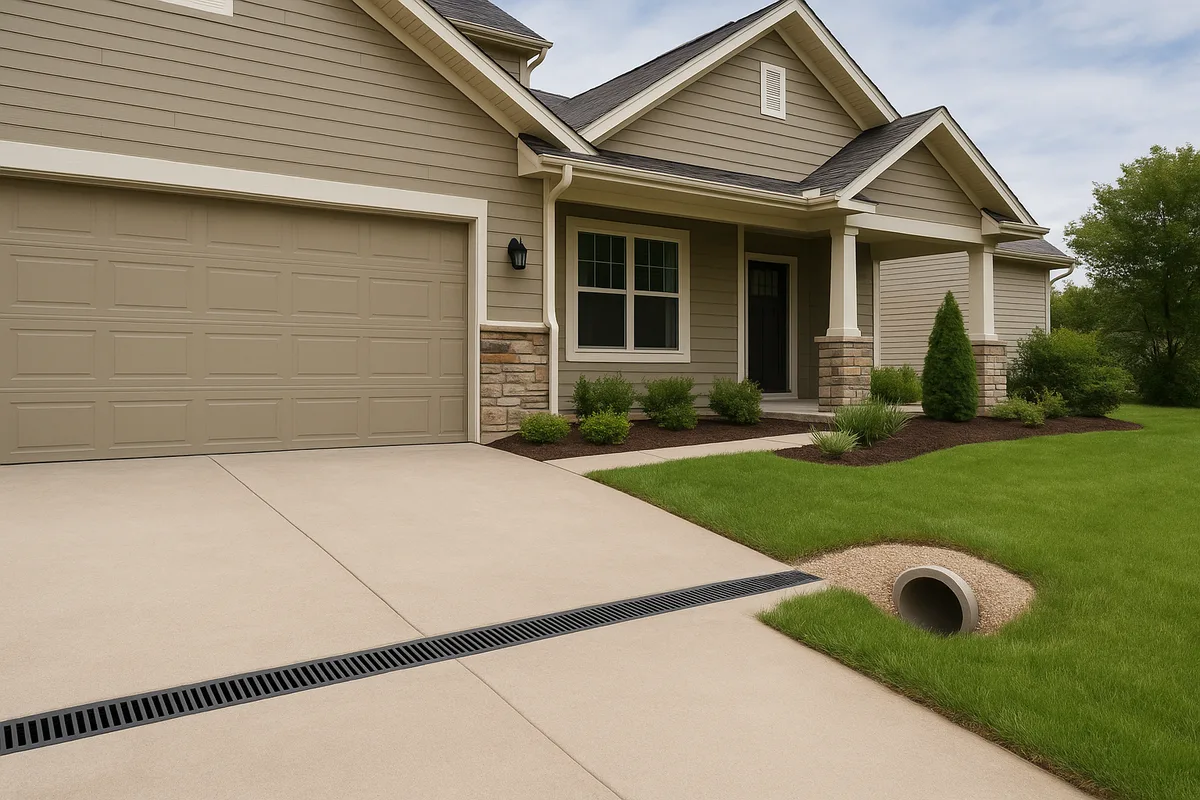
- Foundation perimeter drains that collect water from around the foundation and route it to a swale, storm drain, or dry well
- Yard drains that intercept sheet flow across the property and redirect it
- Curtain drains installed upslope of a problem area to intercept subsurface water before it reaches the affected zone
Products from manufacturers like NDS are widely used by Orlando contractors for residential drainage systems, including channel drains, catch basins, and pop-up emitters. The key is ensuring proper sizing and slope — a minimum of 1% slope (1/8 inch per foot) is needed for the pipe to function, and more is better.
Dry Wells and Infiltration Systems
Dry wells — underground chambers that collect runoff and allow it to slowly infiltrate into the surrounding soil — can be effective in Orlando, but only in areas where the water table is deep enough to provide adequate separation. A dry well needs at least 3-4 feet of unsaturated soil below its base to function properly.
In parts of Orlando with deeper water tables — generally areas at higher elevations like parts of College Park, Winter Park (adjacent), and portions of the Dr. Phillips area — dry wells can be an excellent solution for managing roof runoff. In lower-lying areas where the water table is within 2-3 feet of the surface during wet season, dry wells are generally not viable.
Rain Gardens and Bioswales
Rain gardens — shallow, planted depressions designed to capture and infiltrate runoff — are increasingly popular in Orlando and are well-suited to the climate and soil conditions. The Low Impact Development Center provides design guidance for rain gardens, and several Orlando neighborhoods have implemented them as part of community stormwater improvements.
In Orlando's sandy soils, rain gardens drain quickly when the water table is low, which means they can handle significant volumes of runoff. The key design considerations include:
- Plant selection: Use native Florida plants adapted to both wet and dry conditions. Muhly grass, blue flag iris, coreopsis, and swamp milkweed are excellent choices that thrive in Orlando's rain gardens.
- Sizing: A rain garden should be sized to capture the first inch of runoff from its contributing drainage area. For a typical Orlando home with 2,000 square feet of roof, this means a rain garden of approximately 200-300 square feet.
- Location: Place rain gardens at least 10 feet from the foundation and in an area where they can overflow safely during extreme events. Never place a rain garden where overflow would affect a neighbor's property or a septic system.
- Soil amendment: While Orlando's native sand drains well, mixing in 20-30% compost improves water retention and supports plant growth without significantly reducing permeability.
American Rivers advocates for green infrastructure approaches like rain gardens as part of a comprehensive urban stormwater strategy, and Orlando's stormwater utility has been supportive of these installations.
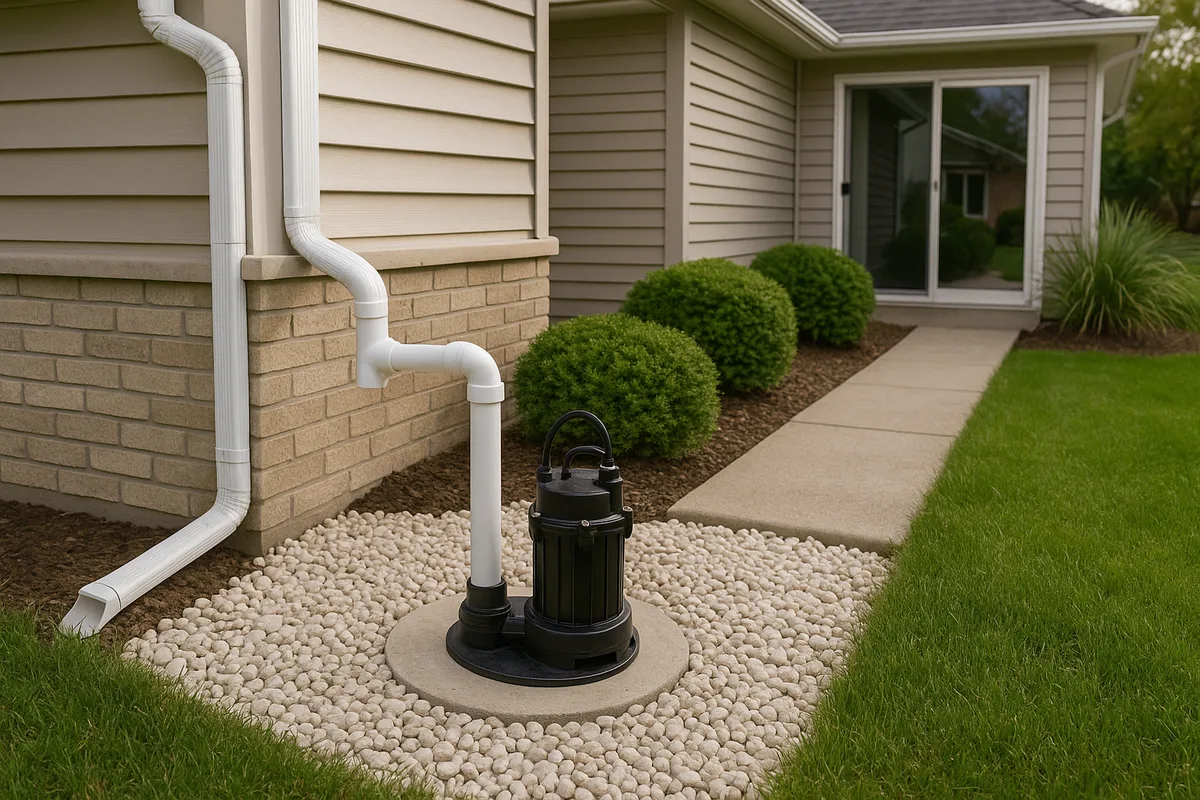
Sump Pumps and Active Drainage
In areas of Orlando where gravity drainage is not feasible — typically low-lying areas where there's no lower discharge point available — sump pumps may be necessary. This is particularly common in:
- Neighborhoods around Lake Conway and Lake Underhill
- Low-lying areas of Pine Hills and Orlo Vista
- Properties adjacent to wetlands or retention ponds
- Homes with finished spaces below the surrounding grade (rare in Orlando, but present in some older construction)
Sump pump systems in Orlando should include:
- A properly sized sump pit (minimum 18 inches diameter, 24 inches deep)
- A pump rated for the expected flow (typically 1/3 to 1/2 HP for residential applications)
- Battery backup (essential in Orlando, where power outages during storms are common)
- A discharge line that routes water to an approved location (not onto a neighbor's property or into the sanitary sewer)
Permeable Paving and Impervious Surface Reduction
Orlando's stormwater regulations encourage reducing impervious surface coverage, and permeable paving is an effective way to maintain functional surfaces while allowing infiltration. Options include:
- Permeable pavers: Interlocking concrete or brick pavers with gaps that allow water to pass through to a gravel base below
- Porous concrete: Specially formulated concrete with a void structure that allows water infiltration
- Gravel or stabilized aggregate: Appropriate for driveways and parking areas in some settings
The American Society of Landscape Architects provides resources on permeable paving design, and several Orlando-area landscape architects specialize in these installations. Permeable paving is particularly effective for driveways and patios, where it can significantly reduce the volume of runoff generated by a property.
Neighborhood-Specific Drainage Considerations
Downtown Orlando and Parramore
The urban core presents unique drainage challenges due to high impervious surface coverage, aging infrastructure, and flat topography. The city has invested in significant stormwater upgrades in the Parramore neighborhood, but chronic ponding remains an issue during heavy rain events. Properties in this area should pay particular attention to foundation waterproofing and ensuring that lot grading directs water to the street and storm drain system.
College Park and Colonialtown
These established neighborhoods sit at relatively moderate elevations and generally have adequate drainage when lot grading is maintained. However, mature tree canopy — one of the area's most valued features — creates challenges. Large tree roots disrupt grading, block swales, and can infiltrate drainage pipes. Property owners should regularly inspect and maintain swales and ensure that root intrusion hasn't compromised drainage infrastructure.
Pine Hills and Orlo Vista
The Pine Hills area in western Orange County includes significant low-lying terrain and areas with muck soils. Chronic drainage problems are common, and the water table is often within 2-3 feet of the surface during wet season. Properties in this area benefit from aggressive swale maintenance, elevated landscaping beds, and in some cases, active pumping systems.
Southeast Orlando and Boggy Creek Area
The Boggy Creek drainage basin serves a large area of southeast Orlando, and development pressure has increased runoff volumes significantly. Neighborhoods in this area, including portions of Meadow Woods and the communities south of the airport, experience periodic flooding during extreme events. Property owners should verify their flood zone status and consider flood insurance regardless of zone designation.
Horizon West and Southwest Orange County
This rapidly developing area west of Orlando presents a different challenge: new construction drainage systems that haven't been tested by extreme events. Stormwater ponds in new developments are designed to regulatory standards, but individual lot drainage depends heavily on builder grading quality. New homeowners in Horizon West should carefully inspect lot grading within the first year and address any deficiencies before the builder warranty expires.
Lake Nona and Medical City Area
Lake Nona's master-planned development includes sophisticated stormwater management, but the area's flat topography and proximity to the Boggy Creek system mean that individual lot drainage remains important. The area's relatively new construction means that settling and grading changes are still occurring, and property owners should monitor drainage patterns annually.
Sinkhole Considerations in Orlando Drainage
No discussion of Orlando drainage is complete without addressing sinkholes. Orlando sits in what geologists call "Sinkhole Alley" — the corridor of Central Florida with the highest density of sinkhole activity in the state. While sinkholes are a geological phenomenon, drainage is directly relevant because:
Concentrated water infiltration can trigger sinkhole activity. Directing large volumes of water to a single point — such as a downspout discharging directly into the ground — can accelerate the dissolution of limestone below and potentially trigger subsidence. This is why spreading water across a broad area through swales and sheet flow is preferred over concentrated discharge in Orlando.
Drainage changes can be early indicators of sinkhole development. If an area of your yard suddenly begins draining much faster than before, or if a depression appears that wasn't there previously, these can be signs of subsurface void formation. Similarly, if your well water becomes turbid or your foundation develops new cracks, these warrant investigation.
Drainage system design must account for sinkhole risk. Dry wells and infiltration systems should not be installed without understanding the subsurface conditions. In areas with known sinkhole activity, concentrating water underground can be counterproductive.
Florida law requires insurers to cover catastrophic ground cover collapse, but the definition is narrow. Property owners concerned about sinkhole risk should consult with a geotechnical engineer and review their insurance coverage carefully.
Costs of Drainage Work in the Orlando Market
Drainage project costs in Orlando as of 2026 reflect the region's active construction market and the relative availability of materials like sand and gravel. Here are typical ranges for common residential drainage projects:
| Project | Typical Cost Range |
|---|---|
| Lot regrading (average residential lot) | $1,500 - $5,000 |
| Swale restoration (per linear foot) | $8 - $20 |
| French drain installation (per linear foot) | $25 - $60 |
| Catch basin and downspout drainage system | $1,200 - $3,500 |
| Dry well installation (each) | $800 - $2,500 |
| Sump pump system with battery backup | $1,500 - $4,000 |
| Rain garden (200-300 sq ft) | $1,500 - $4,000 |
| Permeable paver driveway (per sq ft) | $12 - $25 |
| Complete lot drainage system | $5,000 - $15,000 |
| Sod replacement after drainage work (per sq ft) | $0.75 - $1.50 |
These costs can vary significantly based on access, soil conditions, and the complexity of the project. Properties with high water tables, muck soils, or difficult access may see costs at the higher end or above these ranges.
One cost-saving consideration specific to Orlando: clean fill sand is abundant and relatively inexpensive in Central Florida, which makes regrading projects more affordable here than in regions where fill material must be imported. A typical regrading project might require 5-20 cubic yards of fill, at $20-$35 per cubic yard delivered.
Getting Quotes and Selecting Contractors
When hiring a drainage contractor in Orlando, look for:
- Florida licensing: Ensure the contractor holds appropriate state and local licenses. Drainage work may fall under general contractor, plumbing, or specialty contractor licenses depending on the scope.
- Experience with Orlando's specific conditions: Ask about their experience with sandy soils, high water tables, and karst terrain. A contractor experienced in North Florida or the Panhandle may not understand Central Florida's unique challenges.
- Stormwater permit knowledge: A qualified contractor should know when permits are required and should handle the permitting process.
- References from nearby properties: Drainage solutions that work in one soil and water table environment may not work in another. References from properties with similar conditions are most valuable.
- Written scope and warranty: Get a detailed written scope of work that specifies materials, dimensions, slopes, and discharge points. Insist on a warranty that covers at least one full wet season.
The American Society of Civil Engineers and the Water Environment Federation both maintain resources on stormwater management best practices that can help homeowners evaluate contractor proposals.
Seasonal Drainage Maintenance Calendar for Orlando
Spring (March - May): Preparation Season
This is the critical window to prepare for the wet season. Tasks include:
- Inspect and clean all gutters and downspouts. Orlando's live oaks drop leaves heavily in March and April, and clogged gutters are a primary cause of foundation water problems.
- Check and restore swale grades. Walk your property's swales and ensure they're clear of debris, sediment buildup, and vegetation that blocks flow.
- Inspect drainage pipe outlets. Pop-up emitters, pipe outlets, and discharge points should be clear and functional.
- Test sump pumps. If you have a sump pump, test it now — including the battery backup. Replace batteries every 2-3 years.
- Review grading around the foundation. After the dry season, check for settling, erosion, or areas where mulch or soil has built up against the foundation.
Summer (June - September): Active Monitoring Season
During the wet season, your primary job is observation and response:
- Observe drainage during storms. At least once early in the wet season, watch how your property handles a heavy rain. Note any new problem areas.
- Keep swales mowed but don't scalp them. Grass in swales should be maintained at 3-4 inches — short enough to allow flow but tall enough to filter sediment and prevent erosion.
- Monitor for new settling or depressions. The combination of heavy rain and sandy soil can reveal subsurface issues. New depressions should be investigated.
- Clear storm drain inlets. If your property is near a public storm drain inlet, keep it clear of debris. A blocked inlet can cause localized flooding that affects your property.
Fall (October - November): Assessment and Repair Season
As the wet season winds down, assess what happened and make repairs:
- Document any flooding or drainage failures. Take photos and notes. This information is valuable for planning improvements and for insurance purposes.
- Schedule drainage repairs and improvements. Fall is the ideal time for drainage construction in Orlando — the ground is still workable, but the intense rain has subsided.
- Repair erosion damage. Address any erosion channels, washouts, or areas where grading was compromised during the wet season.
Winter (December - February): Project Season
The dry season is when major drainage projects should be completed:
- Install new drainage systems. The low water table and dry conditions make construction easier and more predictable.
- Regrade and resod. Sod installed in winter has time to establish before the wet season stress begins.
- Plan and permit larger projects. Use the dry season to obtain permits, get quotes, and plan projects for completion before the next wet season.
When to Get Professional Help
While many drainage observations and minor corrections can be handled by homeowners, certain situations warrant professional assessment:
- Water entering the home. Any water intrusion into the living space requires immediate professional attention. This includes water seeping through slab cracks, entering through wall penetrations, or backing up through plumbing.
- Foundation movement or cracking. New or expanding cracks in the foundation, walls, or floor may indicate drainage-related settlement or, in Orlando, potential sinkhole activity. A structural engineer should evaluate.
- Chronic ponding that doesn't respond to basic corrections. If regrading and swale maintenance don't resolve standing water, the problem may be related to the water table, subsurface conditions, or upstream drainage issues that require engineering analysis.
- Neighbor disputes over drainage. If drainage modifications by you or a neighbor are causing problems, professional assessment and documentation can help resolve disputes and establish responsibility.
- Pre-purchase evaluation. Before buying a property in Orlando, a professional drainage assessment can reveal conditions that aren't apparent during a standard home inspection, especially if the inspection occurs during the dry season.
The Irrigation Association provides resources on water management system design, and their certified professionals can assist with complex drainage projects.
For situations involving potential disaster-related damage, the SBA offers low-interest disaster loans that can help property owners fund necessary drainage repairs and improvements after declared disasters.
The Role of Drainage Intelligence in Orlando Real Estate
Orlando's real estate market moves fast, and drainage is often overlooked in the rush to close. But in a city where the difference between a dry property and a flooding one can be a matter of inches in elevation and a few degrees of slope, drainage intelligence is not optional — it's essential.
Consider the stakes: a property with undiagnosed drainage problems can cost tens of thousands of dollars in foundation repairs, mold remediation, and landscape reconstruction. A property with good drainage, properly documented, has a tangible competitive advantage in the market. And in a region where climate patterns are intensifying — delivering more rain in shorter periods — the margin for error is shrinking.
Florida's Ready.gov resources emphasize the importance of understanding your property's flood risk before disaster strikes, not after. In Orlando, that understanding starts with knowing how water moves across and through your specific property.
Get Your Orlando Drainage Intelligence Report™
Low Point Labs' Drainage Intelligence Reports™ are designed specifically for properties in environments like Orlando's — where sandy soils, karst geology, seasonal water tables, and intense rainfall create a complex drainage landscape that defies simple assumptions.
Our reports analyze your specific property's drainage conditions using topographic data, soil information, flood zone mapping, and site-specific assessment to give you a clear picture of how water interacts with your property. Whether you're buying a home in Lake Nona, maintaining a property in College Park, or troubleshooting chronic flooding in Pine Hills, a Drainage Intelligence Report gives you the information you need to make smart decisions.
Don't wait for the next wet season to discover what your property's drainage is really doing. Get your Drainage Intelligence Report today and take control of the water on your property before it takes control of you.
Read more in our statewide drainage guide or explore the US Drainage Guide.
Frequently Asked Questions
The Low Point Labs Drainage Intelligence™ platform is accessible via invitation-led onboarding.